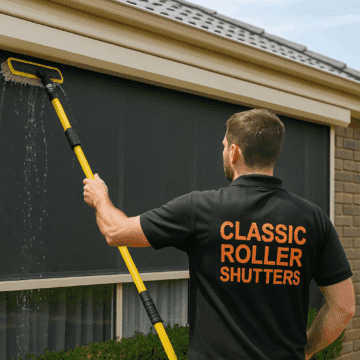
Outdoor patio blinds are weather-resistant window coverings that let you enjoy your alfresco area year-round by blocking sun, wind, rain and prying eyes — and they cost anywhere from $100 DIY to $1,500 + fully installed, depending on style, size, head boxs, fixings and automation. In South Australia’s punishing climate, the wrong fabric fades in a single summer, and a blind without a wind rating may land in the Neighbour’s gum.
This guide makes the choice easy: we unpack 17 proven styles, show real-world price brackets, compare materials (PVC, mesh, canvas, aluminium) and share installer tips that prevent costly mistakes. Read on to pick a blind that suits your patio, budget and lifestyle – not just the showroom brochure.
1. Track-Guided Zip Blinds (Ziptrak®, Zipscreen Style)
If you want the tidiest-looking outdoor patio blinds with the best wind seal, you’ll probably end up looking at a track-guided “zip” system. The fabric is welded to a zipper or spline and slides inside aluminium side tracks, so it can’t flap, rattle or leave gaps for rain to sneak through.
What They Are & How They Work
- Spring-balanced top tube (or optional motor) lets you stop the blind at any height without ropes, pulleys or buckles.
- Unique inner tabs keep the zipper engaged even when the opening is slightly out of square.
- A bottom bar locks onto discreet latches for full storm protection and insect control.
Fabric & Hardware Options
- Clear or tinted PVC for winter warmth.
- 95 % woven mesh for summer airflow and glare reduction.
- Marine-grade acrylic canvas for full blackout.
All fabrics pair with extruded aluminium tracks and bottom bars, usually powder-coated to Colorbond hues for coastal corrosion resistance.
Pros, Cons & Ideal Applications
Pros
- Up to 150 km/h wind rating; seals against mozzies.
- Child-safe, clutter-free operation.
- Sleek cassette option hides the roll.
Cons
- Higher upfront cost.
- Requires a plumb, parallel opening for smooth travel.
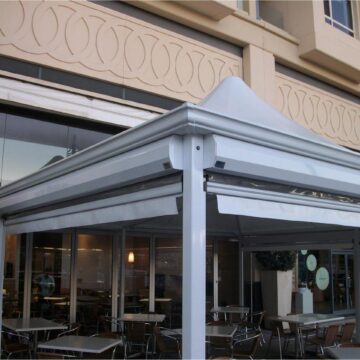
Best for patios, balconies and café fronts exposed to gusty southerlies or street noise where neat aesthetics matter as much as durability.
2. Clear PVC Café Blinds
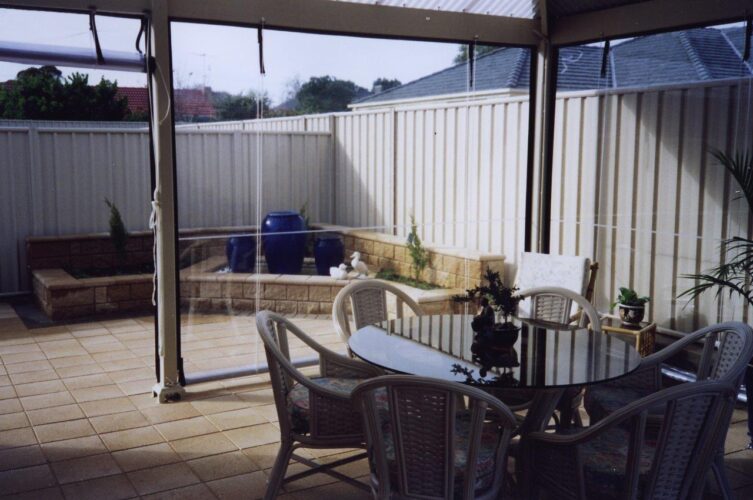
Clear PVC café blinds are the quickest way to turn an open patio into a weather-tight room without blocking the view.
Defining Features
One-piece PVC panels attach with zips, sail-track splines or rope pulleys; once lowered they form a near-sealed ‘window’ that stops wind, rain and draughts.
Maintenance & Longevity
Clean monthly with mild detergent and a soft sponge, rinse well, then dry before rolling. In SA you can expect 4–6 years before cloudiness or cracks appear.
Best Use Cases
Perfect for winter dining areas, cafés and enclosed verandahs; avoid on high-wind coastal decks where constant flexing can crease the film.
3. Mesh Shade Blinds (High-Density Shade Cloth)
Mesh shade blinds use knitted high-density polyethylene (HDPE) cloth that breathes, cuts glare and drops the patio temperature without shutting out every breeze. They’re the pick when you need summer comfort more than a storm seal.
Key Features & Sun Ratings
- Shade factors from 70 % to 95 % let you dial in light levels.
- Permeable fabric bleeds off hot air and prevents heat build-up under polycarb roofs.
UV & Privacy Performance
Darker colours absorb heat yet improve outward vision; tighter 95 % weaves block up to 97 % of UV while giving daytime privacy against nosy neighbours.
Pros & Cons
- 👍 Cooler patio, mould-resistant, wide colour range.
- 👎 Limited rain block; can billow if not paired with side channels.
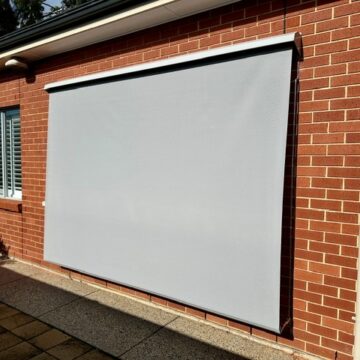
4. Outdoor Roller Blinds (Side-Channel, No Zip)
A side-channel roller blind sits in slim aluminium guides but, unlike Ziptrak-style systems, the fabric isn’t welded to a zipper. Instead, a weighted bottom rail keeps the cloth tensioned while nylon brush seals in the channels cut draught and light bleed. Fewer moving parts mean a leaner price tag and easier DIY, yet you still get a clean, almost-flush look.
How They Differ from Zip Systems
- Fabric edges slide freely inside “U” channels — no welded spline.
- Tension relies on gravity and the bottom bar, not a spring-loaded top tube.
- Small gaps appear in strong cross-winds, so insect sealing is partial rather than total.
Material & Durability Notes
Choose 90–95 % mesh for airflow or acrylic canvas for weather block. Demand stainless-steel screws and brackets in coastal suburbs; galvanised hardware rusts within a season on Adelaide’s beachside patios.
Pros, Cons & Where to Install
Pros: wallet-friendly, neat profile, easy fabric replacement.
Cons: moderate wind rating, small light gaps.
Best suited to pergolas, verandahs and semi-sheltered courtyards where bug-tight sealing isn’t critical but budget is.
5. Crank-Operated Bistro Blinds
If you like the café look but want something sturdier than rope-and-pulley drop sheets, crank-operated bistro blinds hit the sweet spot. Turn the detachable handle, a small gearbox does the lifting, and the panel glides up or down without cords that tangle or breach child-safety rules.
Overview & Operation
A sealed gearbox sits inside the top tube; rotating the crank winds the fabric evenly, while a heavy bottom rail keeps it taut. Because the handle detaches, nothing hangs in the breeze when the blind is parked.
- Materials & Style Options
Choose crystal-clear PVC for winter warmth, 90 % mesh for summer shade, or striped acrylic canvas for a heritage verandah. Powder-coated brackets match Colorbond colours.
Advantages & Drawbacks
- Pros: simple mechanism, easy to repair, no electricity required.
- Cons: you need clearance to swing the crank, and constant manual winding can become tedious on spans over 3.5 m.
6. Motorised Retractable Blinds
Press a button and the blind glides down, locks off exactly where you want it, then tucks away when the clouds roll in—that’s the everyday convenience automation brings. For big spans, upstairs balconies or anyone with dodgy shoulders, motorised outdoor patio blinds turn an occasional luxury into a practical upgrade.
What Counts as “Motorised”
A compact tubular motor lives inside the top tube and does the lifting. Options include:
- 240 V hard-wired motors (quietest, longest life)
- 12 V DC battery packs you recharge every few months
- Solar-charged batteries that sip power from an on-tube panel
All pair with a handheld remote, wall switch or smart-home hub.
- Smart Controls & Weather Sensors
Upgrade modules let the blind:
- Auto-raise in high wind via a built-in accelerometer
- Lower when the sun hits 25 °C on the patio
- Obey “Hey Google, close the blind” voice commands
Great for protecting furniture and keeping pets cool while you’re at work.
Worth-It Scenarios & Downsides
Ideal when:
- Spans exceed 3.5 m
- Daily use is frequent
- Accessibility is an issue
Possible drawbacks: higher upfront cost, battery packs needing periodic charging, and you’re sunk if the power goes out without a manual override.
7. Drop-Arm Awnings
Need shade on an upstairs window or a tight city balcony where a straight-drop blind would crash into the balustrade? A drop-arm awning projects the fabric outwards on spring-loaded arms so you still see out while stopping harsh midday sun from cooking the glass. When retracted it rolls away into a slim headbox.
How They Work
- Fabric wraps around a top tube.
- Twin arms (usually 900–1 200 mm long) pivot down, pushing the cloth to roughly 45–60 °.
- Internal springs keep tension so the awning doesn’t flap.
Solution-dyed acrylic canvas or high-density mesh; optional scalloped valance for federation homes.
Pros & Cons
Pros: excellent glare block, airflow underneath, suits upper levels.
Cons: limited wind resistance—should be retracted in strong gusts; projection depth fixed by arm length.
8. Folding-Arm Awnings (Retractable Awnings)
When you want café-style shade without posts cluttering the deck, a folding-arm awning delivers. The cassette mounts to the wall or fascia, and articulated arms push the fabric out in one smooth sweep, creating an instant roof that disappears at the touch of a button or a few turns of a crank.
Functional Overview
- Twin or triple spring-tensioned arms keep the cloth taut.
- Pitch can be set from 5 ° to about 45 °, so rain runs off.
- Wind sensors are often added to auto-retract in sudden gusts.
- Fabric & Frame Options
Solution-dyed acrylic (280–320 gsm) is standard—UV-stable, water-repellent and mould-resistant. Frames are powder-coated aluminium with stainless fixings; premium models offer Dulux Duratec for coastal sites.
Good & Bad
Pros: huge shade area, no ground posts, quick to stow.
Cons: needs solid fixing (rafters or brick), limited use in high winds, higher upfront cost than straight-drop blinds.
9. Vertical Conservatory Blinds (Outdoor Drapes)
Think of vertical conservatory blinds as outdoor curtains on steroids: heavy-duty fabric panels that slide sideways to turn an open pergola into separate, weather-managed “rooms” on demand.
Description
Panels hang from an aluminium overhead track and run on nylon rollers; a bottom guide keeps them from flapping, and magnetic strips or zips join adjoining panels for a near-seal.
Material & Hardware
Outdoor-rated polyester, acrylic canvas or 95 % mesh fabrics are common; stainless-steel carriages and anodised tracks prevent corrosion in coastal suburbs.
Pros & Cons
Pros: flexible space division, good lateral wind block, modern drape aesthetic. Cons: needs clear floor path, more effort to open than roller varieties, marginal rain protection at panel joins.
10. Aluminium Venetian Patio Blinds
Aluminium venetians bring indoor-style tilt control outdoors, stopping heat before it reaches your patio doors and windows.
What They Are
80–110 mm curved slats descend from a slim headbox, ride on Kevlar lift tapes and tilt 0–90° via crank or motor.
Materials & Weather Performance
Powder-coated aluminium shrugs off rust and copes with winds to ~120 km/h. Stainless screws and UV-stable cords safeguard coastal homes.
Advantages, Disadvantages & Ideal Uses
- Pros: precise daylight control, added insulation, fully retractable
- Cons: premium cost, needs 200 mm recess, slight rattle if half-open in gusts
- Ideal for west-facing sliders, upstairs glazing and passive-solar builds
11. Bamboo & Woven Timber Blinds
Warm bamboo and woven timber blinds instantly soften brick or concrete patios, giving a Balinese feel for pocket-change.
Overview
Thin canes are stitched into mats that roll up via a rope cleat or small crank, leaving dappled light and welcome airflow.
Finish & Sustainability
Opt for UV-sealed, FSC-certified timber; a quick coat of exterior oil each spring wards off mould and fading.
Pros & Cons
- Eco-friendly natural look
- Lightweight, easy DIY
- Limited rain protection
- 4–6-year lifespan
12. External Shutters (Aluminium or PVC)
Sometimes you want a barrier that’s more solid than fabric and still looks smart from the street. External louvre shutters tick that box, giving you an adjustable wall that blocks sun, noise and opportunistic intruders in one hit. Panels can be fixed, hinged, sliding or bi-fold, so they suit everything from balcony balustrades to ground-floor alfresco kitchens.
Material Differences
- PVC: lighter, budget-friendly; however, may fade or warp above 45 °C, so avoid dark colours on north facades.
- Aluminium: marine-grade alloy, cyclone-rated up to 220 km/h; choose Dulux Duralloy (metro) or Duratec (coastal/high-UV) powders.
Pros & Cons
Pros
- Year-round privacy and security
- Excellent heat and noise insulation
- No fabric to tear or discolour
Cons
- Not retractable—panels always visible
- Heavier weight demands solid fixing substrate
- Higher price than most outdoor patio blinds
13. Pergola / Skylight Shade Blinds
A patio roof that’s all polycarb or glass looks stunning but can turn your deck into a hotbox by 10 am. Horizontal shade blinds solve the problem by sitting underneath the rafters and sliding back when you want the sky view. Because they’re tensioned, they won’t sag or flap overhead, and you can retrofit them to most existing pergolas.
What They Are
- Fabric panels run on stainless-steel cables or aluminium guide rails.
- Spring or motor tension keeps the cloth flat, so rain doesn’t pool.
- Stack neatly at one end, reclaiming 80-90 % of the opening.
- Material Options
- Acrylic block-out for glare and light rain.
- Waterproof PVC for full weather seal.
- 95 % mesh for heat without darkness.
Pros & Cons
Pros: controls overhead heat, protects furniture, hidden when open.
Cons: installation above head height, higher cost than vertical blinds, motorisation almost essential on spans over 3 m.
14. Zip-Insect Screen Blinds
When dusk hits, nothing ruins a barbie faster than swarming mozzies. Zip-insect screen blinds turn the patio into a bug-free room without killing airflow.
Overview
They mirror Ziptrak® hardware: mesh is welded to zips that slide inside tracks, locking tight on all sides.
Mesh Specs & Transparency
Standard 0.8 mm aperture blocks midges; darker charcoal yarns improve outward view and slash glare on bright days. BAL-rated fibreglass options are available for bushfire zones.
Advantages & Limitations
- Stops bugs, debris, light rain
- 95 % airflow
- Limited privacy at night
- Higher cost than basic mesh rollers
15. Outdoor Patio Blind Price Guide: Budget, Mid-Range & Premium
Sticker shock is real, so here’s a realistic look at what outdoor patio blinds cost in South Australia today. Use the figures as a ball-park only—custom sizes, tricky sites and motorisation swing the numbers fast.
Factors That Push Prices Up or Down
- Non-standard powder-coat colours (+10–15 %)
- Headboxes/pelmets (+$200–$500each)
- BAL-rated or high-wind fabric (+$20–$40 / m²)
- Scaffold or second-storey access (+$600+)
DIY vs Professional Installation
DIY can chop 30–40 % off labour, but you’ll need:
- Accurate laser measure, angle grinder, impact driver
- Two people to lift wide tubes safely
- Confidence drilling into brick, steel or timber.
Manufacturer warranties often halve for DIY slip-ups, so weigh the risk.
Ongoing Costs
Budget $20 a year for gentle detergent and silicone spray, plus:
- Motor battery replacement every 5–7 years (~$180)
- Tubular motor swap at 15–20years (~$600)
- Fabric restitching or panel swap at 6–8 years depending on UV exposure.
16. Material Comparison Cheat Sheet
Before you hand over a deposit, stop and sanity-check the fabric or substrate being specked. The right material makes the difference between five stress-free summers and a limp, faded rag hanging off your beam. The quick notes below compare the five most common options used in outdoor patio blinds around Adelaide.
- PVC – clear vs tinted: Crystal-clear sheets let through up to 90 % visible light and trap radiant heat; great for winter warmth but sauna-like in January. Light-smoke tints cut glare by ~20 % and hide fingerprints better. Always rinse grit first, then wash with a soft microfibre cloth to dodge hair-line scratches.
- Mesh (75 %, 90 %, 95 % openness): The larger the number, the tighter the weave and the more shade and privacy you gain—95 % mesh can drop patio temps by 7 °C. Look for BAL-rated polyester/PVC blends if you’re in a bushfire zone.
- Canvas / Acrylic: Solution-dyed acrylic sheds water, keeps colours bright for a decade and resists mildew when it can breathe. Traditional cotton canvas is cheaper but soaks up rain and rots quickly.
- Aluminium: Slats or shutters rely on a robust powder coat—Dulux Duralloy is fine inland, but splash out on Duratec for coastal salt spray.
- Timber/Bamboo: Seal edges with exterior varnish and oil the face every spring. Expect minor cupping with seasonal humidity swings.
| Material | Best For | Lifespan* | Approx. $/sqm | Key Con |
|---|---|---|---|---|
| Clear PVC | Winter cafés | 4–6 yrs | $40–$55 | Heat build-up |
| 95 % Mesh | All-round patios | 8–10 yrs | $55–$75 | Limited rain block |
| Acrylic Canvas | Full weather block | 10 yrs | $70–$90 | Heavier, needs stronger fixings |
| Aluminium | Security & cyclone areas | 15 yrs+ | $140–$200 | Higher upfront cost |
| Bamboo | Budget, tropical look | 4–6 yrs | $30–$45 | Short lifespan in rain |
*Typical Adelaide metro conditions, south-facing aspect.
17. Expert Buying, Installation & Care Tips
Before you tap “Buy Now” or book an installer, run through the following checklist. A few minutes with a tape and notepad now will save hours of grief and warranty wrangling later.
Measure Twice, Cut Once
- Measure width at top, middle and bottom; note the smallest figure.
- Check height on both sides – falls more than 10 mm hint at a wonky slab.
- Allow 2–3 mm clearance for brackets and track powder coat thickness.
Patio Orientation & Climate Checklist
- North/West façades: favour 95 % mesh or aluminium slats for harsh afternoon sun.
- Coastal sites: marine-grade powder coat, stainless screws, wind-rated tracks.
- Hills & bushfire zones: BAL-rated fabrics and ember-proof apertures < 2 mm.
Safety & Compliance
- Child-safe crank handles or tensioners are mandatory under ACCC regulations.
- Hard-wired motors must be installed by a licensed sparky; keep compliance certificate.
- Check council rules for boundary fences—some limit awning projection.
Cleaning & Maintenance Routine
- Monthly dust with a soft broom.
- Quarterly wash: mild detergent, hose rinse, air-dry before rolling.
- Annual inspection: tighten loose screws, spray silicone on moving parts.
When to Upgrade to Motorisation
- Spans wider than 3.5 m.
- Daily use (morning coffee, evening shut-down).
- Users with mobility or shoulder issues.
Common Mistakes to Avoid
- Under-specifying wind rating for open decks.
- Fixing into single brick without chem-set anchors.
- Choosing pale mesh for privacy—go charcoal instead.
Your Patio, Your Rules
With 17 styles, price tags from DIY $120 to fully-installed $4 k, and materials spanning clear PVC to cyclone-rated aluminium, the right outdoor patio blinds are the ones that solve your patio’s unique mix of sun, wind and privacy issues. Grab a tape, note your aspect and set a realistic budget—then let the specialists fine-tune the details. Adelaide locals can book a free measure-and-quote with Classic Roller Shutters Adelaide and turn those ideas into shade that works.