Precise, made-to-measure curtains turn an ordinary window into a tailored architectural feature. A dedicated custom curtains service doesn’t simply sell fabric; it measures every reveal and architrave, cuts each panel to the millimetre, then returns to hang the finished drapes so they skim the floor perfectly and glide without snags. That full-circle approach is why Adelaide homeowners and businesses search for specialists rather than wrestling with off-the-shelf packets.
Perhaps you’re comparing prices, wondering how the process works, or still undecided on linen versus triple-weave blockout. Stay with us. This guide unpacks the real difference between custom and ready-made, walks you through measuring, fabric choice and hardware, weighs up local providers, breaks down costs, and finishes with care tips so your curtains look showroom-fresh for years. By the end you’ll know exactly what to ask, what to spend and who to call.
Custom Curtains vs Ready-Made: Understanding the Real Difference
Adelaide’s building stock swings from sandstone cottages with narrow sashes to loft-style apartments with three-metre ceilings. Off-the-shelf packets are cut to average dimensions, so they often puddle on a villa’s floor or leave daylight slivers around a cottage casement. A made-to-measure or custom curtains service, by contrast, starts with your exact window geometry and finishes with a clean, tailored drop that looks built-in.
When locals compare the two options, the same questions pop up:
- How much more do custom curtains cost?
- Will I wait months for them?
- Is the quality noticeably better?
- Do tailored drapes add resale appeal?
The answers come down to four areas.
Dimensions & Fit
Ready-made panels follow standard width increments (most commonly 140 cm) and fixed drops. That’s fine for a basic sliding door, but a bay window with three angles or a heritage architrave needs millimetre accuracy. Custom work removes side-light gaps, aligns patterns across joins and sets the hem 10–15 mm above the floor for a floating, accident-proof finish.
Design Flexibility
With bespoke production you dictate every element: S-fold header for a sleek hotel look, double tracks for day-night layering, contrast bands, even motorisation that links to a smart hub. Ready-made ranges are limited to a handful of fabrics and eyelet or pencil pleat tops—take it or leave it.
Quality & Longevity
Custom makers source higher-grade fabrics, reinforce stress points and install aluminium or powder-coated steel tracks built for daily use. Added linings combat Adelaide’s high UV index, slowing fade and boosting insulation, so replacements are pushed years down the road.
Budget Considerations
Yes, the upfront invoice is steeper—often 1.5–3 × a retail packet. But factor in reduced energy bills, fewer replacements and the premium look buyers notice during open inspections, and tailored curtains frequently out-punch ready-made on total lifetime value.
The Made-to-Measure Process in Adelaide: Step by Step
Booking a custom curtains service isn’t mysterious; it’s a clearly staged journey that turns sketches and swatches into perfectly hung drapes. Knowing each phase—and the questions to ask—lets you stay in control, compare suppliers on equal footing, and avoid last-minute surprises. Here’s how most reputable Adelaide makers run the show from first hello to final steam.
Initial Consultation & Measuring
The process usually starts with a free in-home visit or a showroom chat. A consultant will confirm the window type (reveal, face-fix, or ceiling-flush), check wall construction, and note clearance for tracks or rods. They’ll measure width and drop in three spots, jotting the longest figure to offset uneven floors and ceilings common in older SA cottages. New-build owners can fast-track this step by emailing floor plans; many firms, including factory-direct outfits, quote straight off the drawings so the curtains are ready as soon as you get the keys.
Selecting Fabrics, Linings & Hardware
Swatch books come out next. Think function first—block-out polyester blends for dark bedrooms, breezy linen-look sheers for coastal light, or a layered combo for flexible privacy. Discuss linings that boost thermal insulation; they’re worth it given Adelaide’s 40 °C summers and chilly winter nights. Hardware options range from square-edged decorator rods that make a statement to ceiling-recess tracks that disappear. If you’re eyeing home automation, this is when motorised rails and smart-home compatibility (Google Home, Alexa) are spec’d.
Quotation, Lead Times & Local Manufacturing
With measurements and specs confirmed, you’ll receive an itemised quote listing fabric metreage, trimming, labour, hardware, and installation. Average turnaround for locally sewn curtains is three to six weeks; urgent jobs can be hustled through in as little as ten days, although express surcharges apply. Adelaide-based manufacturing is a bonus—besides supporting SA jobs, it shortens freight delays and simplifies warranty claims if anything needs tweaking.
Professional Installation Day
Installers arrive with pre-pressed panels, tracks cut to length, and the right fixings for brick, timber, or steel studs. They level and secure the hardware, hang each drop, steam out fold lines, and check the hem floats 10–15 mm above the floor. Motorised sets are paired with remotes and, if requested, programmed into your smart hub before they leave. Finish with a walk-through: confirm stack-back clearance, test every glide, and keep the care sheet for future cleaning. In under an hour most rooms look like a magazine shoot, no ladders or headaches for you.
Choosing Fabrics, Headers and Styles That Suit Your Space
Adelaide homes cop blazing summer suns, winter draughts and a dust-laden northerly now and again, so fabric and style choices have to be more than pretty—they must work hard. The beauty of a custom curtains service is that you can cherry-pick every element to handle local conditions while matching your decor. Use the guide below to narrow options before the consultant turns up with an armful of swatches.
Fabric Types Adapted to Adelaide’s Climate
Not all textiles behave the same once the mercury climbs past 38 °C. Here’s a quick cheat-sheet:
| Fabric | Insulation Rating (★ out of 5) | Fade Resistance | Care Level |
|---|---|---|---|
| Cotton | ★★ | Medium | Machine-washable, may shrink |
| Linen | ★★★ | Good | Dry-clean for shape retention |
| Velvet (cotton blend) | ★★★★ | Fair | Professional clean, vacuum regularly |
| Poly-blend (triple weave) | ★★★★ | Excellent | Easy wipe or gentle wash |
Key takeaways: go light (cotton, linen) for airflow in coastal suburbs, step up to triple-weave polys inland where UV is harsher, and reserve plush velvet for formal rooms with less direct light.
Light Control: Sheer, Blockout & Layered Solutions
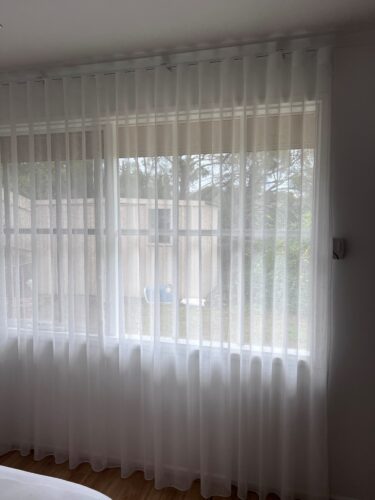
- Sheer panels filter glare while keeping views; perfect for open-plan living.
- Blockout fabrics—especially hotel-grade triple weave—darken bedrooms and boost thermal performance by up to 30 %.
- Day-night double tracks combine both: draw the sheer during daylight; slide the blockout at dusk for privacy and insulation. This layered approach is the most requested upgrade in Adelaide showrooms.
Header Styles Explained (S-Fold, Pencil Pleat, Pinch Pleat, Eyelet)
- S-Fold / Wave: Continuous ripples, 100 % fullness, minimal stack. Modern apartments, recessed tracks.
- Pencil Pleat: Thin, gathered folds, 150 % fullness. Budget-friendly, suits casual family areas.
- Pinch Pleat (Double/Triple): Stitched “pinches” every 10–12 cm, 180–220 % fullness. Classic villas, formal dining.
- Eyelet: Metal rings slide on a rod, 130 % fullness. Quick to open, ideal for kids’ rooms but needs extra width to close tightly.
Colour & Pattern Tips That Add Value
Neutral tones—stone, warm white, dove grey—appeal to future buyers and won’t fight with evolving furnishing trends. If the room lacks personality, introduce a vertical stripe or botanical print as the hero; keep walls and larger furniture muted so the drapes shine without overpowering. Whichever palette you choose, ask for UV-stable dyes or fade-resistant lining; South Australia’s sun can bleach unprotected reds and blues within a single summer.
Cost Breakdown: What Influences the Price of Custom Curtains?
Sticker shock is common when quotes arrive, but once you see the moving parts behind a custom curtains service the figures make sense. Think of the total as four stacked layers—fabric, workmanship, hardware and installation—each affected by choices you control.
Fabric Grade and Meterage
Fabric is usually the single biggest line item, charged by the metre. Price swings are wide:
- Entry-level poly blends: $35–$55 / m
- Mid-range Australian linens and cottons: $60–$90 / m
- Designer imports or velvet: $100–$250 / m
Extra-wide rolls (280 cm) reduce vertical joins but cost more per metre; tall windows or double fullness quickly multiply the required length.
Labour and Tailoring Complexity
Sewing isn’t just straight seams. Pattern matching across wide prints, adding interlining for insulation, or hand-stitched pinch pleats each add labour hours. Expect:
- Standard S-fold production: ≈ $70 per drop
- Triple pinch pleat with hand finishing: $110–$140 per drop
Oversized or shaped windows (arches, bays) incur drafting surcharges because every panel is cut to a unique template.
Hardware, Tracks & Motorisation
A decorator rod from Bunnings might be $40, but purpose-built aluminium tracks powder-coated to match your walls start around $90 per metre installed. Upgrade paths:
- Double ceiling recess track: add +30 %
- 240 V motor with remote: $400–$650 per opening
- Smart-home hub integration: $120–$200 once-off
Installation, Travel & After-Care
Professional fitters level, steam and fine-tune every glide. Typical call-out in metro Adelaide is $120–$180, rising for multi-storey ladder work or regional travel. Some companies bundle a first-year adjust-and-steam service; others charge $75–$100 for post-settling tweaks.
Saving Money Without Sacrificing Quality
- Choose a mid-priced fabric with premium lining; it looks luxe but halves the textile bill.
- Order multiple rooms at once—factory-direct makers often slice 5–10 % for volume.
- Stick to standard headings (S-fold, pencil pleat) and straight tracks to trim labour hours.
- Schedule installation in winter when workrooms are quieter; off-season promos are common.
Understanding these levers lets you tailor both the drapes and the budget to suit your space.
How to Measure Windows Correctly: A DIY Checklist
Even if you plan to book an Adelaide installer later, taking accurate preliminary sizes will save time, avoid quote revisions, and flag any tricky details before fabric is ordered. The process is straightforward but unforgiving—1 mm off on paper can translate to a 10 mm daylight gap on the wall. Follow the checklist below and you’ll hand your custom curtains service figures they can trust.
Tools You’ll Need
- Metal tape measure (5 m or longer)
- Step ladder for ceiling-height reveals
- Notebook or phone to record each window separately
- Pencil for marking centre lines
- Laser level or spirit level (optional but handy for period homes with wonky ceilings)
Inside Mount vs Outside Mount
First decide where the curtain will sit:
- Inside mount (reveal fix) tucks the track within the architrave for a clean, architectural look. Best suited to modern build tolerances and flush reveals.
- Outside mount (face fix or ceiling fix) places the track above or in front of the frame, visually widening the window and blocking more light. It’s the go-to for heritage sash windows and situations where the reveal is too shallow for tracks.
Mark the chosen position before you start measuring—every dimension flows from that point.
Width and Drop: Step-by-Step Method
- Measure the width of the track or frame in three spots (top, middle, bottom). Record the widest number.
- Add stack-back allowance for outside mounts:
track width × 0.30= extra each side for S-folds,0.20for pleats. - Measure the drop from the track position to:
- 15 mm above floor for a “float” finish, or
- 25–50 mm below sill if stopping at the ledge.
- Repeat the drop on the left, centre and right; jot down the longest.
- Note obstructions—air-conditioning heads, power points, skirting heaters—on your sketch.
Common Measuring Mistakes in Period & New Build Homes
- Forgetting ceiling cornice depth and ordering tracks that won’t clear ornate mouldings.
- Measuring from existing rod height instead of the planned ceiling-fix point, shortening the visual height of new builds.
- Ignoring uneven floors in villas; always record the longest drop to prevent puddling on one side.
- Skipping stack-back math for French doors, resulting in curtains that block glass when open.
Double-check everything once; it’s cheaper than remaking fabric later.
Local Providers Snapshot: Comparing Adelaide Custom Curtain Services
Before you book the first name that pops up in Google, it pays to know who does what in Adelaide’s custom-curtain scene. Providers generally fall into four buckets, each with its own balance of price, design help and after-sales support.
Factory-Direct Manufacturers
These outfits own the workroom and often the installers too, slashing middle-man margins and shortening lead times.
- Classic Roller Shutters Adelaide – Locally sewn curtains and blinds, free in-home quote, on-site repairs if anything snags later.
- Southside Textiles – Long-running Edwardstown factory specialising in wide-width linens.
- Brighton Curtain Co. – Focus on budget-friendly triple-weave polys, three-week turnarounds.
Interior Design Studios & Boutiques
Ideal if you want a full room makeover and access to exclusive European mills.
- Harbour & Vale Interiors – Bespoke pleats, colour consultations, furniture packages.
- East End Drapery House – Heritage specialists; will match trims to ornate cornices.
Expect higher design fees and six-week production but a truly curated finish.
Online-Order Platforms Delivering to SA
Low-touch, budget-led options where you self-measure, pick fabrics online and receive boxed panels.
- CurtainsDept.com.au – Upload sizes, free fabric samples, no installer.
- QuickFit Blinds & Curtains – Ten-day dispatch on basic eyelets and S-folds.
Great for DIY types; riskier for irregular windows.
At-Home Consultation Specialists
Mobile showrooms bring swatches to you—handy for busy families.
- Curtain Concierge SA – Evening appointments, on-the-spot quotes.
- WindowStyle Express – Packages curtains, blinds and plantation shutters in one visit.
Quick Comparison Table
| Provider Type | Typical Lead Time | Price Bracket | In-Home Measure? | Installation Provided? | Stand-out Feature |
|---|---|---|---|---|---|
| Factory-Direct | 3–4 wks | $$ | Yes | Yes | Lower mark-ups, local warranty |
| Design Studio | 5–7 wks | $$$$ | Yes | Yes | Interior styling expertise |
| Online Platform | 1–2 wks dispatch | $ | No | No | Cheapest, widest fabric choice online |
| Mobile Specialist | 4–5 wks | $$$ | Yes | Yes | After-hours consults |
Use the matrix to match your priorities—speed, budget, or designer input—to the right custom curtains service.
Care, Maintenance & Warranty for Long-Lasting Drapes
Well-made curtains are an investment, but like all furnishings they need sensible upkeep to keep looking crisp and hanging true. A few minutes each week plus the right cleaning schedule will stretch fabric life, protect colour against Adelaide’s fierce UV, and keep tracks sliding like new.
Daily Habits to Reduce Dust & UV Damage
- Give closed curtains a gentle shake when you open them each morning to loosen surface dust.
- Run the soft-brush vacuum attachment along the fabric and heading once a week, moving from top to bottom so particles fall away.
- In rooms with direct western sun, angle blinds or shade sails outside to take the sting out of late-afternoon rays and slow fading.
- Rotate tie-backs or hold-backs periodically; constant pressure in one spot can crease fibres over time.
Washing, Dry-Cleaning & Steam-Cleaning Guidelines
Check the maker’s label before you reach for detergent.
- Machine-washable cottons and poly blends: cold cycle, mild soap, line dry to avoid shrinkage.
- Linen, velvet and interlined drapes: professional dry-clean only—domestic machines distort pleats and melt blackout coatings.
- A handheld steamer on low setting freshens panels in situ; keep the head 10 cm away to prevent watermarking. Always test on a back hem first.
Repairing Tracks, Linings & Hem Drop
Minor issues rarely call for a full service call.
- Re-hook pleats that pop free; spare hooks usually sit inside the track return.
- Replace broken gliders or end stops—most Adelaide hardware stores stock universal parts that clip straight in.
- If hems sag after seasonal humidity, a quick press with a damp cloth and cool iron will reset the crease; stubborn drops may need the installer to shorten 5 mm.
Warranty Terms to Look For
Reputable custom curtains services include:
- 3–5 year fabric fade warranty, excluding accidental damage or improper cleaning.
- Lifetime guarantee on aluminium tracks and headings against mechanical failure.
- One-year labour cover for installation tweaks—ask if this includes a complimentary re-steam.
Keep invoices and care instructions; warranty claims almost always require proof of purchase and evidence of correct maintenance.
Quick Answers to Frequent Questions
- How long do custom curtains take from order to install?
Most Adelaide makers quote three to six weeks from final measure to hang day; an express custom curtains service can compress that to 10–14 days for a surcharge. - Are custom curtains worth it for rental properties?
Yes. Durable fabrics and perfect fit mean fewer replacements between tenancies and higher perceived value, which can nudge weekly rent upward. - Can I install them myself?
If you’re handy with a drill and laser level, DIY is possible, but professional installers guarantee perfect leveling, steam out creases and keep warranties intact. - Do I need council approval for motorised systems?
No. Motorised tracks are classed as low-voltage fixtures, so they don’t require planning consent; a licensed electrician is needed only for hard-wired units. - What is the average cost per window in Adelaide?
A standard 1.8 m wide × 2.4 m drop window finished in mid-range block-out fabric, S-fold header and face-fix track runs around $750–$1,000 fully installed.
Ready to Transform Your Windows?
Custom curtains do more than dress a window; they sharpen architecture, stabilise room temperatures and inject instant polish. You now know how they differ from packets on a shelf, what drives the price tag, how to measure like a pro and which Adelaide providers tick your boxes. The last step is choosing a team that will cut, sew and install with the same care you put into planning.
If you’re keen to see fabrics in your own light and get an obligation-free quote, book a mobile consultation with the local specialists at Classic Roller Shutters Adelaide. Their factory-direct model keeps costs fair, their installers handle everything—including motorisation—and their after-care crew is on call should a track ever squeak. Pick a time, grab your swatches and let made-to-measure curtains turn those bare panes into your home’s best feature.