Choosing the right window coverings for your home feels overwhelming when you’re faced with dozens of options. You want something that looks good, blocks light when you need it, offers privacy, and fits your budget. But how do you know which type of blind will actually work for your windows?
This guide breaks down nine different types of blinds and window coverings available in Australia. You’ll find out what each one is, how it works, where it suits best, and what you can expect to pay. We cover everything from roller shutters and roller blinds to venetian, roman, honeycomb, vertical, panel glide, outdoor blinds, and plantation shutters. Each section includes the key benefits, drawbacks to consider, and ideal applications so you can make an informed decision for your Adelaide home.
1. Roller shutters
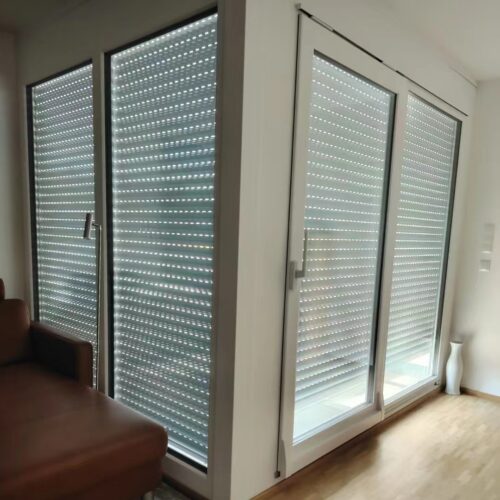
When you explore the different types of blinds for windows, roller shutters stand out as the most heavy-duty option. Unlike lightweight fabric blinds, these solid aluminium panels roll down from an external housing box mounted above your window. They create a complete barrier between your glass and the outside world.
What roller shutters are
Roller shutters consist of interlocking aluminium slats that wind up and down along guide tracks mounted on each side of your window frame. You operate them using a manual strap, crank handle, or electric motor. The slats lock together when fully lowered, forming a rigid protective barrier. Most Adelaide homes install them on the outside of the window frame, though internal versions exist for specific applications.
Key benefits of roller shutters
You get maximum security protection against break-ins, as the locked slats make it extremely difficult for intruders to access your windows. They also provide superior insulation by creating an air gap between the shutter and your glass, which reduces heat transfer by up to 90%. Storm protection comes standard, shielding your windows from hail, flying debris, and high winds. Complete light blockage makes them ideal for shift workers or anyone who needs total darkness.
Roller shutters offer unmatched protection and insulation that no fabric blind can match.
Drawbacks to consider
The initial investment can run slightly higher than other blind types, particularly when you choose a remote motorised operation. Installation requires more work since you need external mounting brackets and guide tracks fitted to your home’s exterior with roller shutters. Some people find the external box housing affects their home’s appearance. Manual shutters can feel cumbersome to operate on large windows and they are a complex installation with electric models need power nearby.
Best rooms and window types
Bedrooms benefit most from the complete darkness and noise reduction roller shutters provide. Ground-floor windows facing the street gain crucial security protection. Western and northern-facing rooms in Adelaide experience significant temperature control improvements. They suit standard windows, sliding doors, and large window banks equally well.
Roller shutter costs in Adelaide and SA
Expect to pay between $900 and $1800 per standard window for manual roller shutters in Adelaide. Motorised versions increase the cost to $1300 to $2100 per window depending on size and features. Larger openings like sliding doors range from $1,200 to $2,500. These prices include professional installation and typically come with a warranty on both materials and workmanship.
2. Roller blinds
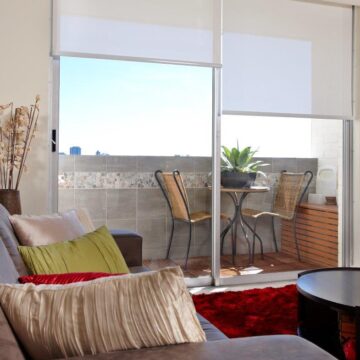
Among the different types of blinds for windows, roller blinds remain one of the most popular choices for Australian homes. These lightweight fabric window coverings offer a clean, minimalist look that suits both modern and traditional interiors. You’ll find them installed inside the window frame or mounted on the wall above.
What roller blinds are
Roller blinds consist of a single piece of fabric wrapped around an aluminium tube at the top of your window. You operate them using a chain mechanism on the side, or you can upgrade to motorised versions controlled by remote or smart home systems. The fabric comes in various weights and opacity levels, from sheer and sunscreen fabrics that filter light whilst maintaining views, to blockout materials that eliminate virtually all light.
Key benefits of roller blinds
You get excellent value for money with roller blinds compared to other window covering options. They’re simple to clean with just a damp cloth or light vacuum, making maintenance straightforward. The vast selection of fabrics, patterns, and colours means you can match any interior design scheme. Their compact profile takes up minimal space when raised, leaving your window frame clear.
Roller blinds give you style and function without breaking your budget.
Drawbacks to consider
Light gaps appear along the sides where the fabric doesn’t quite meet the window frame, which reduces privacy and light control. Bottom rails can bang against the window frame in breezy conditions unless you install proper weights or magnets. Fabric materials offer less insulation than solid options like roller shutters, and they gradually fade when exposed to intense sunlight over several years.
Best rooms and window types
Kitchens benefit from the water-resistant fabric options available in roller blinds. Bathrooms suit them perfectly because you can wipe them down easily. Living rooms and bedrooms work well when you layer roller blinds with curtains for enhanced light control. They perform best on standard rectangular windows rather than unusual shapes.
Roller blind costs in Australia
Standard manual roller blinds cost between $150 and $400 per window depending on size and fabric quality. Motorised versions increase the price to $300 to $700 per window. Blockout fabrics typically cost more than sunscreen or light-filtering options. Installation fees range from $50 to $100 per blind if you don’t tackle it yourself.
3. Vertical blinds
When you’re comparing different types of blinds for windows, vertical blinds present a practical solution for large window expanses and sliding doors. These vertically-hung fabric or PVC vanes rotate and stack to one or both sides, making them particularly suited to wide openings where horizontal blinds would prove impractical.
What vertical blinds are
Vertical blinds feature individual slats called vanes that hang from a track mounted at the top of your window or door opening. You control them using a cord or wand mechanism that rotates the vanes for light adjustment and slides them across for access. The vanes come in fabric, PVC, or aluminium materials, typically measuring 89mm or 127mm in width.
Key benefits of vertical blinds
You gain effortless operation on large openings because the vanes simply slide across rather than lifting heavy material. They provide excellent light control through the rotating vane mechanism, letting you direct sunlight without fully opening the blind. Maintenance stays simple since you can remove individual vanes for cleaning or replacement.
Drawbacks to consider
The vanes can tangle in windy conditions when windows remain open, creating noise and potential damage. They accumulate dust quickly along the track and between vanes. Light leakage occurs at the top and sides where the vanes meet the track. Some people find the aesthetic dated compared to modern roller or panel blinds.
Best rooms and window types
Sliding glass doors suit vertical blinds perfectly because the sideways operation matches the door movement. Large window banks in living rooms benefit from their coverage capability. They work well for commercial spaces that need cost-effective coverage for expansive glazing.
Vertical blind costs in Australia
Standard vertical blinds cost between $200 and $500 per opening depending on width and material quality. PVC vanes run cheaper than fabric options. Installation adds $80 to $150 to the total cost for professional fitting.
4. Venetian blinds
Among the different types of blinds for windows, venetian blinds have remained a classic choice in Australian homes for decades. These horizontal slatted blinds give you precise control over light and privacy through their tilting mechanism, making them suitable for almost any room in your house.
What venetian blinds are
Venetian blinds feature horizontal slats that stack upwards when you raise them and tilt to adjust light when lowered. You control them using a cord to raise and lower and a separate wand or cord to rotate the slats. The slats come in aluminium, timber, or faux-wood materials, typically measuring 25mm or 50mm in width.
Key benefits of venetian blinds
You gain exceptional light control because the tilting slats let you direct sunlight precisely without fully opening the blind. They’re straightforward to clean with a duster or damp cloth. Timber options add warmth and natural beauty to your interiors, whilst aluminium versions suit moisture-prone areas.
Venetian blinds give you pinpoint control over privacy and natural light throughout the day.
Drawbacks to consider
Slats accumulate dust quickly, requiring regular cleaning to maintain their appearance. Timber versions can warp in high-moisture environments unless you choose treated or faux-wood alternatives. Cords can tangle over time, and some people find the slatted appearance less sleek than roller or panel blinds.
Best rooms and window types
Offices benefit from the glare control venetian blinds provide. Living rooms suit timber versions that complement traditional décor. Bathrooms and kitchens work better with aluminium or faux-wood options that resist moisture. They fit standard rectangular windows best.
Venetian blind costs in Australia
Aluminium venetian blinds cost between $80 and $250 per window depending on size. Timber versions increase the price to $200 to $500 per window. Faux-wood options sit in the middle at $150 to $350. Professional installation adds $50 to $80 per blind.
5. Roman blinds
When exploring different types of blinds for windows, roman blinds offer a softer, more elegant alternative to slatted options. These fabric window coverings fold into neat horizontal pleats when raised, creating a tailored look that bridges the gap between curtains and conventional blinds.
What roman blinds are
Roman blinds consist of a single piece of fabric that folds into even horizontal sections as you raise it using a cord or chain mechanism. The fabric attaches to a headrail at the top and features rods or dowels sewn into the back at regular intervals to create the characteristic pleated appearance. You can choose from various fold styles, including flat, hobbled, or waterfall designs.
Key benefits of roman blinds
You achieve a sophisticated, designer appearance that adds warmth and texture to your interiors. The fabric options span countless patterns, colours, and materials, letting you match any décor scheme perfectly. They provide better insulation than venetian or vertical blinds because the fabric sits closer to the window frame.
Roman blinds bring the softness of curtains with the practicality of blinds.
Drawbacks to consider
Manual cord operation can pose safety risks for children and pets unless you install cordless mechanisms. Fabric materials collect dust and require professional cleaning for best results. They lack the precise light adjustment that slatted blinds offer, giving you only fully raised, fully lowered, or partially lowered positions.
Best rooms and window types
Living rooms and bedrooms benefit from the luxurious aesthetic roman blinds provide. Dining rooms suit them when you want a formal presentation. They work best on standard rectangular windows where the pleating effect shows clearly.
Roman blind costs in Australia
Basic roman blinds cost between $500 and $1,000 per window depending on fabric quality and size. Designer fabrics increase prices to $450 to $900 depending on motor type, wiring, and floor level. Professional installation adds $60 to $100 per blind to ensure proper pleating and operation.
6. Honeycomb blinds
When you compare different types of blinds for windows, honeycomb blinds stand out for their exceptional energy efficiency. These cellular fabric blinds trap air within their distinctive honeycomb-shaped pockets, creating a thermal barrier that keeps your Adelaide home comfortable year-round whilst reducing energy bills.
What honeycomb blinds are
Honeycomb blinds feature fabric cells that form hexagonal pockets when viewed from the side. You operate them using a cord, cordless lift system, or motorised mechanism. The fabric attaches to horizontal rails that allow the blind to expand and contract in a pleating motion. Single-cell versions offer basic insulation, whilst double-cell models provide enhanced thermal performance through two layers of fabric pockets.
Key benefits of honeycomb blinds
You achieve superior insulation compared to most other blind types because the air-trapping cells create an effective barrier against heat transfer. They provide excellent noise reduction, making them ideal for homes near busy roads. The soft, diffused light they create adds ambience to your rooms. Cordless options offer child-safe operation without dangling cords.
Honeycomb blinds reduce your heating and cooling costs whilst creating a comfortable indoor environment.
Drawbacks to consider
The cellular structure accumulates dust that requires regular vacuuming with a brush attachment. Deep cleaning proves difficult because you cannot simply wipe the fabric like roller blinds. Limited fabric patterns mean you get fewer design options compared to roman or roller blinds. Some people find the pleated appearance less sleek than modern roller options.
Best rooms and window types
Bedrooms benefit from the light-filtering properties and thermal control honeycomb blinds provide. Living rooms with large windows gain significant energy savings. They suit standard rectangular windows best, though special shapes are available at premium prices.
Honeycomb blind costs in Australia
Honeycomb blinds cost between $200 and $500 per window depending on cell configuration and size. Double-cell versions increase the price by $50 to $100 per blind. Motorised operation adds $150 to $300 to the base cost. Professional installation runs $60 to $90 per blind.
7. Panel glide blinds
Amongst the different types of blinds for windows, panel glide blinds provide a contemporary solution for expansive openings. These large fabric panels slide smoothly along overhead tracks, creating a clean, architectural look that suits modern Australian homes. You’ll find them particularly effective on wide windows, sliding doors, and room dividers.
What panel glide blinds are
Panel glide blinds consist of wide fabric panels (typically 60cm to 100cm) that hang vertically from a track system mounted at the top of your opening. You operate them using a wand or cord mechanism that slides the panels across, stacking them to one or both sides. Each panel moves independently, allowing you to position them precisely for light control and access.
Key benefits of panel glide blinds
You achieve a sleek, minimalist aesthetic that complements contemporary interiors perfectly. Large expanses of fabric reduce visual clutter compared to vertical blinds with multiple vanes. They glide smoothly and quietly along quality track systems, requiring minimal effort to operate.
Panel glide blinds deliver modern sophistication for wide openings that other blind types cannot match.
Drawbacks to consider
The tracks require regular cleaning to maintain smooth operation as dust accumulates. Fabric panels can obstruct significant portions of your glass even when stacked, reducing available light. Installation costs run higher than standard vertical blinds due to the track system complexity.
Best rooms and window types
Sliding doors and large window walls benefit most from panel glide blinds. Open-plan living areas suit their streamlined appearance. They work brilliantly as room dividers that maintain visual flow whilst creating privacy zones.
Panel glide blind costs in Australia
Panel glide blinds cost between $400 and $900 per opening depending on width and fabric selection. Designer fabrics increase prices to $900 to $1,500. Professional installation adds $120 to $200 to ensure proper track alignment and operation.
8. Outdoor blinds
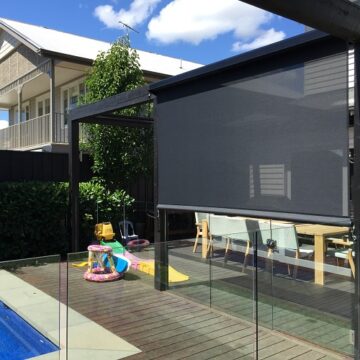
When examining different types of blinds for windows, outdoor blinds deserve special attention as an exterior solution that protects your alfresco areas and outdoor living spaces. These weather-resistant coverings mount outside your home, creating comfortable, protected zones where you can enjoy the outdoors regardless of weather conditions or harsh Adelaide sun.
What outdoor blinds are
Outdoor blinds consist of durable PVC, acrylic, or mesh fabric designed to withstand Australian weather conditions. They mount to the outside of your home’s structure, typically on patios, verandahs, pergolas, or balconies. You operate them using manual straps, crank handles, or motorised systems to roll the fabric up and down. Popular varieties include Ziptrak blinds that use a track-guided system for smooth operation and café-style blinds that roll from the bottom up.
Key benefits of outdoor blinds
You extend your usable living space by creating protected outdoor areas that shield you from sun, wind, rain, and insects. They reduce heat entering your home through windows and doors, lowering cooling costs during Adelaide’s hot summers. Privacy increases for outdoor entertaining areas without sacrificing airflow.
Outdoor blinds transform your alfresco space into a year-round entertainment area.
Drawbacks to consider
Exposure to weather elements means regular maintenance becomes necessary to prevent mould, mildew, and fabric degradation. Strong winds can damage blinds if you don’t retract them during storms. Installation costs exceed indoor blind options due to structural mounting requirements and weather-resistant components.
Best areas and applications
Patios and verandahs benefit most from outdoor blind installation. Balconies gain privacy and weather protection. Pool areas suit mesh options that maintain visibility whilst blocking UV rays. They work brilliantly on pergolas and alfresco dining spaces that need flexible coverage.
Outdoor blind costs in Australia
Outdoor blinds cost between $350 and $800 per opening for manual systems depending on size and fabric type. Ziptrak systems increase prices to $600 to $1,200 per blind. Motorised versions add $200 to $400 to the base cost. Professional installation runs $150 to $300 per blind depending on mounting complexity.
9. Plantation shutters
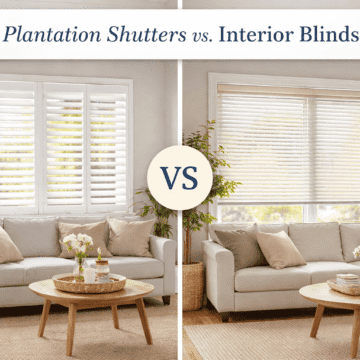
Among all the different types of blinds for windows, plantation shutters represent the premium end of the market. These solid panel window coverings with adjustable louvres offer a permanent, architectural solution that actually becomes part of your home rather than just a window dressing. You’ll find them hinged within your window frames, creating a sophisticated look that stands the test of time.
What plantation shutters are
Plantation shutters feature wide horizontal louvres (typically 63mm to 89mm) mounted within solid frames that attach directly to your window architraves. You control the louvres using a tilt rod or hidden mechanism that adjusts their angle for light control. The panels hinge open like doors, allowing full window access when you want maximum light and airflow. They come in timber, PVC, or aluminium-coated materials designed to suit different environments and budgets.
Key benefits of plantation shutters
You add significant property value to your Adelaide home because plantation shutters are considered a permanent fixture rather than a soft furnishing. They provide superior insulation through the solid frame construction and adjustable louvres that seal tightly when closed. Unlike fabric blinds that deteriorate over time, quality shutters last decades with minimal maintenance.
Plantation shutters are an investment in your home that pays dividends through increased value and lasting appeal.
Drawbacks to consider
The upfront cost substantially exceeds all other window covering options, making them a significant investment. Installation requires precision and professional expertise to ensure proper fitting within your window frames. You cannot easily remove or transfer them if you move houses. Some window configurations don’t suit plantation shutters due to limited frame depth or unusual shapes.
Best rooms and window types
Living rooms and dining rooms benefit most from the elegant, traditional aesthetic plantation shutters provide. Bathrooms suit PVC versions that resist moisture without warping. They work brilliantly on standard rectangular windows with adequate frame depth for mounting.
Plantation shutter costs in Australia
Plantation shutters cost between $600 and $1,200 per square metre depending on material and quality. A standard window typically runs $800 to $1,500 fully installed. PVC versions cost less than timber options, whilst custom colours and finishes increase the price further.
Making your choice
Selecting from the different types of blinds for windows depends on your specific needs, budget, and home style. Consider where you need the most light control, security, or insulation before making your decision. Ground-floor bedrooms might benefit from roller shutters, whilst living rooms could suit roman or plantation shutters for their aesthetic appeal.
Your budget plays a significant role too. Roller and venetian blinds offer excellent value for most rooms, whilst plantation shutters and motorised options require larger investments. Think about long-term benefits like energy savings and property value when comparing costs.
If you’re still unsure which option suits your Adelaide home best, get a free in-home consultation from Classic Roller Shutters. Their team can assess your windows, discuss your requirements, and provide expert recommendations tailored to your specific situation. They manufacture and install all types of window coverings across Adelaide and South Australia.