
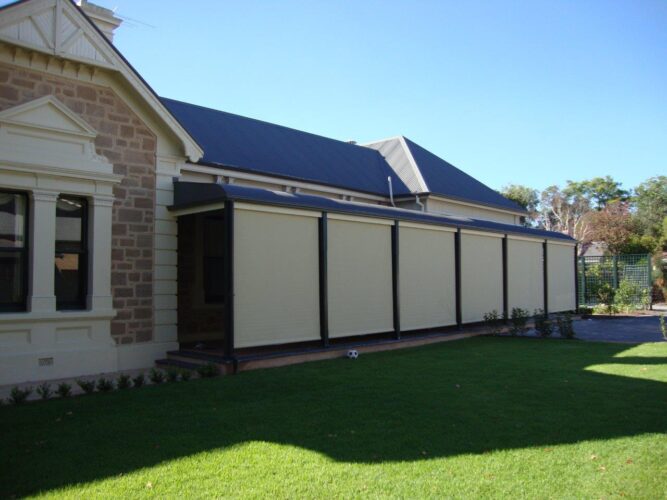
If you’ve ever sat in an Adelaide café or restaurant with an enclosed outdoor area, chances are you were looking through cafe style blinds. These are the clear PVC or mesh blinds you see rolled down around patios, verandahs, and alfresco dining spaces, keeping wind and rain out while still letting you enjoy the view and fresh air. They’re one of the most practical outdoor blind options available, and they’ve become just as popular in backyards as they are in hospitality venues.
At Classic Roller Shutters Adelaide, we manufacture and install outdoor blinds across Adelaide, including Zip Trak and Zip screen systems that serve this exact purpose. With over 40 years of experience in the window coverings industry, we’ve helped thousands of homeowners and businesses find the right solution for protecting their outdoor spaces year-round.
This article breaks down what cafe style blinds actually are, how they differ from other outdoor blind types, and where they work best. Whether you’re trying to make your patio usable through winter or you’re a business owner looking to extend your seating area, you’ll walk away with a clear understanding of your options and what to look for before you buy.
Why cafe style blinds work outdoors
Outdoor spaces in Adelaide deal with a wide range of weather conditions throughout the year, from cold southerly winds in winter to intense summer heat and UV exposure. Cafe style blinds are designed specifically to handle these conditions. Unlike indoor blinds, they use weather-resistant materials like clear PVC or UV-stabilised mesh that hold up against moisture, sun, and wind without cracking, fading, or warping over time.
Protection from wind and rain
Wind is one of the biggest reasons people avoid using their patios during the cooler months. A well-installed set of blinds acts as a physical barrier that breaks the wind without blocking your view or sealing off airflow entirely. Clear PVC panels in particular give you full visibility to your garden or street while keeping the worst of the weather outside.
When your outdoor area stays protected from wind and rain, you can realistically use it for three or four more months of the year than you otherwise would.
Rain is equally manageable. Most cafe blind setups run in guided tracks or channels that keep the panels taut, which prevents water from pooling or leaking through at the edges. This makes them a practical option for both homeowners and business operators who need their outdoor areas to stay functional regardless of the forecast.
Heat, glare, and UV control
Adelaide summers push temperatures well above 35°C on a regular basis, and direct sun exposure makes outdoor areas uncomfortable quickly. Mesh cafe blinds reduce solar heat gain by blocking a significant portion of incoming radiation before it reaches the sitting area. PVC options with UV-stabilised additives also protect outdoor furniture and flooring from long-term sun damage, which saves money over time. On top of that, reducing heat build-up inside a covered patio means you are also reducing your reliance on fans or cooling systems during peak summer heat.
Types of cafe style blinds and materials
Not all cafe style blinds look or perform the same way. The material you choose determines how much light, visibility, and weather protection you get, so it’s worth understanding your main options before committing.

Clear PVC blinds
Clear PVC is the most popular choice for enclosed patios and alfresco dining areas. The panels are virtually transparent, which means you keep your view while blocking wind and rain entirely. Heavier gauge PVC holds its shape better in high winds and resists yellowing over time. For most Adelaide homeowners wanting maximum weather protection without sacrificing visibility, this is the go-to option.
Clear PVC blinds work particularly well when your outdoor space faces a garden, pool, or street view you don’t want to lose.
Mesh and shade fabric blinds
Mesh blinds use UV-stabilised woven fabric that filters light and reduces heat without creating a fully sealed environment. They suit areas where airflow matters more than complete rain protection, such as a pergola with a solid roof already in place. Shade ratings vary between fabrics, so you can match the level of blockout to your specific sun exposure:
- 50% blockout: good light filtering with strong airflow
- 70-80% blockout: balanced shade and ventilation
- 90-95% blockout: significant heat reduction and near-full privacy
How to choose cafe style blinds for your space
The right cafe style blinds for your home or business come down to three things: how exposed your space is, what you want to keep out, and how much visibility you want to retain. Getting these right before you buy saves you from ordering the wrong material or the wrong configuration for your setup.
Match material to your exposure direction
Your outdoor area’s orientation matters more than most people realise. North and west-facing spaces in Australia receive the most direct sun and benefit most from mesh or UV-filtering materials. South and east-facing areas deal more with cold wind and rain, which makes clear PVC the stronger choice for those positions.
Matching your blind material to your sun and wind exposure is the single most useful step you can take before choosing a product.
Consider how enclosed your space already is
If your patio already has three solid walls, a single blind panel across the open side may be all you need. Open pergola structures with multiple exposed sides require a full setup across every opening to make a real difference in weather protection. Your total opening width and height also affects whether a track-guided or free-hanging system suits your situation better.
Installation options and common mistakes
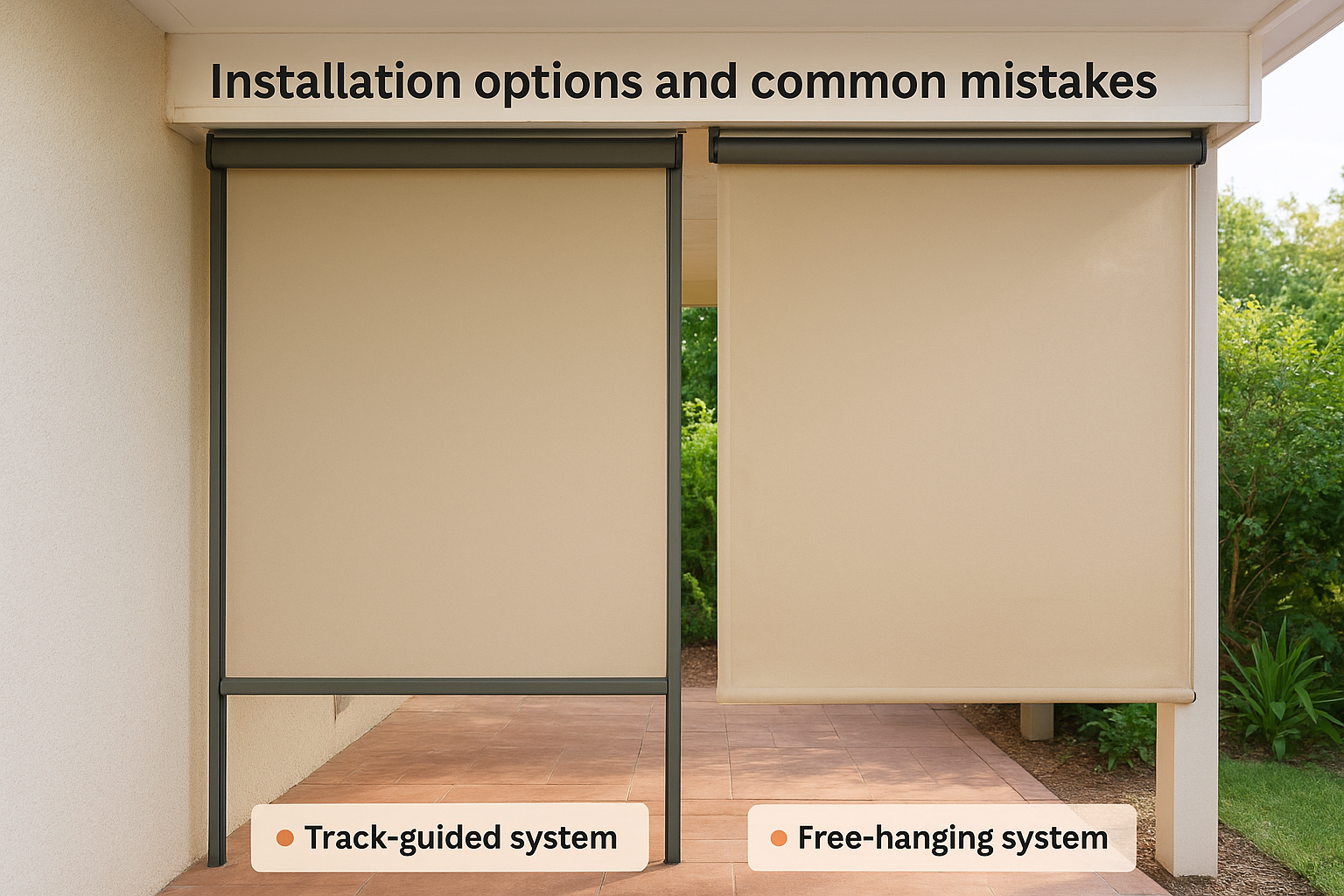
Cafe style blinds come in two main mounting configurations: track-guided systems and free-hanging systems. Track-guided setups use side channels to keep panels taut and sealed at the edges, which makes them far more effective in high-wind or heavy-rain conditions. Free-hanging blinds cost less upfront but tend to flap in strong winds and leave gaps at the sides, reducing their practical protection significantly.
Choosing between DIY and professional installation
Many people attempt to install outdoor blinds themselves and run into problems with alignment and fixing points. If your mounting surface is not structurally sound or the tracks are not perfectly plumb, the blinds will not roll or operate smoothly over time. Professional installation ensures the system is anchored correctly and operates as intended from day one.
Getting the mounting right the first time prevents costly repairs and replacements down the track.
Common mistakes to avoid
The most frequent mistake is undersizing the blind for your opening, which leaves gaps that let in wind and rain at the edges. Always measure your full opening width and height, including any structural frame, before ordering.
- Choose material based on your exposure direction, not just price
- Order blinds sized to the full structural opening, not just the visible gap
- Confirm your fixing points are solid before installation begins
Care, cleaning, and expected lifespan
Cafe style blinds need routine cleaning to stay in good condition. Dirt, mould, and salt residue build up on outdoor surfaces faster than most people expect, especially in coastal areas of Adelaide.
Cleaning PVC and mesh blinds
Clear PVC panels clean up easily with warm soapy water and a soft cloth. Avoid abrasive pads or harsh solvents, as these scratch the surface and speed up yellowing. For mesh, a gentle hose down followed by a soft brush removes dust and grime effectively.
Cleaning your blinds every two to three months extends their service life and keeps them looking presentable year-round.
- Wipe PVC with mild detergent and a microfibre cloth
- Rinse mesh thoroughly to remove soap residue before rolling up
- Let blinds dry fully extended before storing them away
How long do they last?
With proper care, quality PVC and mesh blinds last between eight and fifteen years. UV-stabilised materials hold up better in Adelaide’s high-UV conditions than untreated alternatives, which makes them worth the small additional cost upfront.
Replacing worn parts like tracks or end caps as they age keeps the whole system functional without needing a full replacement. A quick annual hardware check lets you catch small issues before they turn into costly ones.
Next steps for your outdoor area
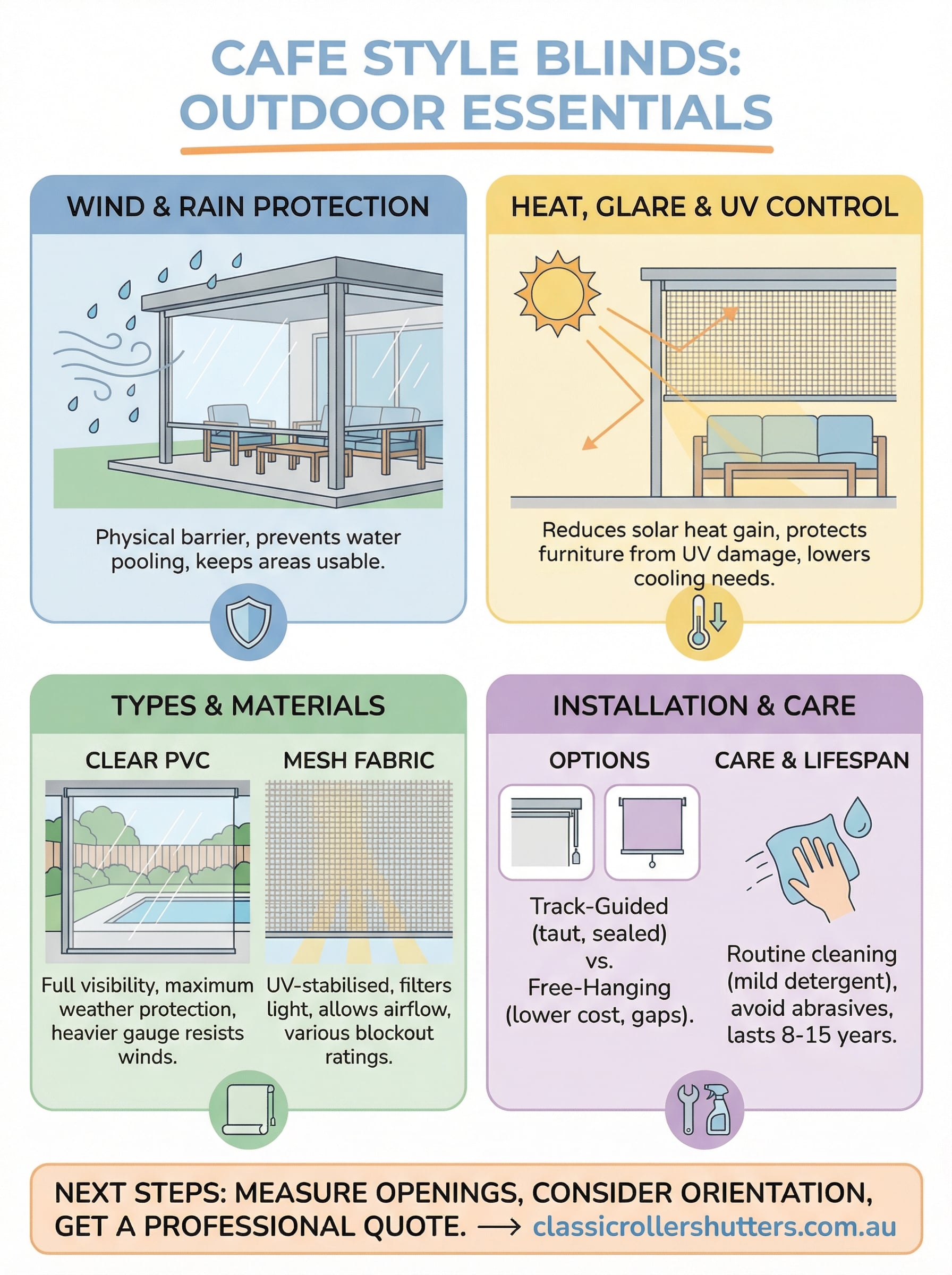
Cafe style blinds give you a practical, cost-effective way to extend how long and how comfortably you use your outdoor space. Whether your priority is keeping wind and rain out during Adelaide winters or reducing heat on a north-facing alfresco area, choosing the right material and a well-installed system makes a significant difference to year-round usability.
Your next move is straightforward. Measure your full openings, note which direction they face, and think about whether you need complete weather protection or primarily shade and UV filtering. From there, a professional quote locks in accurate sizing and the right product for your specific situation. Trying to estimate sizing yourself often leads to gaps and poor performance once the blinds are fitted.
The team at Classic Roller Shutters Adelaide has over 40 years of local experience and manufactures products right here in Adelaide. Request a free in-home quote and get the right solution for your outdoor area.