Choosing a commercial roller door isn’t a one-size-fits-all decision. You’re balancing security, wind region, fire separation, airflow and visibility, speed for forklifts, insulation, corrosion resistance and noise—alongside budget and maintenance. In South Australia that can mean summer heat, coastal salt, regional gusts and bushfire overlays in the same project. Door size and weight, daily cycles, and integration with access control also drive motor and hardware choices. Get it wrong and you risk downtime, higher energy bills and compliance headaches with the NCC and insurers. Get it right and you unlock safer access, smoother operations and lower whole‑of‑life costs.
This guide cuts through the jargon and compares the main types of commercial roller doors used across Australia. For each, you’ll see how it works, the key features, where it fits best, and typical installed pricing to help with budgeting. We’ll also flag relevant standards (AS/NZS 4505 wind, AS 1905.2 fire) and simple upkeep tips. We begin with Classic Roller Shutters Adelaide’s factory‑direct options, then step through the broader market—from standard steel and aluminium shutters to wind‑locked cyclone doors, security grilles, perforated vision, fire‑rated, high‑speed PVC, insulated, counterweight and transparent polycarbonate—so you can shortlist with confidence and move straight to quotes.
1. Classic Roller Shutters Adelaide: factory-direct commercial roller doors
Classic Roller Shutters Adelaide manufactures and installs commercial roller doors and shutters locally. One SA team handles quoting, electrics, install and repairs to minimise downtime and keep compliance on track.
How it works
Built to size from Australian components. Installed with matched motors, controls and safety devices.
Key features
Whole‑of‑life support. Clear advice on wind, fire and security.
- Factory‑direct Adelaide manufacture and installation
- Repairs, spares and motor upgrades
Best for
Choose local when speed and support matter. Suitable from kiosks to warehouses.
- SA sites wanting one accountable supplier
Typical pricing (installed)
Budget with market ranges; quotes vary by size and cycles. Use this installed guide.
- Standard steel (3×3 m): $1.5k–$3k
- Fire‑rated shutters: $6.5k–$20k
2. Standard steel roller door
The standard steel roller door is the budget‑friendly workhorse among types of commercial roller doors. Single‑skin Colorbond or Zincalume curtains suit small businesses, handling bumps and modest daily cycles with straightforward upkeep.
How it works
A single‑skin curtain coils onto a drum above the lintel, lifted by counterbalance springs or a simple 240 V motor. Confirm AS/NZS 4505 wind class and specify suitable guides/fixings for your postcode.
Key features
Practical and tough for daily use.
- Budget-friendly: Lowest cost entry point
- Colour choice: 22 Colorbond colours
- Easy maintenance: Grease springs and guides quarterly
Best for
Where simplicity and value matter.
- Small warehouses/workshops: Ideal for tradie sheds
- Low‑cycle use: Under ~15 cycles/day in standard wind regions
Typical pricing (installed)
Installed guide.
- 3 m × 3 m: $1.5k–$3k installed
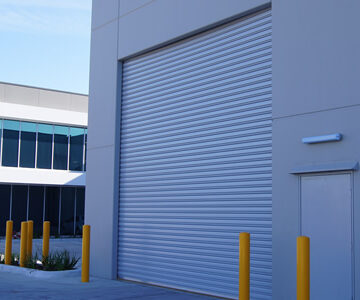
3. Aluminium roller shutter
When coastal air or chemicals start chewing through steel, aluminium roller shutters step in. Extruded, interlocking slats cut weight, run quieter and resist corrosion—handy for customer-facing sites and South Australian seaside locations—while still delivering the security expected from commercial roller doors.
How it works
Interlocking, box‑section aluminium slats roll onto a barrel, guided in side tracks. The lighter curtain needs smaller torsion springs or lower‑torque motors, reducing wear and power draw.
Key features
Lighter, smoother, and built to beat salt and spray.
- Corrosion resistance: Ideal near coast or chemicals
- Quieter travel: Less noise at shopfronts and offices
- Custom finishes: Powder‑coat colours and branding
Best for
Choose aluminium when environment and presentation matter.
- Marinas, boat yards, surf‑club storage
- Coastal cafés, kiosks and retail
- Light industrial with low impact risk
Typical pricing (installed)
Expect a modest premium over steel with simple upkeep.
- Price guide: Typically 10–20% above standard steel
- 3 m × 3 m example: Roughly $1.7k–$3.6k installed (wind class, guides and finishes affect final price)
4. Wind-locked cyclone-rated roller door
When wind exposure jumps or the site is specified to cyclone regions, a wind-locked roller door keeps the curtain in the guides under extreme pressure and protects the building fabric from blow‑in.
How it works
A heavier-gauge curtain runs in deep steel guides with side-mounted wind-lock clips that engage under load, preventing pull-out. Chain or powered operation is common, with battery backup for blackouts.
Key features
Built for certified performance when the weather turns ugly.
- Region C/D ready: Certified to NCC 2022 cyclonic requirements
- Stays put: Wind-locks resist curtain pull-out and blow‑in
- Security uplift: Better against break‑ins and ram‑raids
- Documented: Engineering certification and permanent labelling
Best for
Use where wind and exposure are non-negotiable.
- Coastal Queensland depots and Darwin hangars
- Remote fuel/chemical stores
- Exposed rural equipment sheds
Typical pricing (installed)
Allow roughly 25–40% above a standard steel door; on a 3 × 3 m opening that often lands around $2k–$4k+, subject to wind class and engineering. Inspect wind-lock retainers and guide fasteners annually; watch for galvanic corrosion at mixed metals.
5. Heavy-duty roller shutter door
When you need more than a thin curtain, a heavy‑duty roller shutter adds serious muscle. Interlocked slats in thicker gauges resist prying and accidental knocks, while the barrel and guides are built to handle high duty cycles. Crucially, damaged sections can be swapped out without replacing the entire door, keeping downtime and repair costs in check.
How it works
Steel or aluminium slats (typically 0.8–1.0 mm) interlock and roll onto a sturdier barrel driven by torsion springs or a motor. Optional thermally broken side guides help reduce cold bridging where temperature control matters.
Key features
- Stronger curtain: Thicker, interlocked slats improve after‑hours break‑in resistance
- Serviceable design: Replace individual slats instead of the whole door
- Scalable hardware: Heavier guides and barrels for wider, taller openings
- Hygiene/comfort options: Thermally broken guides available
Best for
- Large warehouses and distribution bays
- Breweries and production facilities
- Data centres and tech rooms needing robust security
Typical pricing (installed)
Pricing is quote‑based and varies by opening size, slat gauge, wind class, and motor choice. Expect a higher outlay than standard steel doors, with savings over time from replaceable slats and straightforward maintenance.
6. Security roller grille
Need after‑hours security without hiding stock? A security roller grille keeps sightlines open, deters smash‑and‑grab, and supports airflow, sprinklers and smoke movement—useful for retail and shared mall fire engineering. Among types of commercial roller doors, it’s the go‑to where visibility matters.
How it works
Interlocked aluminium tubes in a brick‑bond or diamond lattice, tied with steel rods, roll onto a barrel above the lintel. Lightweight curtains suit manual pull or compact motors.
Key features
- Open vision: Clear merchandising and CCTV coverage
- Air movement: Allows sprinkler water and smoke to pass
- Durable finishes: Anodised or powder‑coated for corrosion resistance
- Lightweight: Smaller drives and quieter operation
Best for
- Shopping‑centre kiosks and pharmacies
- Airport duty‑free concessions
- Bar serveries and club façades
Typical pricing (installed)
- Price guide: Mid‑range; typically similar to perforated vision doors
- Upkeep: Wash with pH‑neutral cleaner quarterly (more often on coast); check rod connectors annually
7. Perforated vision roller door
Perforated vision roller doors deliver airflow and visibility after hours while still acting like a solid barrier. Sitting between open grilles and solid shutters, they suit projects where ventilation, surveillance and deterrence all matter—especially car parks and humid service zones.
How it works
Steel or aluminium slats punched with 3–5 mm holes interlock and roll onto a standard drum and guides. The overlapping slats retain strength while the perforations provide consistent airflow and sight lines.
Key features
You get ventilation and visibility without sacrificing much strength.
- Airflow + comfort: 10–20% open area for natural ventilation
- CCTV-friendly: Maintains sight lines and discourages loitering
- Tougher than grilles: Overlapping slats increase rigidity
Best for
Use these where air movement and sightlines are required.
- Car parks
- Ventilated plant rooms
- Humid loading docks
Typical pricing (installed)
Costs are similar to security grilles; keep holes clear for performance.
- Price guide: Budget ~$700–$900 per metre
- Maintenance: Blow out dust quarterly; ensure perforations meet BAL limits
8. Fire-rated roller shutter
Where an opening must act as a fire barrier, a fire‑rated roller shutter provides certified containment and automatic closure. Tested to AS 1905.2 and integrated with the fire system, it preserves evacuation time and compliance without sacrificing floor space.
How it works
A deep‑gauge galvanised or stainless‑steel curtain with an insulated core drops by gravity when a fusible link, thermal sensor or fire‑panel signal triggers it; a chain or motor returns it after reset.
Key features
- FRL 1–4 hours certified to AS 1905.2
- Replaces fixed fire walls to save space
- Optional smoke seals reduce fume spread
Best for
- Commercial kitchens and food courts
- Warehouse compartment walls
- Shopping‑centre tenancy separations
Typical pricing (installed)
Budget $6.5k–$20k installed; requires an annual drop‑test by a licensed inspector. Keep the counterbalance chain clean, maintain clearances and file certificates for audits.
9. High-speed PVC rapid roller door
When forklift traffic is constant or hygiene is critical, speed and airtight separation beat brute strength. High-speed PVC rapid doors open in a flash, cut conditioned‑air loss between zones and bounce back after bumps—keeping lines moving and HACCP auditors happy without the noise of steel shutters.
How it works
A reinforced PVC curtain rolls onto an integrated barrel driven by a variable‑frequency motor and encoder. Opening speeds reach roughly 1–2 m/s. Soft bottom edges and side zips or wind bars keep the curtain in its tracks and reduce impact damage.
Key features
- Energy control: Minimises temperature and air loss
- Throughput: Faster cycles, fewer queues
- Self‑reinsert: Curtain resets after knocks
- Sightlines: Optional clear vision panels
- Low noise: Better near offices
Best for
- Food and beverage processing
- Pharmaceutical/clean‑room docks
- 3PL cross‑dock facilities
Typical pricing (installed)
Expect around $7k–$15k installed. Monthly: wipe photo‑eyes, test the soft‑edge auto‑reverse and vacuum dust from the encoder housing. Document services to satisfy HACCP and NCC Section J audits.
10. Insulated roller door or shutter
Insulated roller doors and shutters combine security with better temperature control. Among types of commercial roller doors, they’re the pick for separating chilled or air‑conditioned zones, reducing summer heat gain and softening noise—useful across SA warehouses, food facilities and mixed office/industrial spaces where comfort and energy bills matter.
How it works
A thicker curtain with upgraded guides and seals—often using insulated or double‑skin slats—reduces heat flow and air leakage while rolling onto a standard barrel.
Key features
- Thermal + acoustic: Improvement over single‑skin curtains
- Energy: Cuts loss and drafts at busy openings
- Guides: Optional thermally broken side guides to limit cold bridging
Best for
- Cool‑rooms and temperature‑zoned warehouses
- Retail/office frontages near plant rooms
- Warehouse offices seeking comfort in SA heat
Typical pricing (installed)
- 3 × 3 m: $2.5k–$4k installed (guide), typically above standard steel
- Upkeep: Around $220/year service; typical life ~18 years
11. Counterweight balanced roller door
For ultra‑wide openings with tight headroom, counterweight balanced roller doors deliver smooth, near‑silent operation and long spans without bulky spring gear. They’re a niche but critical option among types of commercial roller doors when you need big clear widths and minimal maintenance downtime.
How it works
A heavy‑gauge steel or aluminium curtain is lifted by floor‑mounted counterweights via cables and pulleys—no torsion springs—enabling spans up to around 12 m with a compact drum.
Key features
- Quiet, smooth travel: Near‑silent manual operation even on tonne‑weight curtains
- Low headroom: About 450 mm including drum
- Fewer wear parts: Reduced service downtime versus spring systems
Best for
- Aircraft hangars (GA and charter)
- Bus depots and coach garages
- Broad‑span ag‑machinery sheds
Typical pricing (installed)
- Bespoke engineering: Expect pricing north of $15k
- Compliance/maintenance: Annual cable, pulley and counterweight certification; keep the counterweight pit clear of debris
12. Transparent polycarbonate security shutter
When you want clear shopfront visibility after hours without losing a solid barrier, a transparent polycarbonate security shutter fits the brief. The clear curtain keeps displays and CCTV sightlines while screening weather better than open grilles—perfect when presentation and protection must work together.
How it works
Clear polycarbonate panels interlocked with aluminium profiles run in side guides and roll onto a barrel; manual or motorised operation is available.
Key features
- Full visibility: Maintain merchandising and CCTV coverage after hours
- Impact‑resistant curtain: Rigid, clear panels in robust metal guides
- Weather screening: Helps limit wind‑blown rain and dust versus open grilles
Best for
- Premium retail and shopping‑centre frontages
- Airports and car showrooms
- Lobbies and galleries
Typical pricing (installed)
Quote‑based; varies by span, wind class and automation. Use non‑abrasive, pH‑neutral cleaning; inspect guides and fixings annually.
Making your choice
Shortlist two or three door types by matching risk, environment and budget, then confirm compliance and serviceability. Factor wind region and any fire‑separation needs, weigh whole‑of‑life costs (not just sticker price) and lock in an installer who can commission, certify and maintain the system without disrupting operations.
- Opening & cycles: Size, headroom and daily use dictate curtain type and motor torque.
- Wind & fire: Specify AS/NZS 4505 wind class; fire shutters need AS 1905.2 certification and annual drop‑tests.
- Security level: Align with your insurer’s risk profile; consider bollards and alarms where needed.
- Environment: Coastal, chemical or dusty sites push you to aluminium, sealed guides and tougher finishes.
- Energy/noise: Insulated or rapid doors cut losses and complaints near offices.
- Access & automation: Battery backup, keypads, RFID and audit trails for busy sites.
- Service plan: Schedule preventative maintenance and keep records for audits.
In Adelaide, go factory‑direct with Classic Roller Shutters Adelaide for local manufacture, installs, motor upgrades, repairs and free in‑home or plan‑based quotes.