The difference between curtains that look “off” and ones that appear professionally styled often comes down to installation. Learning how to hang curtains correctly can transform any room, making ceilings appear higher, windows look larger, and spaces feel more polished. Yet it’s one of those tasks where small measurement errors create surprisingly noticeable results.
Most DIY mistakes happen before the drill even touches the wall. Hanging rods too low, positioning brackets too close to the window frame, or choosing the wrong curtain length can undermine even the most beautiful fabric. The good news? These are easy fixes once you know what to look for. If you’re looking for expert installation and measuring call classic on 83692266 for your in home consultation today. We also offer an inhouse design service even for DIY. Bring in your measurements, a consultant will go through the fabrics and options with you, order, pick up your DIY curtains in store and SAVE.
At Classic Roller Shutters Adelaide, we’ve supplied and installed curtains across Adelaide homes for over 40 years. This guide shares what we’ve learned about achieving that designer-look finish, from precise measuring techniques to hardware placement that makes all the difference.
What you need before you start
Getting organised before installation saves time and prevents mid-project trips to the hardware store. You’ll need specific tools and materials depending on your wall type, and having everything ready ensures you can hang curtains correctly in one session.
Tools and materials checklist
Your essential toolkit includes a drill with appropriate drill bits for your wall type (masonry bits for brick, standard bits for timber studs), a spirit level, tape measure, pencil, and screwdriver. Wall plugs and screws typically come with curtain rod kits, but check they match your wall construction. For plasterboard walls, you’ll need toggle bolts or cavity anchors rather than standard plugs.
Material-wise, you need the curtain rod or track system, brackets (usually two for rods under 2 metres, three for longer spans), and your curtains with appropriate headers. A stepladder tall enough to reach your planned installation height safely is non-negotiable.
Professional installers measure twice and drill once, a simple rule that prevents costly wall repairs.
Pre-installation preparation
Walk through your space and identify wall studs if you’re fixing into plasterboard. Use a stud finder or the knock-test method (solid sound indicates a stud). Mark stud locations lightly with pencil, as these provide the strongest anchor points for your brackets.
Clear the area around your window completely. Move furniture that might obstruct your work, and lay down dust sheets if drilling into masonry. Check that your ladder can position safely without wobbling, and have a vacuum cleaner nearby for dust management. This preparation makes the actual installation straightforward and prevents accidents.
Step 1. Measure for height, width, and drop
Accurate measurements form the foundation of learning how to hang curtains correctly. Start by measuring your window frame dimensions, then apply the designer formulas that create visual impact rather than just covering glass.
Height placement
Mount your curtain rod 10 to 15 centimetres above the window frame, or higher for dramatic effect. Hanging rods closer to the ceiling makes your room appear taller, particularly effective in standard height spaces. Measure from the rod position down to where you want curtains to end, typically 1 to 2 centimetres above the floor for a polished look, or touching the floor for a luxurious pooling effect.
Width and drop calculations
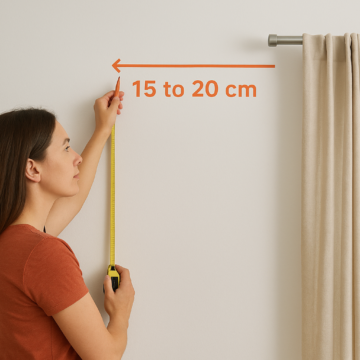
Extend your rod 15 to 20 centimetres beyond each side of the window frame. This wider placement allows curtains to stack neatly when open, revealing maximum glass and natural light. Calculate your curtain width by measuring the full rod length and multiplying by 1.5 to 2.5, depending on fabric weight and desired fullness.
Professional measurements account for both the practical coverage needed and the visual proportions that make spaces feel balanced.
For drop length, add 15 centimetres to your floor measurement if you want a subtle break, or 20 to 30 centimetres for deliberate pooling. Write these numbers down clearly before purchasing fabric or drilling any holes.
Step 2. Choose the right hardware and fixings
Your hardware choice directly affects both appearance and longevity. Matching the rod weight capacity to your curtain fabric weight prevents sagging, while selecting fixings suited to your wall construction ensures secure mounting that lasts.
Rod styles and materials
Timber rods suit traditional spaces and heavier fabrics, while metal poles work well with contemporary interiors and lighter materials. Track systems create a streamlined look when you want curtains to disappear into the ceiling line, particularly effective in modern designs.
Choose rod diameters based on curtain weight. 28-millimetre diameter rods suit lightweight fabrics, whilst 35-millimetre or larger handles heavy drapes. Check the manufacturer’s maximum span recommendations, as rods longer than 2.5 metres often need centre support brackets to prevent bowing.
Bracket and fixing types
Plasterboard walls require toggle bolts or spring toggles that distribute weight across a larger area. These fixings open behind the plasterboard, creating secure anchor points even without studs. Masonry walls need wall plugs matched to your screw size, typically 6-millimetre plugs for standard bracket screws.
Proper fixings matched to wall type prevent brackets pulling free under curtain weight, a common failure point in DIY installations.
Timber studs accept wood screws directly, providing the strongest mounting option. Mark stud locations and position at least one bracket per rod into solid timber when possible.
Step 3. Install the rod or track level and secure
This installation stage requires precision to ensure your curtains hang straight. Working methodically through marking, drilling, and securing prevents wonky brackets that throw off your entire effort to hang curtains correctly.
Mark your drill points level
Position your first bracket at the measured height on one side of the window. Hold a spirit level against the bracket base and mark your fixing holes with a pencil. Move to the opposite side and mark the same height, then use your spirit level horizontally between both marks to confirm they’re perfectly aligned.
For rods longer than 2 metres, mark your centre bracket position exactly halfway between the outer brackets. Double-check all marks sit at identical heights before drilling, as corrections after drilling create unnecessary wall damage.
Drill and secure brackets
Drill pilot holes at each marked point using the correct drill bit size for your wall plugs. Push wall plugs flush with the wall surface, tapping gently with a hammer if needed. Screw your brackets into place, checking they sit flat against the wall without tilting forward or backward.
Level installation matters more than perfect measurement, as the eye detects crooked curtains immediately but forgives slight height variations.
Test each bracket by pulling firmly downward before mounting your rod.
Step 4. Hang, adjust, and finish for a designer look
With your brackets secure and rod mounted, the final installation stage brings everything together. Proper hanging and adjustment techniques separate amateur installations from ones that look professionally done, completing your work to hang curtains correctly.
Hanging and initial adjustment
Thread your curtain rings or hooks onto the rod before placing it on the brackets, or clip curtains directly if using integrated rings. Position the rod into bracket sockets and secure any locking mechanisms provided. Distribute curtains evenly across the rod width, spacing rings consistently for uniform folds.
Step back and check that curtains hang straight without twisting. Adjust ring positions if fabric bunches unevenly, ensuring the weight distributes naturally. Pull curtains closed to verify they meet in the centre without gaps, then open them fully to check the stack-back clears your window glass.
Final styling touches
Steam your curtains while hanging to remove packaging creases and create crisp vertical lines. Hold your steamer 10 centimetres away from fabric, working from top to bottom in smooth strokes. This step dramatically improves appearance, particularly with linen or cotton fabrics.
Professional finishing includes training curtains to fold naturally, creating those elegant cascading pleats that define designer installations.
Arrange the fabric into soft folds at floor level if you’ve chosen a pooling length. Train pleats by running your hand down each fold, encouraging fabric to fall in consistent patterns that remain after repeated opening and closing.
A quick wrap-up
Learning how to hang curtains correctly transforms your windows from functional to impressive through precise measurement and proper installation techniques. You’ve now got the complete process, from calculating ideal height and width placement to securing brackets level and finishing with professional styling touches.
The four-step approach covers every critical detail that separates amateur attempts from designer results. Your measurements create the right proportions, your hardware choice ensures longevity, your level installation prevents wonky hanging, and your final adjustments deliver that polished appearance.
Remember that quality installation requires the right tools, accurate marking, and patience during adjustment. These fundamentals apply whether you’re hanging lightweight sheers or heavy blockout drapes.
At Classic Roller Shutters Adelaide, we supply and install curtains across Adelaide homes with over 40 years of experience. Our factory-direct service includes free in-home consultations if you’d prefer professional installation that guarantees designer-look results from the start.