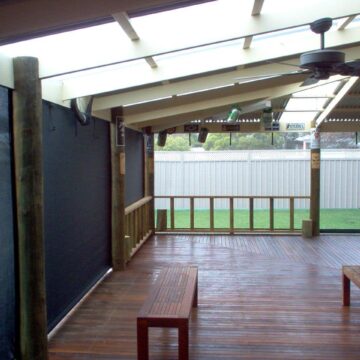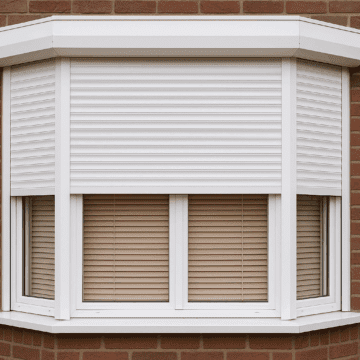
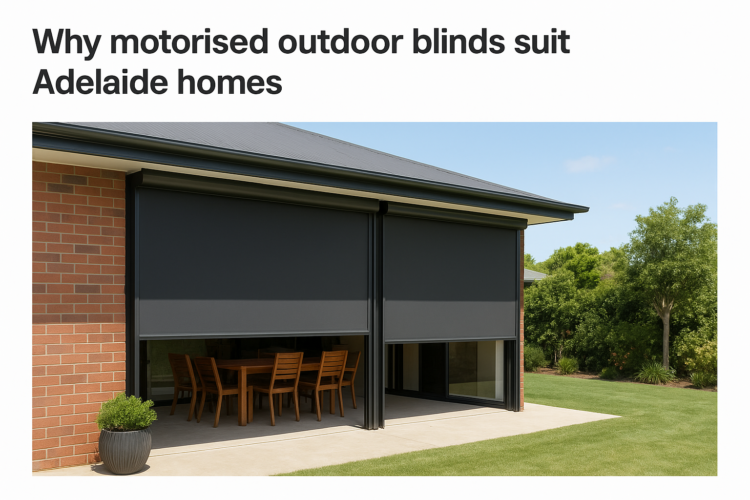
If you’re sick of wrestling with a manual crank every time the wind picks up on your alfresco area, motorised outdoor blinds adelaide homeowners are switching to solve exactly that problem. One button, and the blind drops or retracts in seconds, no cranking, no chain snapping mid-summer, no getting caught out when a storm rolls in while you’re at work.
So what actually are they, and how do they work? A motorised outdoor blind is a standard PVC, mesh, or acrylic outdoor blind fitted with an electric motor built into the roller tube, controlled by a wall switch, remote, or smartphone app. Some run on mains power, others on rechargeable battery packs, and higher-end setups even tie into home automation systems and wind sensors that retract the blind automatically before a gust hits.
We’ve installed and repaired these systems across Adelaide for over 40 years from our local factory, so this guide walks through the different motor types, control options, power sources, and what installation actually involves, so you know exactly what you’re buying before you get a quote.
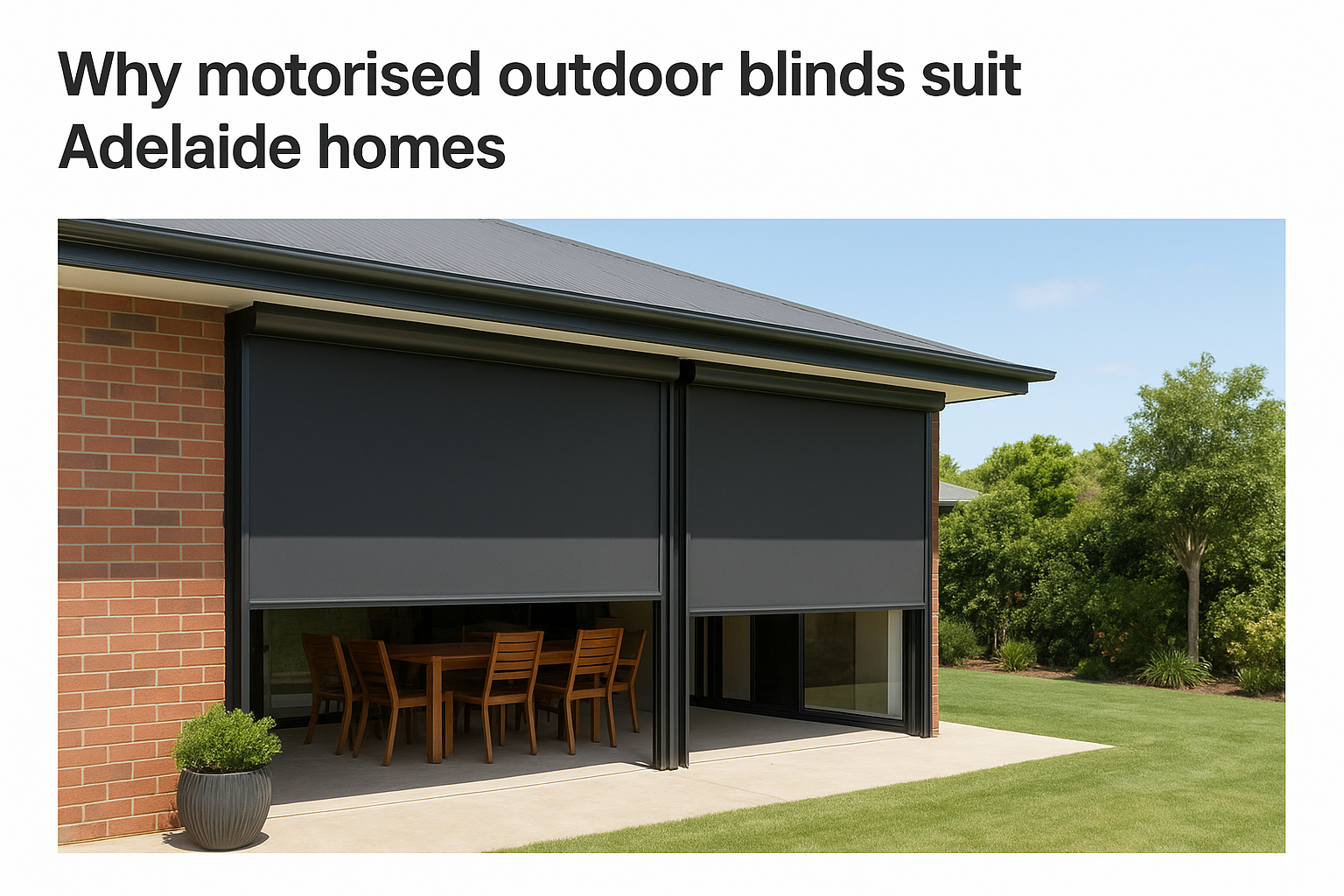
Why motorised outdoor blinds suit Adelaide homes
Adelaide’s climate is exactly why this technology has taken off here faster than in cooler states. Summers regularly push past 40°C, and a west-facing alfresco can become unusable by 3pm without proper shading. Motorised outdoor blinds let you drop shade over a whole patio or verandah the moment the sun swings around, without walking outside in the heat to crank a handle. For families running a shaded outdoor room from October through April, that convenience isn’t a luxury, it’s the difference between using the space daily and letting it sit empty half the year.
Wind, storms and everyday practicality
South Australia’s sudden wind changes are the other big driver. Manual blinds left down during a gust can tear, bend their tracks, or rip clean off the runners, and that’s a repair job we see constantly in our workshop. Systems fitted with wind sensors retract automatically when gusts hit a set threshold, protecting the fabric and the motor before damage happens. That’s a real cost saver over the life of the blind, not just a convenience feature.
A blind that retracts itself before a storm hits will always outlast one you have to remember to wind up.
Suited to Adelaide’s outdoor lifestyle
Adelaide households use their outdoor areas hard: weekend barbecues, kids’ birthday parties, entertaining through long summer evenings. A one-touch remote or app control means you’re not fumbling with a crank handle while carrying plates, and multi-zone setups let you open one side of the verandah for a breeze while keeping the western sun blocked. For rental properties and holiday homes across the Adelaide Hills or coastal suburbs, that same automation means blinds can be scheduled to open and close even when nobody’s on site, which helps with security appearances and protects the fabric from prolonged UV exposure when no one’s around to manage it manually.
Commercial operators benefit too. Cafés and restaurants with alfresco dining need shading that can go up and down multiple times a day without staff standing there winding a handle between customers, and a reliable motor system handles that volume without wearing out the way manual mechanisms do under constant use.
How motorised outdoor blinds work
Strip away the marketing and a motorised outdoor blind is a simple idea done well. A tubular motor sits inside the roller tube itself, spinning the tube to raise or lower the fabric, and a limit switch tells it exactly when to stop at the top and bottom so you never get gears grinding or fabric overwinding. No external gearbox, no visible mechanism, just the blind moving smoothly on command.
The motor and roller mechanism
Most residential setups use a 240V mains-powered motor wired into a wall switch, which is the most reliable option for blinds used daily. Battery-powered motors suit retrofits where running new wiring isn’t practical, recharged via a small solar panel or plugged in periodically.
The motor does the lifting, but it’s the limit switch that stops it from tearing itself apart.
Control options and power sources
Here’s how the common setups compare:
| Control type | Best for | Trade-off |
|---|---|---|
| Wall switch | Fixed installs, daily use | Least flexible |
| Remote control | Multiple blinds, retrofits | Battery replacement needed |
| Smartphone app | Automation, scheduling | Needs stable Wi-Fi |
| Wind/sun sensor | Unattended protection | Higher upfront cost |
Many Adelaide homes combine two or three of these, a wall switch for everyday use, a remote for guests, and a wind sensor running quietly in the background for peace of mind when nobody’s watching the sky.
Choosing the right system and fabric for your space
Getting the fabric right matters as much as the motor. PVC blinds give full weather protection and work well on exposed western or southern walls where wind and rain hit hardest, while mesh fabrics cut glare and UV without blocking the breeze, better suited to entertaining areas where you still want airflow. Acrylic sits between the two, offering good sun protection with a softer, more decorative look for verandahs that don’t cop direct weather.
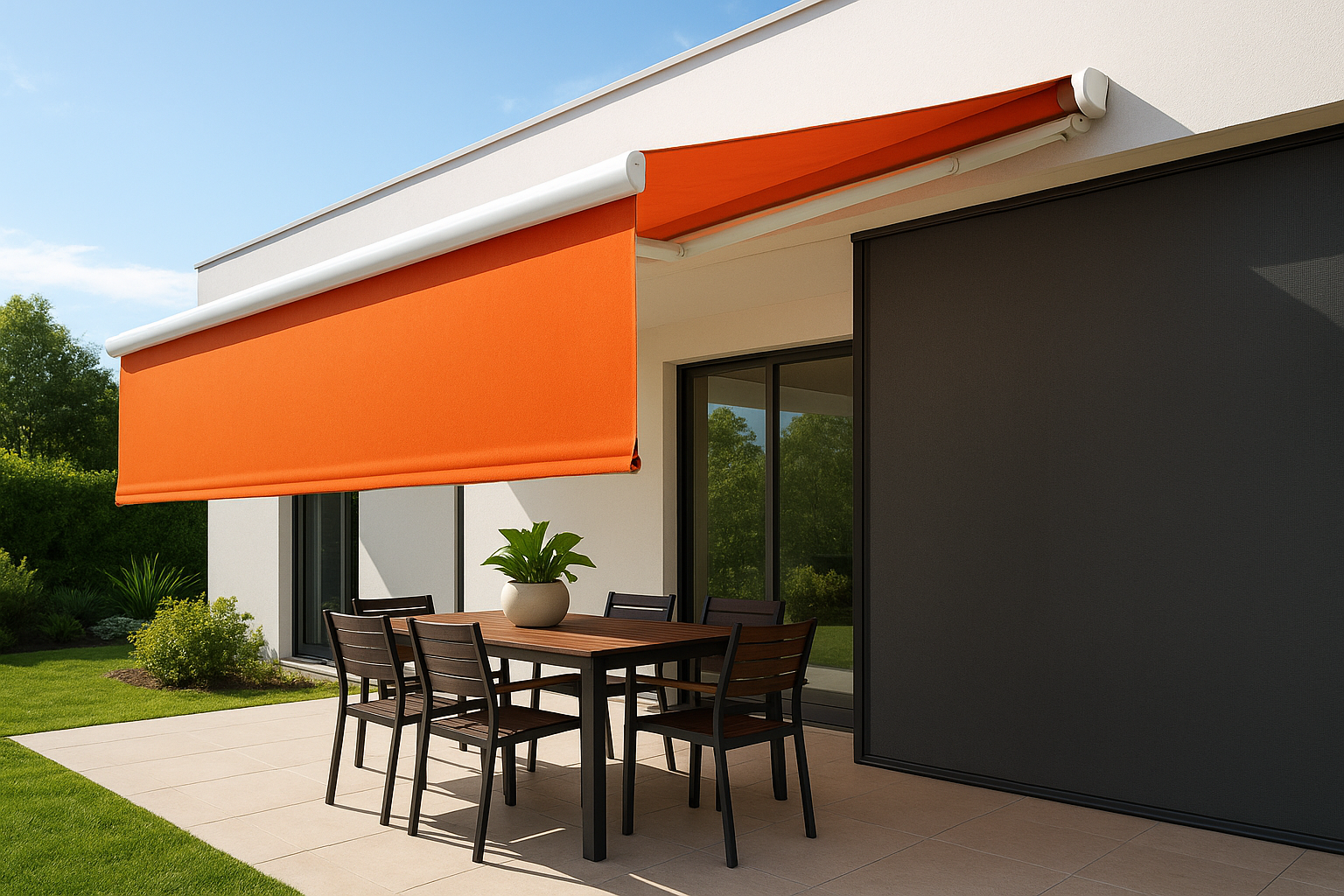
Matching fabric to the space
- PVC: best for wind, rain and full privacy
- Mesh: best for airflow, glare reduction and outdoor dining areas
- Acrylic: best for shaded patios wanting a decorative finish
The wrong fabric choice costs you comfort every day, not just money upfront.
Sizing the motor to the blind
Width and drop determine which motor you need, and this is where a lot of DIY online orders go wrong. A tubular motor rated for a 3-metre blind will strain and wear out fast if fitted to a 5-metre span, so an installer measures the roller tube diameter, fabric weight and drop before recommending motor strength. Wider blinds, especially those over 4 metres, often need a reinforced roller tube alongside a higher-torque motor to stop sagging in the middle.
Getting a local supplier to measure on-site avoids these mismatches entirely, since they’ve seen which combinations hold up under Adelaide’s heat and wind over years of use, not just on a spec sheet.
Installation, costs and upkeep in Adelaide
Installing a motorised outdoor blind isn’t a weekend DIY job once you factor in wiring, bracket alignment and motor calibration. A licensed installer mounts the brackets level, wires the motor to a switch or power point, then sets the limit switches so the blind stops cleanly at both ends. Get this wrong and you’re looking at fabric strain, a motor that overruns, or a blind that never seats properly in its track.
What drives the price
Costs vary depending on width, fabric and control type, but here’s roughly what Adelaide homeowners budget for:
| Factor | Impact on price |
|---|---|
| Blind width | Wider spans need stronger motors and reinforced tubes |
| Fabric type | PVC costs more than mesh; acrylic sits in between |
| Control system | Wall switch cheapest, app and sensor integration adds cost |
| Number of blinds | Multi-zone setups cost less per unit than single installs |
Cheap installation now usually means a callout for repairs within two summers.
Keeping the system running
Once installed, upkeep is minimal. Wipe the fabric down twice a year, check the tracks stay free of leaves and grit, and get the motor inspected if it starts hesitating or making noise before it stops working entirely. Regular use actually helps, motors that sit idle for months are more prone to seizing than ones running daily. Booking a yearly service with a local repair specialist catches worn limit switches or fraying wiring before they leave you with a blind stuck halfway down on a 40-degree day.
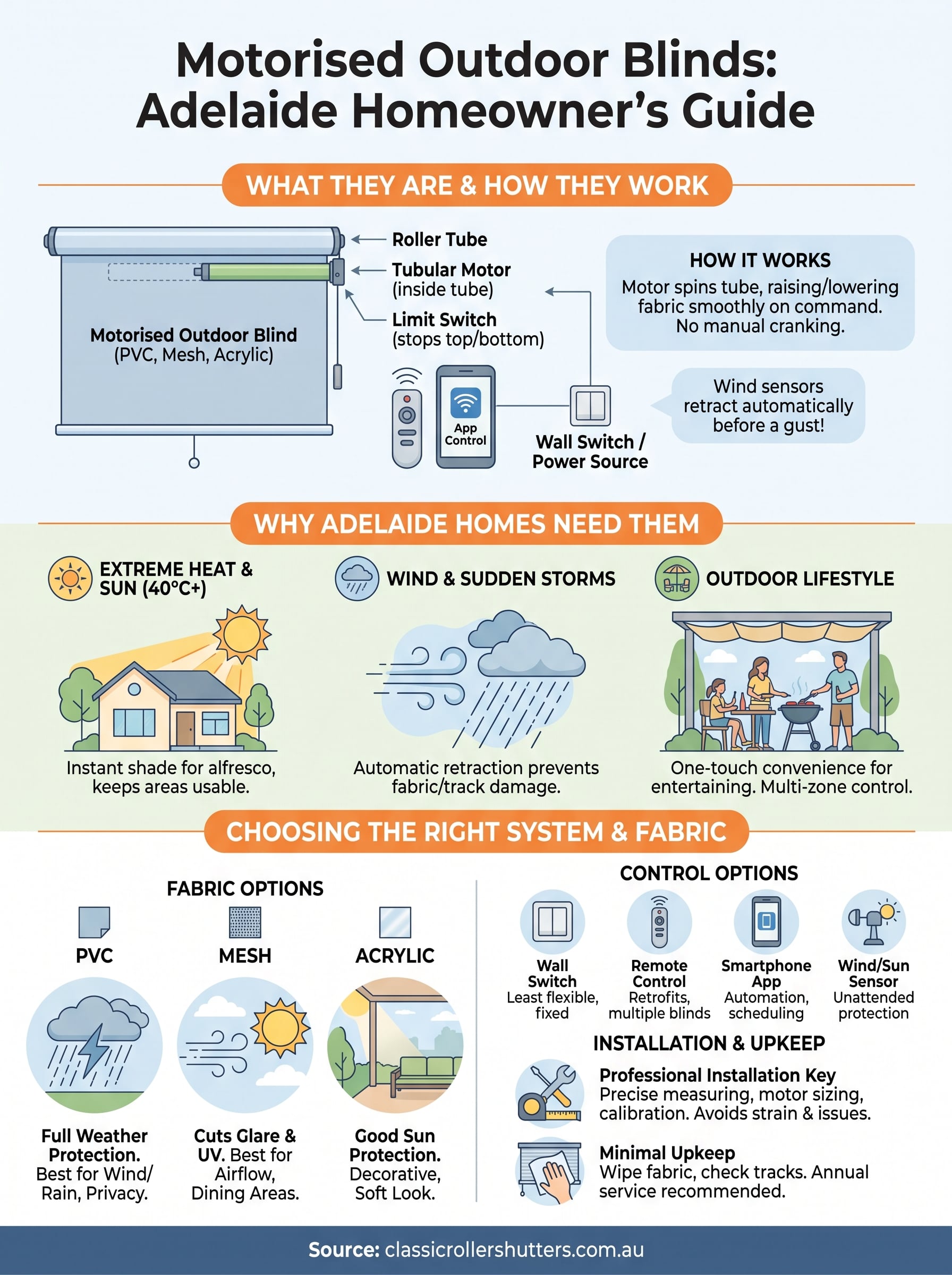
Getting your outdoor space ready
A motorised outdoor blind isn’t just a convenience upgrade, it’s a proper fix for Adelaide’s heat, wind and unpredictable weather changes. Once you understand the motor, control options and fabric choices covered above, you’re in a much stronger position to get a system that suits how you actually use your alfresco area, rather than whatever’s cheapest online.
Getting the right setup comes down to accurate measuring, correctly sized motors, and installation by people who’ve seen how these systems hold up locally over years, not just on a spec sheet. That local knowledge is what separates a blind that runs smoothly for a decade from one that’s back in the workshop within two summers.
If you’re ready to shade your outdoor space properly, get a free in-home quote from Classic Roller Shutters and we’ll measure, recommend the right motor and fabric, and get it installed before the next heatwave hits.