If you’re weighing up roller shutters vs security screens, you’re probably trying to figure out which option gives you the best combination of security, insulation, and everyday practicality for your Adelaide home. Both products protect your property, but they do it in fundamentally different ways, and choosing the wrong one can mean missing out on benefits that actually matter to your situation.
At Classic Roller Shutters Adelaide, we’ve spent over 40 years manufacturing and installing roller shutters across Adelaide. We’ve had thousands of conversations with homeowners asking this exact question, and the honest answer is that it depends on what you prioritise most, whether that’s temperature control, airflow, noise reduction, or pure security.
This comparison breaks down the real differences between roller shutters and security screens across the factors that matter most. By the end, you’ll have a clear picture of which product fits your home, your budget, and your lifestyle.
What each option is and how it works
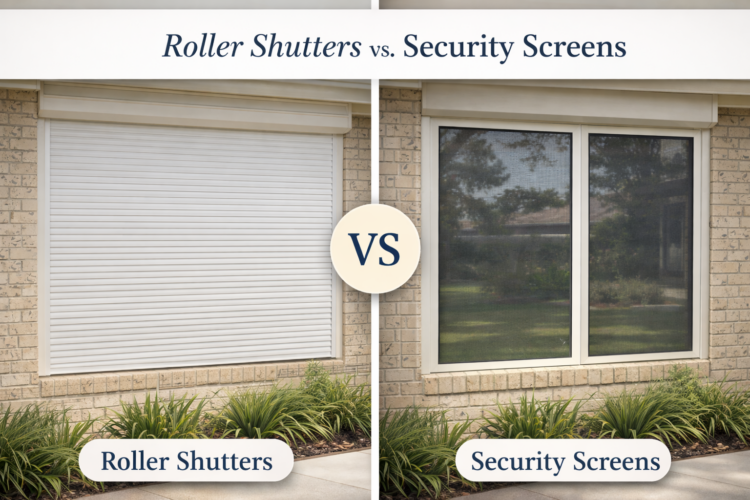
When comparing roller shutters vs security screens, it helps to start with how each product is built and what job it was designed to do. Roller shutters are solid aluminium slat systems that mount outside your window or door and roll up into a housing box when not in use. Security screens are fixed or hinged mesh panels made from stainless steel or aluminium that sit directly over your window or door opening. Both are exterior products, but that is roughly where the similarities end.
Roller shutters
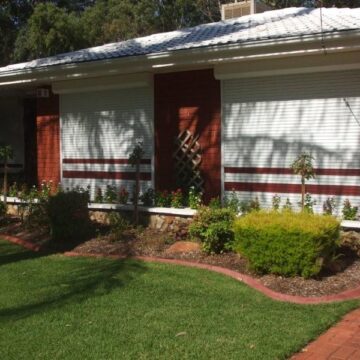
Roller shutters are built from interlocking aluminium slats that form a continuous solid barrier when closed. You can operate them manually with a pull strap or crank handle, or upgrade to an electric motor that lets you raise and lower them with a switch, wall panel, or remote control. When fully closed, the slats block light, reduce heat transfer, and create a barrier between your living space and the outside environment.
Roller shutters give you full control over light, privacy, and airflow at any point during the day, which a fixed screen cannot match.
The shutter sits inside a head box mounted above the window, with guide channels on each side keeping the slats aligned as they travel. This design lets you raise the shutter partially for some air movement while still limiting direct sun, or close it entirely for maximum insulation and security.
Security screens
Security screens use a rigid framed mesh panel fixed directly over your window or door opening. The mesh is typically made from marine-grade stainless steel or powder-coated aluminium, both rated to resist cutting, impact, and corrosion. Unlike a basic flyscreen, a security screen is built to withstand a genuine forced entry attempt.
Because the screen stays in one fixed position, it allows air and light to pass through at all times. You cannot adjust shade or privacy levels the way you can with shutters. What you get instead is constant ventilation and a consistent level of physical protection without any action required on your part.
How they compare for security and safety
When you look at roller shutters vs security screens purely from a security standpoint, both products offer genuine protection, but they work in very different ways. Security screens are purpose-built to resist physical attack, while roller shutters combine a security barrier with other benefits like blackout, insulation, and noise reduction.
Security screens
Security screens are tested against Australian Standard AS 5039, which covers resistance to impact, jemmy attack, and knife shear. A screen that meets this standard is rated to stop an intruder from cutting through the mesh or forcing the frame out of the wall. Marine-grade stainless steel mesh resists cutting tools far better than standard aluminium, and multi-point locking systems secure the frame at multiple contact points along the door or window.
A screen rated to AS 5039 gives you independently verified protection against forced entry, which is worth confirming before you buy.
Roller shutters
Roller shutters provide security in a different way. When the slats are fully closed and locked, they block all visibility into your home, which removes the appeal of your property as a target. The reinforced aluminium slat construction resists prying and lifting, and a secured shutter significantly slows down any forced entry attempt. Because the shutter covers the entire window frame and sits within side channels, there is no exposed gap for tools to be inserted from the outside.
Light, airflow, noise and privacy trade-offs
When you compare roller shutters vs security screens on everyday liveability, roller shutters give you far more control over your environment. Security screens are fixed, so you get consistent airflow and light but no ability to adjust either throughout the day.
Roller shutters
Roller shutters let you control exactly how much light enters a room by raising or lowering the slats to any position. Fully closed, they block virtually all external light, which makes them a strong option for bedrooms, home theatres, or anyone who works night shifts. The aluminium slat construction with foam-filled cores also creates a measurable barrier against traffic noise and street sounds.
Foam-filled roller shutter slats can reduce outside noise significantly, which makes a real difference on busy suburban streets.
Privacy is complete when the shutter is closed, and you can achieve partial privacy by setting the shutter at a low position without blocking airflow from your open window underneath.
Security screens
Security screens allow continuous airflow through the mesh at all times, which suits homes that rely on natural ventilation rather than air conditioning. They do not reduce light or noise in any meaningful way.
Privacy depends entirely on your distance from the screen and the lighting conditions inside versus outside. At night with interior lights on, a security screen provides very limited privacy, since the mesh offers little visual obstruction from the outside.
Weather protection and energy efficiency
When you weigh up roller shutters vs security screens for weather protection, the two products perform very differently. Adelaide summers push temperatures well above 40°C, and the right product on your windows can meaningfully reduce the heat load inside your home. Roller shutters close completely to block direct sunlight before it reaches the glass, which is where real energy savings come from.
Roller shutters
Roller shutters are one of the most effective ways to reduce heat gain through windows during Adelaide’s summer heat. When you close a roller shutter, it creates a buffer of insulated air between the slat and the glass, which slows heat transfer in both directions. Foam-filled slats improve this effect further, helping keep rooms cooler in summer and retaining warmth during winter nights.
Closing your roller shutters before the hottest part of the day can reduce the load on your air conditioner significantly, which adds up on your energy bill over a full Adelaide summer.
Security screens
Security screens offer no meaningful insulation against heat or cold. The mesh allows radiant heat and air to pass through freely, so they do not reduce the thermal load on your windows.
Natural ventilation is where security screens do contribute to comfort. They allow you to leave windows open safely during cooler evenings, which supports passive cooling without needing air conditioning at all.
Cost, maintenance and installation in Adelaide
When you weigh up roller shutters vs security screens in practical terms, upfront price, ongoing maintenance, and installation complexity all factor into the total cost of ownership. Neither product is maintenance-free, but they do require attention in different areas.
Upfront cost
Roller shutters generally cost more than security screens, mainly because they include a motor, housing box, guide channels, and a more complex installation process. Prices vary based on window size, slat type, and whether you choose manual or electric operation. Security screens sit at a lower price point per opening, though heavy-duty stainless steel mesh options with multi-point locking will cost more than basic aluminium mesh versions.
Getting a quote based on your actual window sizes is the most reliable way to compare total cost across both products.
Maintenance
Roller shutters need periodic lubrication of the guide channels and occasional inspection of the slats and motor to keep them running smoothly. Aluminium slats are durable, but physical damage from impact or extreme weather can require slat replacement. Classic Roller Shutters Adelaide offers a dedicated repair division for exactly this.
Installation
Both products require professional installation to perform correctly. Roller shutters need precise fitting of the head box, channels, and motor wiring if electric. Security screens must be anchored correctly into the surrounding frame to meet Australian Standard AS 5039, so DIY installation is not recommended if you want the security rating to hold.
A simple way to decide
When you’re choosing between roller shutters vs security screens, the decision comes down to what you need most from your windows. If temperature control, noise reduction, and blackout capability matter to you, roller shutters are the stronger choice. If you want constant ventilation and a low-maintenance fixed barrier, a security screen suits your needs better. Many Adelaide homeowners install both on different openings, using roller shutters on bedrooms and living areas, and security screens on entry doors where airflow is the priority.
Your budget and the specific opening also shape the answer. Larger windows and west-facing walls exposed to direct afternoon sun benefit most from roller shutters, while doors and smaller openings where you want air moving without any daily action from you are better suited to a screen. If you’re still unsure which product fits your home, talk to the team at Classic Roller Shutters Adelaide for a free in-home quote and honest advice based on your specific situation.