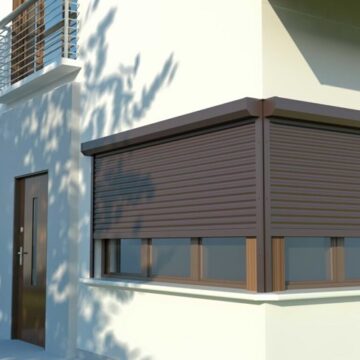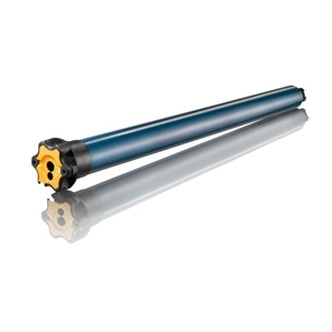
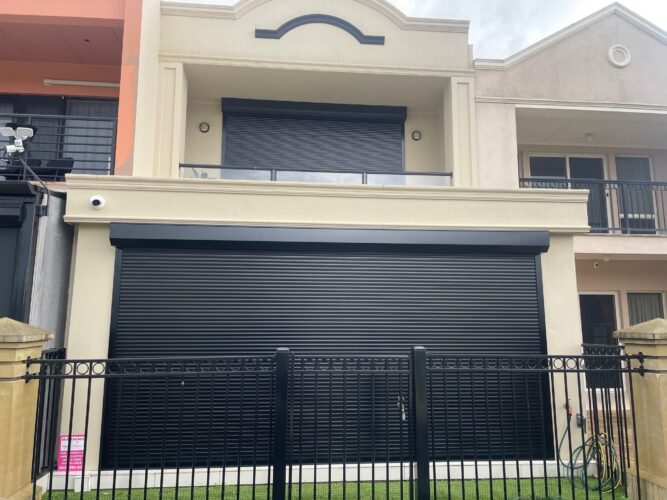
Security shutters — often called roller shutters — are aluminium or steel slats that roll down in guides to cover your windows and doors. Locked in place, they create a strong physical barrier that helps deter break-ins, while also cutting heat, glare and street noise. In Adelaide’s hot summers and stormy spells, they add protection against flying debris and ember attack in bushfire-prone areas. Controls range from simple manual winders to electric, battery and smart-home options, and the finish is usually powder-coated to match your façade.
This 2025 Adelaide buyer’s guide shows you how to compare brands and quotes fairly. We’ll explain shutter types and slat profiles, the specs that matter (thickness, box size, motors, safety overrides), typical local prices and what drives costs. You’ll learn what to check in warranties and after-sales support, what happens at installation, current lead times, and how to plan from floor plans. We’ll cover compliance in SA, alternatives to consider, and exactly what to measure before you request like-for-like quotes from trusted Adelaide installers.
Benefits of security shutters for Adelaide homes and businesses
Security shutters in Adelaide add a tough, visible barrier that deters break‑ins while improving comfort and control. By stopping sun before it hits the glass, they reduce heat gain, glare and fading, help quiet busy streets, and protect windows in storms and high fire‑danger conditions. For homes and shopfronts alike, they deliver privacy and peace of mind after hours.
- Stronger security: Interlocking aluminium slats in side guides make forced entry harder and act as a visible deterrent.
- Heat control & efficiency: Block direct summer sun and improve winter insulation for more stable indoor temperatures.
- Noise & light management: Cut traffic noise and achieve true blackout for bedrooms, media rooms or shift work.
- Weather & ember shielding: Help protect glazing from wind‑borne debris and reduce ember exposure when closed.
- Operational convenience: Options for manual, electric, battery and smart timers for effortless daily use.
- Commercial benefits: After‑hours protection for shopfronts to reduce vandalism risk and downtime.
Types of security shutters and slat profiles
Choosing the right build matters because slat construction and profile determine strength, insulation, visibility and box size. For most homes in Adelaide, foam-filled aluminium delivers quiet, efficient daily use, while shops and wider openings often step up to heavier extruded slats. Security shutters Adelaide buyers should match profile to span, location and risk.
- Foam-filled aluminium (residential): Lightweight, insulated slats for heat, glare and noise control with a compact headbox.
- Extruded aluminium (heavy-duty): Thicker, stronger slats for higher security, wider spans, shopfronts and roller doors.
- Solid/opaque slats: Maximum privacy and blackout for bedrooms, media rooms and street-facing windows.
- Vision/perforated slats: Punched openings for airflow and “see‑through” after hours on commercial frontages.
- Enhanced weather/bushfire options: Reinforced guides and bottom bars for exposed sites and higher wind or ember risk.
- Profile choices: Slimline or heavy-duty, curved or flatter looks; ventilation slots optional to balance light and airflow.
Key features and specifications to compare in 2025
When you’re lining up security shutters Adelaide quotes in 2025, insist on like‑for‑like specifications. Small differences in slat profile, guide design and motor quality can change strength, noise levels, headbox size and lifetime cost. Ask each supplier to spell out exact materials, ratings and inclusions so you can compare fairly.
- Slat profile: Foam‑filled vs extruded; thickness; ventilation slots.
- Headbox: Size and shape; compact fascia options.
- Side guides/wind‑locks: Guide depth, reinforcement, fixings.
- Bottom bar/seals: Rigidity, draught and light sealing.
- Span & wind rating: Maximum width and stated performance.
- Drive type: Manual, 240V electric or battery; manual override.
- Motor/controls: Brand, torque, remotes, smart compatibility.
- Privacy/vision: Solid blackout vs perforated/vision slats.
- Finish: Powder‑coat colours and corrosion protection.
- Warranty/service: Parts, labour, onsite support and local repairs.
Security shutter prices in Adelaide (2025)
In Adelaide, security shutters are typically priced per opening after a site measure. Quotes vary with slat type (foam‑filled vs extruded), width and height, control method (manual, 240V motor or battery/smart), headbox and guide design, installation complexity, electrical work, access and any removals. Commercial/vision slats and bushfire or wind‑lock upgrades also move the needle. Most reputable suppliers quote turnkey supply and installation with GST; ask for a clear inclusions list so you can compare like‑for‑like across brands.
- Slat/profile and colour finish
- Headbox size, side guides and bottom bar spec
- Drive type, motor brand, remotes and manual override
- Electrical allowances (powerpoints, switchgear) and disposal of old
- Warranty terms (parts and labour) and stated lead time
Tip: group openings, choose standard colours, and mix manual/motorised where practical to keep your total down.
What affects the cost of security shutters
Two quotes can look similar yet differ by a lot once you scan the fine print. Security shutters Adelaide pricing hinges on opening size, slat strength, how they’re driven, and how tricky the install is. Weather/security upgrades, colour choices and site electricals all add up. Commercial spans and shopfront vision slats carry different hardware and labour. Use the points below to brief suppliers consistently.
- Opening size & quantity: Wider/taller shutters need heavier profiles; multiple openings can lower unit cost.
- Slat profile: Foam‑filled (residential) vs extruded (heavy‑duty); vision/punched slats cost more.
- Guides & wind‑locks: Deeper guides, reinforcement and storm/wind upgrades add materials and time.
- Controls & automation: Manual is cheapest; 240V or battery motors, remotes and smart hubs add.
- Electrical allowances: Powerpoints, cabling, isolators, switches/timers and licensed electrician labour.
- Access & complexity: Upper storeys, tight access, scaffolding/boom hire, removal of old awnings.
- Finish & colour: Standard powder‑coat vs custom colours/coastal-grade coatings.
- Site exposure: Higher wind ratings and added sealing/hardware for exposed or bushfire‑prone locations.
How to compare quotes fairly
When you’re lining up security shutters Adelaide quotes, insist on itemised, like‑for‑like specifications. Ask each supplier to price the same slat profile and drive type on the same measured openings, and to spell out inclusions and exclusions. That way a cheap price isn’t simply missing electrical work, access equipment or GST. Request a written spec sheet and a one‑page inclusions list you can compare side‑by‑side.
- Exact sizes per opening: Confirm measured width/height and count.
- Slat/profile detail: Foam‑filled vs extruded, thickness, vent slots.
- Headbox/guides: Box size/shape, guide type, wind‑locks.
- Drive and motor: Manual/240V/battery, motor brand/torque, manual override.
- Electrical scope: Powerpoints, cabling, licensed electrician included.
- Inclusions list: Access (scaffold/boom), removal/disposal, finish/colour, GST, lead time, warranty and payment schedule.
Warranty and after-sales support: what to look for
With security shutters, the real value shows up years after install. Don’t just compare “years” on a brochure—check exactly what’s covered, who services Adelaide metro/regional areas, and how fast they respond. Insist on written terms separating parts, labour and call‑outs, and make sure motors, controls and workmanship are backed by brands with local parts and technicians.
- Written coverage: Parts vs labour, onsite call‑out, travel fees, and clear exclusions in plain English.
- Workmanship warranty: Coverage for installation defects and how remedials are handled.
- Motors & controls: Recognised motor brand, local parts access, and a manual override on powered shutters.
- Electrical compliance: Licensed electrician, certificates, and documented switch/isolator locations.
- Service capability: Adelaide-based repairs, typical response times, and after-hours options for shopfronts.
- Spare parts availability: Slats, guides, seals, remotes and motor replacements stocked locally.
- Maintenance requirements: Cleaning/lubrication schedule and whether servicing is needed to keep warranty valid.
- Transferability: Whether the warranty transfers if you sell the property.
- Consumer rights: Confirmation that Australian Consumer Law protections apply alongside any stated warranty.
What to expect during installation
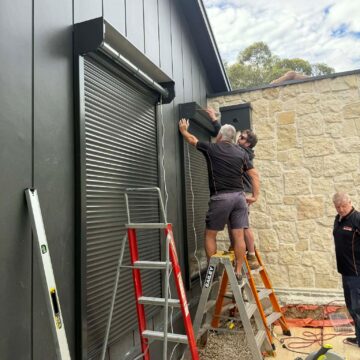
On install day, your team installs your security shutters, confirms sizes and control sides, protects work areas, fixes side guides and headbox, feeds the curtain, then sets travel limits and checks smooth operation. For electric/battery units, a licensed electrician connects and tests, pairs remotes or switches, and shows the manual override. Penetrations are sealed, site cleaned, and basic care and warranty notes explained.
- Clear access: Move furniture, blinds and pelmets.
- Power available: Switchboard access for isolation if needed.
- Parking/driveway space: Allow room for ute/van and ladders.
- Pets secured: Expect drilling noise and some dust.
- Upper-storey installs: May need scaffold/boom—confirm in quote.
- Wi‑Fi details ready: For smart control setup if selected.
New builds and renovations: planning from floor plans
For security shutters Adelaide new builds and renos, planning from floor plans keeps costs predictable and the finish seamless. Classic Roller Shutters can quote directly from drawings, coordinate with your builder and electrician, and confirm sizes, fixings, recesses and power before frames go up. For renovations, measured sketches and clear photos achieve the same accuracy without delays.
- Window/elevations: Mark exact sizes and choose control sides.
- Headbox allowance: Set recess/pelmet depth and service access.
- Solid fixing: Provide timber/steel at guides (avoid foam‑only).
- Pre‑wire: GPO near headbox; conduit to switch/smart hub/isolator.
- Site conditions: Note wind/bushfire exposure and preferred colours early.
Electric, battery and manual controls (including smart options)
Controls shape day‑to‑day use. Security shutters Adelaide buyers typically choose manual winders, hard‑wired 240V motors or cord‑free battery motors, then add remotes or smart automation. Base your choice on shutter size, frequency of use and power access. Always specify a manual override on powered shutters (especially exits), and use a licensed electrician for any hard‑wired connections.
- Manual crank/winder: Lowest cost, no wiring; best for small, infrequent‑use openings.
- 240V electric: Push‑button convenience and stronger torque; needs pre‑wire and an electrician.
- Battery motor: Clean retrofit with no cabling; plan periodic recharging; check torque vs size.
- Smart control: App, schedules, groups and voice; needs compatible motors/hub and reliable Wi‑Fi.
- Remotes & wall switches: Mix for redundancy; group multiple shutters for one‑touch control.
Design and colour choices
Style-wise, security shutters Adelaide projects can blend in or make a statement. Aluminium components are powder‑coated in standard colours for best value, with custom colours available at extra cost and often longer lead times. Decide on headbox shape (square or curved), side‑guide presence as an architectural line, and whether you want solid blackout slats or vision/perforated slats for display and airflow. For coastal sites, ask about corrosion‑resistant finishes to keep the look fresh.
- Colour strategy: Match window frames/trim or choose a contrasting feature tone.
- Headbox line: Keep box heights consistent across the façade for a clean look.
- New builds: Recess pelmets to conceal boxes and guides for a seamless finish.
Energy efficiency, noise reduction and light control
External roller shutters act as the first line of defence for comfort in Adelaide’s hot summers and cool nights. By stopping sun before it hits the glass, they cut heat gain; foam‑filled aluminium slats and sealed guides add a still‑air layer that slows heat flow and helps retain warmth in winter. The curtain’s mass plus the air gap also dampen traffic and neighbourhood noise. Solid slats achieve near‑blackout, while vent slots and perforated/vision options let you fine‑tune daylight and privacy for bedrooms, media rooms and shopfronts.
- Energy efficiency: External shading, insulated slats and good seals reduce reliance on AC and heating.
- Noise reduction: Heavier profiles, deeper guides and bottom‑bar seals help quiet busy streets.
- Light control: Choose solid for blackout, vented/perforated for daylight and display.
Security, bushfire and local compliance in South Australia
Security shutters in Adelaide do double duty: a break‑in deterrent and added protection in storms and bushfire‑prone areas. Choose metal slats and robust guides; when closed, they can help limit ember entry and shield glazing, but they’re not a substitute for compliant windows, screens or building measures under the National Construction Code. On bedrooms and escape paths, ensure an internal manual override so occupants can exit. Hard‑wired motors must be installed by a licensed electrician.
- Emergency egress: Internal manual override on powered shutters.
- Bushfire suitability: Metal slats, sealed guides; get a supplier statement.
- Wind performance: Confirm spans, fixings and stated wind exposure.
- Electrical compliance: Licensed install with an electrical Certificate of Compliance.
- Commercial frontage: Don’t obstruct exits or required safety signage.
Maintenance, repairs and upgrades
Look after security shutters and they’ll run quietly for years. A simple care routine in Adelaide’s climate is to clean the curtain, guides and bottom seals a few times a year (more often near the coast), check screws and end stops, and operate each shutter fully to spot drag or misalignment early. For anything powered, keep remotes handy, know your manual override, and use a licensed electrician for hard‑wired faults or motor swaps.
- Routine care: Hose off dust, wash with mild soapy water, rinse and dry; avoid abrasive cleaners and pressure on the headbox.
- Easy user checks: Replace remote batteries, re‑pair remotes, and have travel limits re‑set if the shutter stops short or over‑runs.
- Common repairs: Replace damaged slats/bottom bars, bent guides, worn straps/winders, failed motors or controls; re‑secure loose fixings and reseal penetrations.
- Upgrades: Convert manual to 240V or battery motors, add smart control/timers, group remotes, fit new seals/brushes, and specify a manual override on powered units.
- When to call a pro: Jammed curtains, uneven rolling, grinding noises, water ingress around guides/headbox, or any electrical fault—book an Adelaide repair tech for all brands.
Commercial and shopfront security shutters
Adelaide retailers and commercial sites typically step up to extruded aluminium security shutters for wider spans, high traffic and after‑hours protection. Many choose vision/perforated slats to keep merchandise visible while discouraging smash‑and‑grab attempts; solid slats suit back‑of‑house or higher‑risk areas. Look for deep guides, reinforced bottom bars, wind‑locks and motorised 240V operation with keyed control. Ensure installs don’t block exits or signage, and insist on fast local repair support to minimise downtime.
- Exact opening sizes and mullion positions
- Slat style: solid or vision for display
- Controls: keyed switch, group control, manual override
- Electrical scope and isolator location; after‑hours service
Alternatives to consider (screens, outdoor blinds, glazing)
Not every opening needs a full metal shutter. If your priority is airflow, views or a lighter look, consider these options alongside security shutters Adelaide buyers commonly choose. Each solves a different problem—some improve comfort and daylight control, others add passive security—so match them to the room, risk level and budget.
- Security screens (stainless mesh): Let in air and light with a tough, tamper‑resistant frame; good everyday protection but not blackout.
- Track‑guided outdoor blinds: Excellent for shade, glare and wind on patios; comfort upgrade, not a security product.
- Laminated or double glazing: Better impact resistance and energy performance; still benefits from external shading.
- Safety/solar films: Add shatter resistance and UV control; won’t prevent determined entry.
- Internal blinds/curtains: Great for privacy and light control; minimal security or storm protection.
What to measure and prepare before getting a quote
Good quotes start with accurate info. For security shutters Adelaide, note simple site details and rough sizes so advice and pricing align on the first visit. Measure visible openings, decide face‑ or reveal‑fix, note power options, and flag anything that could affect access or emergency exit.
- Sizes: Width × height per window; face or reveal fix.
- Headbox space: Head clearance/pelmet depth for consistent lines.
- Substrate: Brick, concrete, timber, cladding; solid fixing at guides.
- Controls: Manual/240V/battery, control side; bedrooms need internal override.
- Power: Nearest GPO/pre‑wire; preferred switch; Wi‑Fi for smart.
- Obstacles/access: Pipes, lights, awnings; upper‑storey or narrow access.
- Exposure/finish: Coastal, wind, bushfire; colour; solid vs vision slats.
Lead times and timelines in 2025
Lead times for security shutters Adelaide in 2025 vary with supplier workload, season and site access. As everything is made‑to‑measure, the timeline runs from onsite measure and spec sign‑off, to production, any electrical works, then installation. On new builds, pre‑wire before linings and coordinate with other trades. For renovations, clear access and arrange removal of old awnings early. Get a written lead‑time range and install window; confirm who books electrician and access gear. Special colours, heavy‑duty profiles, smart hardware and regional travel can add time.
Frequently asked questions
Below are quick answers Adelaide buyers often ask about security shutters, from daily use to compliance and care. Use them to brief suppliers and sense‑check quotes; if in doubt, get written confirmation in your specification and warranty. Local site conditions, heritage overlays and power availability can affect what’s possible and how the job is installed.
- Are shutters OK on bedrooms and exits? Yes—specify an internal manual override and keep egress clear.
- Will they work in a blackout? Hard‑wired units use the manual override; battery motors run until flat.
- Do I need council approval? Usually not for typical installs; confirm strata and any heritage overlay with council.
- Will they make rooms too dark? Choose vented/perforated slats or stop part‑way for daylight.
- How do I clean them? Wash with mild soapy water, clear guides, and book service if noisy or dragging.
- Can I add smart control later? Often yes with compatible motors or by adding a suitable hub.
- How long do they last? Quality aluminium with periodic care lasts many years; motors and remotes are replaceable parts.
- Do they help in bushfire weather? They can shield glass and reduce ember entry; they don’t replace NCC/BAL measures.
Next steps
You’re clear on shutter types, specs, pricing and how to compare quotes. The fastest way to get value now is to brief every supplier the same and request like‑for‑like, itemised proposals. Choose on build quality, warranty support and install capability—not just price.
- Shortlist suppliers: Pick 2–3 Adelaide specialists with local manufacturing and in‑house repairs.
- Prepare info: Note sizes, fix type, control side and power; add photos/floor plans.
- Demand itemisation: Slat profile, headbox/guides, motor brand/override, electrical scope, warranty, lead time.
- Plan new builds: Coordinate pre‑wire, pelmets/recesses and egress early.
Ready to compare real numbers? Book a free measure and quote with Classic Roller Shutters Adelaide for factory‑direct pricing and expert local installation.