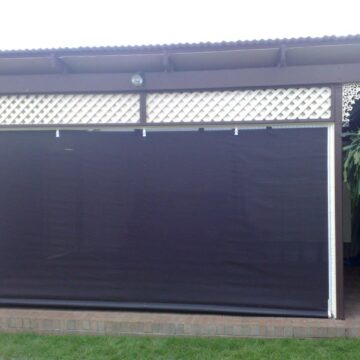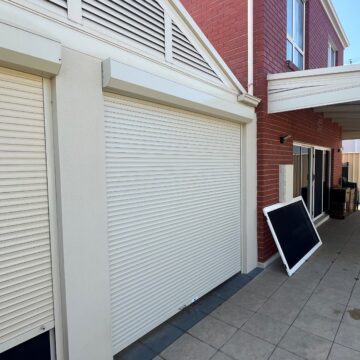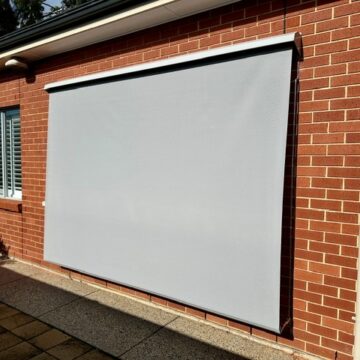
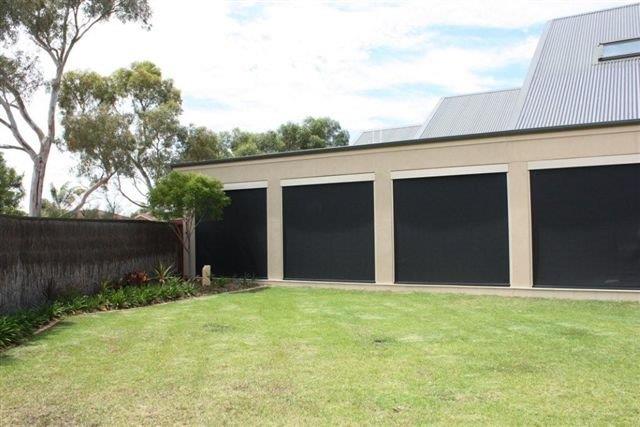
Adelaide’s outdoor entertaining season doesn’t have to end when the weather turns. With the right outdoor living blinds, you can transform a patio, pergola, or alfresco area into a space that works in summer heat, winter wind, and everything in between. The difference between an outdoor area you use occasionally and one you use year-round often comes down to how well it’s enclosed and protected.
But choosing the right blinds isn’t always straightforward. There are different styles, materials, and operating systems, each suited to different setups, budgets, and goals. Some prioritise airflow and views, while others focus on full weather protection. Knowing what’s available helps you make a decision you’ll actually be happy with long-term, rather than one that looks good on paper but falls short in practice.
At Classic Roller Shutters Adelaide, we manufacture, supply, and install outdoor blinds across Adelaide, including popular options like Zip Trak and Zip screen systems. With over 40 years of experience in the industry, we’ve helped thousands of homeowners and businesses get more from their outdoor spaces. In this guide, we’ll walk you through 11 types of outdoor living blinds worth considering, so you can find the right match for your home and how you like to entertain.
1. Ziptrak outdoor blinds
Ziptrak is one of the most popular outdoor living blinds systems available in Australia, and for good reason. It’s a purpose-built, track-guided system that handles wind, rain, and sun far better than most alternatives. If you want a high-performing blind that turns your outdoor area into a genuinely usable room, Ziptrak is worth serious consideration.
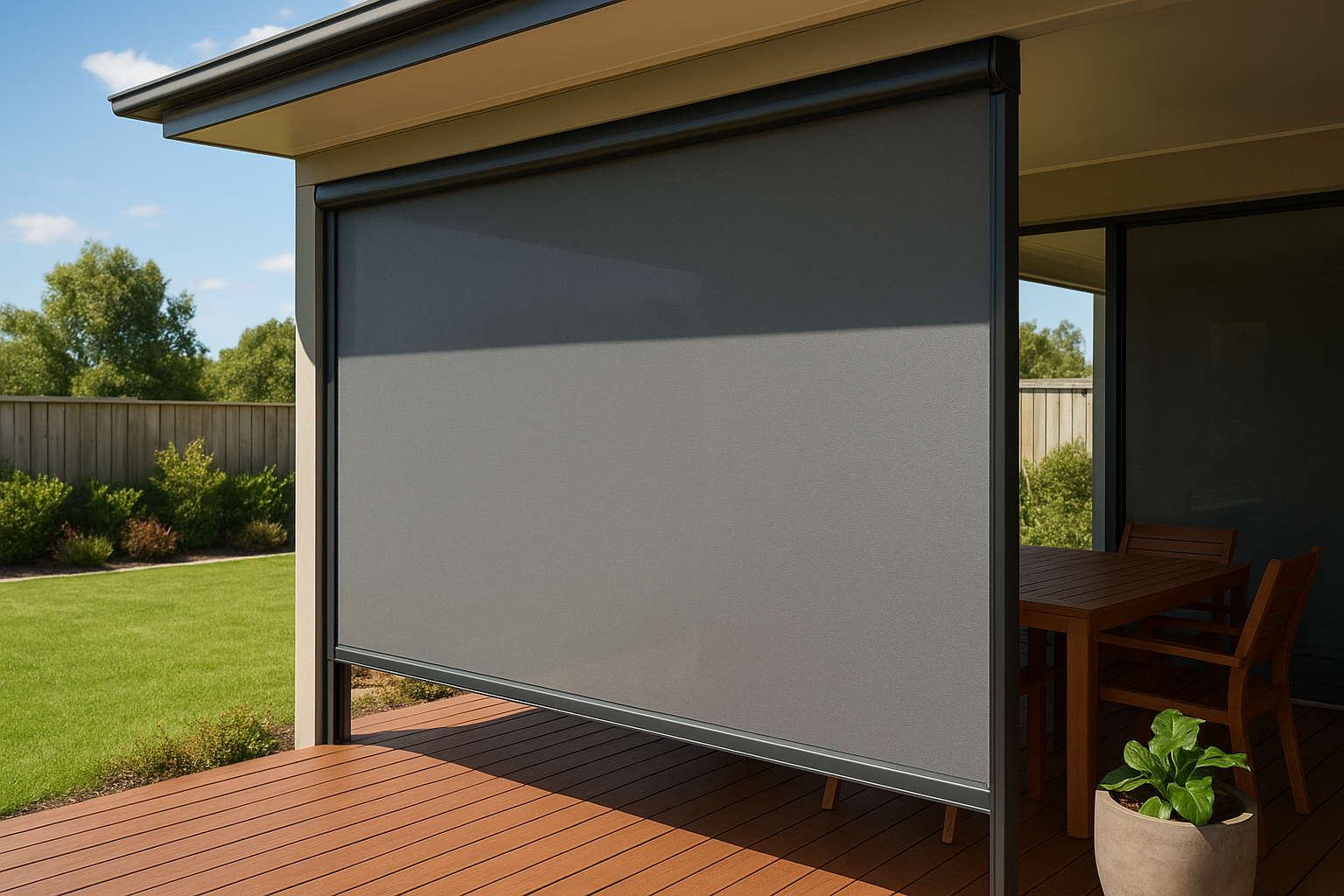
How Ziptrak outdoor blinds work
Each blind runs on a patented side-channel track system that guides the fabric from top to bottom without cords or zips. You push the blind down by hand and it locks in place at any height using a spring-tensioned bottom bar. No cords, no winding, no fuss.
The fabric sits sealed within the side channels, which stops wind from getting underneath or around the edges. This full perimeter seal is what separates Ziptrak from standard drop blinds. Consistent protection across the entire blind face, rather than just down the centre, is what makes this system perform so well in exposed outdoor areas.
Best use cases for Ziptrak outdoor blinds
This system works well in a wide range of settings, but it suits certain situations particularly well:
- Pergolas and alfresco areas where you want near-total enclosure
- Large openings where standard blinds would flex or billow in wind
- Homes in coastal or elevated Adelaide suburbs where wind is a regular issue
- Spaces where you want to adjust coverage quickly without tools or effort
Key trade-offs to know before you buy
These blinds are not the cheapest option on the market. The patented track system and quality fabrics push the price above standard drop blinds, so factor that into your budget from the start.
Because the system relies on specific track dimensions, custom sizing is essential, and retrofitting into existing structures sometimes requires additional structural work.
You also need adequate structural support on the sides and top of your opening for the tracks to mount correctly. For new builds or renovations, this is straightforward to plan for. For existing structures, have a professional measure up before committing.
Typical cost range in Australia
In Australia, Ziptrak blinds typically start from around $1200 to $2500 per blind for standard residential sizes, though pricing shifts depending on size, fabric choice, and whether you choose a manual or motorised system.
For a full alfresco enclosure with multiple blinds, total installed costs can range from $3,000 to $8,000 or more. Getting a quote based on your specific measurements is the most reliable way to plan your budget accurately.
2. Zip screen outdoor blinds
Zip screens are a close relative of Ziptrak but serve a different purpose. Where Ziptrak focuses on full weather enclosure, zip screens are designed primarily for sun and insect protection while keeping airflow through the space. They’re a practical outdoor living blinds option for areas where shade and ventilation matter more than complete wind or rain coverage.
How zip screen outdoor blinds work
Zip screens use a tension-based side channel system where the fabric threads through a zip-style track on both sides. This holds the screen taut and prevents it from bowing outward in a breeze. The fabric is typically a woven mesh or sunscreen material that blocks UV rays and cuts glare without fully blocking your view.
Most zip screens are also available in varying openness factors, ranging from tighter weaves that block more light to more open weaves that let in more airflow. This lets you match the fabric to your sun exposure and ventilation priorities.
Best use cases for zip screen outdoor blinds
These screens suit areas that receive direct afternoon sun but don’t face severe weather. They work particularly well for:
- East or west-facing pergolas and verandahs that catch strong morning or afternoon sun
- Outdoor areas where insect protection is a priority alongside shade
- Spaces where you want to reduce heat and glare while preserving an open feel
Key trade-offs to know before you buy
Zip screens are not built for heavy rain or strong wind the way a full Ziptrak system is. Water passes through mesh fabric, so if your outdoor area is fully exposed to the elements, zip screens alone may not be sufficient.
Zip screens perform best when paired with an existing pergola roof or overhead cover rather than used as a standalone weather barrier.
Typical cost range in Australia
Zip screens typically cost between $1200 and $2500 per blind, installed, for standard residential sizes. Final pricing depends on dimensions, fabric openness factor, and whether you choose manual or motorised operation.
3. Wire-guided outdoor roller blinds
Wire-guided outdoor roller blinds offer a middle ground between basic drop blinds and fully tracked systems like Ziptrak. They use tensioned stainless steel cables on each side to keep the fabric controlled in the wind, making them a solid outdoor living blinds option for covered pergolas and patios that need decent weather resistance without the premium price tag.
How wire-guided outdoor blinds work
The blind rolls down from a barrel at the top, and the fabric threads through stainless steel guide wires fixed at the base on each side. Tension in the wires keeps the fabric from billowing outward in moderate wind. You can operate these blinds manually via a pull strap or crank handle, or upgrade to a motorised system depending on your budget and convenience needs.
Best use cases for wire-guided outdoor blinds
These blinds work well in sheltered or semi-exposed outdoor areas. They suit:
- Covered pergolas where the roof handles rain and the blind manages wind and privacy
- Situations where budget is a priority but basic wind resistance is still needed
- Medium-sized openings where a fully tracked system may be more than required
Key trade-offs to know before you buy
Unlike fully tracked systems, wire-guided blinds don’t seal the fabric at the edges, so they’re not as wind-resistant as zip or Ziptrak options. In strong or gusty conditions, the wires can stretch and the fabric will still move noticeably.
If your outdoor area faces regular strong winds or driving rain, a fully tracked system will serve you better long-term.
Typical cost range in Australia
Wire-guided blinds are generally one of the more affordable professionally installed options, with most blinds falling in the $1000 to $1800 range per blind depending on size, fabric choice, and whether the system is manual or motorised.
4. Straight drop outdoor blinds
Straight drop blinds are the most straightforward outdoor living blinds option available. They roll down vertically from a mounted barrel above your opening and hang freely without side guides or tracks. If you’re after a simple, cost-effective solution for a sheltered outdoor area, straight drop blinds are worth a look.
How straight drop blinds work
A straight drop blind operates from a spring-loaded or motorised roller barrel fixed above the opening. The fabric drops straight down and is held in place by a weighted bottom bar. Most systems use a simple pull strap or cord to raise and lower the blind, though motorised versions are also available. Without side guides, the fabric hangs free on each side, which keeps the system simple but limits its performance in wind.
Best use cases for straight drop blinds
These blinds suit sheltered pergolas and verandahs where overhead cover is already in place and the main goal is privacy or light control rather than full weather sealing. They also work well on balconies that face away from prevailing winds or are protected by surrounding structures. For a straightforward aesthetic that doesn’t require complex installation, they’re a practical choice.
Key trade-offs to know before you buy
The lack of side guides means wind can push the fabric around significantly, which limits how useful these blinds are in exposed positions. They’re not designed to seal out driving rain or strong gusts.
If your outdoor area catches regular wind from any direction, a wire-guided or tracked system will hold up far better over time.
Typical cost range in Australia
Straight drop blinds are one of the most affordable professionally installed options, typically ranging from $800 to $1800 per blind depending on size and fabric.
5. Crank-operated patio blinds
Crank-operated patio blinds are a practical outdoor living blinds option that suits homeowners who want reliable control without relying on battery power or electrical wiring. The manual crank handle gives you precise, consistent operation and keeps maintenance simple over the long term.
How crank-operated patio blinds work
A crank-operated blind uses a side-mounted handle or wand connected to a gear mechanism that raises and lowers the fabric in a controlled, smooth motion. Unlike pull straps, the crank gives you steady tension throughout the full range of travel, so the blind won’t snap or jerk as it moves. These blinds can be fitted with a variety of fabrics, from mesh sunscreen to solid PVC, depending on what your space needs most.
Best use cases for crank-operated patio blinds
These blinds work best in outdoor areas where electricity access is limited or inconvenient, such as freestanding pergolas or older patio structures. They’re also a reliable choice for:
- Larger blinds where a pull strap would require too much effort to operate
- Situations where you want simple, low-maintenance operation with no motor to service
- Covered patios where consistent daily adjustment is part of the routine
Key trade-offs to know before you buy
The crank mechanism adds a small amount of hardware bulk to the side of the frame, which may not suit every aesthetic. You also need to be within reach of the handle to operate it, which can be awkward for very wide or tall installations.
For openings wider than three metres, a motorised system will generally be easier to operate day-to-day.
Typical cost range in Australia
Crank-operated patio blinds typically fall in the $1000 to $2000 per blind range installed, making them a mid-range option that sits above basic drop blinds but below fully tracked or motorised systems.
6. Outdoor café and bistro PVC blinds
Café and bistro PVC blinds are a practical and versatile outdoor living blinds option that started in commercial settings but has become increasingly popular in residential homes. They combine weather resistance with visibility, making them a strong choice for alfresco areas that need full enclosure without the feel of a sealed room.
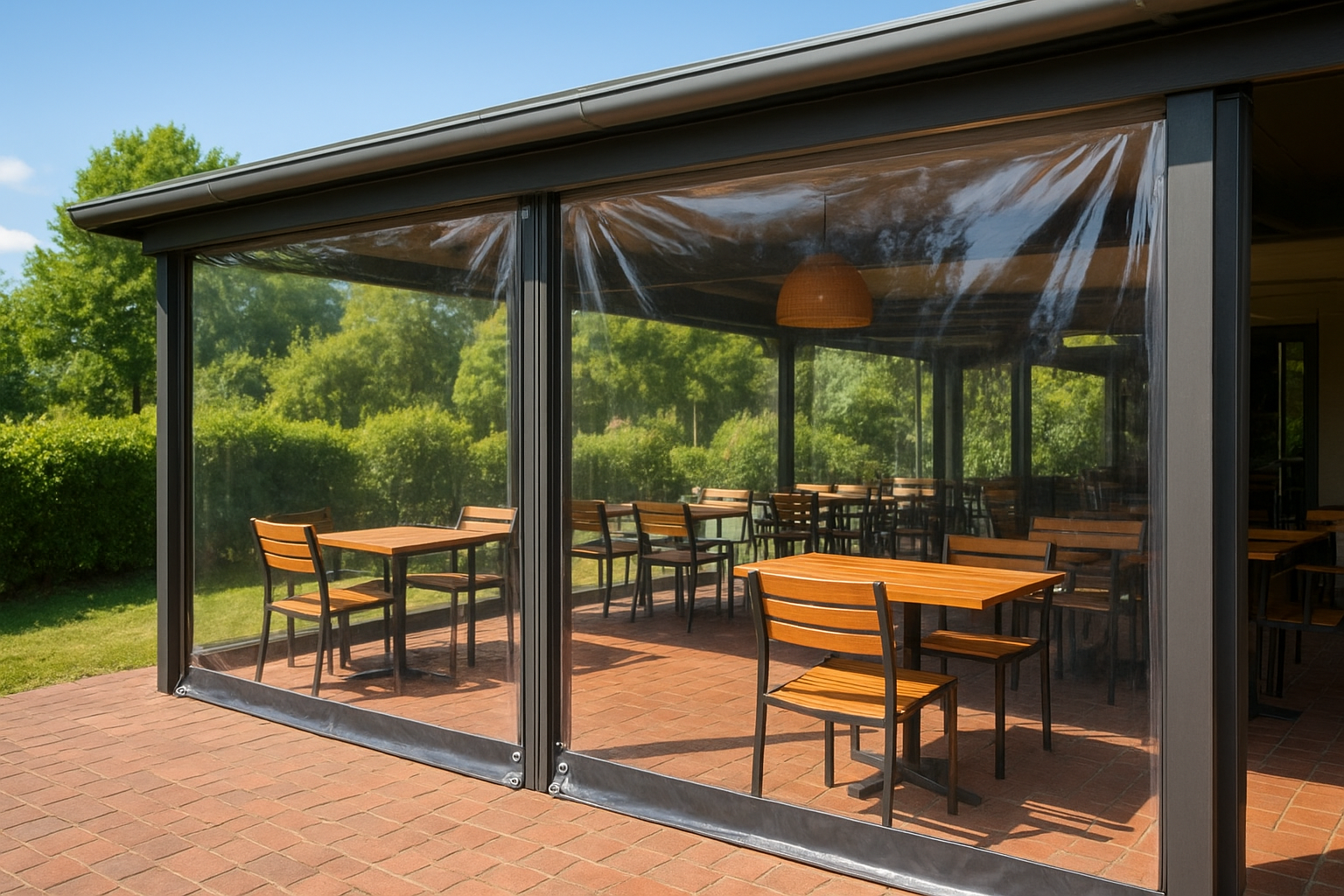
How café and bistro PVC blinds work
These blinds use clear or tinted PVC sheeting that either rolls from a barrel above the opening or drops from a fixed frame. The panels fasten at the base using snap hooks or velcro tabs to stay secure in wind. Some versions roll up completely out of sight when not in use, while others fold and stack at the top of the opening.
Best use cases for café and bistro PVC blinds
PVC blinds suit outdoor areas where full weather protection and unobstructed views both matter. They work particularly well for:
- Restaurants and cafés that need to enclose outdoor dining through cooler months
- Residential alfresco areas where you want to see the garden while staying sheltered
- Patios facing prevailing wind and rain that still need natural light to pass through
Key trade-offs to know before you buy
PVC can yellow and become brittle over time, especially in high UV environments like Adelaide summers. Budget versions tend to degrade faster, so the quality of the PVC you choose matters considerably.
Investing in UV-stabilised PVC from the outset will extend the life of your blinds and keep them looking clear for longer.
Typical cost range in Australia
Café and bistro PVC blinds typically range from $500 to $1500 per blind installed, depending on the panel size and PVC thickness you select.
7. Outdoor sunscreen mesh blinds
Outdoor sunscreen mesh blinds are a dedicated sun management solution rather than a full weather barrier. If your outdoor area gets heavy sun exposure but stays reasonably sheltered from wind and rain, these blinds give you UV protection and glare reduction without making the space feel closed in. They’re one of the most practical outdoor living blinds options for Adelaide’s long, hot summers.
How outdoor sunscreen mesh blinds work
Sunscreen mesh blinds roll down from a barrel-mounted header above the opening and use a woven polyester or fibreglass mesh fabric that filters sunlight without fully blocking your view. The fabric is rated by openness factor, typically expressed as a percentage, where a lower percentage means a tighter weave that blocks more light and heat. A 1% or 3% openness fabric gives strong glare reduction, while a 10% or 14% fabric lets in more light and airflow. Most systems use a pull strap or motorised operation depending on your setup.
Choosing the right openness factor for your specific sun angle and orientation will make a bigger difference to comfort than almost any other decision in this category.
Best use cases for outdoor sunscreen mesh blinds
These blinds are best suited for north or west-facing pergolas and alfresco areas that receive direct sun for most of the day. They work well where you want to keep your view of the garden or surrounds while reducing heat build-up and UV exposure for people and furniture inside the space.
Key trade-offs to know before you buy
Mesh fabric does not block wind or rain, so it works best under an existing pergola roof. In fully exposed areas, a more enclosed system will serve you better.
8. Outdoor privacy screen blinds
Privacy screen blinds are a purpose-built outdoor living blinds option for people who want to close off their outdoor area from neighbouring sightlines without creating a fully sealed enclosure. They give you visual privacy and a defined boundary while still allowing air to move through the space freely.
How privacy screen blinds work
These blinds use a densely woven or solid fabric that rolls down from a barrel header above the opening. The fabric is opaque or near-opaque, which blocks direct lines of sight from adjacent properties or the street. Most systems operate with a pull strap or motorised mechanism, and the blind hangs freely or attaches to guide wires depending on the setup you choose.
Best use cases for privacy screen blinds
Privacy screens work best in residential alfresco areas and courtyards that sit close to neighbouring fences or boundary lines. They also suit ground-floor entertaining areas on corner blocks or busy streets where passing foot traffic is an issue.
If your main goal is daytime privacy rather than weather protection, a privacy screen blind will often outperform a mesh or sunscreen fabric at a lower price point.
Key trade-offs to know before you buy
Because the fabric is dense and opaque, privacy screens reduce natural light more than mesh alternatives. They also do not provide meaningful wind or rain resistance, so they work best under an existing pergola or verandah roof rather than in a fully open exposed position.
Typical cost range in Australia
Privacy screen blinds typically range from $600 to $1800 per blind installed, depending on the size of the opening, fabric weight, and whether you choose manual or motorised operation.
9. Outdoor blinds with clear or tinted PVC panels
Clear and tinted PVC panel blinds offer a full weather barrier while keeping your outdoor area feeling bright and open. Unlike mesh or privacy screen options, these blinds close off your space completely while still letting natural light through. They’re a popular outdoor living blinds choice for homeowners who want genuine weather protection without sacrificing the view.
How clear and tinted PVC blinds work
These blinds use rigid or semi-rigid PVC sheeting mounted in a roller or panel system above your opening. Clear PVC allows full visibility through the blind, while tinted versions reduce glare and heat transmission by filtering the incoming light. The panels attach at the base using weighted bars or securing tabs to keep the PVC stable in light to moderate wind.
Best use cases for clear or tinted PVC blinds
These blinds work best in outdoor areas where rain and wind protection are the priority but natural light still matters. They suit alfresco dining areas that face winter weather, as well as pergolas adjacent to pools where water splash and privacy both need managing. Tinted options are particularly useful on west-facing structures that receive strong late-afternoon sun.
If you want to enclose your outdoor area through winter without making it feel dark or closed in, clear PVC panels are one of the most effective ways to do it.
Key trade-offs to know before you buy
PVC panels can scratch more easily than glass alternatives and will cloud or yellow with prolonged UV exposure if low-grade materials are used. Ventilation is also limited when the blinds are fully closed, which can cause heat build-up during warmer months.
10. Motorised outdoor blinds with smart controls
Motorised outdoor blinds bring automated convenience to any outdoor living blinds system you choose. Rather than manually adjusting your blinds throughout the day, you control everything with a remote, wall switch, or smartphone app, making it easy to respond to changing weather or sun angles without leaving your seat.
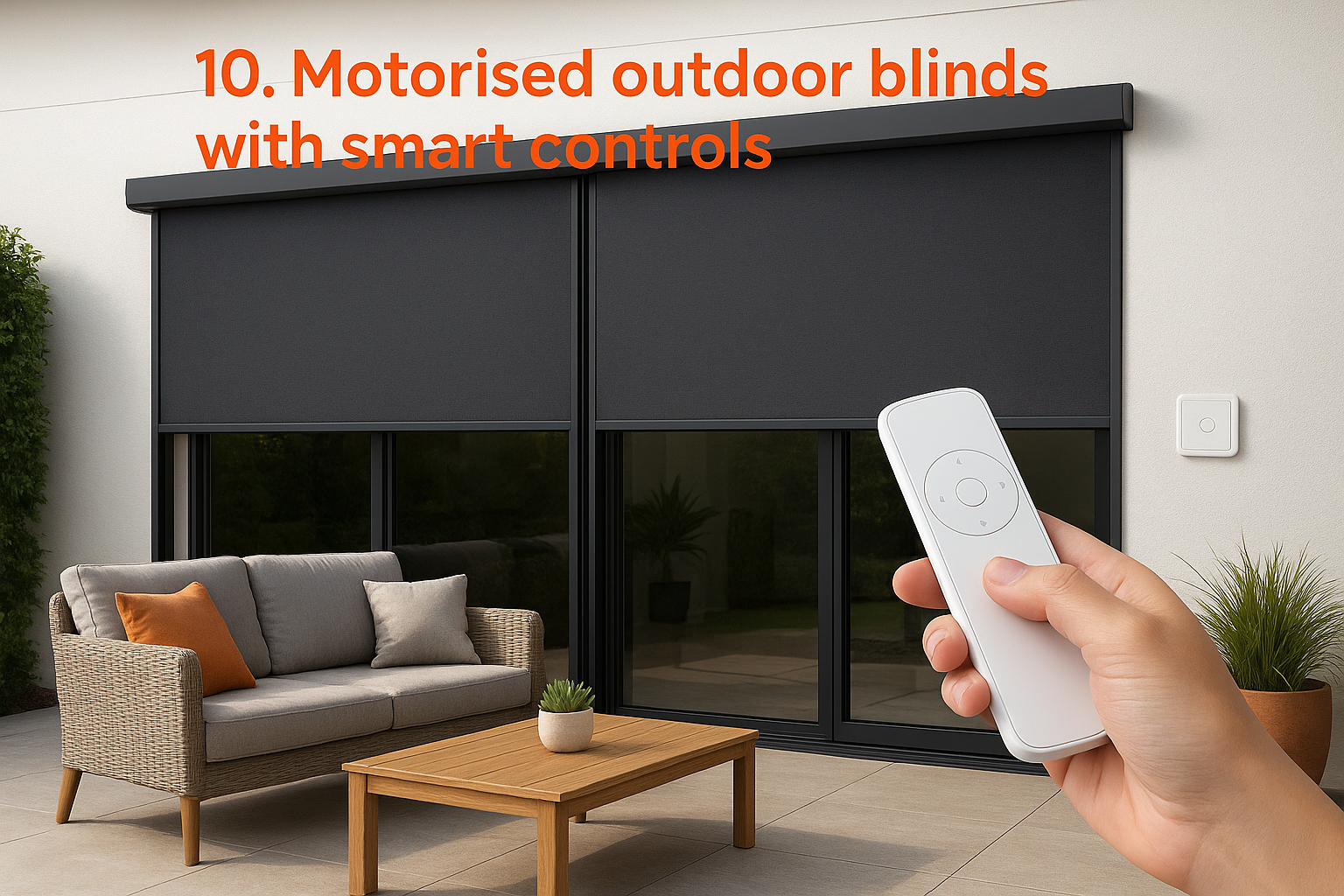
How motorised outdoor blinds work
A motorised system replaces the manual pull strap or crank with an electric motor housed inside the roller barrel above the opening. The motor connects to a control system, which can range from a basic remote handset through to full smart home integration via Wi-Fi or Bluetooth. Many systems are also compatible with wind and sun sensors that trigger the blinds to open or close automatically based on conditions.
If you have multiple blinds across a large outdoor area, smart controls let you operate all of them simultaneously from a single device rather than adjusting each one individually.
Best use cases for motorised outdoor blinds
Motorised systems work well for large or hard-to-reach openings where manual operation would be awkward or inconvenient. They also suit households where accessibility is a priority, such as for elderly residents or anyone who finds repeated physical effort difficult.
Key trade-offs to know before you buy
Motors require either a 240V power connection or a rechargeable battery, so electrical planning is essential before installation. Battery-powered motors avoid wiring costs but need periodic recharging, while wired motors offer more reliable long-term performance without that maintenance step.
Typical cost range in Australia
Motorised outdoor blinds typically add $500 to $900 per motor to the base cost of whichever blind system you choose, depending on the motor brand, control type, and whether you need new electrical wiring installed.
11. Outdoor aluminium shutters
Outdoor plantation aluminium shutters are a durable, long-term outdoor living blinds alternative that crosses the line between a blind and a permanent architectural feature. Where fabric-based systems flex and filter, aluminium shutters block, redirect, and protect with a level of rigidity that no fabric option can match.
How outdoor aluminium shutters work
Aluminium shutters consist of horizontal louvred blades set within a rigid aluminium frame that mounts directly to the exterior of your home or structure. You adjust the blades by rotating them open or closed, which controls light, airflow, and visibility simultaneously. Many systems offer manual rod operation or motorised control, giving you flexibility over how hands-on the daily adjustment process is.
Best use cases for outdoor aluminium shutters
These shutters suit homeowners who want a permanent, low-maintenance solution that adds structural character to their outdoor area. They work particularly well for:
- West-facing alfresco areas that receive intense afternoon sun
- Properties where security and cyclone or storm resistance matter alongside shade
- New builds or major renovations where the shutters can be integrated into the facade design from the start
Key trade-offs to know before you buy
Aluminium shutters are among the heavier and more expensive options in this category. Installation requires solid structural support, and the rigid frame means they’re less adaptable to irregular or non-standard openings than fabric systems.
If you want a solution that doubles as a security barrier and a sun control system, aluminium shutters offer a level of protection that fabric blinds cannot replicate.
Typical cost range in Australia
Outdoor aluminium shutters typically range from $1200 to $1,800 per panel installed, depending on blade size, louvre width, and whether you choose manual or motorised operation.
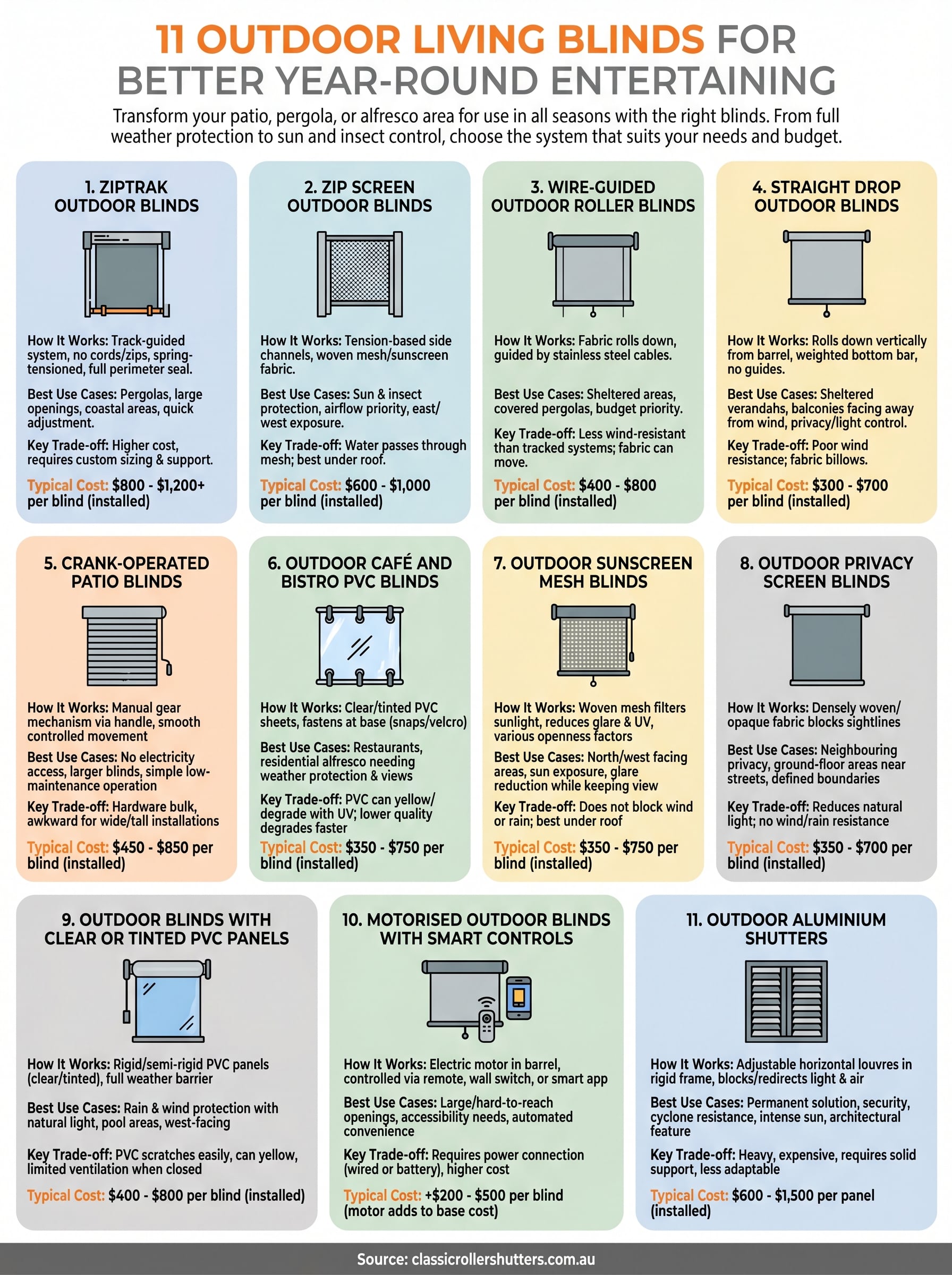
Next steps – 83692266
You now have a solid picture of what’s available across the outdoor living blinds market and how each option performs in real conditions. The right choice depends on how exposed your space is, how much weather protection you actually need, and what your budget allows. If you’re still unsure which system suits your setup, the best next step is to get a proper measure and quote from someone who knows the products well.
At Classic Roller Shutters Adelaide, we manufacture and install outdoor blinds locally in Adelaide, including Ziptrak and Zip screen systems. We offer free in-home consultations where we can assess your space, walk you through your options, and give you accurate pricing based on your actual measurements rather than estimates. No guesswork, no pressure. Get in touch with our team at Classic Roller Shutters Adelaide to book your free quote today.