Adelaide’s weather doesn’t do things by halves. You get scorching UV in summer, sudden southerly gusts, and the odd downpour that seems to come from nowhere. Pick the wrong fabric for your outdoor blinds and you’ll be replacing them in two years instead of ten, which is why finding the best material for outdoor blinds matters more than the colour or the price tag on the swing tag.
If you’ve been scrolling through options wondering whether PVC, acrylic canvas, mesh, or HDPE will actually hold up on your patio or alfresco area, you’re asking the right question. Each material behaves differently under UV exposure and Adelaide’s swings between dry heat and wind-driven rain, and the right pick depends on whether you want a clear view out, full privacy, or maximum airflow without the fade and crack you see on cheaper blinds after one hot summer.
In this guide, we compare five fabric types side by side, looking at durability, weather resistance, and how each one copes with real South Australian conditions. As a local manufacturer that’s fitted outdoor blinds across Adelaide for over 40 years, we’ll point you toward the material that suits your specific setup, not just the one that looks good in a showroom.
1. Mesh screen fabric
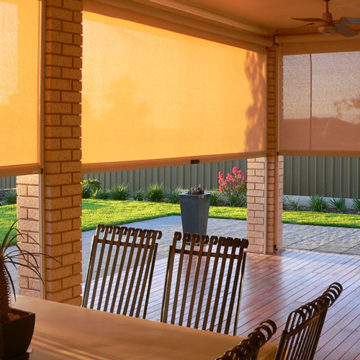
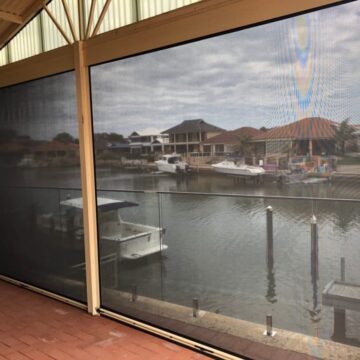
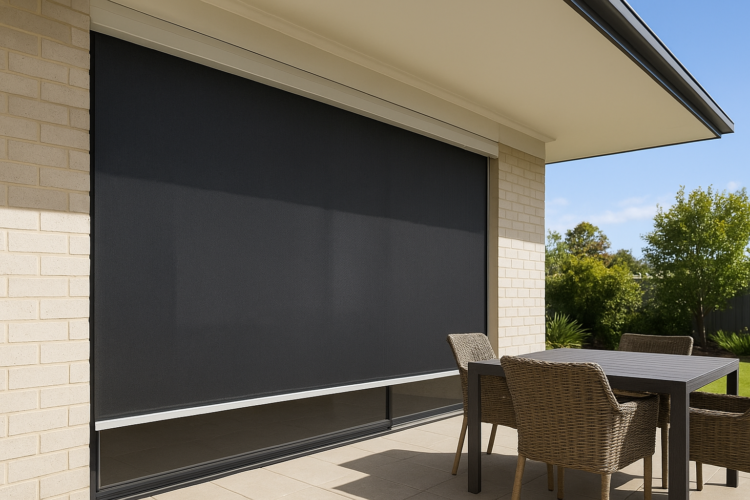
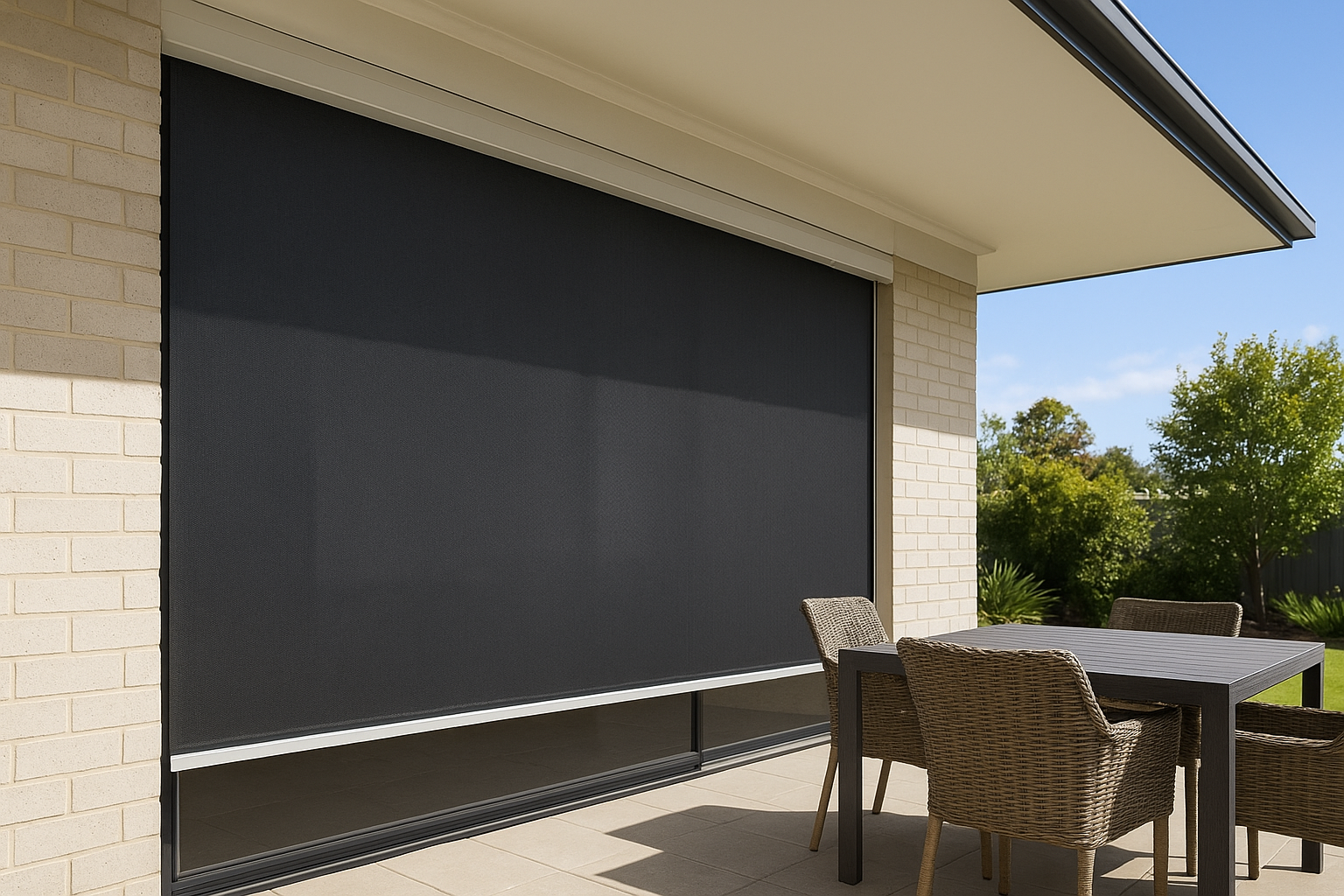
Mesh screen fabric, sometimes called PVC-coated polyester mesh, is a tightly woven material designed to block sun and wind while still letting air pass through. It’s the material you’ll see on most modern Zip Trak and Zip screen systems, tensioned in tracks so it stays flat even in a stiff breeze. Because it’s not a solid sheet, you get shade and privacy without turning your alfresco into a sealed box on a 35 degree day.
Weather and UV protection
Mesh fabrics are rated by their UV block percentage, usually somewhere between 85% and 99% depending on the weave density you choose. That range matters, because a 95% block fabric on a west-facing patio in Adelaide will feel noticeably cooler than a 85% one by mid-afternoon in February. It also copes well with wind, since the open weave lets gusts pass through rather than ballooning the blind like a sail.
A well-chosen mesh screen cuts glare and heat without blocking the breeze that keeps an alfresco livable in summer.
Durability and lifespan
Good quality mesh, properly tensioned in a zip track system, typically lasts 10 to 15 years in Adelaide conditions. The coating resists cracking better than raw PVC because the weave flexes with temperature changes instead of stretching as one rigid sheet.
Best suited for
Mesh suits alfresco areas, verandahs, and outdoor entertaining zones where you want to keep using the space during the day without losing airflow. It’s also the pick if you want to see out while blocking the view in from the street.
Maintenance and cost
Maintenance is minimal: a hose-down twice a year and an occasional check of the zip tracks and tension. Expect mesh systems to sit at the higher end of the price range compared to basic PVC, largely due to the track hardware, but the lower long-term running cost usually justifies it.
2. PVC blind fabric
Clear PVC blind fabric is the solid, see-through sheeting you’ll spot on cafe-style outdoor blinds where the goal is a fully enclosed space that still lets light in. Unlike mesh, it seals off wind and rain completely, so it works more like a soft wall than a screen. You’ll find it on plenty of Adelaide alfrescos where owners want a room they can actually shut up in winter.
Weather and UV protection
Clear PVC blocks wind and rain outright, but it’s the weakest performer here on UV resistance, since untreated sheeting yellows and turns brittle within a few Adelaide summers. Tinted or UV-stabilised versions hold up longer, though even these fade faster than mesh or acrylic under constant sun.
Clear PVC gives you a sealed, see-through space, but expect it to show its age well before the other materials on this list.
Durability and lifespan
Expect 5 to 8 years from PVC before cracking or clouding sets in, less on north or west-facing walls.
Best suited for
PVC suits enclosed patios and cafe blinds prioritising weatherproofing and visibility over long-term durability.
Maintenance and cost
It’s the cheapest option upfront, but wipe it down regularly and expect earlier replacement, which affects long-term value.
3. Acrylic canvas
Acrylic canvas is a solution-dyed woven fabric, the same family of material used on quality market umbrellas and awnings. The colour runs through each fibre rather than sitting on the surface, so it resists fading in a way printed or coated fabrics can’t match. It’s a popular choice when you want a solid, tailored look rather than the mesh or clear-panel styles.
Weather and UV protection
Acrylic canvas offers strong UV resistance, often rated above 95% block, and the solution-dyed fibres keep their colour even after years of direct Adelaide sun. It handles light rain reasonably well thanks to a water-repellent finish, though heavy, driving rain will eventually soak through.
Solution-dyed acrylic keeps its colour long after cheaper printed fabrics have faded to grey.
Durability and lifespan
Expect 8 to 12 years of solid performance if it’s tensioned properly and kept away from prolonged pooling water.
Best suited for
Acrylic suits shaded pergolas and semi-covered outdoor areas where sun control and appearance matter more than full weatherproofing.
Maintenance and cost
It sits mid-range on price, needs an annual clean, and rewards you with colour retention that outlasts basic PVC by years.
4. HDPE shade cloth
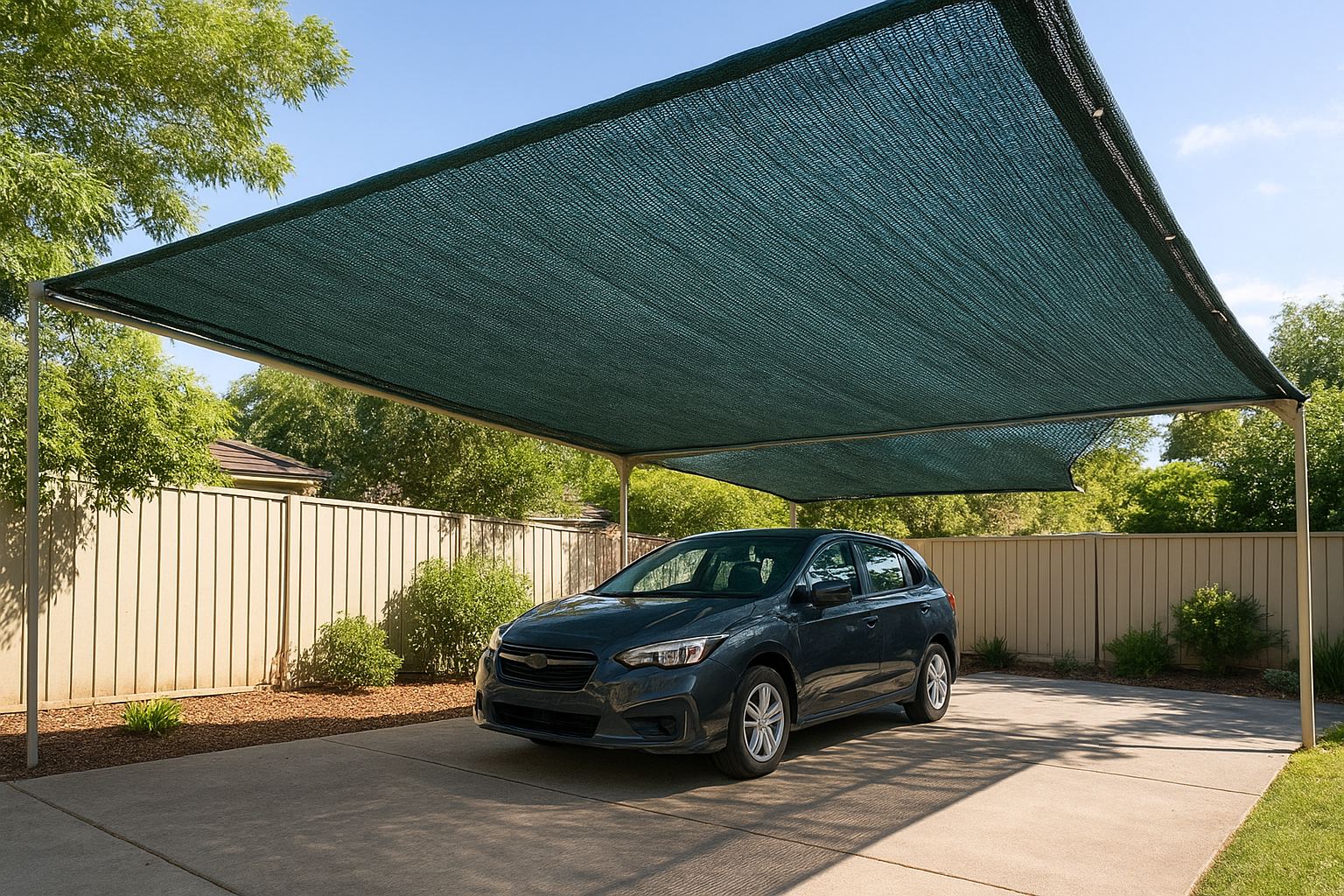
HDPE shade cloth is a knitted polyethylene fabric, the same material you see stretched over school playgrounds and nurseries. It’s woven with a deliberately open structure, so it trades solid coverage for airflow and breathability. If you’ve got a carport, pergola, or side yard that needs sun relief without turning into a hotbox, this is the material most tradies will point you toward.
Weather and UV protection
HDPE blocks UV radiation effectively, with most shade cloths rated between 90% and 95%, and the knit resists unravelling even where it’s cut or fixed with eyelets. It’s not designed for rain protection though, since water passes straight through the weave along with the breeze.
HDPE shade cloth trades weatherproofing for airflow, making it the coolest option on a still, hot afternoon.
Durability and lifespan
Quality HDPE holds up for 7 to 10 years outdoors, with UV-stabilised knits outlasting cheaper garden-variety cloth by several seasons.
Best suited for
HDPE suits carports, pergolas, and side courtyards where sun glare is the main problem, not wind or rain.
Maintenance and cost
It’s low-cost and low-fuss, needing only an occasional shake or hose-off, though it won’t replace a fully weatherproof blind.
5. Poly-cotton canvas
Poly-cotton canvas blends natural cotton fibres with synthetic polyester, giving you the traditional woven look of old-school canvas awnings with a bit more resistance to rot and stretch. It’s the material you’ll spot on heritage-style verandah blinds and traditional awnings where owners want a classic look rather than a modern mesh or PVC panel. Fewer Adelaide homes go this route now, but it still suits period properties chasing an authentic finish.
Weather and UV protection
Poly-cotton offers decent UV protection, though it doesn’t match the solution-dyed performance of acrylic canvas, and untreated cotton fibres can absorb moisture in prolonged wet weather. A quality water-repellent coating helps, but this fabric still isn’t built for constant rain exposure.
Poly-cotton canvas delivers a classic look, but it asks for more upkeep than any synthetic on this list.
Durability and lifespan
Expect 6 to 9 years from poly-cotton canvas, shorter if it’s left wet or stored damp after rain.
Best suited for
It suits heritage homes and traditional verandahs where the woven canvas look matters more than low maintenance.
Maintenance and cost
It sits mid-range on price but needs more frequent cleaning and drying than synthetic alternatives to avoid mildew.
Finding the right fabric for your home
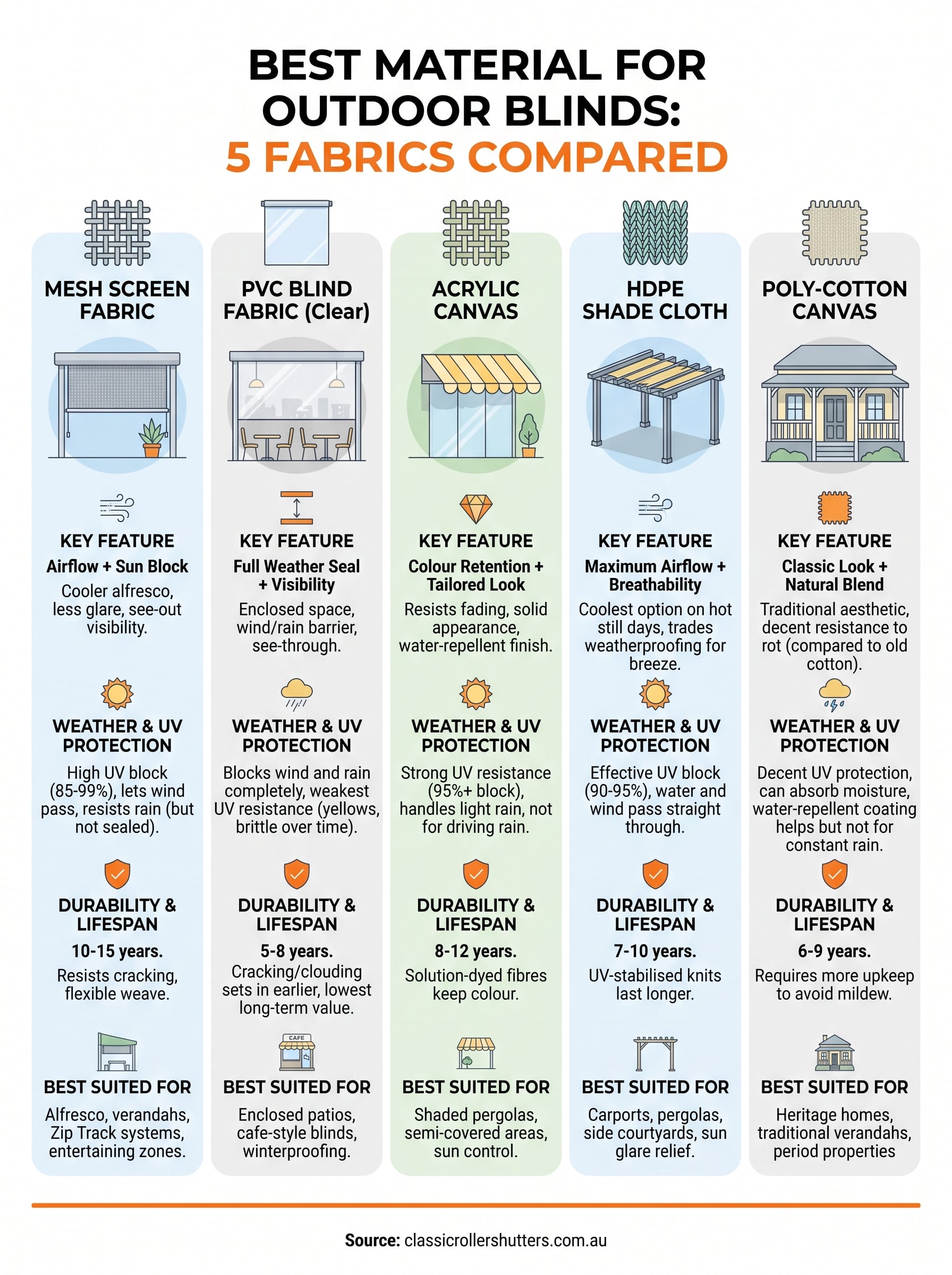
There’s no single winner here. Mesh screen fabric earns its place as the best material for outdoor blinds on most Adelaide alfrescos, balancing airflow, UV block, and a decade-plus lifespan. But if you’re after a sealed cafe blind, acrylic canvas for a shaded pergola, or budget shade cloth for a carport, one of the other four fabrics will suit better than mesh ever could.
Getting this decision right comes down to matching the fabric to your specific space, orientation, and how you actually use it, not just picking whatever’s cheapest at the hardware store. That’s where a proper in-home look at your setup pays off, rather than guessing from a swatch card.
We’ve fitted every fabric on this list across Adelaide properties for over 40 years, and we’ll tell you straight which one fits your home. Book a free in-home quote and we’ll help you get the material right the first time.