Ask three Adelaide suppliers for a quote on plantation shutters and you’ll likely get three different numbers, which makes budgeting frustrating when you just want a straight answer. Plantation shutter Adelaide price ranges widely because so much depends on material, window size, and finish, and most websites won’t tell you why.
This article gives you the real figures. You’ll see typical price per square metre for PVC, timber, and aluminium shutters, plus what a standard three-bedroom home actually costs once installation is included. We’ll also break down the cost drivers that push a quote up or down, things like louvre size, window shape, and whether you’re fitting bifold doors or standard windows.
We’ve priced and installed plantation shutters across Adelaide homes for decades from our factory, so these numbers reflect what customers genuinely pay, not inflated showroom estimates. By the end, you’ll know what to expect on your quote and where you can reasonably negotiate or save, without sacrificing quality or durability.
Why plantation shutter prices vary across Adelaide homes
Walk into three different Adelaide showrooms with the same window measurements and you’ll walk out with three quotes that don’t match. That’s not suppliers padding numbers, it’s because plantation shutters are a made-to-measure product with several variables stacked on top of each other. Material, louvre size, window shape, colour, and how tricky the installation is all move the price independently, so a quote that looks cheap on paper can end up costing more once the fine print is factored in. Understanding these variables before you call for quotes means you can compare apples with apples instead of guessing why one number is double another.
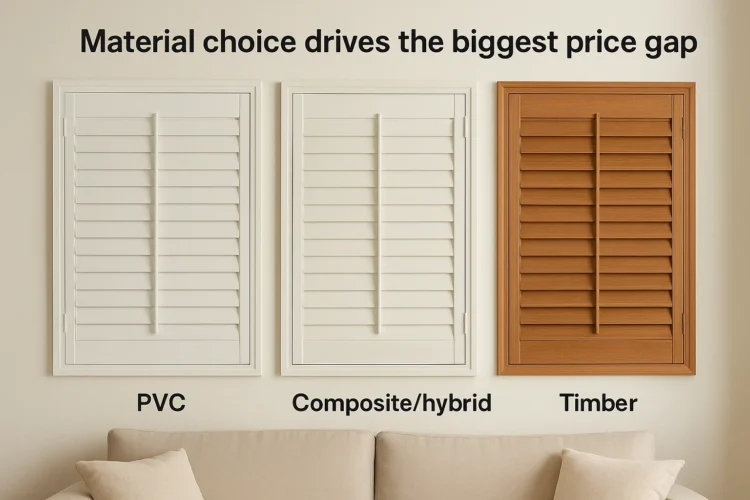
Material choice drives the biggest price gap
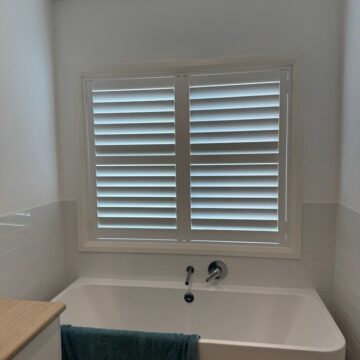
The single biggest factor in your price is what the shutters are made from. PVC shutters sit at the affordable end and suit wet areas like bathrooms and laundries because they don’t warp with moisture. Timber shutters, usually basswood or a paulownia composite, cost more but give you the classic look most Adelaide homeowners picture when they think plantation shutters. Aluminium sits in between and gets specified more for commercial jobs or exposed outdoor-facing windows where strength matters more than warmth of finish.
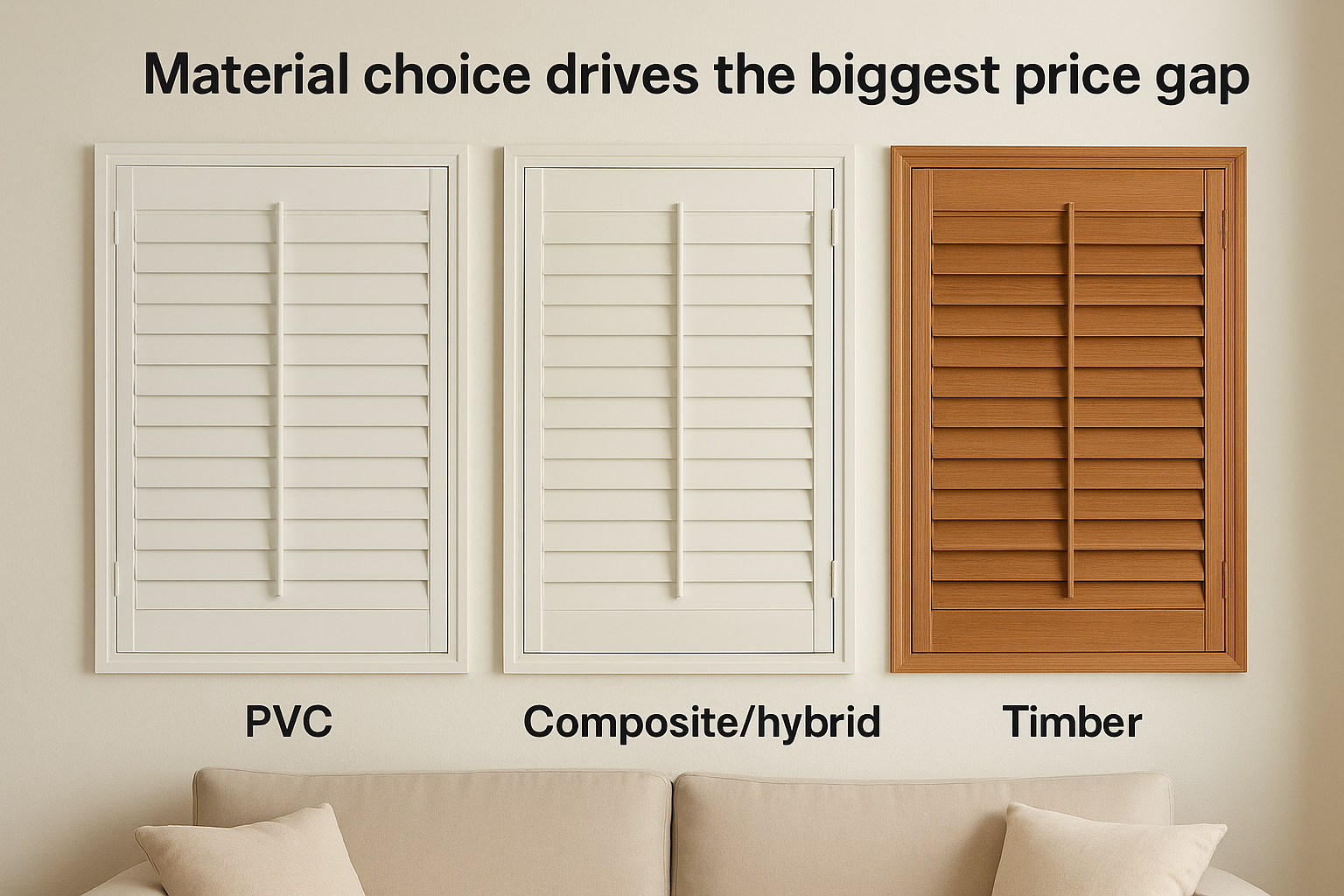
| Material | Typical use case | Relative cost |
|---|---|---|
| PVC | Bathrooms, laundries, rentals | Lowest |
| Composite/hybrid | Living areas, general home use | Mid-range |
| Timber (basswood) | Feature windows, living rooms, bedrooms | Higher |
| Aluminium | Commercial, high-exposure areas | Mid-to-high |
Material alone can shift your quote by hundreds of dollars per window, so it’s the first decision worth locking in before comparing prices.
Window size, shape and configuration
Standard rectangular windows are the cheapest to shutter because they use off-the-shelf panel configurations and require the least custom cutting. Once you move into bay windows, arched frames, or bifold doors, the price climbs because each panel needs individual measuring, custom framing, and sometimes bespoke hinge arrangements to get a clean fit. A sliding door running three or four metres wide will also cost more than a single window simply because it needs more panels and a track system to handle the extra width.
Here’s roughly how configuration affects the job:
- Standard single window, straightforward frame, lowest labour and material use.
- French doors, two frames working together, slightly more hardware.
- Bifold or stacking doors, multiple track-mounted panels, higher labour.
- Bay or angled windows, custom-cut frames, most time-intensive to fit.
- Arched or shaped windows, often the most expensive per square metre due to specialised cutting.
Louvre size and hardware finish
Louvre width matters more than most people expect. Wider louvres, typically 89mm or 114mm, use fewer moving parts per panel and give a more contemporary look, but the trade-off is they can cost more per louvre because they’re a premium size in most manufacturers’ ranges. Narrower louvres around 63mm suit smaller or heritage-style windows and often work out cheaper simply because they’re a more common stock size. Hardware finish, whether it’s a basic clear coat or a premium hidden tilt rod mechanism, also adds to the total. A hidden tilt rod looks cleaner but typically carries a price premium over a traditional visible rod.
Access, orientation and installation complexity
Where your windows sit in the house changes the labour component of your quote even when the shutters themselves are identical. Ground-floor windows with clear access are quick to fit. Second-storey windows, tight stairwells, or shutters going above a stove or sink take longer and sometimes need extra safety measures, which adds to the installation fee. North and west-facing windows in Adelaide also cop more sun exposure, and installers sometimes recommend UV-stabilised materials or additional reinforcement in those spots, which nudges the price up slightly but protects the shutters from warping over the long run.
How to budget for a plantation shutter in Adelaide
Budgeting for plantation shutters works best when you treat it as a room-by-room exercise rather than trying to guess one lump sum for the whole house. Start by counting your windows, noting rough dimensions, and grouping them by type: standard, sliding door, bay, or arched. This gives you a realistic starting point before a single quote lands in your inbox, and it stops you being surprised when the bifold doors in the living room cost more than the bedroom windows.
Set a per-room estimate first
Most Adelaide homeowners find it easier to budget when they break the project into stages rather than one big spend. A typical approach looks like this:
- Wet areas first (bathroom, laundry): PVC shutters, lowest cost per window.
- Bedrooms and living areas next: composite or timber, mid-to-high cost depending on size.
- Feature windows or doors last: bay windows, bifolds, or arched frames, highest cost and most custom work.
Staging the project this way also spreads the cost if you’re not doing the whole house at once, which suits a lot of renovation budgets.
Budget room by room, not window by window, and you’ll avoid underestimating the total by thousands.
Get quotes that break down every line item
Insist on an itemised quote rather than a single total figure. A proper Adelaide supplier will separate material cost, hardware, and installation labour so you can see exactly where your money goes and negotiate on the parts that matter most to you. If a quote only shows one number, ask for the breakdown before you sign anything. This also makes it far easier to compare three quotes against each other, since suppliers sometimes bundle different things under “installation” or “finishing”.
Factor in extras before you commit
Numerous small additions catch people out after they’ve already mentally locked in a budget. Motorisation for hard-to-reach windows, additional trims for uneven walls, and freight or access fees for multi-storey homes can all add to the final invoice. Quotable extras worth asking about upfront include:
- Motorised or remote-controlled panels
- Extra trim or architrave work for older homes
- Custom colour matching beyond standard ranges
- Removal and disposal of old blinds or curtains
Once these are factored in, you’ll have a number that actually holds up when the invoice arrives, rather than a rough figure that balloons by the time installation day comes around.
Typical price examples per window and per square metre
Numbers help more than percentages when you’re trying to picture your own invoice, so here’s what Adelaide customers typically pay once you strip away the vague “from $X” advertising you see on some sites. These figures cover supply and standard installation, and they shift depending on the factors covered above, but they give you a realistic starting range rather than a guess.
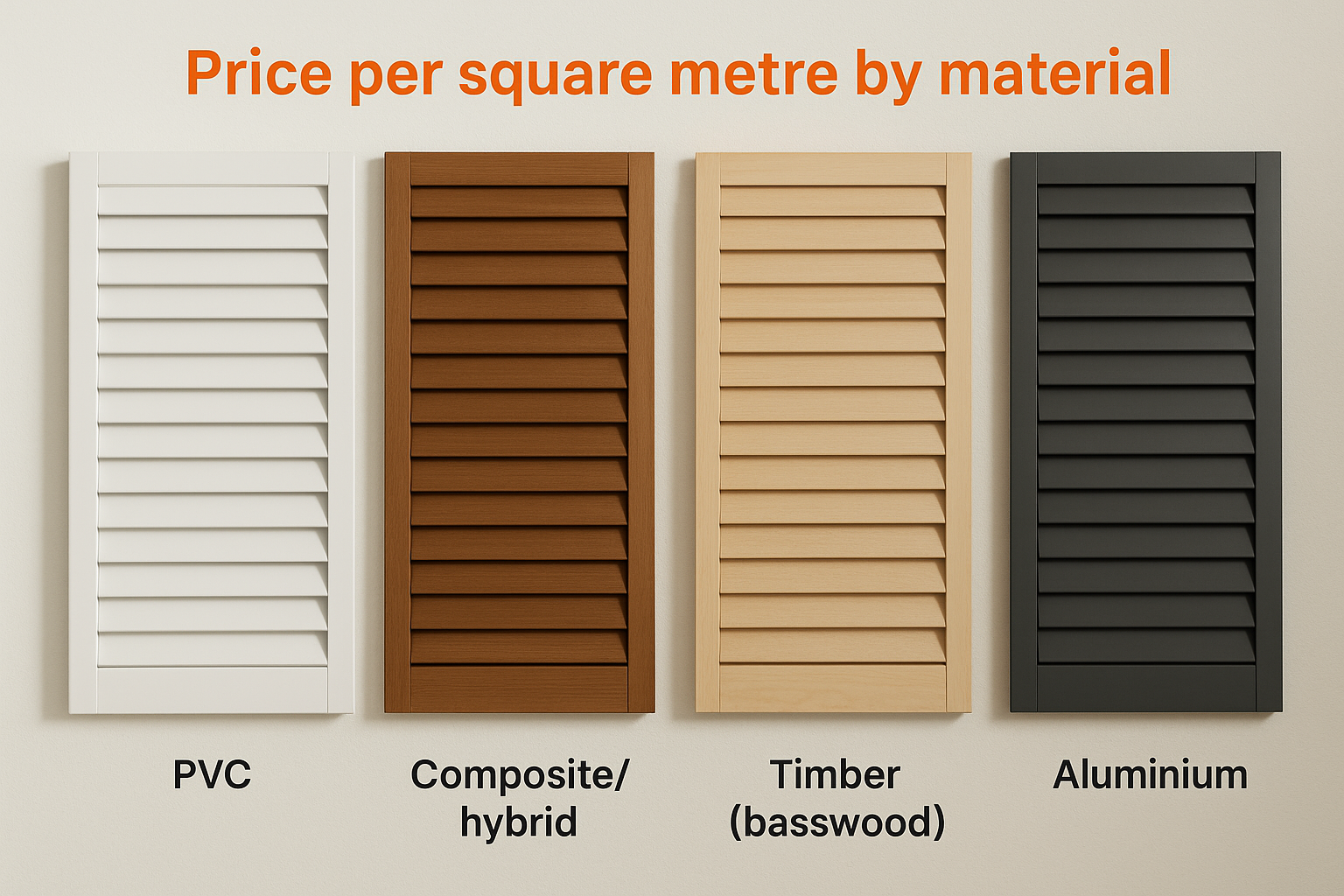
Price per square metre by material
Square metre pricing is the easiest way to compare materials because it strips out window size as a variable. Here’s roughly what Adelaide suppliers charge per square metre, installed:
| Material | Price per m² (installed) |
|---|---|
| PVC | $250 to $350 |
| Composite/hybrid | $320 to $420 |
| Timber (basswood) | $400 to $550 |
| Aluminium | $380 to $480 |
These ranges assume a standard rectangular window with common louvre sizes and a basic hinge finish. Add a hidden tilt rod, premium colour, or an unusual shape and you’ll sit at the top of the range or above it.
Price per window for common sizes
Owners find it easier to picture a per-window figure than a square metre rate, so here’s what a typical standard window costs once you factor in a common size of around 1.2m by 1.5m:
- Small window (bathroom or laundry, under 1m²): $250 to $400 in PVC.
- Standard window (living room or bedroom, 1.5m² to 2m²): $450 to $750 depending on material.
- Sliding door (2.4m wide, standard height): $1,200 to $2,000 for a two or three-panel setup.
- Bifold door (3m wide, multiple stacking panels): $1,800 to $2,800 depending on panel count and hardware.
- Bay window (three-panel angled configuration): $1,000 to $1,600 due to custom framing.
A single standard window rarely tells the whole story, so always ask for a whole-home quote once you know your material preference.
What a full home typically runs
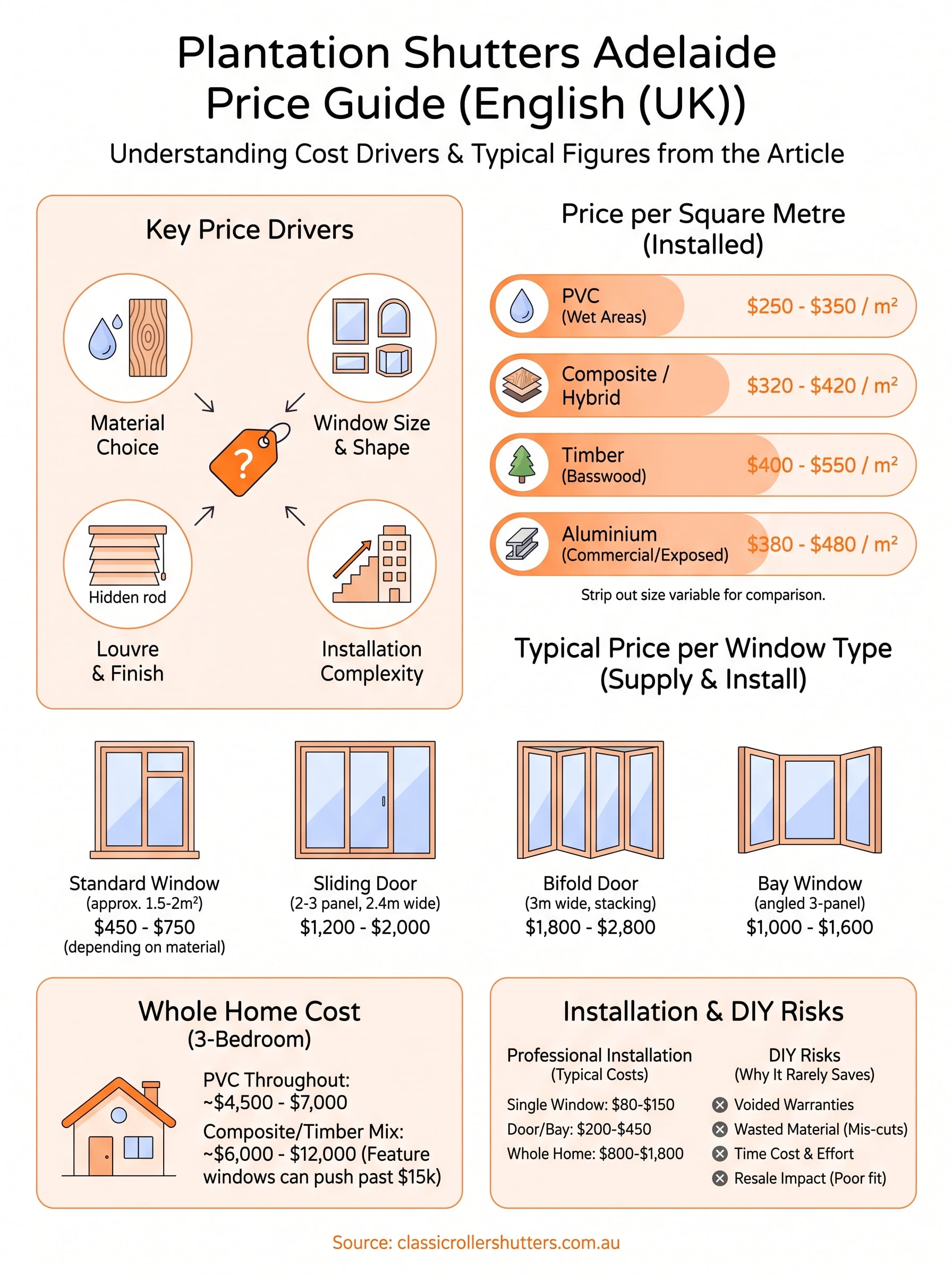
A standard three-bedroom Adelaide home with eight to ten windows, a mix of standard and one or two feature openings, usually lands somewhere between $6,000 and $12,000 for a full plantation shutter fit-out in composite or timber. Choosing PVC throughout brings that down closer to $4,500 to $7,000, while a home heavy on bifold doors, bay windows, or timber upgrades can push past $15,000. None of these figures include motorisation or major structural adjustments, which sit as separate line items on a proper quote. If your quote comes in well below these ranges, ask what’s been left out before you assume you’ve found a bargain, because it’s usually the hardware, warranty, or finish quality that’s been trimmed to hit the lower number.
Installation costs and whether DIY is worth the risk
Labour is baked into most of the per-window figures above, but it’s worth understanding on its own because it’s the part homeowners most often try to cut. Professional installation on plantation shutters isn’t just screwing a frame to a wall. It involves precise measuring, packing out uneven reveals, and hanging louvres so they close flush without binding, which takes real skill on older Adelaide homes where walls are rarely perfectly square.
What professional installation typically costs
Installation fees generally sit as a percentage of the total job rather than a flat rate, since a bifold door takes far longer to hang than a single bathroom window. As a rough guide across Adelaide suppliers:
| Job type | Typical installation cost |
|---|---|
| Single standard window | $80 to $150 |
| Sliding or bifold door | $200 to $400 |
| Bay or arched window | $250 to $450 |
| Whole-home fit-out (8 to 10 windows) | $800 to $1,800 |
These figures assume ground-floor access and a straightforward frame. Add a second storey, scaffolding, or an awkward stairwell and expect the quote to climb further.
Why DIY plantation shutters rarely save money
Buying shutters as a flat-pack kit and fitting them yourself looks like an easy way to shave a few hundred dollars off the invoice, but it rarely works out that cleanly. Plantation shutters need to be measured to within a couple of millimetres, because even a small gap throws off how the louvres sit and seal. Get the frame slightly out of square and you’ll end up with panels that rub, gaps that let light through, or hinges that wear out faster than they should.
A shutter that’s out by even a few millimetres will bind, sag, or gap, and no amount of adjusting after the fact fixes a bad initial measurement.
Risks worth weighing before you pick up a drill yourself:
- Voided warranties, since most manufacturers only honour warranty claims on professionally installed products.
- Wasted material, because a mis-cut frame or bracket usually means reordering, not patching.
- Time cost, with a full-home job often taking a first-timer several weekends compared to a day or two for an experienced installer.
- Resale impact, as poorly fitted shutters are noticeable to future buyers and valuers.
When DIY genuinely makes sense
Where DIY does hold up is on the parts side, not the installation side. Adelaide homeowners who already have shutters and just need a replacement tilt rod, hinge, or louvre clip can often source these directly and fit them without touching the frame. That’s a sensible way to stretch your budget without gambling on a full install you’re not equipped to get right the first time.
Putting your shutter budget into perspective
Getting a straight answer on plantation shutters Adelaide price always comes back to the same handful of variables: material, window shape, louvre size, and installation complexity. Once you know where your home sits on those factors, a quote stops looking like a mystery number and starts looking like a fair reflection of the work involved. Whether you’re shuttering one bathroom window or fitting out a whole three-bedroom home, the ranges in this guide should give you enough to budget confidently and spot a quote that’s missing something.
If you’d rather skip the guesswork altogether, get an itemised, no-obligation figure from people who manufacture locally and install every day across Adelaide. Get a free in-home quote from Classic Roller Shutters and find out exactly what your windows will cost, with nothing left off the invoice.