Choosing between timber vs PVC plantation shutters is one of the most common questions we get from Adelaide homeowners standing in our showroom, unsure which material suits their windows. Both look sharp once installed, but they behave very differently once the South Australian sun, humidity, and daily knocks start testing them, and picking the wrong one can mean warping, fading, or paying twice for a redo.
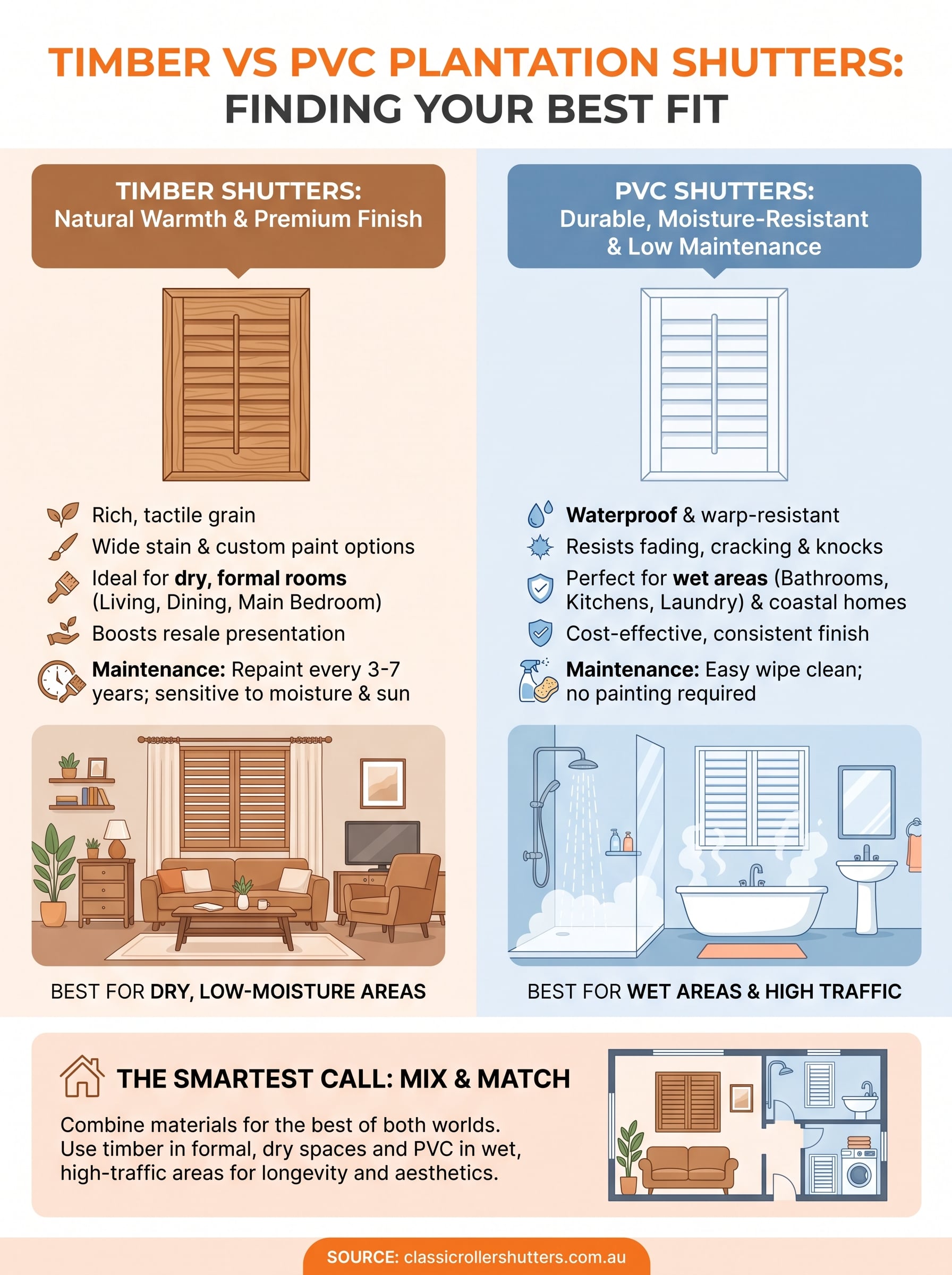
The short answer: timber suits dry, low-moisture rooms where you want a warm, premium finish, while PVC handles bathrooms, kitchens, and coastal properties better because it shrugs off moisture and won’t crack or fade. Your choice really comes down to the room, your budget, and how much maintenance you’re prepared to do.
In this guide, we’ll break down how each material performs on durability, cost, appearance, and room suitability, drawing on what we’ve seen after decades of manufacturing and installing shutters across Adelaide homes. By the end, you’ll know exactly which option fits your project, and where a mix of both might actually be the smartest call.
Why the right shutter material matters for your home
Getting the material right isn’t just about looks. It affects how long your shutters last, how much upkeep you’ll be doing every year, and whether you end up calling us back in twelve months to fix a problem that a different choice would have avoided altogether. Plantation shutters are a long-term investment, often outlasting carpets, paint jobs, and even kitchens, so the decision deserves more thought than matching a swatch to your walls.
The real cost of getting it wrong
We’ve walked into homes where beautiful timber shutters were installed in a steamy bathroom, and within eighteen months the louvres had swollen, the paint had bubbled, and the whole set needed replacing. That’s not a manufacturing fault, it’s a material mismatch. Timber is a natural product, and it responds to moisture the way any timber does, whether it’s a door frame or a dining table. PVC doesn’t have that vulnerability, but pick it for a formal living room where you wanted a rich, grain-textured finish, and you might find yourself disappointed every time you look at it next to your timber furniture.
Choosing shutter material based on the room, not just the room’s style, saves you from paying for the same window twice.
Getting this wrong is expensive. A full re-supply and reinstall on a set of shutters can run into hundreds or thousands of dollars depending on window size and coverage, and that’s before you factor in the hassle of scheduling another installation around your work and family life. Room suitability should always come before colour matching.
Climate factors specific to Adelaide
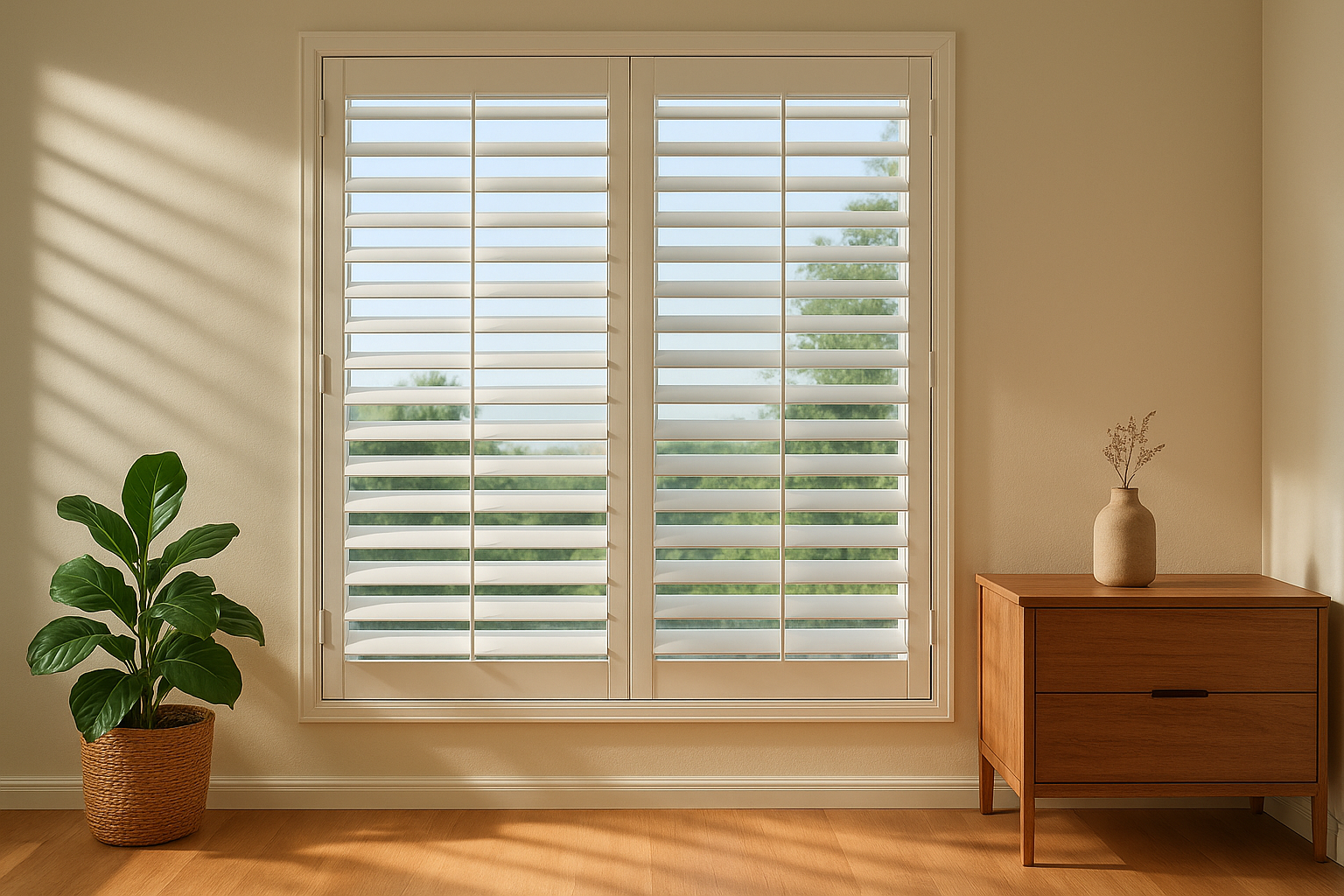
Adelaide throws a fair bit at window furnishings across a typical year. Summer days regularly climb past 35°C, and the intense UV exposure common across South Australia accelerates fading and material breakdown faster than in milder climates, a pattern documented in long-term climate records from the Bureau of Meteorology. Add in the swing between bone-dry summers and damp winter mornings, and you’ve got conditions that stress-test both timber and PVC in different ways.
| Climate factor | Effect on timber shutters | Effect on PVC shutters |
|---|---|---|
| High UV exposure | Fading, surface checking over years | Minimal fading with quality UV-stabilised PVC |
| Coastal humidity/salt air | Swelling, warping, paint lifting | No absorption, resists corrosion |
| Rapid temperature swings | Expansion and contraction, joint stress | More stable, slight expansion but no cracking |
| Direct water exposure | Rot risk if untreated or exposed long-term | Fully water resistant |
Those figures aren’t scare tactics, they’re the reason we ask every client about window orientation and room use before recommending a material. North-facing windows that catch afternoon sun all year behave very differently to a shaded southern hallway, and your shutter choice should reflect that.
What’s at stake beyond aesthetics
Heat and moisture aside, the material also shapes how well your shutters actually perform their job. Timber offers denser insulation in some configurations, which matters if you’re chasing thermal efficiency in a north-facing lounge room during Adelaide’s cooler months. PVC, being hollow-chambered in most designs, still insulates well and often edges ahead in bathrooms and laundries where moisture control matters more than thermal mass.
Insulation performance for window furnishings generally is backed by broader energy efficiency guidance from government bodies like the Department of Climate Change, Energy, the Environment and Water, which notes that well-fitted shutters and blinds can meaningfully reduce heat loss and gain compared to bare glass. Whichever material you choose, a snug fit and quality installation matter just as much as the shutter itself.
Resale value is another factor worth weighing. Buyers touring an Adelaide home notice window furnishings, and shutters that look tired, warped, or mismatched to the room can quietly undercut an otherwise well-presented property. Selecting a material that suits the room from day one protects that investment far better than a quick, cheap fix now followed by a costly swap later. This is exactly why we spend time at the in-home consultation stage talking through room-by-room material choices rather than pushing a single product across the whole house.
How to choose between timber and PVC shutters
Deciding between timber vs PVC plantation shutters doesn’t need to feel like guesswork. Once you know which questions matter, most homeowners land on the right answer within a few minutes of walking through their house. We run through the same checklist with every client during a free in-home consultation, and it works just as well if you’re weighing up the decision on your own before booking one.
Ask yourself these questions first
Start with the room, not the shutter. Moisture, sun exposure, and how the room gets used day to day will tell you more than any brochure photo ever will. Run through this list for each window you’re covering:
- Does the room see regular moisture, such as a bathroom, ensuite, or laundry?
- Is the window exposed to direct afternoon sun for several hours a day?
- Do you want a natural timber grain and warmth, or are you happy with a smooth painted look?
- Is budget a hard limit, or are you prioritising longevity over upfront cost?
- Will kids, pets, or high foot traffic knock against the shutters regularly?
Answering these honestly usually points you towards one material well before you’ve compared a single swatch.
Match the material to your priorities
Once you’ve got answers to those questions, it helps to see them side by side. We’ve put together a quick reference based on what actually drives most decisions in Adelaide homes.
| Your priority | Better fit |
|---|---|
| Bathroom, kitchen, or laundry | PVC |
| Formal living or dining room | Timber |
| Tight budget | PVC |
| Premium resale presentation | Timber |
| Coastal or high-humidity suburb | PVC |
| North-facing room with heavy sun | PVC (or UV-stabilised timber) |
| Kids’ bedrooms or playrooms | PVC |
| Study or home office wanting a classic look | Timber |
If moisture or budget is your main concern, PVC wins almost every time; if warmth and resale presentation matter most, timber usually takes the room.
Think about it as sorting your windows into two piles rather than trying to force one material across the whole house. Most Adelaide homes we fit out actually end up with both, timber in the lounge and main bedroom, PVC in the bathrooms and laundry, because that’s what suits each room rather than the house as a whole.
When in doubt, test both in person
Photos and website comparisons only get you so far. Grain texture, paint sheen, and the actual weight of a louvre in your hand tell a different story than a screen ever will. Visiting a showroom and holding a timber louvre next to a PVC one, in the same light your room gets, often settles the debate on the spot.
Understanding your specific window sizes and orientation also changes the calculation. A small ensuite window facing south behaves nothing like a wide bay window catching full afternoon sun, and a proper assessment accounts for both. That’s why we always recommend getting a measure and quote done before locking in a material, even if you’re fairly confident which way you’re leaning.
Comparing the cost of timber and PVC shutters
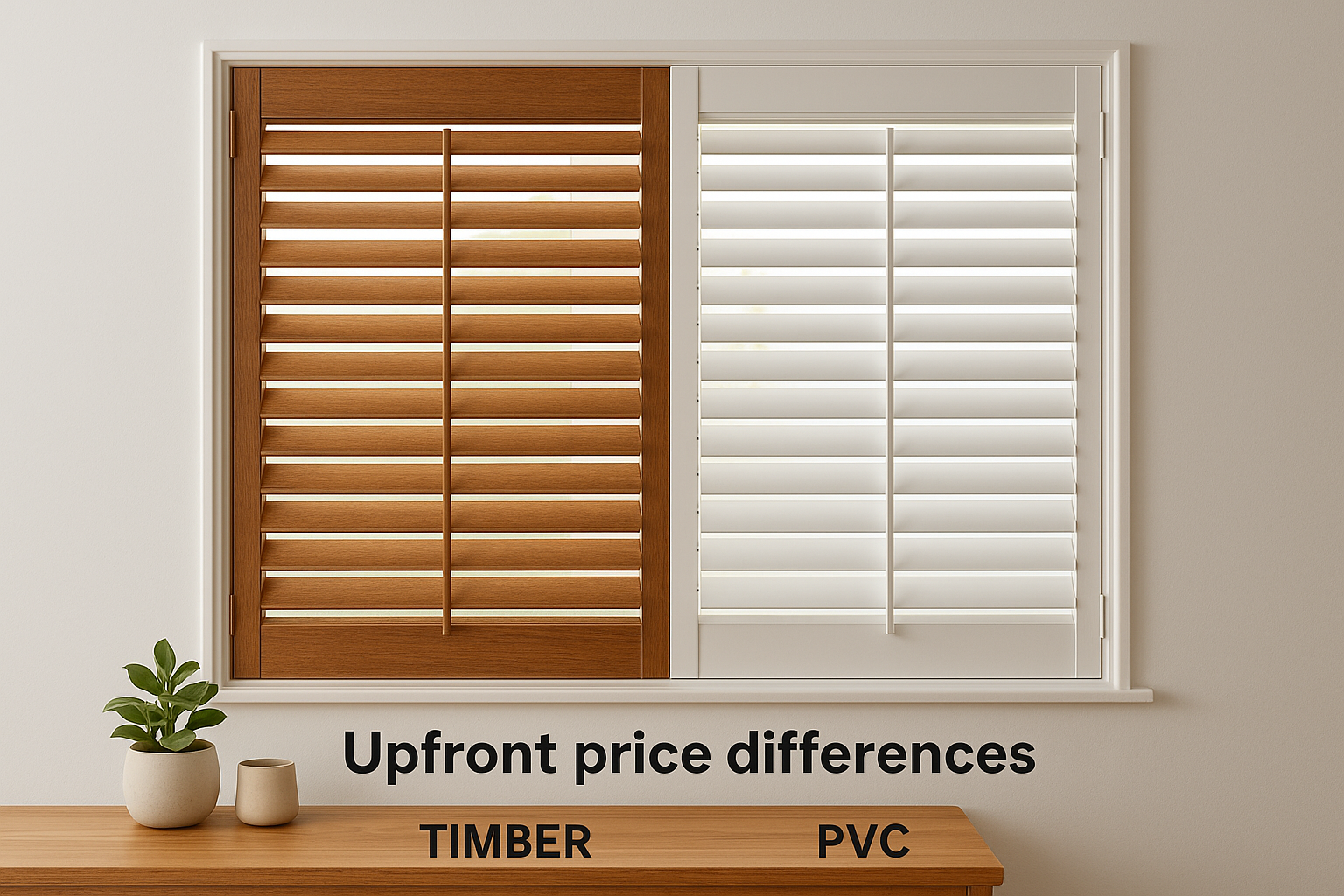
Money talks in most renovation decisions, and shutters are no exception. PVC plantation shutters generally cost less than timber across the same window sizes, largely because the raw material and manufacturing process are cheaper to produce at scale. Timber, especially hardwoods like basswood or cedar, carries a higher price tag from the outset because it’s a natural resource that needs careful milling, sanding, and finishing before it’s ready to hang. That price gap widens further on larger windows, where the extra material needed pushes timber costs up faster than PVC.
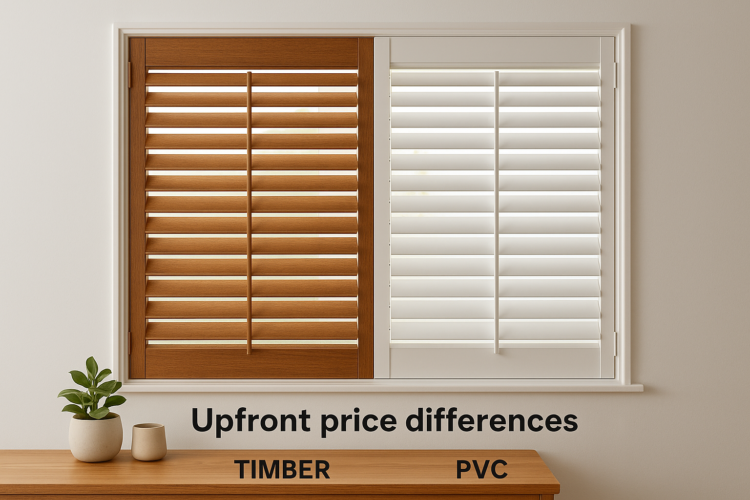
Upfront price differences
Expect a noticeable spread once you start comparing quotes for the same opening. The table below reflects the general pattern we see across Adelaide installs, though your final number always depends on window size, blade width, and any custom colour matching.
| Factor | Timber shutters | PVC shutters |
|---|---|---|
| Typical price per window | Higher | Lower |
| Custom stain or paint colour | Often extra cost | Usually included in standard range |
| Large or bay windows | Cost rises sharply with size | Cost rises more gradually |
| Repair or replacement parts | Pricier due to timber sourcing | Generally cheaper and easier to source |
Quotes should always be compared window by window rather than as a lump sum for the house, because a mixed-material job (timber in the living room, PVC in the bathroom) can bring the overall spend down without sacrificing where it matters most.
What drives the price beyond materials
Beyond the raw material, labour and finishing add to the final figure. Timber louvres often need a more careful install to avoid stressing the frame, and a stained or painted finish adds time and cost compared to PVC’s factory-applied coating. Installation complexity also plays a role: oddly shaped windows, French doors, and bi-fold configurations push labour costs up regardless of material, so a straightforward rectangular window will always be your cheapest option to shutter.
Cheaper upfront doesn’t always mean cheaper overall, factor in repairs, repainting, and lifespan before you commit to a material purely on price.
Long-term cost considerations
Repainting is where timber’s ongoing cost really shows up. A timber shutter exposed to sun and moisture may need repainting or restaining every few years to stay looking sharp and to protect the wood underneath, and that’s a recurring cost PVC simply doesn’t carry. Skipping that maintenance doesn’t save money either, it just shortens the shutter’s life and brings the replacement date forward.
Getting an accurate figure for your home
Square footage and quote structure vary enough between suppliers that a genuine comparison only comes from measuring your actual windows. A free in-home consultation gives you real numbers for your specific rooms rather than a rough online estimate, and it lets you see exactly where a mixed approach might save you money without compromising on the rooms where timber’s look matters most. Once you’ve got firm figures for both materials side by side, the decision usually comes down less to raw cost and more to which rooms genuinely need PVC’s resilience and which ones deserve timber’s finish.
Appearance and style: timber versus PVC finishes
Looks are usually what tips a homeowner one way before durability even enters the conversation, and it’s a fair starting point. Timber shutters carry a natural grain and depth that PVC simply can’t fake, no matter how good the moulding technology gets. That said, modern PVC has closed the gap considerably, and from across a room most people can’t tell the difference unless they’re standing close enough to touch the louvre. The real question isn’t which looks better in isolation, it’s which suits the rest of your room.
The grain, warmth, and texture question
Touch a timber louvre and you’ll feel slight variations in the surface, tiny imperfections that come from it being a real, once-living material. That texture reads as warmth in a room, especially against timber floors, exposed beams, or a Hamptons-style interior where natural materials are already doing a lot of the visual work. PVC louvres are moulded to a consistent, smooth finish every time, which suits a cleaner, more contemporary look but won’t give you that same tactile richness. Neither is objectively better here, it’s purely about matching the material to the interior style you’re already building.
Colour and finish options
Paint and stain options differ meaningfully between the two materials, and this often surprises first-time buyers who assumed shutters were shutters.
| Finish type | Timber | PVC |
|---|---|---|
| Standard whites | Yes | Yes |
| Custom colour matching | Yes, wider stain and paint range | Limited to standard factory range |
| Wood-grain stain | Yes, natural variation | Simulated finish, less depth |
| Gloss/matte options | Both available | Usually matte or satin only |
| Colour fastness over time | Can yellow or fade without recoating | Holds colour longer with UV-stabilised PVC |
If you want a custom stain to match existing timber furniture or flooring, timber is the only material that will genuinely deliver it.
That table matters more than it might look at first glance. If you’re renovating a heritage-style home in Unley or Norwood and want a stain that matches existing skirting boards, PVC won’t get you there no matter how good the installer is. On the other hand, if you’re after crisp, bright white shutters for a new-build in a modern estate out towards Mawson Lakes, PVC delivers that finish reliably and won’t need repainting to keep it looking fresh.
Blade width and profile choices
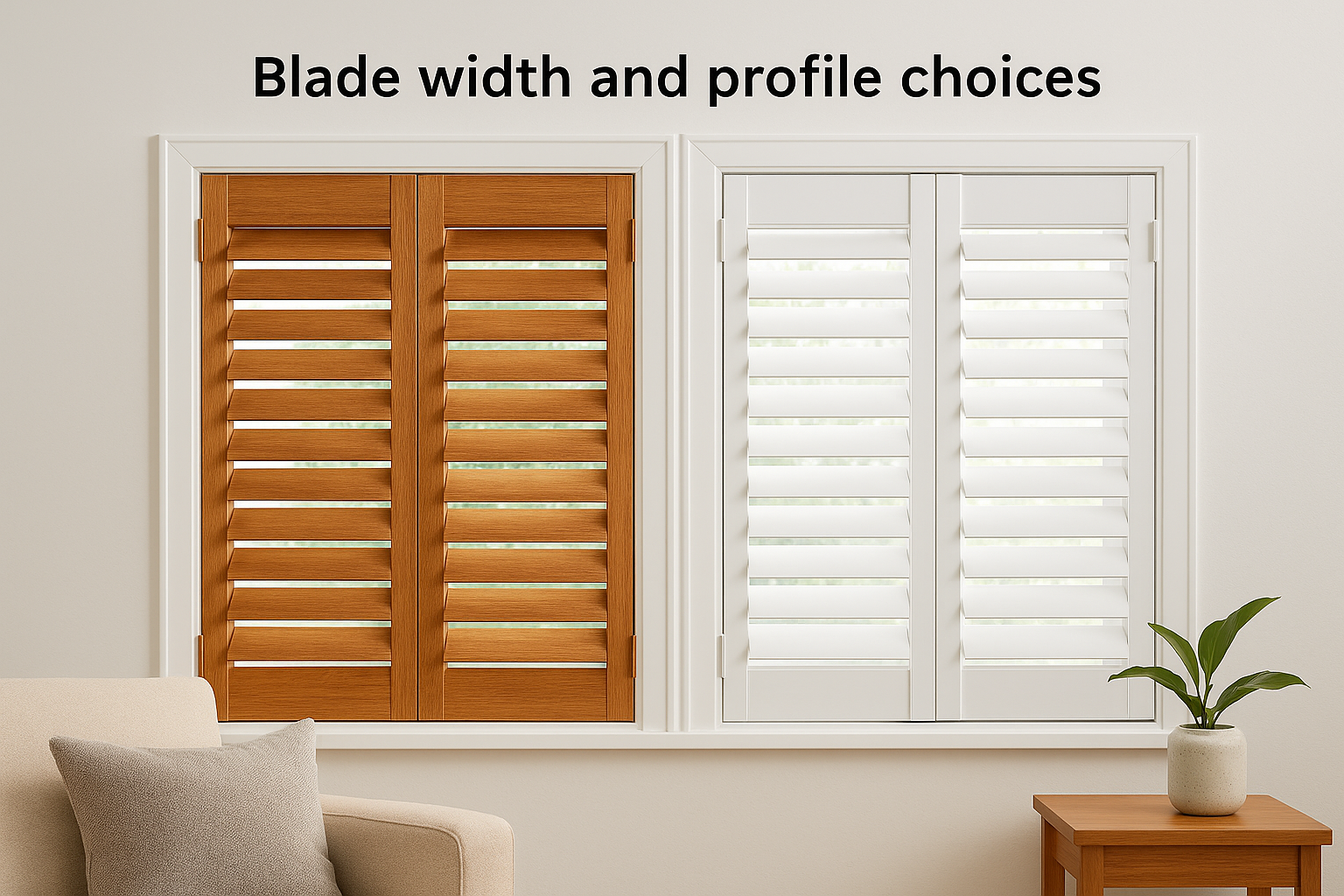
Beyond colour, blade width changes the whole feel of a window. Wider louvres, generally 89mm to 114mm, give a bolder, more modern statement and suit larger windows, while narrower blades around 63mm to 76mm feel more traditional and work well on smaller or heritage-style windows. Both timber and PVC come in a similar range of widths, so this decision usually comes down to window proportions rather than material.
Ultimately, appearance shouldn’t be decided in isolation from the rest of this comparison. A timber finish that looks stunning in a showroom display can still be the wrong call for a steamy bathroom, and a crisp white PVC set might feel out of place next to a rich timber dining suite. Weigh the look against the room’s practical demands before you commit, because the best-looking shutter is the one that still looks that good in five years.
Durability and maintenance in Adelaide’s climate
Longevity is where the timber vs pvc plantation shutters debate gets real, because a shutter that looks great on installation day means nothing if it’s warped or faded within a few summers. Adelaide’s mix of intense UV, dry heat, and the odd damp week tests both materials differently, and the maintenance you’re willing to commit to should factor into your decision just as much as upfront cost.
How each material ages over time
Properly maintained timber shutters can last decades, but that longevity depends entirely on staying on top of repainting and keeping them away from sustained moisture. Left unchecked, sun exposure dries out the paint or stain layer, and once that protective coat cracks, the timber underneath starts absorbing moisture and swelling. PVC shutters age far more predictably. The colour is baked into the material rather than sitting on top of it, so there’s no coating to fail, and the louvres won’t rot, swell, or attract termites regardless of how humid the room gets.
A PVC shutter left completely untouched for ten years will usually look better than a neglected timber one, simply because there’s no coating left to fail.
What maintenance actually looks like
Breaking maintenance down by task makes the difference between the two materials much clearer than a general statement ever could.
| Maintenance task | Timber | PVC |
|---|---|---|
| Dusting/wiping | Monthly, soft cloth | Monthly, soft cloth |
| Repainting or restaining | Every 3-7 years depending on sun exposure | Not required |
| Checking for swelling/warping | Recommended in humid rooms | Not applicable |
| Hinge and louvre pin checks | Every 12 months | Every 12 months |
| Deep clean with water | Avoid, spot clean only | Safe with mild detergent |
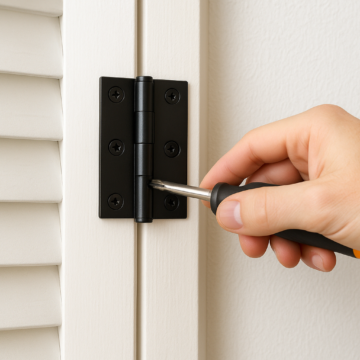
Regular checks matter more than people expect. Hinges loosen on both materials over time from daily opening and closing, and catching that early with a quick tighten avoids sagging louvres that eventually won’t sit flush. Skipping the timber repaint cycle is the single biggest mistake we see, because homeowners assume the finish will hold indefinitely, then get caught out when a whole panel needs replacing rather than a simple recoat.
Coastal and high-sun suburbs need extra thought
Suburbs closer to the coast, think Glenelg, Semaphore, or Henley Beach, add salt air into the mix, which speeds up timber’s breakdown even with good maintenance. Timber shutters in these areas often need repainting on the shorter end of that three-to-seven-year window, while PVC carries on unaffected by the salt content in the air. Northern suburbs with long, hot afternoon sun exposure put more stress on paint and stain finishes too, so if you’re set on timber in a north-facing room, budget for more frequent upkeep than you would in a shaded, south-facing space.
Getting this part right comes down to being honest about how much upkeep you’re actually prepared to do, not how much you intend to do when the shutters go in. If regular repainting sounds like a chore you’ll put off, PVC removes that decision from your to-do list entirely, and in Adelaide’s climate, that’s often the smarter long-term call.
Choosing the best material room by room
Walking through a house window by window is the fastest way to settle the timber vs PVC plantation shutters question, because every room has its own moisture level, sun exposure, and daily wear pattern. Rather than picking one material for the whole property, think of your home as a set of separate decisions that happen to share a colour scheme. Most Adelaide homes we fit out end up with a mix, and that’s not a compromise, it’s the sensible outcome once you look at each room on its own terms.
Wet areas: bathrooms, ensuites, and laundries
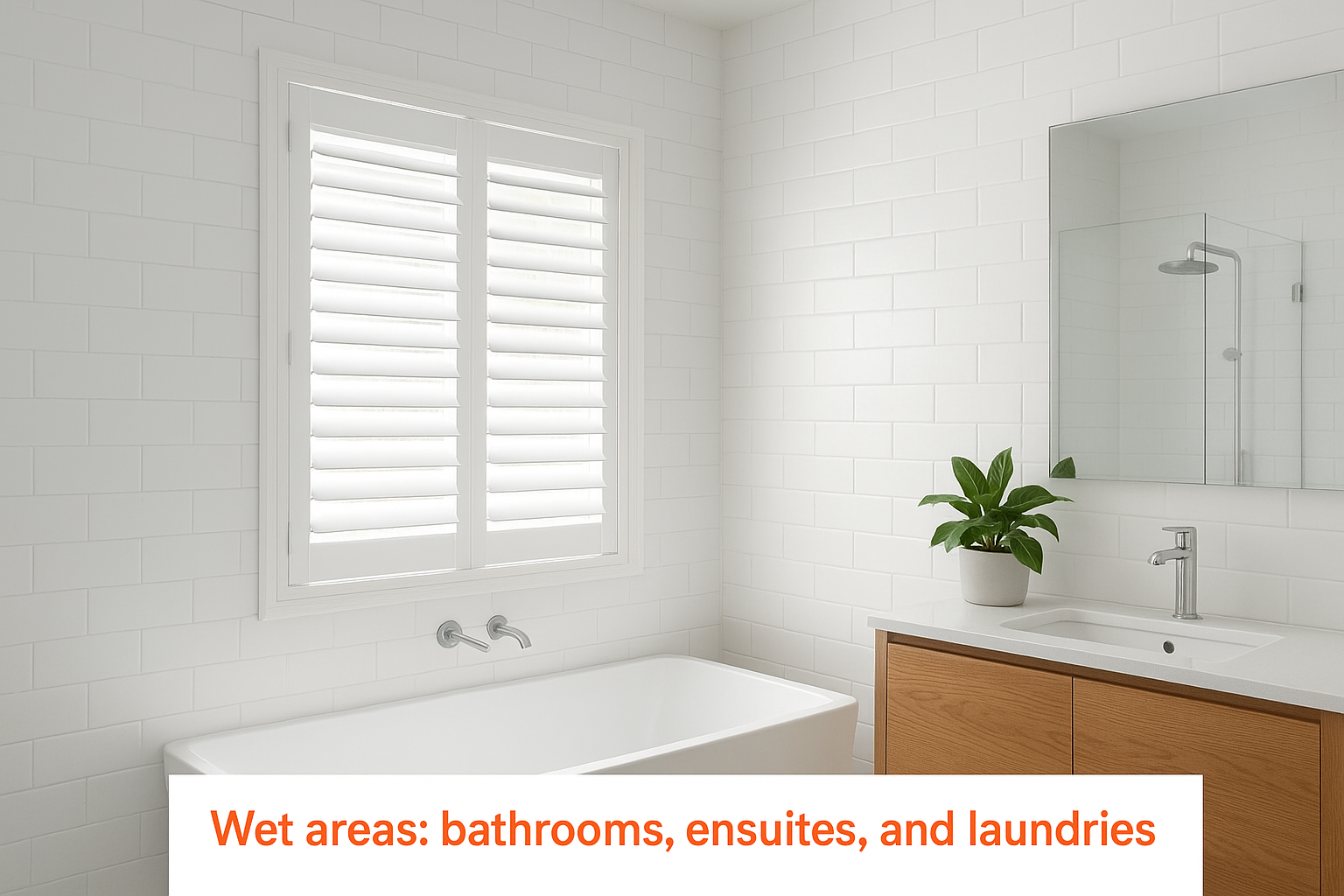
Bathrooms and laundries are the clearest call in this whole comparison. Steam, splashback, and condensation build up fast in these spaces, and timber shutters simply aren’t built to handle sustained moisture no matter how well they’re sealed. PVC handles the humidity without swelling, warping, or lifting paint, which makes it the practical choice for every wet area in the house, full stop.
Living areas, dining rooms, and main bedrooms
Formal living rooms, dining spaces, and main bedrooms are where timber earns its reputation. These rooms tend to stay dry year-round, and the natural grain and depth of timber louvres complement timber floors, feature walls, and furniture in a way PVC can’t quite match. If resale presentation matters to you, this is exactly where a timber upgrade pays off, since buyers notice the difference in a formal front room far more than they do in a laundry.
Spend your timber budget on the rooms buyers actually walk through slowly, and save PVC for the ones they walk through quickly.
Kitchens and north-facing rooms
Kitchens sit in an odd middle ground. They’re not as wet as a bathroom, but cooking steam, splashes near the sink, and grease in the air still stress a painted timber finish over time. Combine that with a north-facing aspect catching hours of Adelaide sun, and you’ve got two separate reasons to lean PVC in this room, even if you’ve gone timber everywhere else.
Kids’ rooms, playrooms, and high-traffic zones
High-traffic rooms need a material that shrugs off knocks rather than one that needs babying. PVC’s moulded finish resists scuffs and dents from toys, school bags, and general household chaos without chipping paint the way timber can. Bedrooms belonging to younger kids, rumpus rooms, and hallways near a back door all fall into this category.
A quick room-by-room reference
Seeing the whole house laid out at once makes the pattern obvious.
| Room | Recommended material | Why |
|---|---|---|
| Bathroom/ensuite | PVC | Constant moisture and steam |
| Laundry | PVC | Splashback and humidity |
| Kitchen | PVC | Steam, grease, sink splashes |
| Formal living/dining | Timber | Warmth, grain, resale appeal |
| Main bedroom | Timber | Premium look, low moisture |
| Kids’ bedroom/playroom | PVC | Knock resistance |
| Study/home office | Timber | Classic finish, low traffic |
| Entry/hallway | Either | Depends on traffic and sun |
Applying that table to your own floor plan usually settles most of the guesswork in one pass. Entryways and hallways are the one grey area, since they don’t fit neatly into either camp, and that’s where your own priorities around traffic, sun exposure, and style should make the final call rather than a blanket rule.
Can you mix timber and PVC shutters in one home
Yes, and honestly, most of the homes we fit out in Adelaide end up doing exactly that. There’s no rule saying every window in the house needs the same material, and treating your home as a single decision rather than a room-by-room one is how people end up with warped timber in a bathroom or a mismatched formal lounge. Mixing materials is standard practice, not a compromise you settle for when budget runs short.
Why mixing makes practical sense
Think about how differently your rooms actually get used. A bathroom copes with steam every single day, while a formal dining room might only see direct sun for an hour in the afternoon. Forcing one material across both spaces ignores that reality and usually means overpaying for timber somewhere it’ll fail early, or settling for PVC in a room where you really wanted that grain and warmth. Splitting the decision by room lets each material do the job it’s actually good at, which is the whole point of comparing them in the first place.
The smartest shutter plan for most Adelaide homes isn’t timber or PVC, it’s timber where it lasts and PVC where it needs to.
Keeping the look consistent across the house
The trick to mixing materials without your home looking disjointed is matching colour and profile rather than material. Stick to the same white, or the same stain tone if you’re colour-matching, across both timber and PVC sets, and keep blade widths consistent room to room unless window size genuinely demands a change. Walk from your PVC-fitted kitchen into a timber dining room and, if the colour and louvre width line up, most visitors won’t clock the material change at all. It’s the same logic as matching skirting boards or door handles throughout a house, consistency in the details matters more than uniformity in the material itself.
A simple approach that works for most homes
When clients ask us how to split their house, we usually suggest starting with this rough pattern and adjusting for their specific rooms:
- Wet areas (bathroom, ensuite, laundry, kitchen): PVC, no exceptions
- Formal living and dining spaces: timber, if budget allows
- Bedrooms: timber for main bedroom, PVC for kids’ rooms and high-traffic bedrooms
- Study or home office: timber for the classic look, unless it’s north-facing and gets heavy sun
- Entry and hallways: either, based on your traffic levels and existing colour scheme
That split isn’t fixed, and plenty of homeowners adjust it based on their own priorities, but it’s a reliable starting point that avoids the common mistakes we see when someone picks a single material for the whole house without thinking room by room.
Getting the transition right
The only real risk with mixing materials is a clumsy transition, usually where a PVC-fitted kitchen opens straight into a timber dining area and the colour doesn’t quite match under natural light. That’s easily avoided by bringing sample louvres of both materials into the actual rooms before ordering, since paint and stain can read differently depending on the light each space gets. A proper in-home consultation catches this before it becomes a problem, rather than after installation when swapping colours means starting over.
Finding the right fit for your windows
Weighing up timber vs PVC plantation shutters always comes back to the same question: what does this particular room need? Timber brings warmth and grain to dry, low-traffic spaces where looks matter most, while PVC handles bathrooms, kitchens, and busy family zones without flinching at moisture or knocks. Neither material wins outright, and most Adelaide homes end up with a sensible mix of both once you assess room by room rather than trying to force one choice across the whole house.
Getting this right on paper is one thing, but seeing samples in your own light, against your own floors and furniture, is what actually settles the decision. If you’re ready to work out which material suits each window in your home, book a free in-home consultation with Classic Roller Shutters and we’ll measure, advise, and quote before you commit to anything.