A cracked or jammed slat rarely gives you much warning. One day the shutter rolls up fine, the next it’s grinding, bowing, or stuck halfway down. That’s usually when you start searching for roller shutter slats for sale and quickly discover the market is more confusing than it should be, with different profiles, materials, and price points that all look similar online.
Before you buy, you need to know what you’re actually comparing. Slats vary by width and curve profile, by aluminium gauge, and by whether they’re foam-filled for insulation and noise reduction. Get the wrong match and the shutter won’t roll smoothly, if it rolls at all. This article walks through what determines slat quality and price, so you can tell a genuine bargain from a false economy.
We’ll cover the main slat materials and profiles used across Adelaide homes and businesses, how to measure your existing shutter correctly, and what separates cheap imported parts from ones built to last. Whether you’re patching up an older shutter yourself or sourcing parts for a repair job, you’ll finish this read knowing exactly what to look for and what questions to ask before you hand over any money.
Why the right slats matter for your roller shutters
A roller shutter is only as strong as its weakest slat. Mismatched slats throw the whole curtain out of alignment, so the shutter binds in the guide rails, jams halfway, or puts extra strain on the motor every time it runs. That strain adds up fast. A motor designed to lift a smooth, correctly weighted curtain will burn out months earlier if it’s fighting a slat that’s slightly too wide, too thin, or a different curve profile than the rest.
A single wrong slat can wreck a whole shutter, not just look out of place.
Security is the other side of this. Roller shutters on Adelaide homes and shops are often doing double duty, blocking western sun in summer and deterring break-ins overnight. Thin or poorly made slats bend under hand pressure, and a bent slat leaves a gap wide enough to pry open with a screwdriver. If you’re replacing parts on a security shutter, cheap slats defeat the purpose of having a shutter at all.
Insulation performance drops off too when slats don’t match. Foam-filled slats work by trapping air inside a sealed aluminium shell, cutting noise and slowing heat transfer through the window. Mix in a hollow, unfilled slat from a bargain batch and you’ve created a weak point where heat and sound pass straight through, undoing the benefit of every other slat around it.
There’s also the visual side, which matters more than people expect once a shutter’s been repaired. Slats fade slightly over years of sun exposure, so a brand-new slat dropped into an older curtain can stand out as an obvious patch job, especially on light colours like Classic Cream or Dune. It’s a small thing until you’re trying to sell the property or you’ve got a client asking why the
How to choose the correct replacement slats
Grab a tape measure before you open a single browser tab. Getting an exact match starts with the numbers, not the photos on a supplier’s website, because slats that look identical in a listing can differ by a few millimetres in width or curve and still refuse to sit flush in your existing curtain.
Measure before you shop
Pull one intact slat from your shutter, or measure in place if none come out easily, and record every dimension a supplier will ask for before you request a quote.
- Slat width (commonly 37mm, 45mm, or 52mm on Adelaide shutters)
- Curve profile depth (flat, mini curve, or standard curve)
- Overall length, cut to your shutter’s exact opening width
- Colour code or name, checked against your existing fascia and guides
- Whether the slat is foam-filled or hollow
Measure twice, because a slat that’s out by 2mm won’t roll at all.
Match material and colour
Once you’ve got measurements sorted, check the material specification against what’s already installed. Aluminium gauge matters here; a 6mm foam-filled slat feels and performs differently to a 4mm hollow one, even if both are listed under the same width. Colour matching sounds trivial until the new slat turns up noticeably brighter than its sun-faded neighbours. Ask any supplier for a physical sample or a close-up photo against a ruler, not a marketing render, before you commit to a bulk order of replacement slats.
Common roller shutter slat types and profiles explained
Walk into any Adelaide supplier and you’ll see slats grouped by profile and material rather than colour. Aluminium slats dominate the residential market because they’re light, rust-proof, and easy to roll, while steel slats show up mostly on older commercial roller shutters where raw strength matters more than weight. Knowing which category your shutter falls into narrows your search fast, since mixing steel and aluminium in the same curtain almost never works.
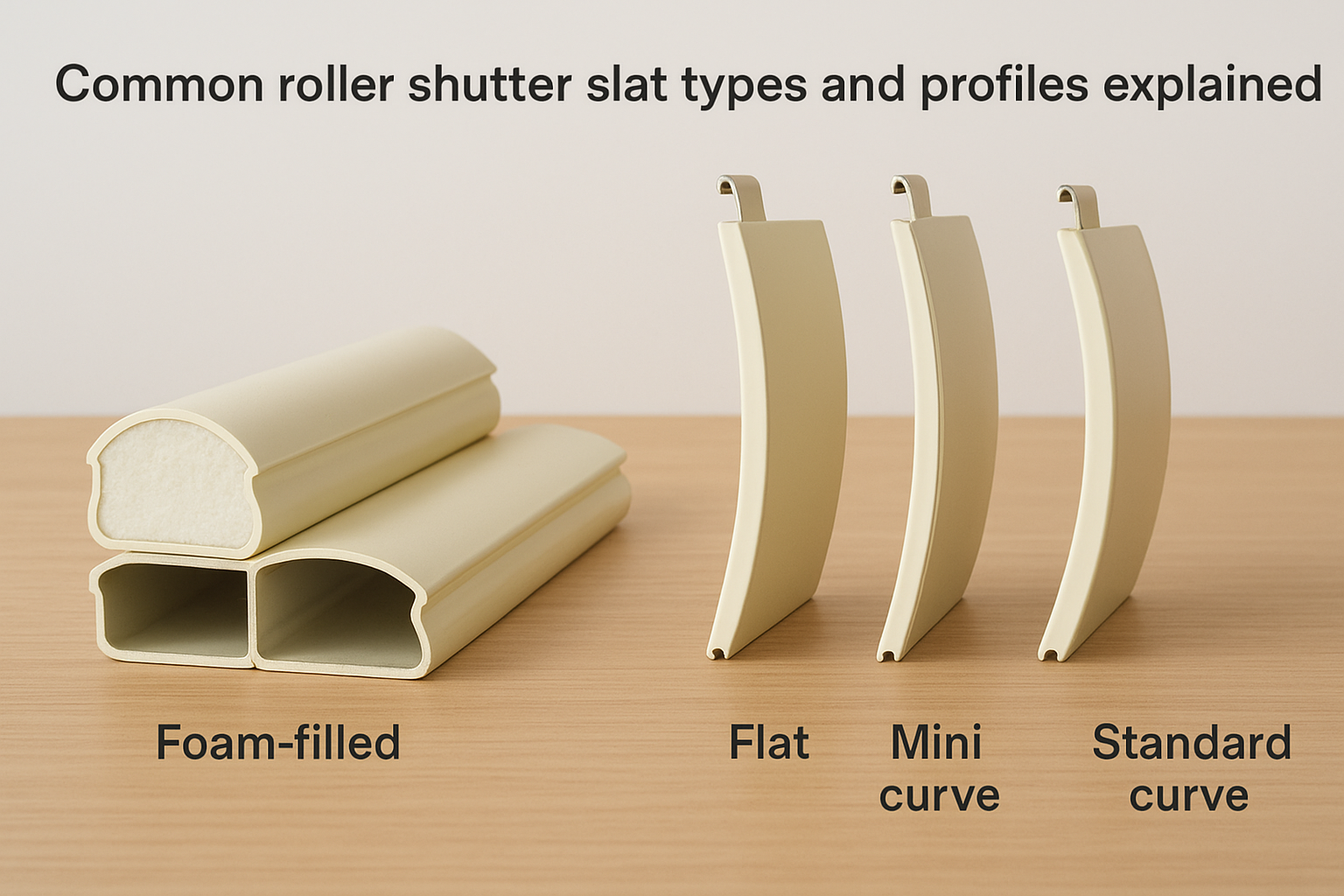
Flat, mini curve, and standard curve
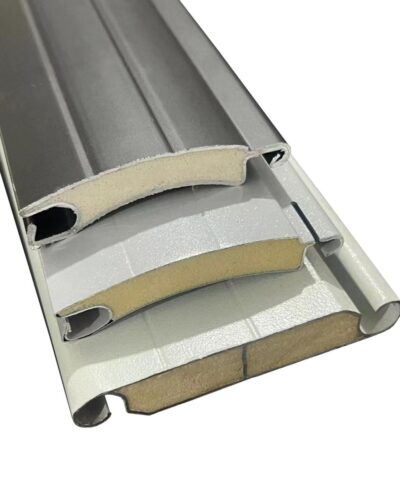
Profile shape affects both strength and how the shutter sounds when it runs. Flat slats sit lowest in weight and cost, mini curve slats add a slight bow for extra rigidity, and standard curve slats give the strongest resistance to bending, which is why they turn up on security-grade shutters.
| Profile | Typical use | Relative strength |
|---|---|---|
| Flat | Light residential, internal | Lowest |
| Mini curve | Standard residential | Medium |
| Standard curve | Commercial, security-focused homes | Highest |
Profile shape decides how much force a slat can take before it bends.
Foam-filled versus hollow
Extruded aluminium foam-filled slats are the standard choice across Adelaide for a reason. They insulate better, deaden noise, and resist denting compared with hollow slats, which are cheaper but noticeably weaker under hand pressure. If your original shutter was foam-filled, stick with foam-filled replacements, because a hollow slat dropped into a foam curtain sounds different every time the shutter rolls.
What affects the price of roller shutter slats
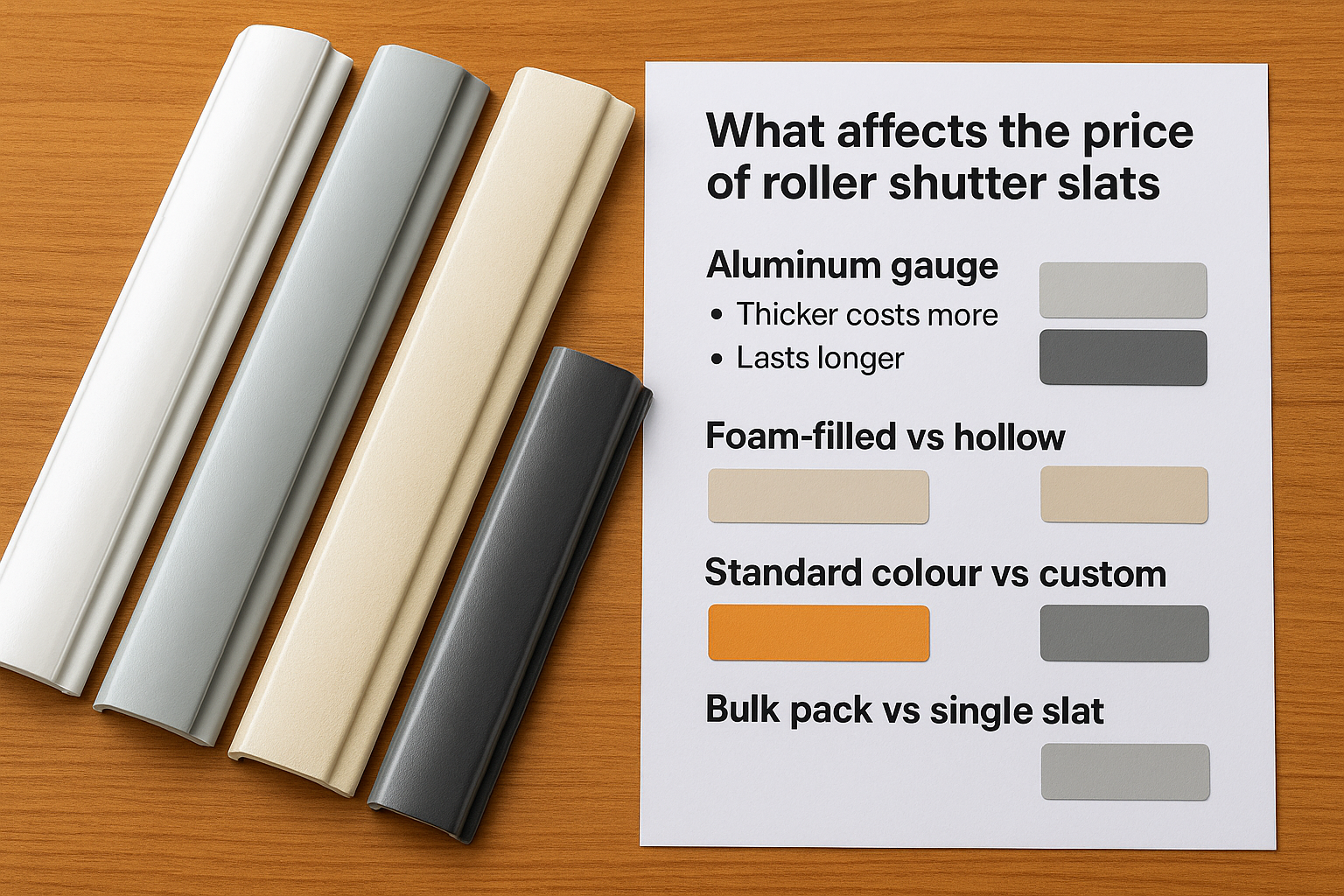
Price on roller shutter slats for sale swings more than most buyers expect, and the gap usually comes down to a handful of factors rather than random markup. Aluminium gauge is the biggest driver: a 6mm foam-filled slat costs noticeably more per metre than a 4mm hollow one, but it also lasts years longer and resists denting far better. Cheap imported batches often shave gauge thickness to hit a lower price point, and that saving shows up fast once the shutter’s back in daily use.
Cheap slats aren’t a bargain if you’re replacing them again in two years.
Volume, colour, and cut length
Buying in bulk changes the per-slat cost significantly, since suppliers price by the metre or by the pack rather than per individual piece. Custom colour matching adds a premium too, particularly for older shades that have been discontinued or need a small custom batch run. Cut-to-length slats, sized exactly to your shutter’s opening, cost more than stock lengths you trim yourself, but they remove the guesswork and reduce wastage.
- Aluminium gauge (thicker costs more, lasts longer)
- Foam-filled versus hollow construction
- Standard colour versus custom or discontinued shade
- Bulk pack versus single-slat purchase
- Pre-cut length versus stock length requiring trimming
Supplier margins and freight
Online marketplaces selling generic imported slats can undercut local Adelaide suppliers on sticker price, but freight from interstate warehouses adds cost and delay that often erases the saving. Local manufacturers who cut and finish slats on-site skip that freight markup entirely, which is part of why factory-direct pricing usually beats a courier-shipped box from interstate.
Where to buy quality roller shutter slats in Adelaide
Finding a supplier is easy. Finding one who’ll actually match your existing shutter is the hard part. Local Adelaide suppliers who manufacture on-site can measure a sample slat against their own stock and tell you within minutes whether it’s a genuine match, something no interstate marketplace listing can promise from a photo.
A supplier who can hold your old slat next to their stock beats any online listing.
What to ask before you buy
Run through this list with any supplier before you commit to an order, whether you’re buying a single slat or a full pack for a repair job.
- Can they match your exact width, curve profile, and colour from a sample?
- Do they stock foam-filled and hollow versions, or only one?
- Will they cut slats to your shutter’s exact opening length?
- Do they carry parts for other brands, not just their own installs?
- What’s the lead time if your colour needs a custom run?
Why factory-direct makes sense
Buying from a manufacturer that also handles roller shutter repairs cuts out the guesswork entirely. Classic Roller Shutters stocks roller shutter spare parts for DIY buyers and runs its own repair division, so you’re dealing with people who see mismatched slats and failed motors every week, not a warehouse picker filling an online order. That local knowledge matters most when your shutter is an older model or a brand that’s no longer common in Adelaide, since a supplier who’s seen it before will spot problems a generic listing never mentions.
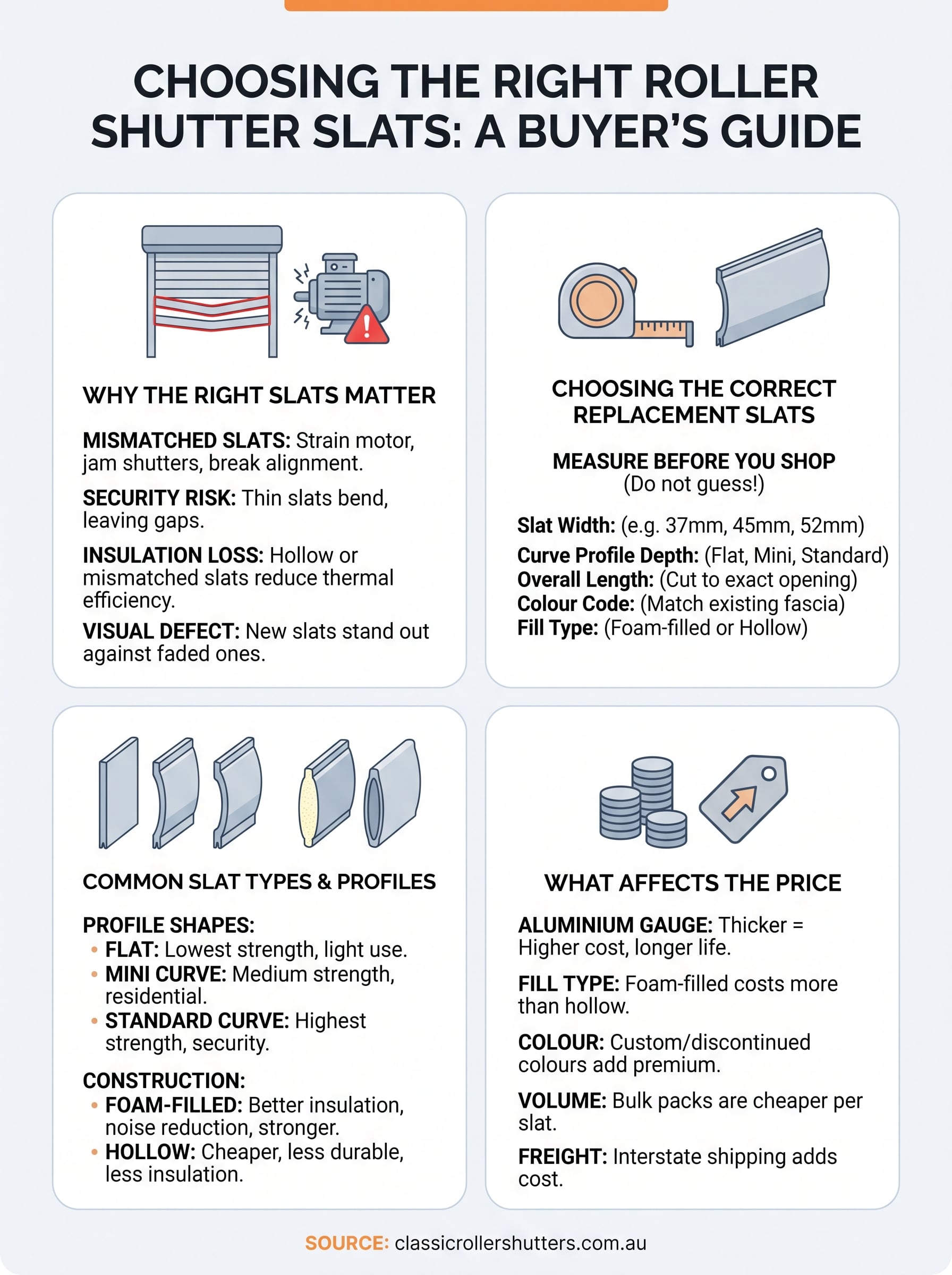
Getting your roller shutters running smoothly again
Buying the right slat comes down to getting the basics right: correct width and profile, matching gauge and fill, and a colour that won’t stand out against sun-faded neighbours. Skip any of those checks and you’ll end up ordering twice, paying for freight twice, and still fighting a shutter that binds in the guides.
If you’ve measured your slat and you’re still unsure what you’re looking at, don’t guess. A quick photo or a sample slat tells an experienced supplier more in five minutes than an hour of scrolling listings ever will, and it saves you from a costly mismatch down the track.
Whether you need a single replacement slat, a full repair, or you’re upgrading an old manual shutter to electric, get in touch with Classic Roller Shutters for a straight answer on what your shutter needs and what it’ll cost to fix properly.