Battery vs Electric Roller Shutters Adelaide: Which System Is Right for Your Home?
When choosing new roller shutters, one of the most common questions we’re asked is:
Should I choose battery-operated or 240V electric roller shutters?
The answer isn’t that one system is good and the other is bad.
At Classic Roller Shutters & Blinds, we’ve been manufacturing, supplying and installing roller shutters in Adelaide for more than 40 years, and we offer both systems because there is a genuine place for each.
The right choice depends on your home, where the shutters are being installed, access to mains power, how you want to operate them and the level of automation you want.
In some homes, a rechargeable battery shutter is an exceptionally practical solution.
In others, we will recommend a 240V electric roller shutter as the premium long-term option.
Here’s how the two systems work and where each one really comes into its own.
What Is a Battery-Operated Roller Shutter?
Our battery-operated roller shutters don’t require a permanent 240V electrical connection at the shutter.
Instead, the system uses a rechargeable lithium-ion battery handset communicating with the battery mechanism or motor housed neatly inside the shutter box.
You operate the shutter from the handset without needing a wall switch or mains wiring run to each shutter.
For the right property, this is an excellent system.
The Big Advantage: No Mains Power Required at the Shutter
One of the greatest advantages of a battery roller shutter is the installation flexibility it provides.
Not every house makes it easy—or even practical—to get 240V power to every window.
This is particularly relevant when retrofitting roller shutters to an existing home.
Running new electrical wiring can sometimes require access through wall cavities, ceilings or other areas of the building. Depending on the construction of the home, that can range from straightforward to extremely difficult.
A battery system gives us another option.
Two-Storey Homes
Second-storey windows are a good example.
Depending on the construction of the house, getting new mains wiring from the switchboard and through the building to upstairs shutter locations can be difficult and disruptive.
A battery-operated roller shutter can eliminate the need to run a new 240V electrical supply to the shutter.
Homes Without Accessible Wall Cavities
Older homes, renovated properties and particular construction methods may have limited or no suitable wall cavity for new electrical cabling.
Rather than creating unnecessary building work simply to get power to a shutter, a battery system may provide a much cleaner installation.
Hebel and Similar Construction
Hebel homes and other forms of solid or specialised wall construction can also make retrofitting electrical cabling more challenging.
This is where battery shutters really demonstrate their value.
Instead of choosing the operating system first and then trying to make the building accommodate it, we look at the home and recommend the system that makes sense for the installation.
How Often Do Battery Roller Shutters Need Charging?
Battery roller shutters do require charging, but for most homeowners it simply becomes part of normal household maintenance.
Under typical residential use, the rechargeable lithium-ion system will generally require charging every few weeks, although the actual interval varies according to the size and weight of the shutter and how frequently you operate it.
A bedroom shutter operated once in the morning and once at night, for example, will have different battery usage from a shutter that is opened and closed numerous times throughout the day.
Charging is straightforward using the appropriate charger for the system.
The important difference is that you are recharging the system periodically rather than permanently supplying 240V power to the shutter.
For many existing Adelaide homes, that small amount of maintenance is a worthwhile trade-off for avoiding difficult electrical work.
Battery Shutters and Power Outages
Another useful advantage of a charged battery system is that it isn’t dependent on the home’s mains electricity being available every time you want to operate the shutter.
If the power goes out, a battery-operated shutter with adequate charge can still be operated.
That can be a very useful feature, particularly when shutters are installed over important windows or openings.
As with any rechargeable system, however, it relies on the battery being adequately charged.
What Is a 240V Electric Roller Shutter?
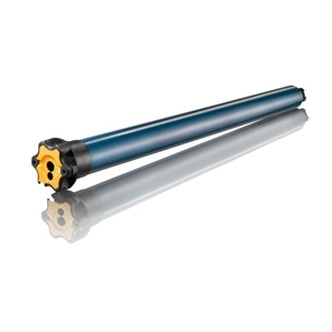
Where suitable mains power is available, 240V electric roller shutters are our premium operating solution.
A correctly selected quality 240V motor is housed within the roller shutter system and connected to mains electricity by an appropriately licensed electrician.
There’s no routine battery charging required for normal operation.
Press the switch or remote and the shutter operates.
For customers looking for a high-quality, convenient system designed for long-term use, 240V electric is difficult to beat.
Why We Recommend 240V Electric for Many Homes
Quality 240V roller shutter motors have an excellent service life when correctly sized, installed and used for their intended application.
They are particularly attractive when:
- you’re building a new home and can plan electrical points in advance
- suitable electrical access already exists
- you’re undertaking a major renovation
- you don’t want to periodically recharge batteries
- you’re installing a number of shutters throughout the house
- you want more advanced control and automation options
- you’re creating a smart-home system
When wiring can be incorporated cleanly, 240V gives you an exceptionally convenient long-term roller shutter solution.
Wall Switch or Remote Control?
Electric doesn’t mean you have to operate every shutter in the same way.
Classic offers different control options depending on the motor and system selected.
Wall-Switch Operation
A traditional wall switch provides simple, reliable control.
Press the switch to raise or lower the shutter.
For many customers, that’s exactly what they want—particularly for shutters that are always operated from the same room.
Remote-Controlled Roller Shutters
If you prefer the convenience of operating your shutters remotely, we can configure compatible electric shutter systems with remote controls.
This can be particularly convenient when you have multiple shutters throughout the house.
Rather than walking from window to window, compatible systems can provide individual and grouped shutter control from a handset.
Smart Roller Shutters – Control Them From Your Phone
For homeowners wanting the next level of convenience, Classic also offers smart roller shutter solutions.
Using compatible Somfy motors and the TaHoma smart-home hub, your roller shutters can become part of your connected home.
Depending on the system configuration, this allows you to operate compatible shutters through your smartphone.
That means your phone effectively becomes another roller shutter control.
Smart control can also open up options for scheduling and automation.
For example, you may want shutters to operate at particular times of day rather than remembering to open or close every shutter individually.
For customers installing a complete house of electric shutters, this can transform the way the system is used.
What Happens to a 240V Shutter During a Blackout?
A standard 240V roller shutter relies on mains electricity.
Therefore, if your property loses power, a standard electrically operated shutter cannot operate until power is restored.
But that doesn’t mean you can’t plan for a blackout.
Battery Backup Options
For suitable systems and applications, Classic can offer battery backup options so the shutter can still be operated if mains power is interrupted.
This is particularly worth discussing where access through an opening is important or where the customer specifically wants backup operation during a power outage.
Manual Override Options
Certain motor and shutter configurations can also be specified with a manual override.
Again, this is why we prefer to discuss how the shutter will actually be used before recommending a motor.
Power-failure operation is much easier to plan for when the shutter is being specified than after it has already been manufactured and installed.
Battery vs 240V Electric Roller Shutters
| Feature | Rechargeable Battery | 240V Electric |
|---|---|---|
| Permanent mains connection at shutter | No | Yes |
| Operation | Battery handset | Wall switch or remote, depending on system |
| Routine charging | Yes – generally every few weeks depending on use | No |
| Suitable for difficult retrofits | Excellent | Depends on electrical access |
| Two-storey applications | Excellent where wiring is difficult | Excellent where wiring can be provided |
| Homes without accessible cavities | Excellent option | Can require additional electrical work |
| Hebel/specialised construction | Very useful | Depends on electrical access |
| Operates during mains outage | Yes, provided sufficient charge remains | Requires suitable backup/override option |
| Smart-home options | System dependent | Excellent with compatible motors and controls |
| Long-term convenience | Excellent | Premium solution |
| Best suited to | Difficult wiring/retrofit situations | New builds, renovations and homes with suitable power access |
So Which Roller Shutter System Is Better?
We don’t believe in telling every customer that one operating system is automatically better.
The better system is the one that suits the property.
If you’re installing shutters on an existing two-storey home and running new electrical cables would mean difficult access or unnecessary disruption, a rechargeable battery system may be the smartest choice.
If you’re building a new home and the electrician can provide power to every shutter location before the walls are finished, we’d generally encourage you to seriously consider 240V electric.
If you’re renovating and already have suitable power nearby, 240V may again make sense.
And if you’re creating a smart home and want your shutters incorporated into an automated system, a compatible 240V motor with Somfy TaHoma provides another level of control.
There is a place for both products.
Don’t Choose the Motor Before Looking at the House
This is perhaps the most important advice we can give.
The operating system shouldn’t be selected from a website without considering the building.
When we quote roller shutters, we look at things such as:
- the construction of the home
- window location
- whether the property is single or two storey
- electrical access
- wall construction and cavities
- number and size of shutters
- how frequently they’ll be operated
- preferred control method
- whether smart-home control is required
- whether operation during a power outage is important
Only then can we properly recommend battery or 240V electric roller shutters.
Adelaide Roller Shutter Specialists Since 1984
Classic Roller Shutters & Blinds is a South Australian family-owned business that has been manufacturing, supplying and installing roller shutters for more than 40 years.
We don’t offer only one operating system and then try to make it fit every house.
We offer manual, rechargeable battery and 240V electric solutions because Adelaide homes are different—and customers’ requirements are different.
Whether you need the installation flexibility of a rechargeable lithium-ion battery roller shutter, the long-term convenience of a 240V electric roller shutter, or a smart roller shutter system using compatible Somfy technology and TaHoma, we can help you select the system that makes sense for your home.
Talk to Classic Roller Shutters & Blinds about your property and we’ll explain the options, advantages and limitations before you decide.