A reputable commercial blinds installer will handle everything from on-site measurement and product selection through to compliant installation, safety sign-off, and ongoing maintenance—saving you time, ensuring a perfect fit, and protecting your workplace.
Whether you manage a bustling café, a medical clinic or an entire office tower, the same questions crop up once the windows need covering: Which blinds suit the space, how much will they cost, who can fit them without disturbing staff, and what paperwork keeps insurers happy? This guide answers those questions step-by-step. We unpack the consultation process, measuring techniques and product options, then break down Australian pricing in plain-spoken AUD figures. Examples draw on South Australian projects, yet the principles apply right across the country. You’ll see typical lead times, on-site procedures, and the regulations that govern chain safety, fire ratings and energy performance. Finally, you’ll learn how to spot a licensed, fully-insured installer—and the red flags that suggest you should keep shopping. Let’s get started.
Why Professional Installation Matters for Commercial Blinds
Cutting corners on a fit-out might seem tempting when budgets are tight, yet the way your blinds are measured, mounted and certified has a direct impact on comfort, safety and ongoing costs. Entrusting the job to qualified specialists in commercial blinds installation safeguards three critical areas: performance, compliance and warranty.
Precision fit drives performance and aesthetics
In a corporate setting, a few millimeters can separate a sleek façade from a sloppy one. Professional installers use laser measures, levelling lasers and templating software to deliver gaps of less than 2 mm. That accuracy:
- Removes light bleed that can cause monitor glare and fatigue.
- Maximizes the fabric’s insulation value, trimming aircon spend by up to 20 %.
- Creates a uniform stack height so brand graphics or screen-printed logos align perfectly across a glazed curtain wall.
When every blind drops to the same point and sits plumb, clients and visitors notice the polish—even if they can’t quite put their finger on why the space feels more “put together”.
Occupational health & safety compliance in workplaces
Australian WHS regulations place responsibility on the PCBU (person conducting a business or undertaking) to eliminate hazards. A licensed installer helps you tick that box by:
- Fixing chain/cord restraints at the required 1,600 mm above floor level and supplying tested break-away clips.
- Offering anti-ligature tracks for hospitals, mental-health wards and detention facilities.
- Completing Safe Work Method Statements (SWMS) for ladder or EWP use, isolating nearby power where motors are hard-wired, and leaving the site free of off-cuts and fixings.
Failing to meet these standards risks fines and, more importantly, worker injury.
Warranty protection and liability cover
Manufacturers typically offer:
- 5–10 year fabric and component warranties
- 1–5 year motor warranties
- -2year workmanship guarantees from reputable installers
DIY installs or work performed by unlicensed contractors can void these assurances, leaving your business liable for product failure or property damage. Professional commercial blinds installation not only locks in warranty cover but also provides certificates of compliance and proof of public liability insurance—documents your insurer will ask for if something goes wrong down the track.
The End-to-End Process: From First Contact to Final Sign-Off
Commercial blinds installation isn’t a single trade-visit; it’s a mini-project that runs from scoping to hand-over paperwork. Knowing the milestones upfront lets facilities managers budget accurately, schedule tenants, and keep compliance files audit-ready. Below is the typical journey an Australian installer will guide you through.
Initial consultation & needs analysis
A project manager will either walk the site or review architectural plans if the building is still on paper. Expect questions such as:
- What is the primary use of each space (boardroom, waiting area, breakout zone)?
- Are there specific glare hotspots on computer screens?
- Do you have corporate colours or branding guidelines to follow?
- Are any areas subject to bushfire or hospital fire-rating clauses?
This discovery session shapes every decision that follows, so have occupancy numbers, operating hours and any sustainability targets (e.g., Green Star) handy.
Accurate measuring and transparent quoting
Next comes the tape-off, usually performed with laser distance meters linked to tablet software. Measurements are taken to the nearest millimetre and loaded straight into quoting apps that spit out a line-item proposal while the rep is still on site. A thorough quote should break out:
- Fabric/motor/hardware cost per blind
- Labour per window
- Disposal of existing treatments
- GST and freight
- Optional extras such as scaffolding, after-hours labour or temporary hoarding
Tip: ask the installer to list motorization, control systems and any electrical work as separate rows so you can compare apples with apples.
Fabric, colour, and hardware selection
Once the numbers look right, a design consultant will bring sample books or drop swatch kits at reception. You’ll review:
- Openness factors (1 %, 3 %, 5 %) under a lightbox to see real-world glare control
- Fire-retardant certificates stamped to AS 1530.2
- Hardware colours, end cap finishes and chain types (stainless vs plastic)
Corporate branding often dictates palette, but don’t forget practicalities—darker fabrics absorb more heat and may increase cooling loads, while lighter backings reflect solar gain.
Scheduling and logistics planning
Lead times vary: locally manufactured rollers run 2–6 weeks; imported specialty systems can stretch to 10. The installer will lock in:
- Lift bookings and dock times for deliveries
- Security induction slots for crew
- After-hours or weekend access if desks need to stay staffed
- Coordination with electricians so motor cables are energised but isolated before blinds arrive
Good operators issue a Gantt-style programme so you can see which floors are hit on which days.
What happens on installation day
Expect a small team in high-vis shirts to:
- Lay drop sheets and move furniture clear of windows.
- Remove old curtains or venetians and bag them for recycling/skip.
- Fix brackets—either into concrete lintels with masonry anchors or into aluminium mullions with tek screws.
- Hang and level each blind, then test chain tension or jog motors via remote/app.
Noise is limited to cordless drills and usually wraps up in 20–45 minutes per opening.
Final checks, training, and sign-off
Before the crew packs up, the supervisor will walk you through:
- Operational training—chain safety clips, limit setting for motors, app log-ins
- Maintenance dos and don’ts (no harsh chemicals, quarterly dusting)
- Delivery of warranty cards, fire-retardant tags and certificates of compliance
Sign the completion form only when every blind runs smoothly and the site is broom-clean. From first call to final tick-off, a well-managed commercial blinds installation keeps surprises to a minimum and your workplace looking sharp.
Common Types of Commercial Blinds and Compatibility with Installation Methods
Not every window—or tenancy contract—welcomes the same treatment. The most common product families used in Australian offices, hospitality venues and health facilities all come with their own mounting quirks, clearance needs and compliance boxes to tick. Below you’ll find a cheat-sheet to help you match the right blind to the right fixing method long before installation day.
Roller and sunscreen blinds: the corporate staple
Simple, space-saving rollers account for well over half of commercial blinds installation projects because they fit almost any frame depth and can disappear completely when raised. Your installer will discuss:
- Recess mount (inside the reveal) for the cleanest look—requires at least 60 mm reveal depth for a chain drive, 85 mm for a motor tube.
- Face mount when reveals are shallow or obstructed by window hardware; brackets fix to the wall, ceiling or mullion.
- Single, dual or cassette systems. Dual rollers combine a 5 % openness fabric for daytime glare control with a full block-out for presentations. Cassette heads conceal the tube and improve light sealing around the edges.
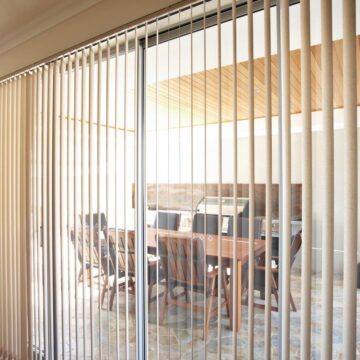
Vertical blinds & panel glides for large spans
For glazed walls above three metres wide, verticals and panel glides provide broad coverage without heavy tubes:
- Aluminium headrails screw to the ceiling slab, plasterboard ceiling battens or pelmets.
- Overlap and stack direction are calculated during the site measure so slats don’t obstruct emergency exit hardware.
- Child-safe wand operation is now standard; chains along the bottom of slats are generally removed in commercial settings to avoid WHS hazards.
Panel glides ride on a multi-channel track and suit sliding doors where clearance prevents a recess mount.
Venetian and aluminium blinds for office flexibility
25 mm micro venetians or 50 mm commercial aluminium venetians allow tenants to tilt light rather than fully raise it:
- They can be top-fixed into the reveal or face-fixed above the architrave; ceiling suspension bars are handy when mullions are uneven.
- Reflective “pearlescent” slats meet 3- or 4-star NABERS glare requirements by bouncing heat back out.
Motorised and automated solutions
Automation is less about gadgets and more about compliance and accessibility:
- Hard-wired 240 V motors need pre-run conduits and an electrician to isolate circuits before installers arrive.
- Low-voltage or battery tubes mount like a chain blind; the battery pack hides in the headbox.
- Most commercial motors include dry-contact inputs for BMS integration, allowing blinds to rise automatically when fire alarms trigger or daylight sensors detect heat gain.
Specialty solutions: zip screens, fire-retardant curtains & anti-microbial fabrics
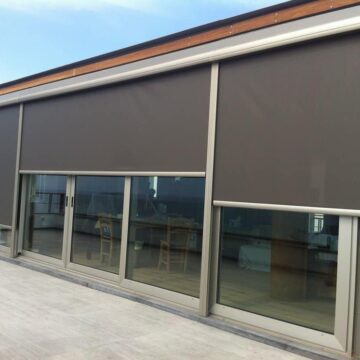
- Zip track screens anchor into side channels to resist wind loads—ideal for alfresco cafés or childcare verandas. Installation requires plumb jambs and floor channels drilled into concrete.
- Fire-retardant curtains must carry AS 1530.2 tags and are often ceiling-fixed on heavy-duty tracks rated for public assembly buildings.
- Hospitals and food labs choose PVC-free, anti-microbial roller fabrics; these mount like standard rollers but the installer must wear gloves to avoid contaminating the surface pre-handover.
Choosing the correct product-plus-mounting combo ensures the blinds perform as specified and speeds up installation because no on-site improvisation is needed.
Compliance, Safety, and Building Regulations You Need to Know
Cut-price blinds that look fine on day one can quickly become a legal headache if they fail a fire audit, snag a child’s neck-cord, or breach energy-efficiency targets in a Green Star office. In Australia, commercial blinds installation must satisfy a web of national standards, state WHS laws and insurer expectations. A reputable installer will supply the paperwork noted below; as the building owner or manager, you remain the duty-holder, so it pays to understand the basics.
Relevant Australian Standards and NCC clauses
Australian Standards set the benchmark, while the National Construction Code (NCC) makes many of them mandatory:
AS 2663.3Internal Window Coverings – details performance and durability testing, load requirements for brackets and allowable deflection.AS/NZS 60335.2.97Safety of electric blinds and awnings – referenced when motors are hard-wired.AS 1926.1(child safety devices) is cross-referenced for corded systems.- NCC Volume One cites fire-hazard properties in
Clause C1.10and energy provisions inSection J, both of which affect fabric selection.
A professional installer should provide a compliance statement that maps each blind type back to the relevant clause or test report.
Fire-retardancy ratings and tagging requirements
Most public buildings—schools, hospitals, aged-care homes, theatres—demand fabrics that achieve a flame-spread index ≤ 4 under AS 1530.2. Look for:
- Permanently sewn or heat-pressed tags showing the test lab, date and batch number.
- Certificates of assessment less than five years old (older documentation may be rejected during annual fire inspections).
- Documentation confirming the same coating on both sides if the blind is dual-coloured.
If your tenancy falls under NCC Part C2 (fire compartments and exits), installers must also retain a copy of the supplier’s Group Number test for the headbox or pelmet material.
Accessibility and child-safety obligations in public spaces
Cord and chain loops attract strict rules under the Trade Practices (Consumer Product Safety Standard) 2014 and state WHS regs:
- Tensioning devices must be fixed 1 600 mm above finished floor level and resist a 70 N pull test.
- Break-away connectors are mandatory in childcare, aged-care and health-care Class 9 buildings.
- Anti-ligature tracks or wand operation may be required in mental-health units and correctional facilities.
During fit-off, installers should photograph each restraint point and include it in the hand-over pack—gold when auditors visit.
Environmental and energy-efficiency certifications
Blinds play a surprising role in hitting sustainability KPIs:
Green Star Interiors v1.3awards points for low-VOC fabrics (< 0.5 mg/m² hr) and for demonstrating an average fabric Solar Reflectance Index (SRI) above 40.- NABERS Indoor Environment targets glare and daylight control; 1 % openness sunscreen rollers often score better than 5 % on east and west façades.
- Some tender documents now request cradle-to-cradle or GECA certification—ask your installer for the chain of custody.
When all of the above boxes are ticked, you walk away with a blind package that is not only stylish and functional but also litigation-proof, energy-smart and audit-ready.
Pricing Breakdown: How Much Commercial Blinds Installation Really Costs in Australia
No two fit-outs cost the same, yet most quotes follow a predictable pattern once you understand the levers. The numbers below are drawn from recent projects in Adelaide, cross-checked against national PAA data, and expressed in AUD (ex-GST).
Key cost drivers you should budget for
- Window size and quantity – bigger panes mean wider tubes and heavier duty tracks.
- Fabric grade – standard polyester sunscreen vs fire-retardant, antimicrobial or low-VOC options.
- Motorisation – battery, low-voltage or 240 V hard-wired, plus control hardware.
- Mounting complexity – concrete lintels, heritage brick, or full-height glazing that needs boom lifts.
- Site access and timing – after-hours installs, security clearances or regional travel uplift labour.
- Ancillary trades – electricians for motors, scaffolders for atriums, or glaziers if glass has to be removed.
Typical per-square-metre and per-window figures
| Product type | Materials (per window) | Install labour (per window) | Motor add-on | All-in ballpark* |
|---|---|---|---|---|
| Chain roller (block-out) | $40–$120 | $30–$50 | n/a | $70–$170 |
| Dual roller (sunscreen + block-out) | $80–$200 | $45–$70 | +$10 for linked chains | $125–$270 |
| Vertical / panel glide | $90–$180 | $40–$60 | n/a | $130–$240 |
| Motorised roller | $40–$120 | $30–$50 | $250–$650 | $320–$820 |
*Based on a “standard” 1200 mm × 1500 mm office window. Bulky atrium or curtain-wall bays cost proportionally less per square metre once travel and set-up are absorbed.
Labour vs material costs explained
On a medium-sized office (100 windows) the split averages 65 % materials, 35 % labour. The ratio tightens as quantity rises because installers can hit 30–40 blinds per tech per day on repetitive openings, whereas fabric and motor costs stay fixed.
Smart ways to save without cutting corners
- Standardise sizes across floors so the factory can batch-cut fabric, slashing wastage.
- Choose locally made blinds; you’ll dodge import freight and get shorter lead times.
- Run chain-drive now but ask the installer to chase a low-voltage cable to each headbox for easy future motor upgrades.
- Group works so installers set up the lift or scaffold once, not three times.
How to request and compare quotes
- Ask for itemised pricing that separates fabric, hardware, motors, electrical, scaffold and rubbish removal.
- Confirm measurement method (laser vs hand tape) and tolerance guarantees.
- Check that the quoted motors include commissioning and programming, not just supply.
- Verify licences, insurances and warranty periods in writing.
- Request at least two references for projects of a similar size or building class.
With these figures and checkpoints in hand you can spot lowball estimates, negotiate extras with confidence, and budget realistically for a compliant, professional commercial blinds installation.
Timeline and Project Management Expectations
A commercial blinds project is a mini construction job: multiple suppliers, tight building access slots, and strict WHS paperwork. Knowing the headline timings helps you line up cleaners, painters, and IT moves without last-minute scrambles.
Manufacturing & delivery lead times
- Locally made rollers or verticals: 2–6 weeks from sign-off.
- Imported specialty systems or custom fabrics: 6–10 weeks, longer in November–January peak.
Factor in a 10 % contingency for freight delays or fabric batch re-runs; smart facility managers issue purchase orders early and lock in colours first.
Installation duration and sequencing
An experienced two-person crew averages 25–40 standard windows per day. Multi-storey jobs are tackled floor-by-floor so occupants can shuffle desks once, not daily. Atriums or high glazing that needs boom lifts are booked as separate “high-risk” days.
Coordination with other trades on new builds
Blinds go in after painting, ceiling tiles and lights but before final clean. Your installer will share lift schedules with electricians running motor feeds, and may request pre-installed GPOs or junction boxes 300 mm from each headbox. One missed conduit can stall a whole floor, so circulate drawings early.
Minimising disruption in occupied premises
- Nominate after-hours or weekend slots for boardrooms and reception areas.
- Require dustless drill bits, drop sheets, and silent drive anchors where possible.
- Insist on same-day rubbish removal and COVID-safe sign-in procedures.
Handled this way, commercial blinds installation becomes a background hum rather than a workplace drama.
What to Look For in a Commercial Blinds Installer (and Red Flags)
A slick website is nice, but credentials, workmanship and service back-up are what separate a solid partner from a risky hire. Use the checklist below to vet any company you invite to quote on your commercial blinds installation.
Qualifications, licenses, and insurance
Reputable installers hold a current builder’s or blinds-and-awnings license in their state, white cards for site safety, and — when motors are hard-wired — an electrical contractor’s licence. Ask for certificates of currency showing at least $20 million public liability and workers’ compensation cover.
Locally manufactured products vs imports
An installer aligned with an Australian factory can offer tighter lead times, consistent dye lots and faster warranty repairs. Imported blinds have their place, but make sure test reports and spare parts are readily available before you sign off.
Portfolio depth and commercial references
Look for a track record across building classes that match yours — offices, healthcare, hospitality, education. Request photos or, better, a quick site visit to a completed job. Positive feedback from facility managers carries more weight than glossy brochures.
After-sales service and in-house repair capability
Blind motors burn out and chains stretch. Check that the provider stocks parts, runs a dedicated service crew and offers preventive maintenance plans. A 48-hour response commitment is common on larger contracts.
Warning signs and deal-breakers
- Vague, lump-sum quotes with no product specification
- Pressure for full payment upfront before a single measure is taken
- No physical address or ABN on paperwork
- Reluctance to provide license numbers or insurance details
If any of these pop up, keep shopping — the time you save now could cost you plenty later.
Post-Installation Support: Warranty, Maintenance, and Upgrades
A quality commercial blinds installation should keep working long after the installers drive away. That staying power depends on clear warranty paperwork, a sensible maintenance plan and the option to upgrade when technology or tenancy needs evolve.
Understanding warranty terms and exclusions
Most commercial fabrics carry a 5–10 year warranty against fading, cracking and delamination, while motors are usually covered for one to five years. Workmanship guarantees run separately—often 12 years for locally made blinds. Read the fine print: misuse (yanking chains), corrosive cleaning agents or unapproved electrical alterations can void cover. Keep stamped certificates and serial numbers on file for insurance claims.
Preventive maintenance schedules for high-traffic areas
Like any moving part, blinds last longer when serviced. Best practice is:
- Quarterly dusting or vacuuming of slats and roller fabrics
- Annual chain tension checks and bracket screw torque tests
- Two-yearly motor limit–reset and battery health check for cordless units
Facilities with heavy public use—think schools or cafés—should log inspections in their WHS register.
Repair vs replace: making the call
Rule of thumb: if repairs exceed 50 % of replacement cost—or matching fabric is discontinued—swap the blind. Minor fixes such as chain swaps, slat replacement or motor resets are economical and keep warranties intact. A reputable service crew will provide a written cost–benefit report before proceeding.
Future-proofing with motorization and smart control retrofits
Good installers leave conduits or low-voltage leads in place even when you choose manual operation today. Adding DC motors, Wi-Fi hubs or BMS dry-contact modules later takes minutes, not days, and avoids fresh wall chases. Smart upgrades cut energy use by automating blinds to track sun angles—delivering measurable ROI without changing the fabric.
Key Takeaways Before You Book an Installer
Commercial blinds installation is one of those jobs that looks simple from a distance yet quickly unravels when measurement, safety or scheduling go wrong. Heading into procurement with the essentials fresh in mind will save headaches—and money—later.
- Professional measurement to the nearest millimetre eliminates light gaps, improves energy performance and delivers the crisp “corporate” finish clients notice.
- WHS-compliant fittings—tensioned chains, break-away devices, fire-rated fabrics—protect occupants and keep you on the right side of regulators.
- Transparent quotes should itemise materials, labour, motorisation, access equipment and GST; anything vague is a red flag.
- Typical outlay sits between
$70and$170per manual roller, plus$250–$650if you add a motor—budget accordingly and scale for quantity discounts. - Lead times range from two to six weeks for locally made blinds, up to ten for imported or custom fabrics; lock in dates early to avoid project overlap.
- A trustworthy provider holds trade licences, carries at least $20 m public liability, supplies written warranties and can point to comparable commercial references.
- Post-install support—spare-parts inventory, 48-hour service response and upgrade pathways—turns a one-off purchase into a long-term asset.
Ready to tick every box with a local, factory-direct team? Explore Classic Roller Shutters Adelaide’s commercial solutions and line up a free site measure today.