
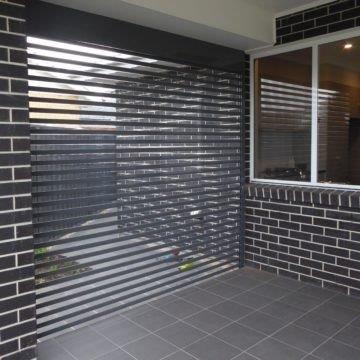
If you run a café, restaurant, or any business with an outdoor area in Adelaide, commercial outdoor blinds are one of the most practical upgrades you can make. They extend your usable space, protect customers and staff from sun, wind, and rain, and give your property a polished, professional appearance that keeps people coming back.
But choosing the right system isn’t as simple as picking a colour. You need to consider the material, the mounting method, wind ratings, and whether the product suits your specific setup, whether that’s a shopfront, alfresco dining area, or warehouse opening. Getting this wrong costs time and money, so it pays to understand your options before committing. The differences between café blinds, Zip Trak systems, and straight-drop blinds matter more than most business owners realise, and pricing varies significantly depending on what you choose.
At Classic Roller Shutters Adelaide, we manufacture, supply, and install outdoor blinds for commercial properties across Adelaide, and we’ve been doing it for over 40 years. This article breaks down the main types of commercial outdoor blinds, the materials available, what they cost, and what to look for when choosing a system for your business. No fluff, just the details you need to make a confident decision.
Why commercial outdoor blinds matter for businesses
For most businesses, outdoor space sits underused simply because it’s exposed. Sun, wind, and rain push customers indoors or away entirely. Installing commercial outdoor blinds turns that exposed area into a controlled environment you can use year-round, which directly affects how much revenue your outdoor seating or working area generates.
An undercover area without weather control is only half the investment.
More usable space, more revenue
If you run a café or restaurant with an alfresco area, every seat outside represents direct income. Without weather protection, those seats sit empty during hot Adelaide afternoons and cold winters. A well-specified blind system lets you extend your trading hours and seasons without a costly building extension. For retail and office settings, the same logic applies to outdoor waiting areas, entry zones, and loading bays.
Many business owners see a measurable lift in foot traffic or covers within weeks of installing quality outdoor blinds. The upfront cost repays itself faster than most fitout items because it directly unlocks space you already paid for.
Weather and UV protection for customers and fittings
Adelaide summers are harsh. Direct UV exposure damages furniture, flooring, and equipment faster than most business owners budget for. The right blind fabric reduces UV penetration significantly, extending the life of your outdoor fittings. Beyond the sun, wind and rain are the two main reasons customers leave early, so a system that handles gusts and sudden showers keeps people seated and comfortable longer.
Your staff benefit too. Working in full sun for extended periods is a genuine health and safety concern, and Australian workplace regulations require employers to manage heat and UV exposure for outdoor workers. Quality blinds address that obligation practically and affordably.
Types of commercial outdoor blinds
Not every commercial outdoor blind system suits every application. The three main types you’ll encounter in Adelaide commercial projects are café blinds, straight-drop roller blinds, and Zip Trak channel-guided systems. Each one handles weather differently, suits different structural setups, and comes at a different price point.
Café blinds and straight-drop roller blinds
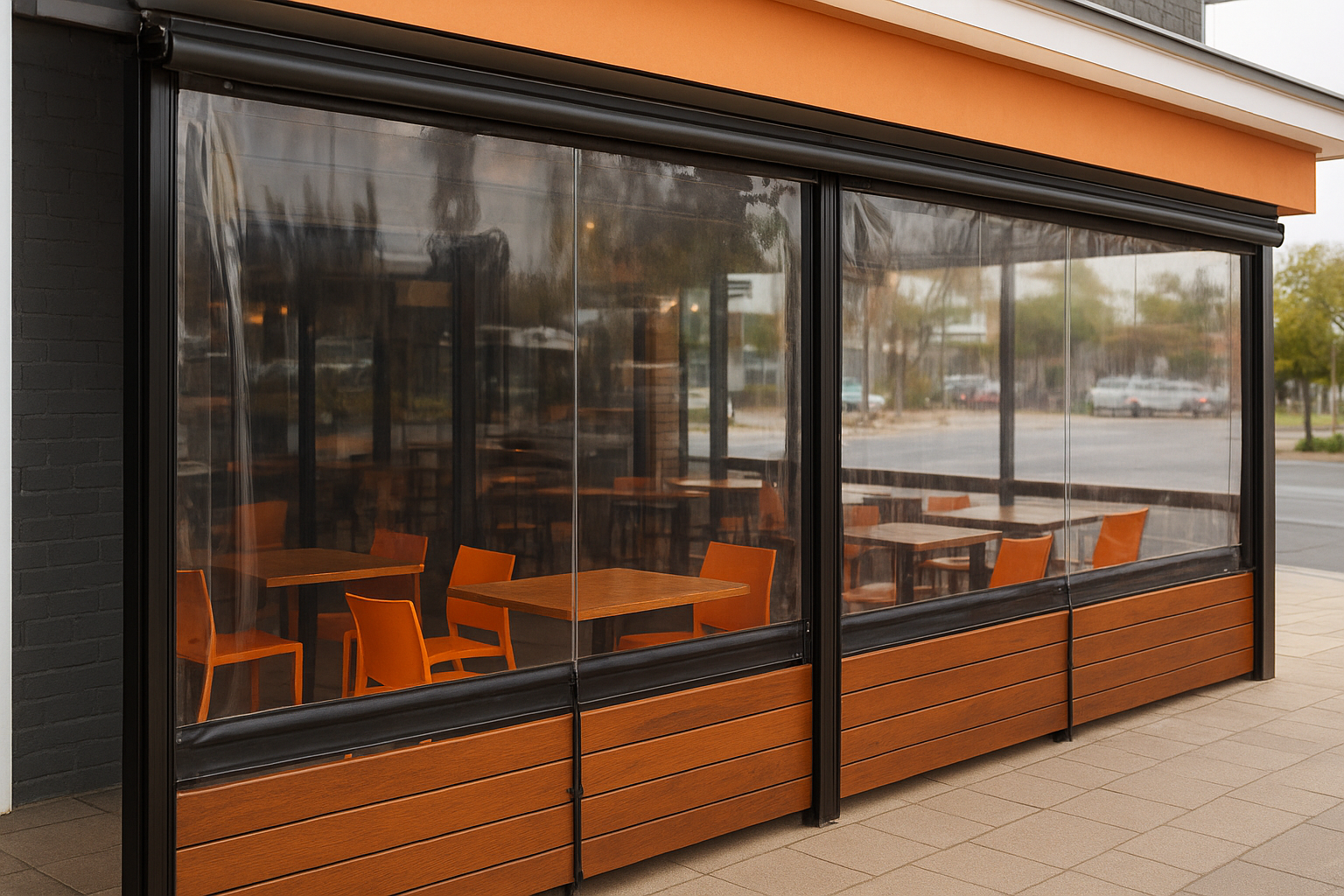
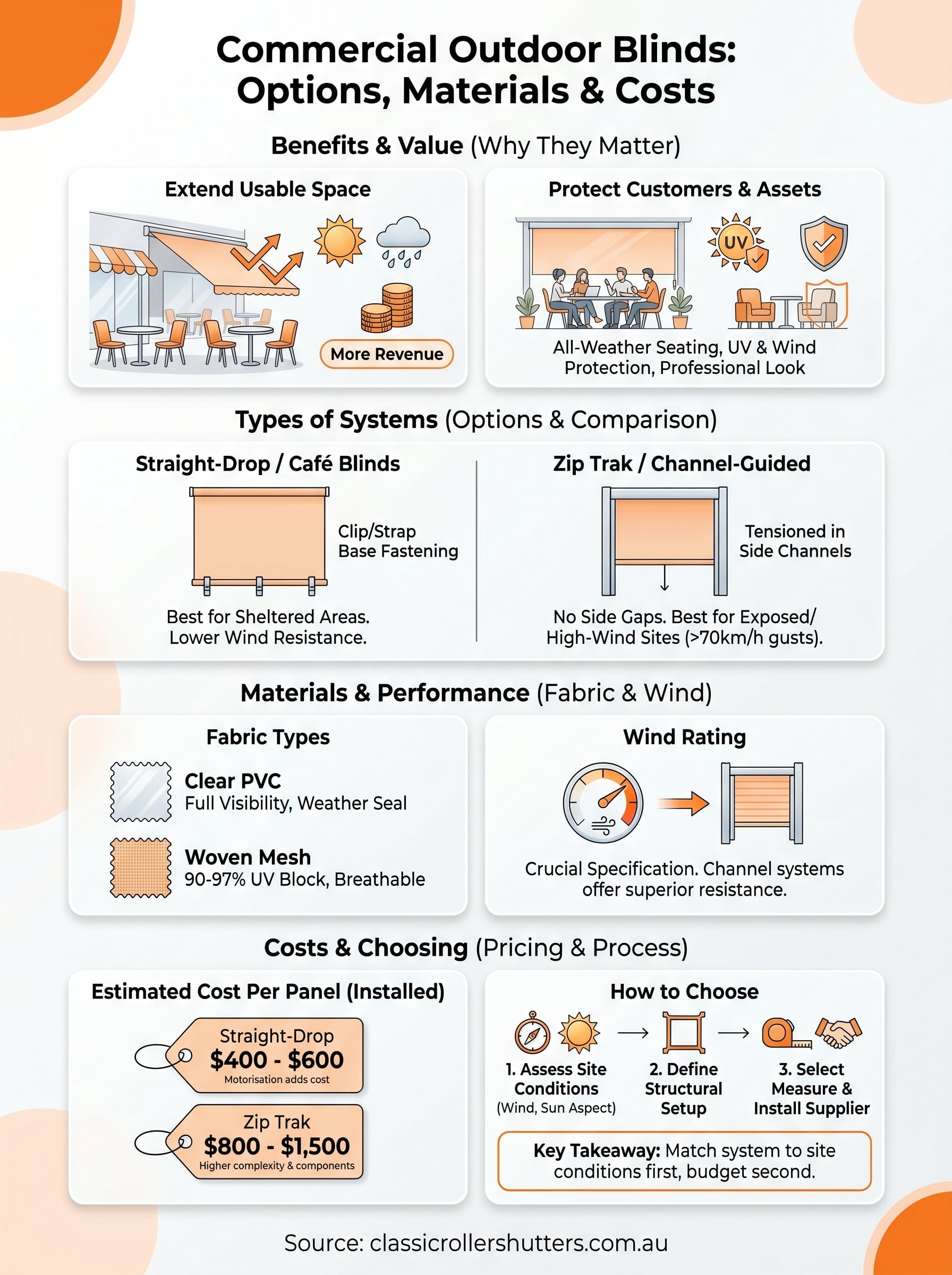
Café blinds are the most common choice for alfresco dining areas. They use clear PVC or woven mesh panels that roll down from a top track and fasten at the base with a simple clip or strap system. Straight-drop roller blinds work on the same principle but typically use fabric rather than clear PVC, making them better suited to shopfronts and covered walkways where full visibility isn’t the priority.
Zip Trak channel-guided systems
Zip Trak blinds run along side channels that keep the fabric tensioned even in strong wind, making them the most weather-resistant option available. The guided edges eliminate the gaps that standard drop blinds leave at the sides. For exposed or high-wind locations across Adelaide, Zip Trak is usually the right call over a standard café blind.
If your outdoor area faces prevailing winds, the side-channel design of a Zip Trak system is worth the additional cost.
Materials and performance features to compare
The material you choose for commercial outdoor blinds determines how well your system performs over time and in Adelaide’s climate. Cheap fabric fades, tears, and loses tension within a few seasons, costing you more in replacements than a quality product would have cost upfront.
Fabric types and UV ratings
The two main fabric options are clear PVC and woven polyester mesh. Clear PVC suits situations where you want full visibility and weather enclosure, but it yellows with prolonged UV exposure if you buy a low-grade product. Woven mesh blocks between 90 and 97 percent of UV radiation depending on the density, which makes it the better choice for sun-facing aspects.
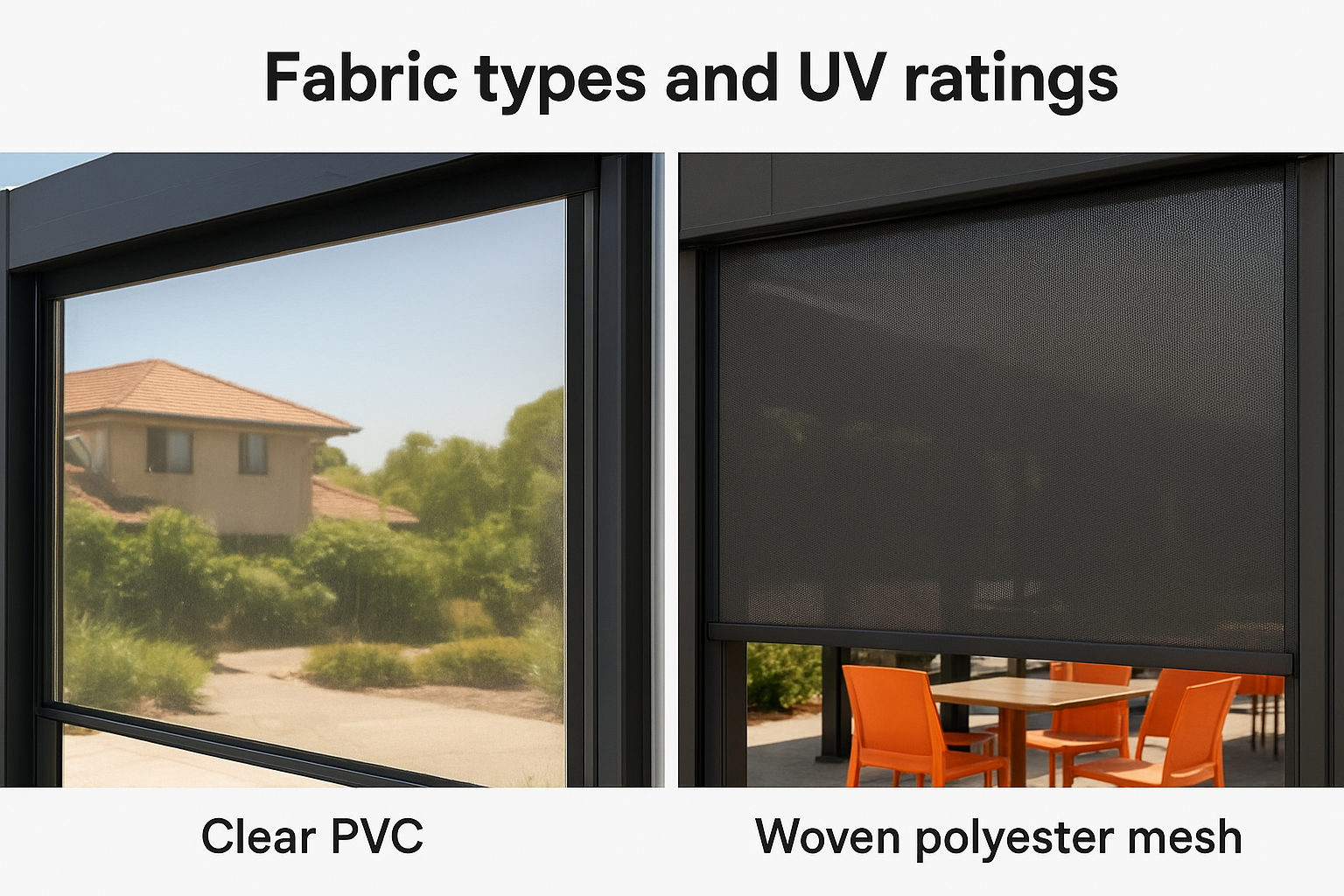
Specify a fabric with a documented UV block rating from the manufacturer, not just a general description.
Wind resistance and structural ratings
Wind rating is the most overlooked specification in commercial blind purchases. Standard drop blinds carry a lower wind resistance than channel-guided systems, and in exposed Adelaide locations that difference matters. Look for products that specify a wind speed rating in kilometres per hour rather than vague terms like “wind resistant.” Side-channel systems like Zip Trak generally handle gusts above 70 km/h without damage, making them a safer long-term investment for outdoor dining areas.
How pricing and installed costs work
Pricing for commercial outdoor blinds depends on three main variables: the system type, the fabric grade, and the size of your installation. A basic café blind setup costs significantly less than a fully motorised Zip Trak system, but the two products serve different purposes and perform at different levels, so comparing them on price alone misses the point.
What drives the cost up or down
System complexity is the biggest cost driver. Channel-guided systems require more components and precise installation than straight-drop blinds, which pushes the price higher. Motorisation adds cost too, but for large commercial installations it removes the need for manual operation across multiple panels, saving time and reducing wear on the fabric and hardware.
Motorised systems often justify their cost through reduced daily operational effort across multiple blind panels.
What to budget per panel
For a rough guide, straight-drop café blinds in commercial-grade PVC or mesh typically start from around $400 to $600 per panel installed. Zip Trak and channel-guided systems sit higher, often in the $800 to $1,500 range per panel depending on size and motorisation. Your final cost varies based on site conditions, the number of panels required, and the supplier you choose.
How to specify and buy the right blinds
Before you contact a supplier, document your site conditions clearly. Know the dimensions of each opening, the direction it faces, and whether it’s exposed to strong winds. This information saves time during consultation and helps you get accurate quotes faster.
Start with your site conditions
Wind exposure and sun aspect are the two factors that will determine your system type more than anything else. A north-facing alfresco area in Adelaide needs serious UV block and heat management, while a west-facing wall requires a fabric that handles afternoon heat without degrading quickly. Map out each opening separately rather than treating the whole space as one unit, because different sides of a building can need different products.
Your structural setup matters too. Fixing points, ceiling height, and whether you have an existing pergola or freestanding frame all affect which system is physically possible to install. Flag any unusual features early.
Work with a supplier who measures and installs
For commercial outdoor blinds, always use a supplier who measures on-site before quoting. A measurement done remotely or from rough dimensions leads to poorly fitted products and call-backs. Choosing a factory-direct supplier cuts out the middleman and gives you direct access to the people who will manufacture and install your system, which simplifies problem-solving if adjustments are needed.
A supplier who measures, manufactures, and installs in-house carries accountability that a reseller does not.
Next steps
You now have a clear picture of what commercial outdoor blinds involve, from system types and materials through to realistic installed costs. The key takeaway is straightforward: match your system to your site conditions first, your budget second. A Zip Trak suits exposed, high-wind locations. Standard café blinds work well in sheltered setups. The fabric you choose determines both UV performance and long-term durability, so don’t treat it as an afterthought.
Before you contact anyone, measure your openings, note which direction they face, and identify any structural constraints. That preparation makes every conversation with a supplier faster and more useful.
If your business is in Adelaide and you want a supplier who manufactures locally, measures on-site, and handles installation directly, Classic Roller Shutters has been doing exactly that for over 40 years. Get a free quote on commercial outdoor blinds for your property and we’ll come to you.