There’s a reason classic curtains never go out of style. While trends come and go, traditional curtain designs, think pinch pleats, pencil pleats, and rich flowing fabrics, continue to anchor rooms with a sense of warmth and sophistication that lighter window coverings simply can’t match. Whether you’re fitting out a new build or refreshing a tired living space, choosing the right curtain style, heading, and fabric makes all the difference to how a room looks and how it performs day to day.
At Classic Roller Shutters Adelaide, curtains sit alongside our full range of window coverings, from roller shutters and blinds through to plantation shutters. As a family-run Adelaide business with over 40 years of experience, we manufacture and install curtains locally, and we offer free in-home consultations so you can see and feel fabric options in your own space before committing.
This article breaks down the curtain styles, heading types, and fabric choices that fall under the “classic” umbrella. By the end, you’ll have a clear understanding of what separates one style from another, which options suit different rooms and budgets, and how to make a confident decision when it’s time to buy. If you’re after practical guidance rather than guesswork, you’re in the right place.
Why classic curtains never go out of style
Trends in interior design shift constantly, but classic curtains hold their ground because they solve real problems while looking good doing it. Full-length drapes with structured headings add visual weight and height to a room, making spaces feel intentional rather than thrown together. That quality doesn’t date, and it’s why so many homeowners return to traditional styles when they want a result they can live with for years.
The design principles that hold up over time
Good design is rooted in proportion, contrast, and texture, and classic curtain styles lean into all three. Floor-to-ceiling fabric creates a strong vertical line that draws the eye upward and makes ceilings appear taller. Rich textiles like velvet, linen, and silk blends bring texture into a room in a way that paint and furniture alone rarely achieve.
Classic curtains work not because they follow fashion, but because they follow the rules of proportion that have defined well-designed interiors for centuries.
Beyond looks, traditional curtains deliver practical benefits that modern alternatives often compromise on. Lined and interlined drapes significantly reduce heat loss through windows, which matters in Adelaide’s cooler months. You also gain measurable noise reduction, particularly in homes near busy roads or open-plan spaces where sound travels freely.
Why Adelaide homes suit them well
South Australian homes often feature generous window openings and high ceilings, especially in older suburbs and new builds with contemporary proportions. Classic curtain designs scale well with these architectural details in a way that roller blinds or light sheers simply don’t. A well-hung pinch pleat curtain can transform your living room from functional to finished.
Local manufacturing means you can match fabric, lining, and heading type to your home’s specific climate conditions rather than settling for off-the-shelf solutions. Adelaide experiences hot summers and cool winters, so choosing the right lining weight and fabric type matters for long-term comfort, not just aesthetics.
Classic curtain styles and where they suit best
Classic curtains cover a range of traditional styles, each suited to specific rooms and functions. Knowing which style fits your space before you buy saves you from choices that look wrong once the curtains are finally hung.
Formal living and dining rooms
Full-length drapes suit large living rooms and dining rooms best, where fabric needs to carry visual weight across a generous window span. Hanging curtains from ceiling height to the floor adds immediate height and presence to a space without requiring expensive furniture or fittings to support the look.
The vertical drop of a well-hung drape does more for a room’s proportions than almost any other design decision.
Rooms with cornices, architraves, or decorative ceiling roses benefit most from this treatment, as the fabric’s strong vertical line complements existing architectural detail rather than competing with it.
Bedrooms and relaxed spaces
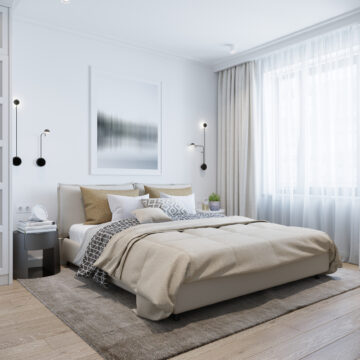
In bedrooms, layering a sheer curtain behind a heavier drape gives you practical control over light and privacy throughout the day. This combination works especially well in rooms with east or west-facing windows, where morning or afternoon sun can be intense.
For sunrooms and casual sitting rooms, a lighter fabric with a simple heading keeps things relaxed while still looking intentional. The key is choosing a fabric weight that matches the room’s purpose and the amount of light it receives.
Curtain headings explained: pinch, pencil, eyelet
The heading is the part of the curtain that attaches to the track or rod, and it shapes the entire look of the finished window. Choosing the wrong heading for your space is one of the most common mistakes people make when buying classic curtains.
Pinch pleat and pencil pleat
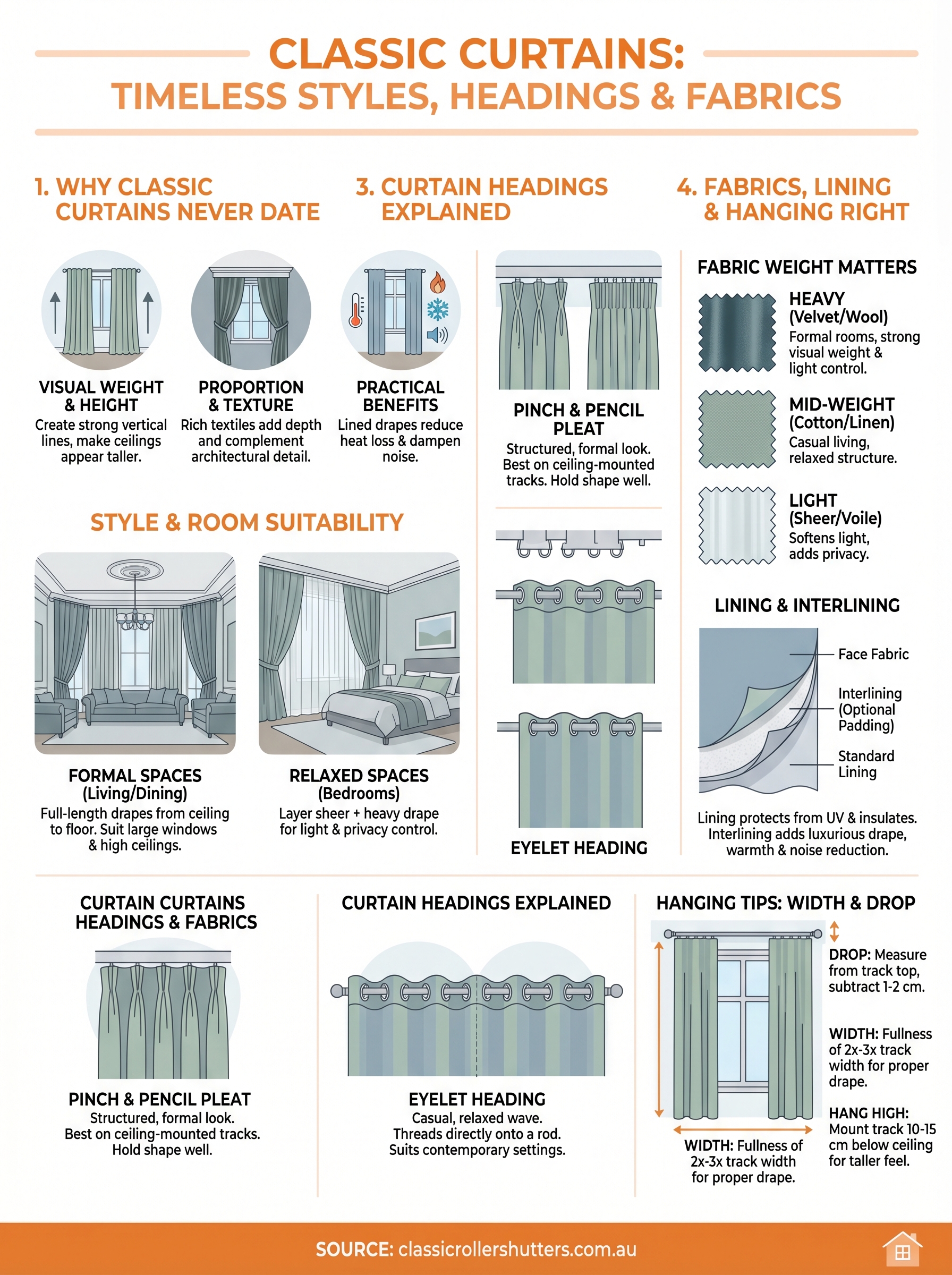
Pinch pleat headings group fabric into evenly spaced clusters of two or three folds, creating a formal, structured appearance. Pencil pleat headings form tighter, continuous folds that suit both traditional and transitional interiors. Both styles work best on ceiling-mounted tracks where the fabric can hang with a full, uninterrupted drop to the floor.
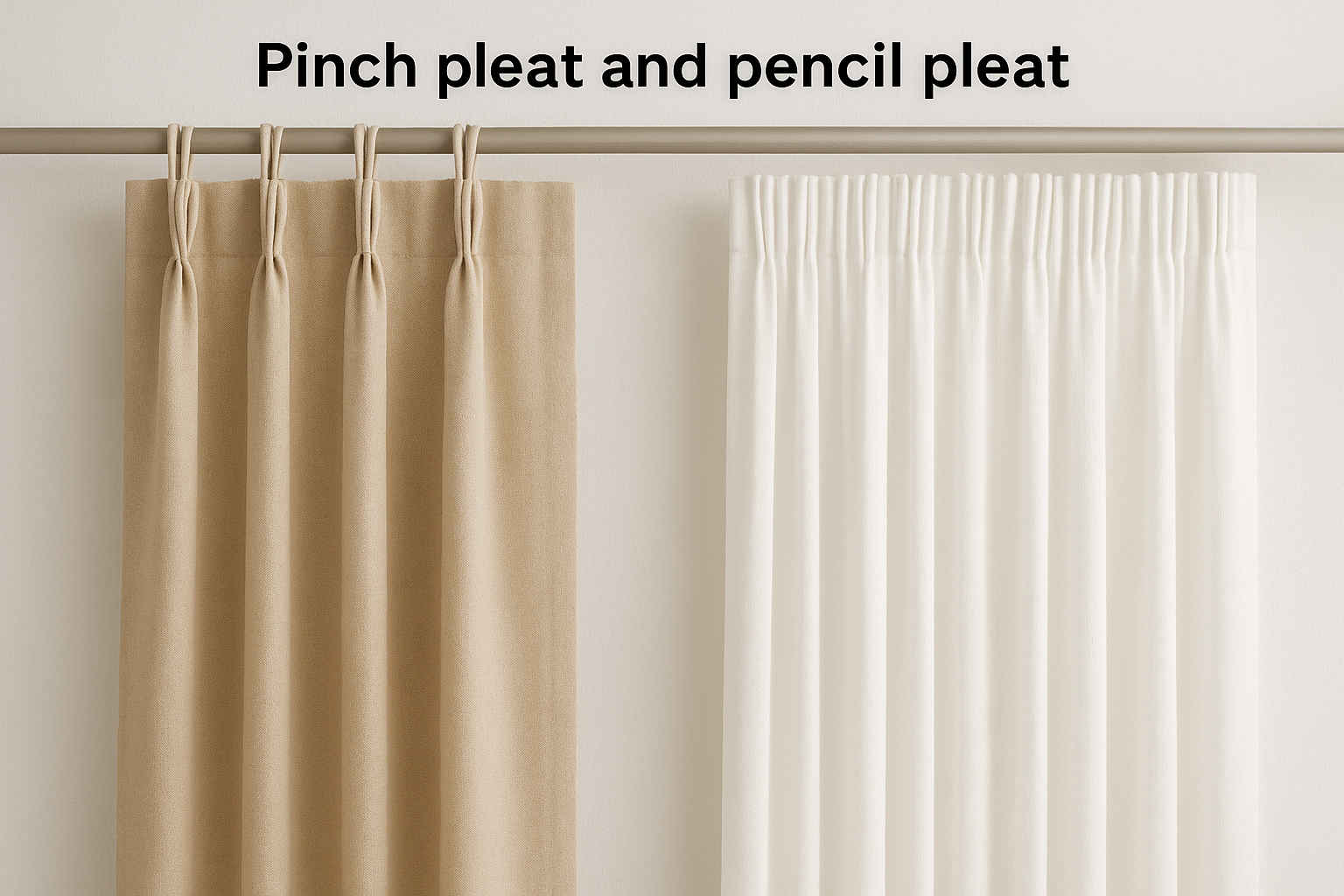
Pinch and pencil pleats are the most versatile classic heading options available, and both hold their shape well over years of regular use.
Eyelet headings
Eyelet headings use large metal rings punched through the fabric top, which thread directly onto a rod. They create a relaxed, evenly spaced wave that works better in casual or contemporary settings than in formal rooms. If your space already carries traditional architectural detail, eyelet headings can feel slightly at odds with the overall look, so consider your room’s style carefully before committing to this option.
Fabrics, linings, and interlinings for a timeless look
The fabric you choose defines how classic curtains behave in a room as much as how they look. Heavier fabrics like velvet, wool blends, and woven linen hold their shape well and drape with a fullness that lighter materials simply cannot replicate.
Choosing the right fabric weight
Velvet and heavyweight linen suit formal rooms and bedrooms where you want both visual richness and strong light control. For casual living areas with plenty of natural light, a mid-weight cotton or linen blend gives you a relaxed but still structured result without overwhelming the space.
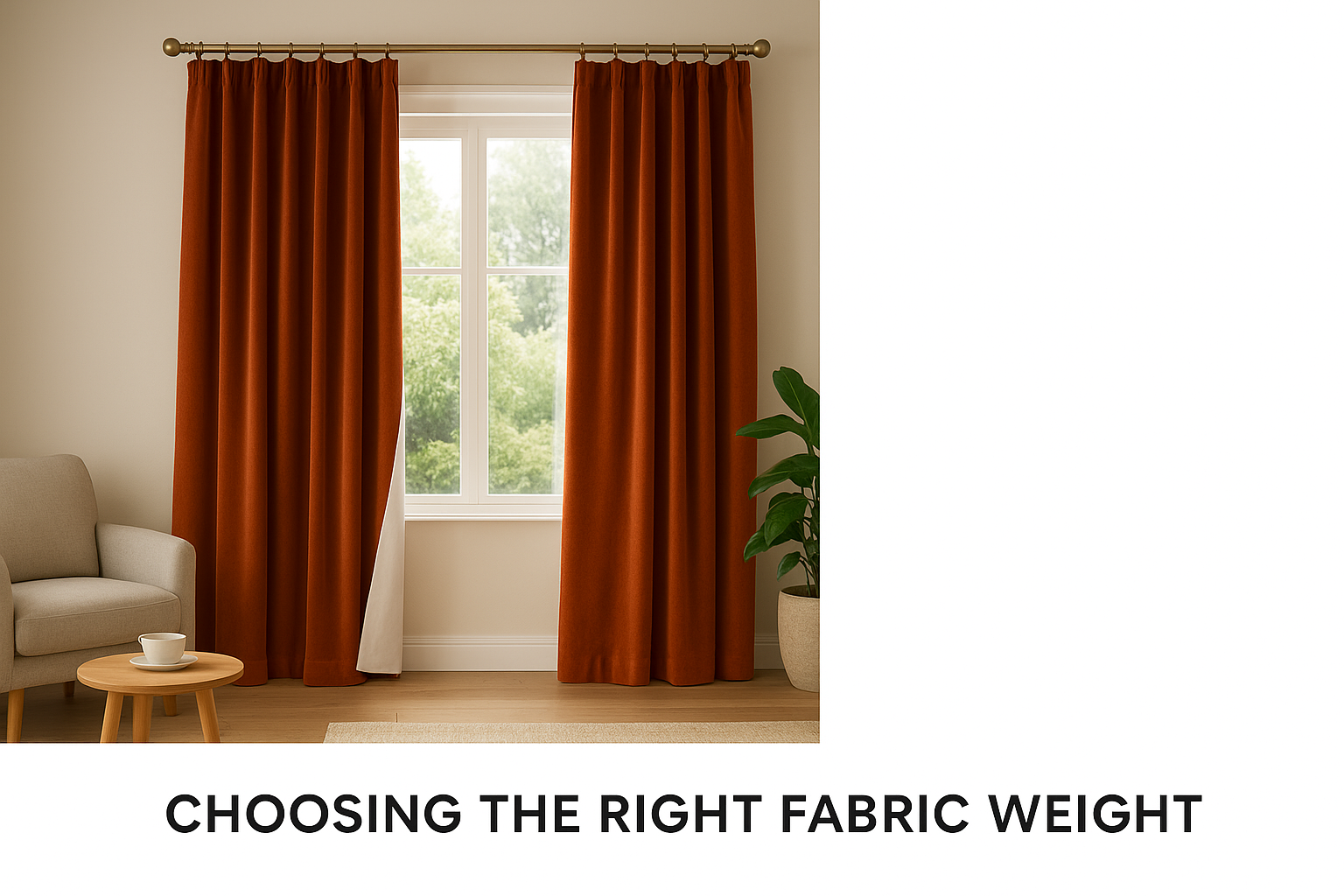
The fabric weight you choose affects how your curtains drape, insulate, and wear over time, so it’s worth getting right before you order.
Why lining and interlining matter
A standard lining protects your fabric from UV damage and adds a basic layer of insulation, which is worth having in any room. Interlining, a soft layer of padding stitched between the face fabric and lining, takes this further by adding thermal mass, reducing noise, and giving curtains a full, luxurious drape that no unlined curtain can match. For Adelaide’s cooler winters, interlined curtains deliver a noticeable difference in room warmth and energy efficiency.
How to choose and hang classic curtains correctly
Getting the measurements right before you order is the single most important step in buying classic curtains. A curtain ordered to the wrong drop or width looks awkward regardless of fabric quality, so measure carefully before you commit.
Measuring width and drop
Your curtains need fabric fullness of at least double your track width to drape properly, and triple fullness suits pinch pleats and formal rooms especially well. Shortcutting on width is the most common reason curtains look flat once hung.
- Width: multiply track width by 2 for standard fullness, or 2.5-3 for pinch pleat
- Drop: measure from track top to floor, then subtract 1-2 cm
Measure from the track or rod position rather than the window frame to get the drop accurate every time.
Hanging height matters
Mounting your track or rod closer to the ceiling than to the window frame creates the strongest vertical effect and makes your room feel taller. For standard 2.4 metre ceilings, fix the track 10-15 cm below the ceiling line.
Consider the window’s width and surrounding wall space too. Extending the track beyond the window frame on each side lets you stack curtains off the glass when open, maximising the light your room receives.
Final thoughts 83692266
Classic curtains give you one of the strongest returns on investment of any window treatment, combining thermal performance, privacy, and visual weight in a format that continues to look right regardless of what decorating trends come along. Getting the heading type, fabric weight, and lining right for your specific rooms determines whether the finished result looks deliberate and polished or slightly off. The details covered in this article, from fullness ratios to interlining options, give you a solid starting point for making those decisions with confidence.
If you’re based in Adelaide and want to see fabric samples in your own space before committing, our team offers free in-home consultations across the metropolitan area. We manufacture locally and work across both new builds and existing homes, so we can help you find the right fit for your budget and your rooms. Visit Classic Roller Shutters Adelaide to get started.