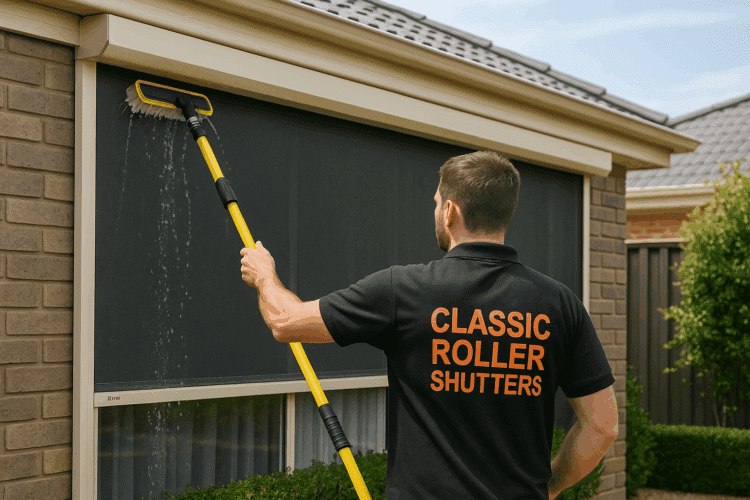
The safest, most effective way to freshen any outdoor blind is to brush away loose dust, wipe it with a soft cloth dipped in a 10-to-1 warm water and mild detergent mix, rinse thoroughly, and let it dry fully before rolling up.
Beyond a quick spruce-up, regular cleaning keeps blinds looking smart, extends fabric life, protects warranties and, importantly for Adelaide’s humid summers, stops mould from taking hold. Whether your patio is shaded by crystal-clear PVC café panels, breezy mesh Ziptrak screens, classic canvas awnings or powder-coated aluminium slats, the principles are the same—gentle products, patient technique, zero harsh chemicals. This guide walks you through eight straightforward steps: identifying the material and reading the care tag, setting up your workspace, dry-dusting before any water comes near, washing with that mild soapy solution, tackling stubborn stains and mildew, rinsing and drying the right way, applying protective finishes, and knowing when it’s wiser to call a professional. Follow along and you’ll spend less time scrubbing and more time enjoying a spotless outdoor room, all without risking cloudy PVC or frayed stitching.
Step 1: Identify Your Blind Material and Read the Care Tag First
Before you reach for the sponge, take 60 seconds to confirm exactly what you’re about to wash. Different fabrics and finishes behave very differently under heat, water and elbow-grease, and a wrong move can cloud PVC or void a warranty faster than you can say “high-pressure hose”. Flip the hem, headbox or cassette and locate the small stitched-in care label. That tag tells you what detergents are safe, the maximum water temperature and whether scrubbing or pressure cleaning is allowed.
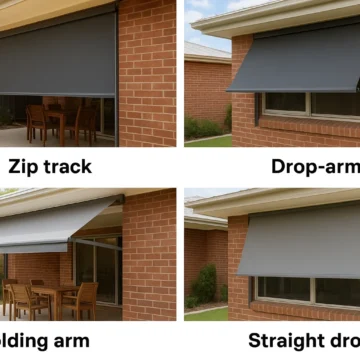
Outdoor blinds in Australian backyards usually fall into one of four camps:
- PVC/vinyl café blinds – clear or smoked panels that roll or slide.
- Mesh or woven shade cloth (e.g. Ziptrak, Zipscreen).
- Canvas or solution-dyed acrylic awnings – often striped.
- Aluminium slat Venetians or timber-look roll-ups.
Common red flags across all materials:
- No solvents, kerosene, acetone or bleach.
- Skip abrasive pads and stiff brushes.
- Avoid hot water on PVC (keep it under
38 °C). - Low-pressure rinse only unless the manufacturer okays more.
Ignoring those points can nullify UV and Mould-proof warranties, turning a simple bit of cleaning outdoor blinds into an expensive replacement.
Recognizing damage versus dirt
- Cloudy or permanently opaque PVC = UV degradation, not grime.
- Yellow/brown specks that won’t wipe off canvas = mildew colonizing fibers.
- Frayed hem stitching or loose side-splines = fabric fatigue, time for repair.
- Bent aluminium slats or kinked tracks = mechanical damage requiring professional attention.
Spot these early and you’ll know when cleaning stops and maintenance begins.
Step 2: Prepare the Area and Gather the Right Cleaning Supplies
A tidy workstation speeds things up and stops freshly washed fabric landing in fresh dirt. Lay down a drop sheet if you’re working over timber decking, pull outdoor furniture back a metre or two and make sure you’ve plenty of elbow-room to swing a broom without whacking the barbecue.
| Item | Why it’s needed |
|---|---|
| Soft broom or long-reach duster | Sweeps off loose dust without scratching |
| Microfiber cloths (3–4) | Lint-free wiping and buffing |
| Two buckets | One for soapy mix, one for clean rinse water |
| Garden hose with mist nozzle | Gentle, even rinsing |
| pH-neutral dishwashing liquid | Safe detergent base |
| White vinegar | Natural Mould and odor buster |
| Soft-bristle detailing brush | Works solution into mesh weave and seams |
| Ladder or sturdy step stool | Reaches top rails safely |
| Rubber gloves | Protects hands from grime and chemicals |
| Fabric or PVC protectant spray (optional) | Adds water-repellent, UV barrier |
Before you start spraying, flick off any nearby outdoor power outlets, keep pets inside and plant the ladder on level ground. Good prep now prevents accidental shocks, paw prints and wobbly moments later.
Mixing your cleaning solution
Default formula: pour 100 ml of mild detergent into 1 L of warm (not hot) water and stir gently—no bubbles means no residues. For light soil or a quick maintenance wipe, swap in a 3:1 water-to-white-vinegar blend. Skip vinegar on clear PVC with micro-cracks; the mild acid can creep into fissures and turn them cloudy. Mix only what you’ll use today—fresh is best for streak-free results.
Step 3: Dry Dust and Remove Loose Debris Before You Wet Anything
Jumping straight to soapy water is tempting, yet dislodging the loose stuff first is what keeps fine grit from turning into sandpaper. Start at the top rail and work down in long, overlapping passes with a soft broom or a handheld vac fitted with a brush attachment. For coastal homes this is doubly important—salt crystals cling to PVC and mesh and will scratch if you rub them wet. A widely available option is the Morgan 270 mm soft indoor broom from Bunnings, gentle enough for clear café blinds yet firm enough to flick off dried pollen.
If you need a ladder, plant it squarely on level ground before you begin. Quick safety refresher:
- Shoes on, thongs off.
- Engage the spreader bars fully.
- Keep your belt buckle between the rails—no leaning.
- Ask a mate to foot the base if the surface is sloped.
Take five minutes for this dry sweep now and you’ll shave ten off the actual washing time.
Dealing with cobwebs and insect nests
Gently twist a long-reach duster into corners and under pelmets to lift webs rather than smear them. Mud-dauber nests or stubborn cocoons can be nudged away with a plastic spatula; avoid aerosols that may stain fabric. Remember to dust both sides so you don’t roll debris into the cassette later.
Step 4: Wash the Blind Surface with a Mild Soapy Solution
With the loose grit gone, it’s time for actual washing. The golden rule when cleaning outdoor blinds is “damp, not drenched”—excess water runs into hems, breeds Mould and can stretch fabric.
- Dip a clean microfiber cloth into your 10-to-1 warm water + detergent bucket.
- Wring until it’s just damp; if it’s dripping, it’s too wet.
- Starting at the top rail, wipe in long, straight, horizontal stripes, slightly overlapping each pass.
- Rinse the cloth in the second bucket after every two or three swipes to avoid redepositing dirt.
Material-specific tweaks:
- PVC café blinds – Keep the panel shaded and under
38 °C. Glide your open palm behind the cloth in straight lines—swirls can leave permanent haze. Re-wet cloth often; dry friction scratches clear vinyl. - Mesh or woven screens – A soft-bristle detailing brush and light circular motion lift grime from the weave. Don’t press so hard that the fabric bows.
- Canvas or acrylic awnings – Slide one hand behind the area you’re wiping to support the fabric and stop stretch marks. Work with the warp and weft, not diagonally.
- Aluminium slats – Wipe each slat edge to edge; tilt the blind to reach the rear face.
Never introduce bleach, turps, window cleaner, solvent wipes or a pressure washer set above 700 psi; all of them strip UV coatings and void most warranties faster than you can say “whoops”.
Frequently asked questions during washing
How do I clean plastic café blinds that are really dirty?
Pre-soak a folded microfiber pad in the soapy mix for two minutes, lay it flat on the stain, then lift—grime softens without scrubbing.
Can I use vinegar on my blinds?
A 3:1 water-to-vinegar spray is ideal for moldy canvas or aluminium but skip it on clear PVC; acidic solutions creep into micro-cracks and cause cloudiness.
Step 5: Target Stains, Mould and Mildew the Gentle Way
Even the tidiest patio cops the occasional splatter. Adelaide’s humid summers, shaded verandas and drifting pollen mean mildew spores have a field day, while weekend barbies leave oily dots that love to embed in fabric. The trick is to treat each mark quickly with the mildest product that actually works—nothing more aggressive.
| Stain type | Safe treatment mix | Tools | Dwell time |
|---|---|---|---|
| Wind-blown dirt / red dust | 10 : 1 warm water + mild detergent | Microfibre cloth | 5 min |
| Bird droppings | Same as above, cover with soaked pad | Soft plastic scraper to lift | 10 min |
| Barbecue grease | A drop of pH-neutral dish liquid in warm water | Microfibre + detailing brush | 8 min |
| Mildew / mould spots | 1 cup white vinegar to 1 L water | Trigger spray + soft brush | 15 min |
For widespread mould: saturate the area with the vinegar solution, let it sit the full 15 minutes, then gently agitate with the brush and rinse. Still faint shadows on canvas? Dissolve 1 tsp oxygen bleach (sodium percarbonate) into 3 L of warm water, patch-test behind a hem, apply, wait another 10 minutes and rinse clean. Oxygen bleach breaks down into soda ash and oxygen—safe for coloured fabrics when used sparingly.
Important: steer clear of chlorine bleach on every blind type. It attacks stitching, turns clear PVC yellow and can perforate mesh coatings, wiping years off the lifespan you’re trying to protect.
Preventing regrowth
Mould hates sunshine and airflow, so leave blinds fully extended until bone-dry, trim nearby plants for better circulation, and give each panel an occasional morning of direct but gentle UV exposure. Once a season, mist on a silicone-free, UV-rated fabric-guard spray to add a water-shedding, mould-inhibiting barrier—cheap insurance against the next humid spell.
Step 6: Rinse Thoroughly and Let the Blind Dry Completely
Soap left behind looks streaky, attracts dust and can weaken protective coatings, so a meticulous rinse is non-negotiable. Fit a garden hose with a gentle mist or shower nozzle and start at the headbox, working side-to-side in slow passes. Keep the spray roughly one metre from the surface; high pressure forces water into seams and hems where mildew loves to lurk.
If you live in a hard-water area—large parts of Adelaide’s north-east included—finish with a quick splash of de-ionised or rain water, or run a clean squeegee down clear PVC to dodge mineral spotting.
Drying rules change with the material:
- PVC café blinds – Leave fully extended. Blot with a lint-free chamois for that showroom clarity.
- Mesh screens – Shake off excess, then air-dry. Don’t roll up until entirely bone-dry or you’ll trap moisture.
- Canvas awnings – Keep under light tension so the cloth dries flat and avoids shrink lines.
Choose a calm, dust-free day; wind can redeposit grit on your freshly washed panels faster than you can coil the hose.
Step 7: Apply Protective Finishes and Establish an Ongoing Maintenance Schedule
Once the fabric is squeaky-clean, lock in your hard work with a purpose-made protectant. A light mist of UV blocker or fabric guard repels water, slows fading and makes the next round of cleaning outdoor blinds far quicker. Hold the nozzle 20–25 cm from the surface, overlap passes like wet paint, then leave the blind fully extended for the product’s stated cure time—usually two to four hours.
Tracks, zips and pulleys deserve love too. A quick shot of silicone spray, followed by a wipe to remove excess, keeps blinds gliding smoothly and prevents salty build-up from seizing mechanisms.
For day-to-day care, pencil in this simple timetable:
- Weekly – Gentle brush-off in coastal or high-pollen areas
- Monthly – Five-minute wash and rinse in typical suburban settings
- Seasonally – Deep clean, protectant re-coat and hardware lube before summer storms or winter hibernation
Adopt preventative habits to stretch the lifespan even further:
- Keep nearby plants pruned back
- Park the barbecue a safe distance away
- Roll blinds up in strong winds or hail forecasts
Storage and storm preparation
If your patio faces severe weather, consider removing the blind over winter. Roll the fabric around its tube, slip a breathable cotton sleeve over the bundle and store it horizontally on a shelf—never hung, never wrapped in plastic. For PVC panels you plan to leave installed, tension them snugly and secure tie-downs so gusts can’t whip the material against posts.
Step 8: Know When to Call in the Professionals
Some problems simply won’t budge with elbow-grease. If your PVC has gone permanently cloudy, mesh is ripped, tracks are warped, the crank jams, or that musty mould odour returns within days, it’s time to book expert help. A trained technician can re-tension springs, replace panels, realign side splines and even convert tired manual blinds to smooth motorised operation—often cheaper than a full replacement. Adelaide homeowners can save guesswork by arranging an on-site assessment with Classic Roller Shutters; their team carries specialised cleaners, spare parts and the know-how to restore outdoor blinds safely.
Wrap-Up & Next Steps
Cleaning outdoor blinds doesn’t have to chew through your weekend or your wallet. Follow the eight simple moves we’ve covered—
- Identify the material and read its tag
- Prep the work zone and gear
- Dry-dust top to bottom
- Wash with a gentle 10 : 1 soap mix
- Spot-treat stains and mould with vinegar or oxygen bleach
- Rinse thoroughly and let things dry bone-dry
- Add a UV/fabric protector and mark a maintenance calendar
- Call the pros when wear or damage shows
Stick to mild products, soft tools and regular light touch-ups; you’ll save hundreds of dollars in premature replacements and keep your patio looking café–fresh year-round.
If you’d rather outsource the elbow-grease—or need repairs, motor upgrades or brand-new blinds—our Adelaide team is ready to help. Book a no-obligation inspection with Classic Roller Shutters and enjoy expert advice plus factory-direct pricing. Your outdoor room will thank you.