Adelaide summers punish anyone with an exposed patio, alfresco area, or west-facing window. If you’re searching for outdoor awning blinds adelaide, you’re probably tired of squinting through glare, dodging afternoon heat, or watching your outdoor furniture fade in the sun. The right blind system fixes all three problems, and it does it without the bulk or cost of a full pergola rebuild.
So what exactly counts as an outdoor awning blind, and how do you find someone local who actually manufactures and installs them properly? This guide breaks down the different styles on the market, from fixed guide track systems to drop-arm awnings, and explains how they differ from standard roller shutters. You’ll also get a clear picture of what affects pricing, so you’re not caught out by vague quotes.
We’ll also point you toward what to look for in an Adelaide supplier, including local manufacturing and proper installation support, since that’s what separates a blind that lasts fifteen years from one that fails after two summers. By the end, you’ll know exactly what to ask for and who to call.
Why outdoor awning blinds matter for Adelaide homes
Adelaide doesn’t do mild summers. You get stretches of 35°C-plus days, harsh UV even in autumn and spring, and a sun angle that hits west-facing patios like a furnace by mid-afternoon. Outdoor awning blinds aren’t a decorative extra here, they’re the difference between an alfresco area you actually use and one that sits empty from November to March. If you’ve ever tried to eat lunch on your deck in January without shade, you already understand the problem.
Adelaide’s climate demands serious shade
South Australia’s Bureau of Meteorology consistently records some of the highest UV index readings in the country during summer, often reaching extreme levels of 11 or higher (source: Bureau of Meteorology). That’s not a number you can ignore if your kids play outside or you’re running a café with outdoor seating. A quality awning blind blocks the vast majority of that UV load before it ever reaches your skin, your furniture, or your flooring. Compare that to shade sails or umbrellas, which shift with the sun and leave gaps exactly when you need coverage most.
A well-installed outdoor awning blind is the single most effective upgrade for turning an unusable summer patio into year-round living space.
Protecting your health, furniture, and flooring
Beyond comfort, there’s a real cost to unprotected outdoor areas. UV exposure fades timber decking, cracks outdoor cushions, and bleaches paintwork within a few seasons. Skin cancer risk is the bigger concern, and the Cancer Council Australia is blunt about it: shade is one of the five recommended sun protection measures, alongside sunscreen and protective clothing (source: Cancer Council Australia). An awning blind gives you passive, permanent protection that doesn’t rely on remembering to reapply sunscreen every two hours or reposition an umbrella every hour as the sun moves.
Turning wasted space into usable living area
Consider what an unshaded patio actually costs you. Most Adelaide homes have some form of outdoor entertaining area, yet a huge portion of that square footage sits idle for half the year because it’s either too hot, too glary, or too exposed to wind-blown rain. Outdoor awning blinds solve all three at once when you pick the right configuration:
- Heat reduction: quality PVC or mesh fabrics can block a significant percentage of solar heat gain before it hits your outdoor area.
- Glare control: even on overcast days, screen fabrics cut the harsh reflected light that makes outdoor dining uncomfortable.
- Weather flexibility: many systems double as wind and light rain barriers, extending usable months well beyond the core summer season.
- Privacy: closed blinds screen your alfresco from neighbouring properties without blocking airflow entirely.
That’s effectively free floor space added to your home, without the council approvals, footings, or six-figure budget a room extension demands.
Cutting cooling costs indoors too
Windows and glass doors facing west or north absorb enormous amounts of heat during Adelaide afternoons, and that heat doesn’t stay outside. It radiates straight through the glass into your living areas, forcing your air conditioner to work harder. Installing awning blinds over those windows, not just patio areas, intercepts solar heat before it reaches the glass at all. The Australian Government’s energy efficiency guidance notes that external shading is one of the most effective ways to reduce unwanted summer heat gain in a home (source: energy.gov.au). Fitted correctly, blinds pay for themselves over time through lower cooling bills, on top of the comfort and lifestyle gains you get immediately.
Put all of that together and it’s clear why so many Adelaide households treat outdoor awning blinds as essential infrastructure rather than an optional add-on. The next question is which style actually suits your space, your budget, and how you use your outdoor area day to day.
Types of outdoor awning blinds available in Adelaide
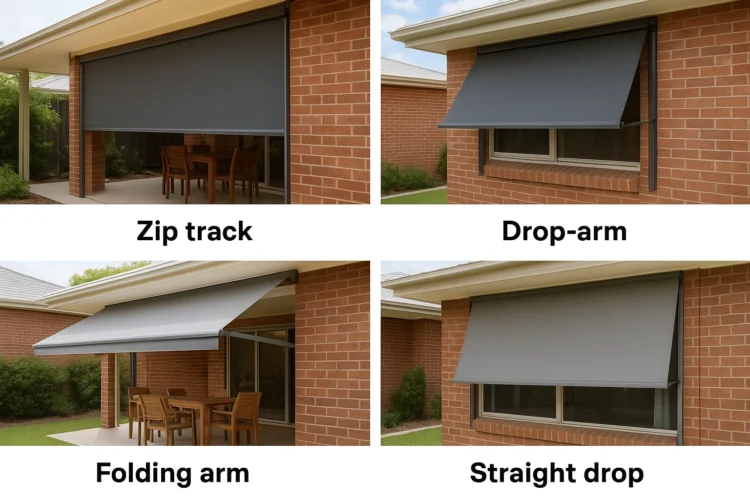
Walk into any Adelaide supplier and you’ll find several distinct systems marketed under the same “outdoor awning blind” umbrella, and they’re not interchangeable. Picking the wrong one for your space usually means poor wind performance or gaps that let dust and rain through. Zip track systems dominate the local market because they’re built to handle Adelaide’s wind gusts and dust storms, but they’re not the only option worth considering.
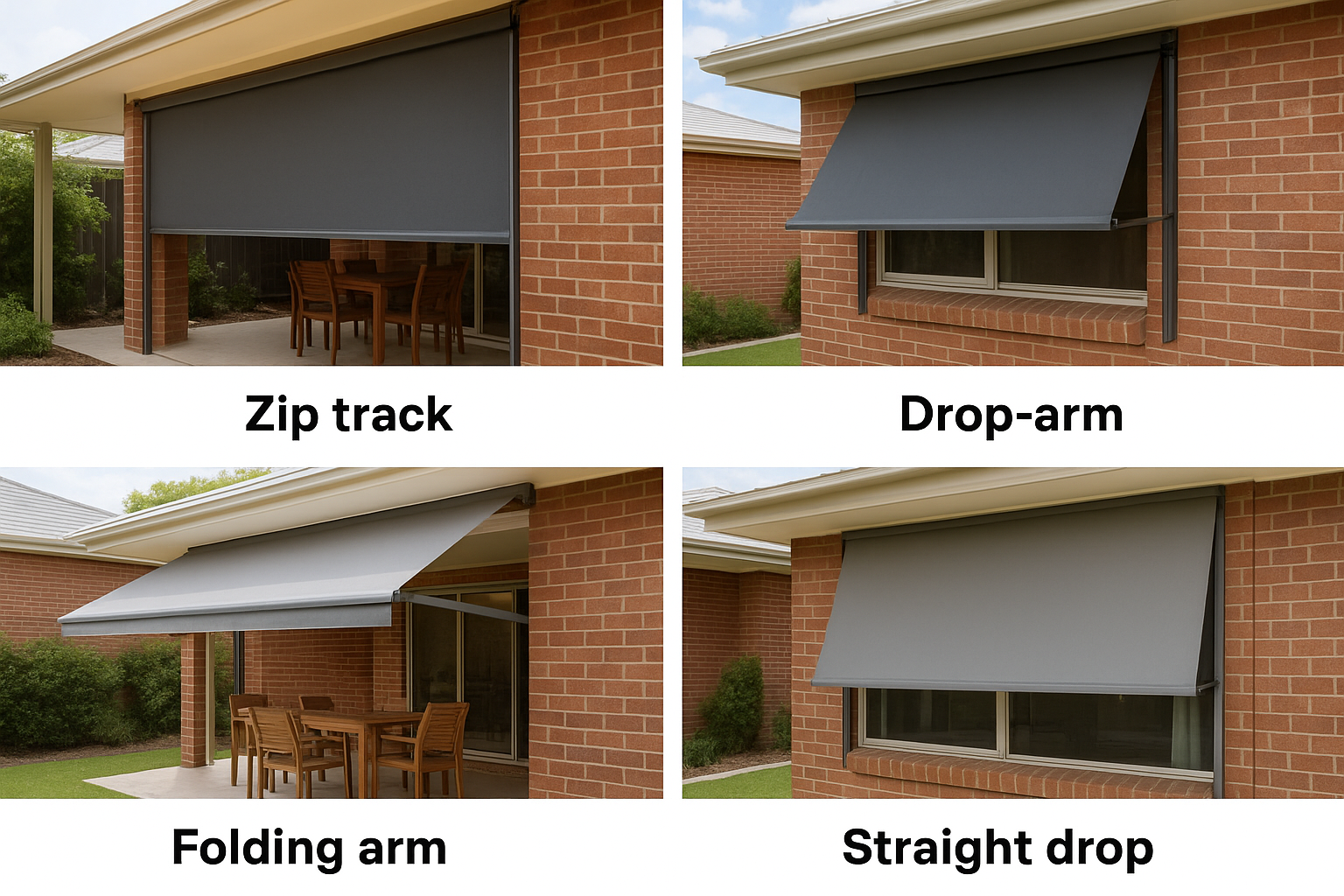
Fixed guide track (zip track) blinds
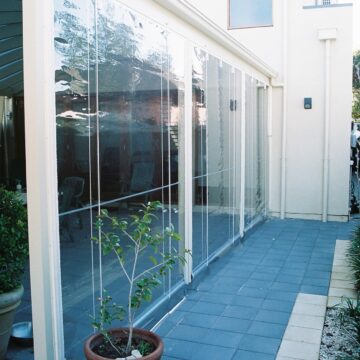
These run within aluminium side channels, which zip the fabric edge into a sealed track as it lowers. That sealed edge is what gives zip track blinds their strength, they can handle far stronger wind loads than a free-hanging blind because the fabric can’t billow or flap loose. They suit exposed alfresco areas, pergolas, and verandahs where wind is a genuine concern, and they come in clear PVC, mesh, or solid acrylic depending on whether you want visibility, glare reduction, or full blackout.
Zip track systems are the standard choice for Adelaide’s windier, dust-prone outdoor areas because the sealed side channels stop the fabric flapping loose.
Drop-arm and folding arm awnings
Drop-arm awnings extend from a fixed point above a window or doorway and angle outward, giving shade without a full frame underneath. They work well over smaller windows or narrow verandahs where a full patio structure isn’t practical. Folding arm awnings, by contrast, project further out from the wall and retract flat against it, making them a good fit for larger open patios that need shade during the day but full sun access at other times.
Straight drop and café blinds
Straight drop blinds lower vertically without side tracks, which makes them cheaper but less effective against strong wind. They’re commonly used on undercover verandahs that already have some structural protection, or for softening afternoon glare on a covered deck. Café blinds use clear or tinted PVC to keep an outdoor dining area protected from wind and light rain while still letting light through, which is popular with Adelaide homeowners who want to use their patio in winter, not just summer.
Comparing the main systems
| Type | Wind resistance | Best for | Fabric options | |—|—|—| | Zip track | High | Exposed patios, pergolas | Mesh, PVC, acrylic | | Drop-arm | Moderate | Windows, narrow verandahs | Acrylic, canvas | | Folding arm | Moderate | Large open patios | Acrylic, canvas | | Straight drop | Low to moderate | Covered verandahs, glare control | PVC, mesh |
Motorisation is available across most of these systems now, and it’s worth factoring into your decision early rather than retrofitting later. A motorised system lets you close blinds in seconds when weather turns, which matters more than it sounds during a sudden Adelaide dust storm or a rogue afternoon southerly.
How to choose the right outdoor awning blinds for your home
Getting this decision right starts with being honest about how your outdoor area actually gets used, not how you imagine using it. A blind chosen for looks alone often ends up rolled up and ignored within a year because it can’t handle the wind, glare, or privacy needs of the space. Outdoor awning blinds work best when the system matches the specific conditions of your patio, verandah, or window, not a generic best-seller from a catalogue.
Match the blind to your exposure
Start by working out which direction your outdoor area faces and how exposed it is to wind. A west-facing alfresco that cops direct afternoon sun and open-paddock gusts needs a zip track system with a sealed side channel, full stop. A sheltered verandah under an existing roofline has more flexibility and can often get away with a straight drop or drop-arm awning at a lower price point. Coastal or hilltop properties around Adelaide’s fringes should lean toward higher wind-rated systems regardless of budget, since a torn or bent blind costs more to fix than it would have cost to buy the right one initially.
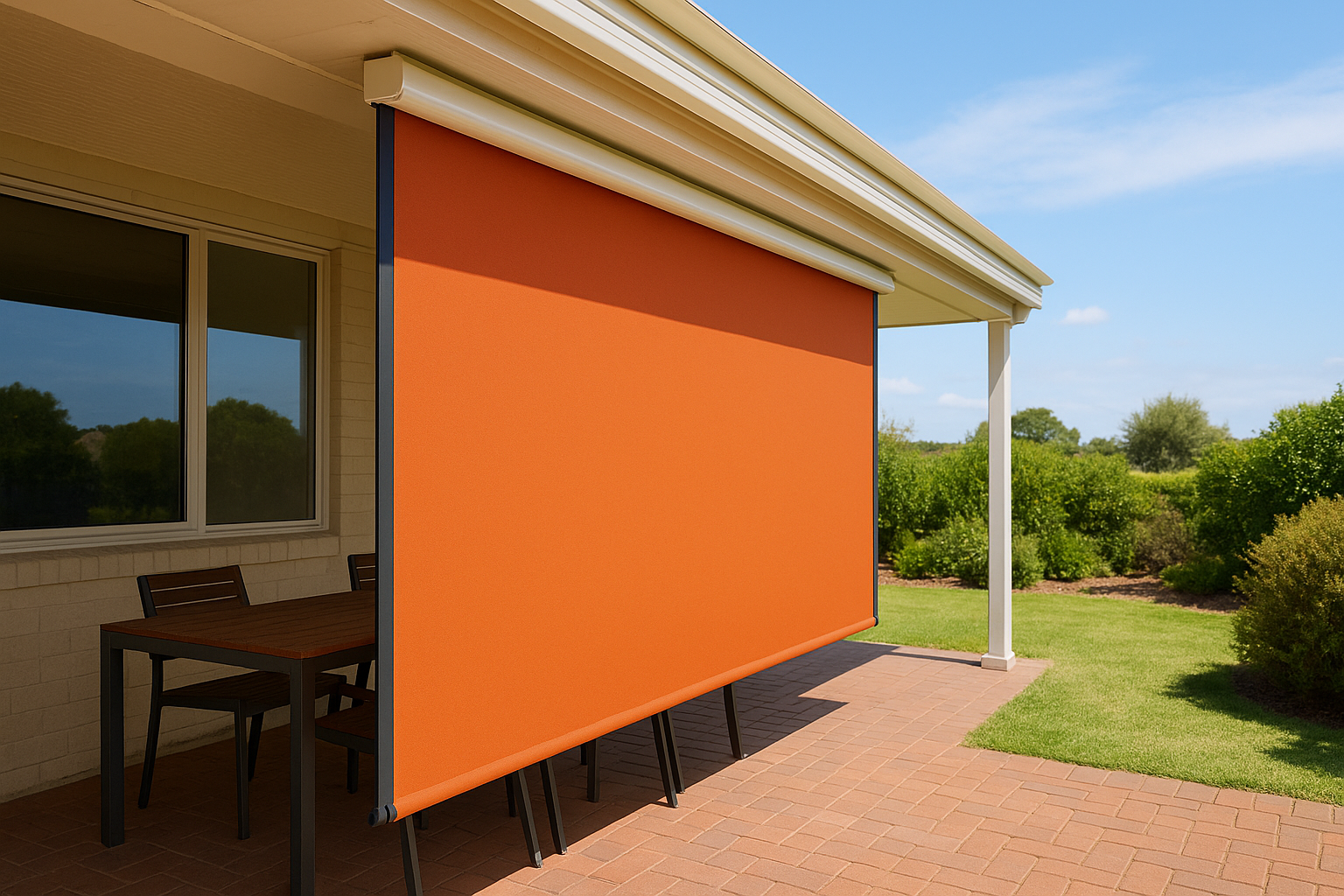
Choose the blind system based on wind exposure first and appearance second, because a torn fabric or bent track fixes nothing and costs more than getting it right from the start.
Pick the right fabric for the job
Fabric choice changes what the blind actually does for you day to day. Clear PVC keeps light flowing through while blocking wind and rain, which suits alfresco dining areas used year-round. Mesh fabrics cut glare and UV without blocking airflow, ideal for hot but still evenings. Solid acrylic or blockout fabric gives you full privacy and shade but turns the space darker, so it suits areas used mainly for afternoon shade rather than evening entertaining.
- Full sun protection with visibility: clear or tinted PVC
- Airflow with glare reduction: mesh screen fabric
- Maximum privacy and blockout shade: solid acrylic
- All-weather café-style use: heavier PVC with reinforced seams
Manual versus motorised operation
Manual crank systems cost less upfront and suit blinds you rarely adjust, such as a fixed shade panel over a west window. Motorised operation makes far more sense for blinds you’ll open and close daily, or for hard-to-reach installations above second-storey windows or wide patio spans. Remote and app-based controls also let you close blinds automatically when a sudden gust or storm rolls through, which matters more in Adelaide than most people expect given how quickly a hot northerly can turn into a dust-laden southerly change.
Get a proper site measurement first
Never order an awning blind off a standard size chart if you can avoid it. Slight variations in post spacing, roofline pitch, or ground level on Adelaide’s older homes throw off generic measurements constantly, leading to gaps that let wind and dust straight through. A local supplier who measures on-site, ideally the same team that manufactures and installs the product, catches these issues before the blind is built rather than after it’s delivered and doesn’t fit properly.
What affects the cost of outdoor awning blinds
Price quotes for outdoor awning blinds vary wildly across Adelaide, and that’s not suppliers being cagey, it’s because so many variables feed into the final figure. Two blinds that look identical from the street can differ by hundreds of dollars once you factor in track type, fabric grade, and how complicated the installation actually is. Understanding these factors before you call for quotes means you can compare like for like instead of getting confused by numbers that don’t line up.
Size and number of openings
Width and drop are the obvious starting point, since more fabric and longer aluminium tracks cost more to manufacture. Beyond raw dimensions though, the number of separate openings matters just as much. A single wide blind across one opening is usually cheaper per square metre than three narrower blinds covering the same total area, because each unit needs its own motor or crank mechanism, its own tracks, and its own installation labour. If your patio has multiple posts breaking up the space, budget for that added complexity upfront rather than being surprised later.
Fabric and system type
Fabric grade shifts price more than most homeowners expect. Basic mesh sits at the lower end, mid-range PVC costs more because it handles wind and rain, and heavier reinforced PVC built for café-style year-round use sits at the top. System type stacks on top of that.
| Factor | Lower cost | Higher cost |
|---|---|---|
| Track type | Straight drop | Zip track (sealed sides) |
| Fabric | Standard mesh | Reinforced PVC or acrylic |
| Operation | Manual crank | Motorised with remote |
| Frame material | Standard aluminium | Powder-coated custom colour |
A blind that looks cheaper on paper often costs more over its lifetime once you factor in replacement fabric, failed cranks, and re-installation.
Motorisation and add-ons
Motors add a meaningful chunk to the upfront price, but they’re rarely the place to cut corners if you’re closing the blind often. Wind sensors that automatically retract the blind during a gust, app-based controls, and integration with existing home automation systems all add further cost. None of these are essential, but each one solves a specific frustration, so weigh them against how you’ll actually use the space rather than adding every option by default.
Installation complexity
Ground-level patios with easy wall or post fixing points are the cheapest to install. Second-storey windows, angled rooflines, or older Adelaide homes with uneven brickwork all push labour time up, since the installer has to adapt the fixing method on site rather than using a standard bracket. This is another reason a local Adelaide team that manufactures its own product tends to quote more accurately than a national franchise working from a call centre estimate, because they’ve seen the quirks of local housing stock before and price accordingly rather than guessing.
Where to buy outdoor awning blinds in Adelaide
Adelaide has no shortage of businesses selling outdoor awning blinds, ranging from small local manufacturers to national franchises running showrooms out of Sydney or Melbourne. That range makes shopping around confusing, because two quotes for what looks like the same product can come from completely different supply chains, one built in a local factory and fitted by the same crew who measured it, the other imported and subcontracted out to whoever’s available that week. Knowing the difference upfront saves you from a blind that doesn’t match the quote, or worse, one nobody local will service when something goes wrong.
Local manufacturers versus national retailers
Factory-direct Adelaide suppliers cut out the middleman, which usually means better pricing and faster turnaround than a national chain that manufactures interstate and ships components down. More importantly, a local manufacturer understands Adelaide conditions specifically, the dust storms, the wind loads on exposed patios, the quirks of older bluestone and brick homes across the suburbs. National retailers often work from generic specifications that weren’t designed with our climate in mind, and if a part fails outside their standard service area, you’re waiting weeks for someone to drive down from interstate.
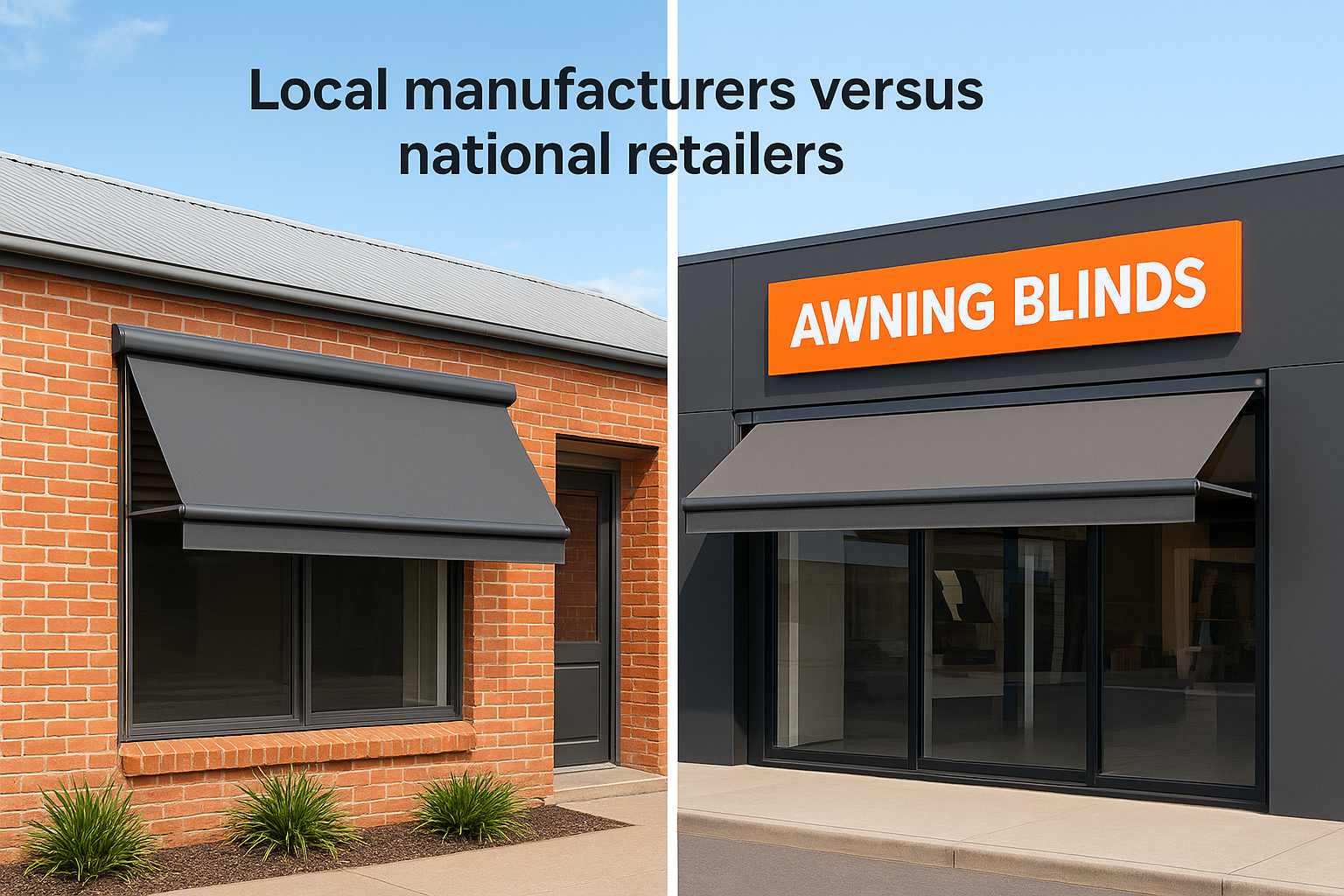
A supplier who manufactures locally and installs with their own team is accountable for the whole job, not just the sale.
What to check before you commit
Before signing anything, run through a short checklist. It takes ten minutes and saves you from the most common complaints Adelaide homeowners raise about poorly chosen suppliers:
- Do they manufacture locally, or are they reselling an imported product under their own brand?
- Do they offer a free in-home measure and quote, including from floor plans if you’re still building?
- Do they have an in-house repair division, so servicing doesn’t mean starting from scratch with a new company later?
- Can they show a physical showroom where you can see and touch fabric samples before committing?
- Do they handle electrical upgrades, in case you decide to motorise later?
Where Classic Roller Shutters fits in
Classic Roller Shutters manufactures out of its own Adelaide factory, which means the blinds quoted in your loungeroom are the same ones built down the road, not imported stock with a markup attached. Free in-home consultations cover measuring, fabric selection, and advice on which system suits your exposure, and that same team handles installation rather than outsourcing it to a third party. Because the business also runs a dedicated repair division and offers electrical upgrades for motorising existing systems, you’re not left stranded if something needs adjusting five years down the track, a common gap with suppliers who only sell and never service.
Caring for your outdoor awning blinds
A well-built blind still needs basic upkeep to last its full lifespan, and most Adelaide homeowners underestimate how much dust, salt, and grit accumulate in the tracks over a single summer. Regular maintenance is the cheapest insurance you’ll ever buy against a costly repair callout, and most of it takes less time than mowing the lawn. Skipping it doesn’t save you money, it just moves the cost further down the track, often to a point where a simple clean has become a jammed motor or a torn fabric edge.
Cleaning the fabric and tracks
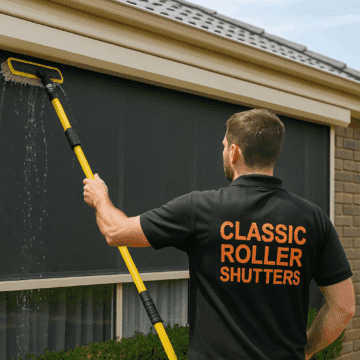
Dust builds up fastest in Adelaide because of the dry summers and the occasional dust storm rolling in off the plains. Wipe down PVC and mesh fabric with a soft brush and mild soapy water every few months, and avoid harsh chemicals or pressure washers, which can degrade the coating on PVC panels over time. Pay particular attention to the zip track channels on sealed systems, since grit trapped in the guide rails is the single biggest cause of a blind that suddenly won’t lower smoothly.
- Fabric: soft brush, mild detergent, rinse and air dry fully before retracting
- Tracks: vacuum or brush out loose grit every season change
- Hardware: check brackets and screws for rust or looseness twice a year
- Motor housing: keep clear of cobwebs and insect nests, which interfere with sensors
Checking the mechanism seasonally
Before each summer, run the blind fully up and down a few times and listen for grinding, stalling, or uneven movement. Catching a worn crank mechanism or a slipping motor early means a straightforward part swap rather than a full unit replacement later. If you’ve got a motorised system, test the wind sensor and remote at the same time, since a sensor that’s stopped triggering properly leaves your fabric exposed to exactly the gusts it’s meant to protect against.
Catching a small mechanical fault before summer costs a callout fee. Ignoring it costs a whole new blind.
Protecting against wind and storm damage
Even wind-rated zip track systems have limits, and Adelaide’s sudden southerly changes catch plenty of homeowners off guard. Retract blinds fully during severe wind warnings rather than leaving them extended overnight, and if you’re away for extended periods over summer, consider setting a motorised system’s automatic retraction rather than relying on manual habit. A blind left extended through a genuine storm event is the most common cause of torn fabric and bent arms that this repair division sees each year.
When to call in a professional
Some jobs are worth doing yourself, but re-tensioning springs, replacing motors, or realigning bent tracks aren’t among them. A local repair division that knows the common failure points on Adelaide-installed systems will diagnose the issue faster than a generalist handyman, and doing it right the first time avoids a second callout for the same fault a few months later.
Making the right choice for your outdoor space
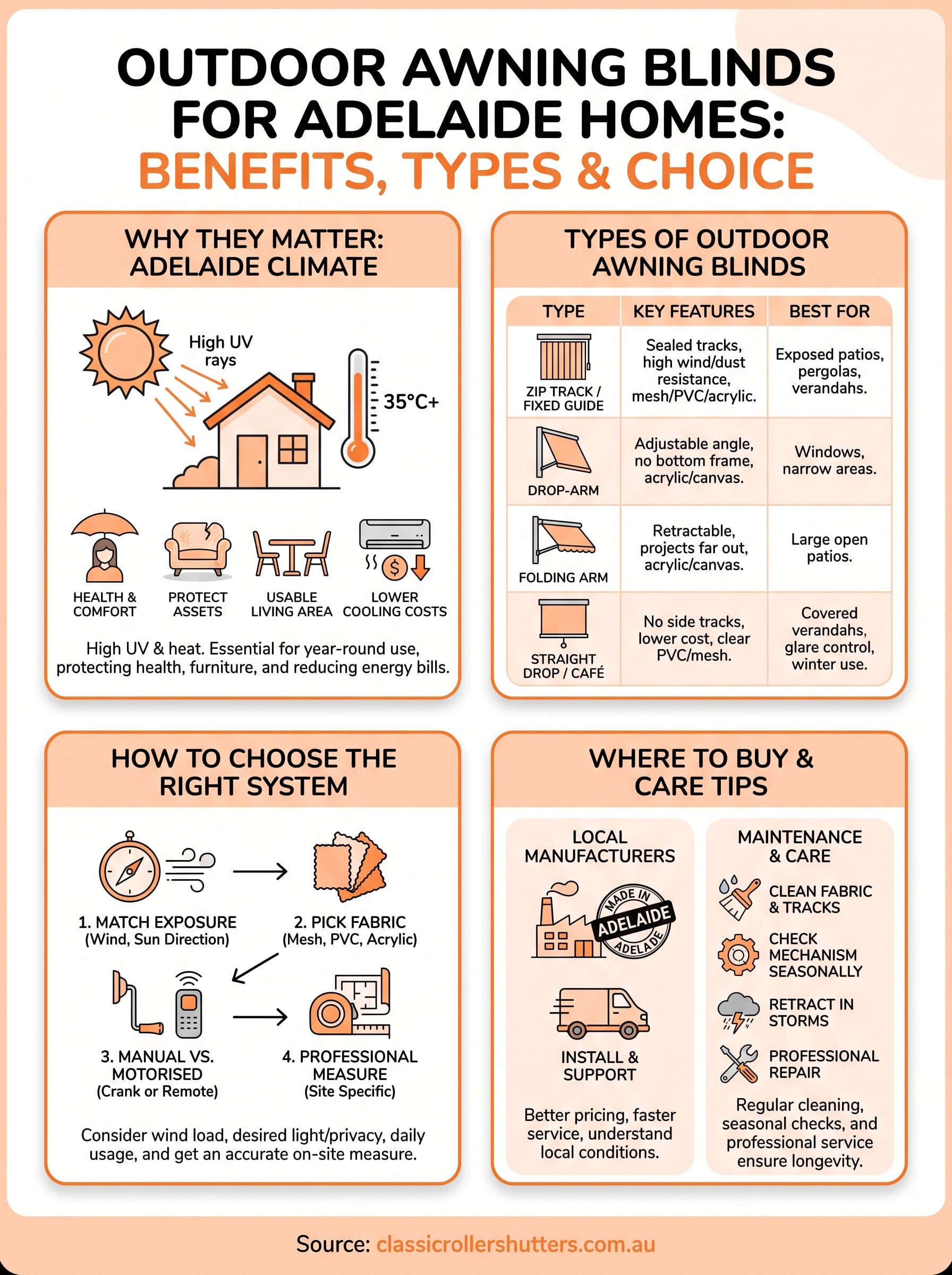
Outdoor awning blinds aren’t a one-size-fits-all purchase. Your patio’s exposure, the fabric you pick, and whether you go manual or motorised all shape how much use you actually get out of the space across an Adelaide summer. Buying based on price alone, without matching the system to your wind exposure, usually ends with a blind that’s rolled up and forgotten within a year.
Getting a proper on-site measure and choosing a supplier who stands behind the product after installation matters more than any spec sheet. That’s exactly where a factory-direct Adelaide manufacturer earns its keep, since the same team that builds your blind also fits it and services it later if something needs adjusting.
If you’re ready to stop guessing and get an accurate quote for your own outdoor area, book a free in-home consultation with Classic Roller Shutters and get a system built for how you actually live outdoors.