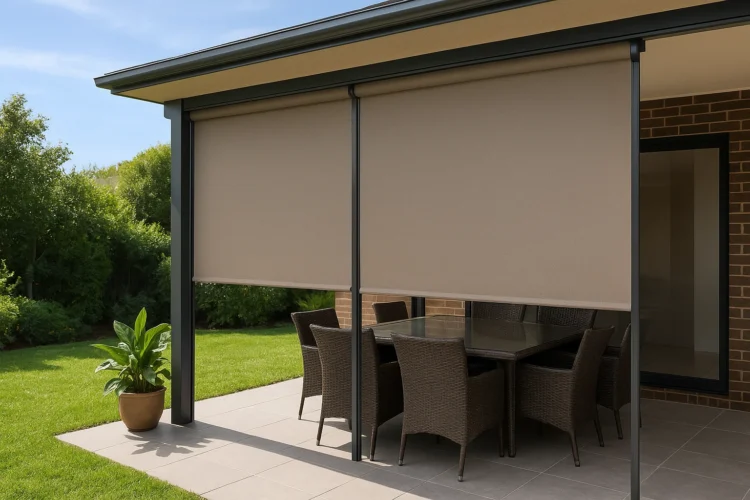
Your alfresco area sits unused half the year. Too hot in summer, too windy in winter, and that expensive outdoor setting just collects dust under the pergola. Outdoor blinds for alfresco spaces solve exactly this problem, turning a fair-weather patio into a room you actually use, whatever the forecast says.
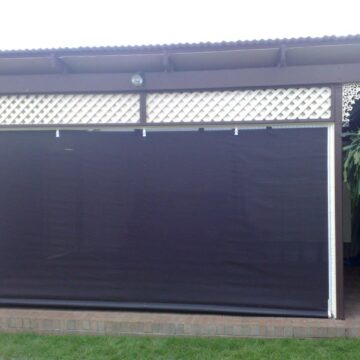
So what are they, exactly? Outdoor blinds are weather-rated screens, made from PVC, mesh, or shade cloth, that drop down the sides of your alfresco or patio to block sun, wind, and rain. Options range from manual crank systems through to fully motorised Zip Trak blinds that close at the touch of a button. Prices in Adelaide typically start from a few hundred dollars per blind and climb depending on size, fabric, and whether you go electric.
In this guide, we’ll walk through the different types of outdoor blinds available, what separates a cheap import from a properly made product, realistic pricing for South Australian homes, and where to buy them locally. We manufacture and install these blinds ourselves from our Adelaide factory, so we know precisely what holds up against a Fleurieu wind gust and what falls apart after one season.
Why outdoor blinds are worth adding to your alfresco
Adelaide’s climate is exactly the reason your alfresco needs proper protection. You get 45-degree days in January and biting southerly winds rolling off the gulf in July, sometimes in the same fortnight. Outdoor blinds for alfresco areas give you a way to shut out whichever extreme is hitting that week, rather than watching your paving bake or your outdoor furniture get soaked because the wind changed direction overnight.
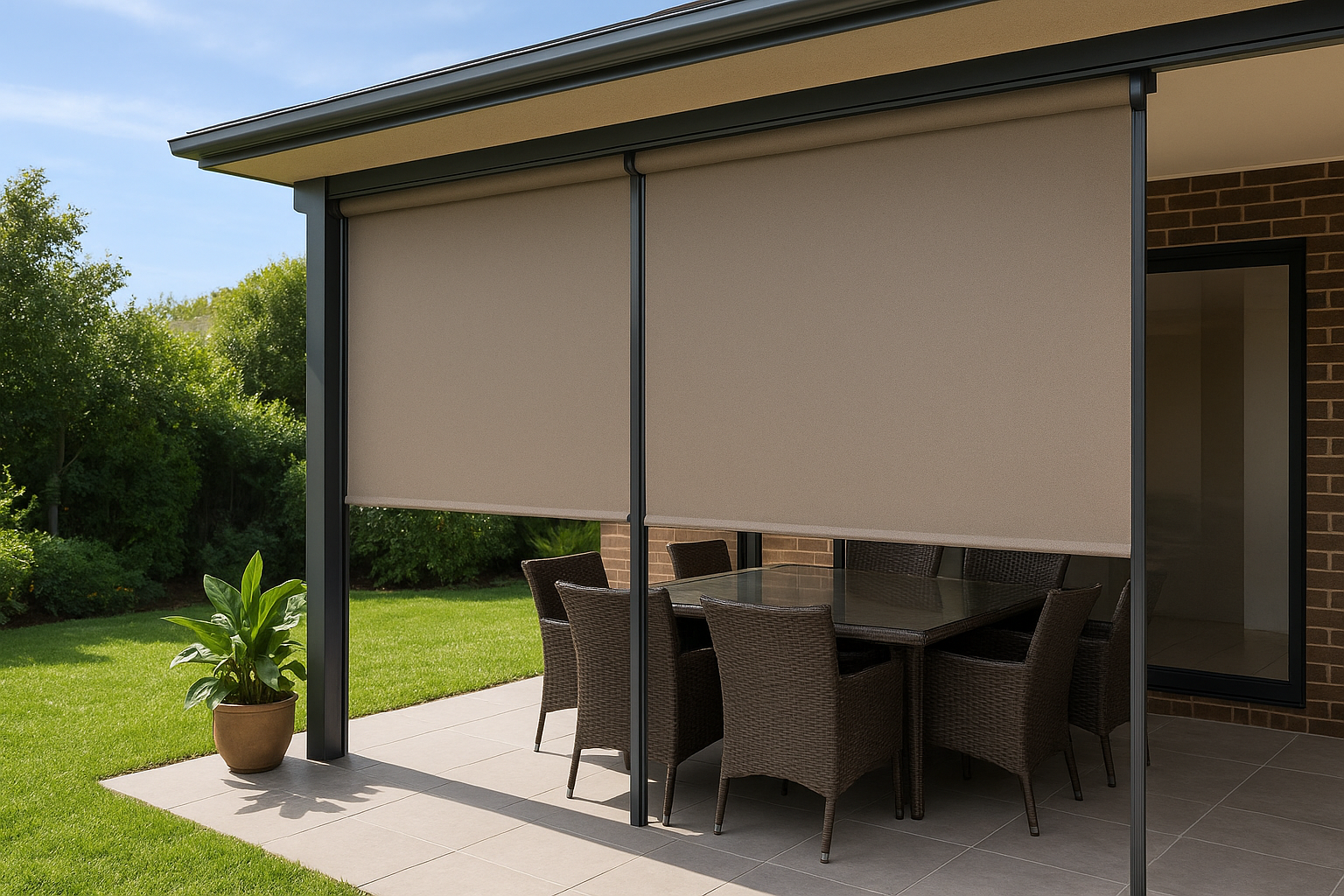
Heat is the obvious problem, but glare does just as much damage to a good afternoon outside. A west-facing alfresco without shading can push surface temperatures up by 15 to 20 degrees compared to a shaded one, which is enough to make the space unusable from noon until dinner. Blinds made from quality PVC or mesh fabric cut direct sun and glare without turning the area into a dark box, since most weave patterns still let filtered light and airflow through.
A well-chosen outdoor blind can turn six unusable months into twelve.
More usable space, more of the year
Think about what an extra room actually costs to build in Adelaide right now. Extending a house typically runs into tens of thousands of dollars once you factor in council approvals, footings, and finishes. Enclosing an existing alfresco with blinds costs a fraction of that and delivers a similar outcome: a sheltered, usable space that works for breakfast in winter and drinks in summer.
- Extends entertaining season: hosting works in July, not just December
- Protects existing assets: outdoor furniture, timber decking, and appliances stay out of direct weather
- Adds privacy: closed blinds block sightlines from neighbouring properties
- Reduces energy transfer: shading the alfresco keeps adjoining rooms cooler in summer
Property value and everyday practicality
Buyers and renters in Adelaide increasingly expect a functional outdoor living area, not just a slab under a roof. Real estate agents we deal with regularly mention that a fully enclosed alfresco with blinds photographs better and rents faster than an open one, particularly for family homes where the outdoor space doubles as a second living room. It’s a small upgrade that shows up in how a property presents, without the cost or approval hassle of a full extension.
Practically speaking, blinds also solve problems that render your alfresco unusable in specific weather. Windblown rain is the main culprit, since most Adelaide alfresco designs have open sides that let horizontal rain straight in during a southerly. Dropping a PVC blind on the exposed side stops that instantly. Wind itself is another factor; even a moderate gust makes sitting outside unpleasant, and blinds cut wind speed dramatically once closed. According to the Bureau of Meteorology, Adelaide averages winds above 25 km/h on roughly a third of days annually, which is enough to justify permanent screening rather than relying on umbrellas or temporary shade sails.
Ultimately, the case for outdoor blinds comes down to return on a modest investment. You’re not buying a luxury add-on, you’re buying back months of usable living space that would otherwise sit empty, waiting for the right weather that Adelaide doesn’t reliably deliver.
How to choose the right outdoor blinds for your space
Picking the right blind starts with the direction your alfresco faces, not the catalogue photo you liked. A north or west-facing space cops the harshest afternoon sun in Adelaide, so you need a heavier PVC or a tightly woven mesh with high UV block. South and east-facing alfrescos deal more with wind and rain, so fabric weight and seal quality against the frame matter more than sun rating. Get this wrong and you’ll pay for a blind that solves the wrong problem.
Match the fabric to the exposure
Mesh and PVC aren’t interchangeable, even though suppliers sometimes present them that way. Mesh lets airflow through and suits sides that need shade without fully sealing the space, while clear or tinted PVC gives you a genuine weatherproof barrier for the side that takes rain and wind head-on. Most Adelaide alfrescos end up with a mix, mesh on the sheltered side, PVC on the exposed one.
Choose fabric by exposure, not by what looks best in the showroom.
Decide between manual and motorised operation
Manual crank systems cost less upfront and work fine on smaller blinds you open and close occasionally. Motorised Zip Trak blinds make more sense once you’re running multiple blinds or a width over three metres, since cranking a large blind daily gets tedious fast. If you’re already updating a manual shutter system elsewhere on the property, it’s worth asking about upgrading everything to electric in one visit rather than staggering the work.
Check track type and wind rating
A blind is only as good as its track. Zip-track systems, where the fabric edge locks into a channel, hold up far better in wind than cable-guided blinds that can flap loose at the sides. Ask any supplier for the wind rating in km/h before you buy, not just the fabric warranty.
- Exposure: match fabric weight and type to which way the alfresco faces
- Width: anything over 3-4 metres usually needs motorisation
- Track system: zip-track outperforms cable-guided in genuine wind
- Frame fit: measure against posts, beams, and any slope in the existing structure
Measuring accurately against your existing posts and beams before ordering saves a return visit, and it’s exactly why an in-home consultation beats guessing dimensions off a plan.
Types of outdoor blinds for alfresco areas
Walk into any Adelaide showroom and you’ll see three or four blind styles that all claim to suit an alfresco. They don’t do the same job, so it pays to know what separates them before you commit to one. Outdoor blinds for alfresco spaces generally fall into these categories, each suited to a different combination of budget, exposure, and how often you’ll operate them.
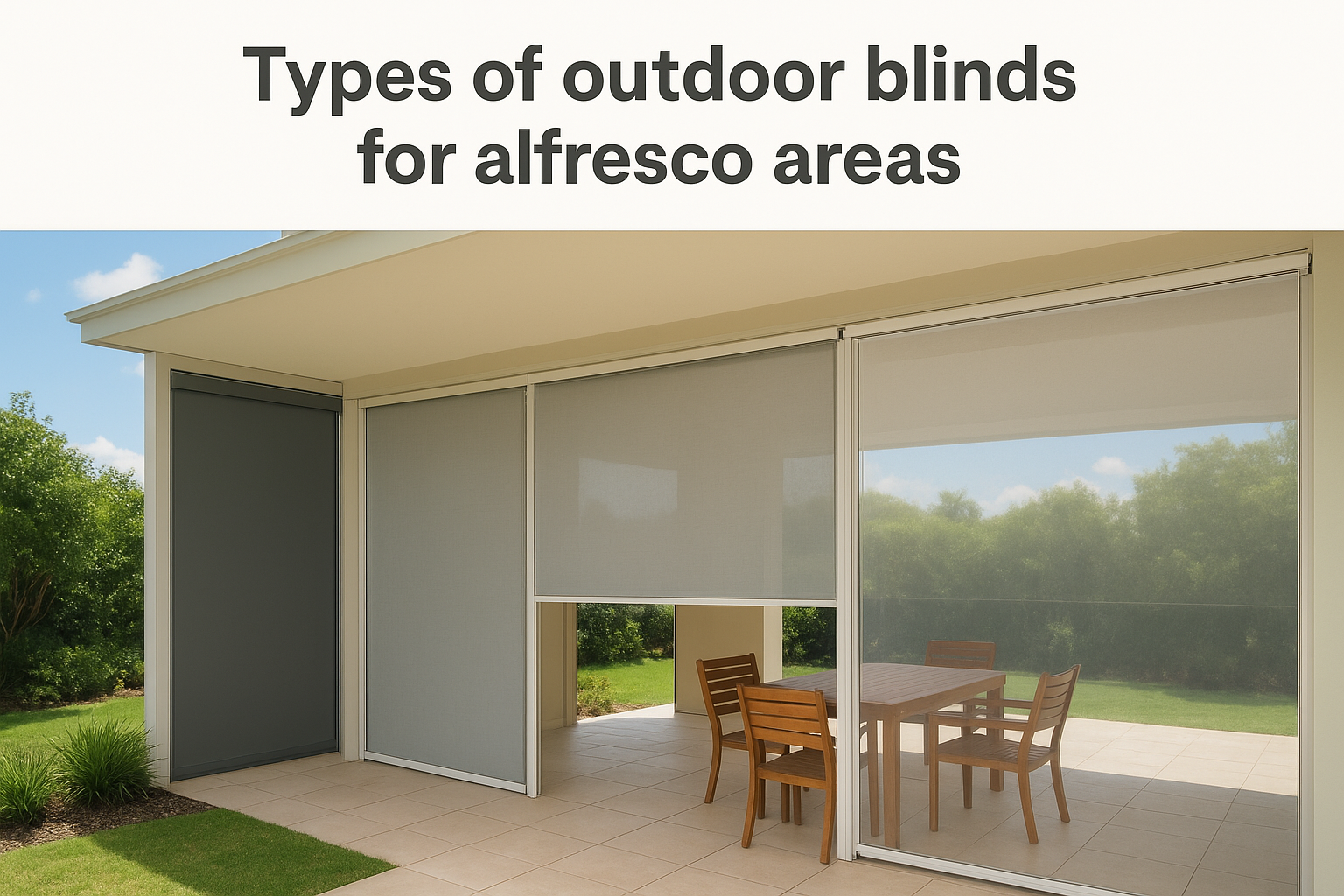
Zip Trak and Zip screen blinds
Zip Trak systems use a fabric edge that locks into a side channel, which is what stops the blind flapping or lifting out in wind. They come in PVC for full weather block or mesh for shade with airflow, and you can run them manually or motorised. Zip screens are the same locking mechanism in a lighter-duty build, often chosen for smaller openings or budget-conscious jobs where full Zip Trak specification isn’t necessary.
If wind is your main problem, the track matters more than the fabric.
Straight drop and channel blinds
Straight drop blinds run down guide cables or a simple track without the zip-lock edge, which makes them cheaper but less wind-resistant. They suit sheltered alfresco sides, verandahs tucked out of prevailing weather, or budgets that need to stretch across several openings. Channel-guided versions improve on basic cable systems slightly, giving a cleaner line and marginally better seal, though neither matches a true zip-track for genuine storm conditions.
Café blinds and clear PVC panels
Café blinds are the clear PVC style you see outside restaurants, typically fixed or manually rolled rather than motorised. They’re a good fit for alfrescos wanting an unobstructed view through the blind while still blocking wind and rain, and they cost less than a full Zip Trak PVC setup.
| Type | Best for | Wind resistance | Typical cost driver |
|---|---|---|---|
| Zip Trak PVC | Exposed, windy sides | High | Motorisation, width |
| Zip Trak mesh | Sun and glare control | High | Fabric grade |
| Straight drop/cable | Sheltered areas, budget jobs | Low to moderate | Number of blinds |
| Café blind (clear PVC) | Unobstructed views, mild exposure | Moderate | Panel size, fixings |
Mixing types across one alfresco is common. A Zip Trak PVC blind on the exposed western side paired with straight drop mesh elsewhere often gives you the best protection for the least outlay.
What affects the cost of outdoor blinds
Pricing for outdoor blinds for alfresco areas varies more than most quotes suggest, because the fabric alone rarely tells the full story. A single straight-drop mesh blind might land under $500, while a motorised Zip Trak PVC blind across a wide opening can run into several thousand dollars once you add electric operation and remote control. Knowing what drives that spread helps you avoid paying for features you don’t need, or worse, cutting corners on the one feature that actually matters for your exposure.
Size and width
Width matters more than height in most quotes, since a blind over three to four metres usually needs a motor to operate smoothly and a heavier track to stop sagging. Height adds cost too, particularly on double-storey alfrescos, but it’s the horizontal span that pushes a job from a simple manual crank into motorised territory.
Fabric grade and brand
Not all PVC is the same thickness, and not all mesh blocks the same percentage of UV. Cheaper imported fabric fades and cracks within a couple of Adelaide summers, while a properly rated commercial-grade PVC holds colour and flexibility for years. This is where the biggest price gap between suppliers usually sits, not in the frame or the track.
Pay for the fabric grade first. Everything else is easier to upgrade later.
Motorisation and electrical work
Upgrading from manual to motorised adds the cost of the motor itself plus any electrical work needed to run power to the blind. If you’re doing several blinds at once, or already have an electrician on site for a roller shutter upgrade, bundling the work usually costs less per blind than doing them one at a time.
Installation complexity
Steel posts, sloped ceilings, and existing structures that weren’t built with blinds in mind all add labour time. A straightforward retrofit onto a standard Colorbond patio costs less than fitting around an angled pergola or a heritage verandah with uneven beams.
- Width: over 3-4m typically requires motorisation
- Fabric grade: commercial PVC and mesh cost more but last longer
- Motor and wiring: adds per-blind cost unless bundled
- Structure: sloped or non-standard frames add installation time
- Number of blinds: multiple openings often reduce per-unit pricing
Where to buy outdoor blinds in Adelaide
Adelaide has no shortage of blind suppliers, but the difference between a factory-direct manufacturer and a reseller matters more than most buyers realise. Outdoor blinds for alfresco installations bought through a reseller often get marked up twice, once by the manufacturer and again by the shopfront selling them to you, with little added value beyond a showroom visit. Buying direct from a local factory cuts that margin out and usually means faster turnaround, since you’re not waiting on stock shipped interstate or overseas.
Factory-direct versus retail showrooms
General hardware chains and blind retailers stock a narrow range chosen for broad appeal, not for Adelaide’s specific wind and heat conditions. A local manufacturer that also handles installation and repairs understands which fabric grade actually survives a Fleurieu southerly, because they’re the ones called back out to fix the blinds that don’t. That feedback loop between manufacturing, fitting, and repairs is something a retail-only shopfront simply doesn’t have.
Buy from whoever fixes blinds, not just whoever sells them.
What to check before committing
Before signing off on a quote, confirm a few basics that separate a reliable supplier from a cheap import reseller:
- Local manufacturing: ask whether the blind is made in Adelaide or imported
- In-home measure and quote: a proper consultation catches sloping beams and odd angles before they become install-day problems
- Repair backup: check if the supplier services what they sell, or if you’re on your own once it’s fitted
- Warranty terms: get the fabric and motor warranty in writing, not just a verbal assurance
Getting a quote that reflects your actual space
Photos and rough measurements over the phone rarely produce an accurate price, particularly once posts, slopes, or existing structures come into play. Requesting a free in-home consultation, where someone measures against your actual alfresco rather than a generic template, gives you a quote you can trust and avoids the awkward renegotiation that happens once an installer turns up and finds the opening doesn’t match the paperwork. Classic Roller Shutters offers exactly this service across Adelaide, quoting directly from your site or even from floor plans if you’re still mid-build.
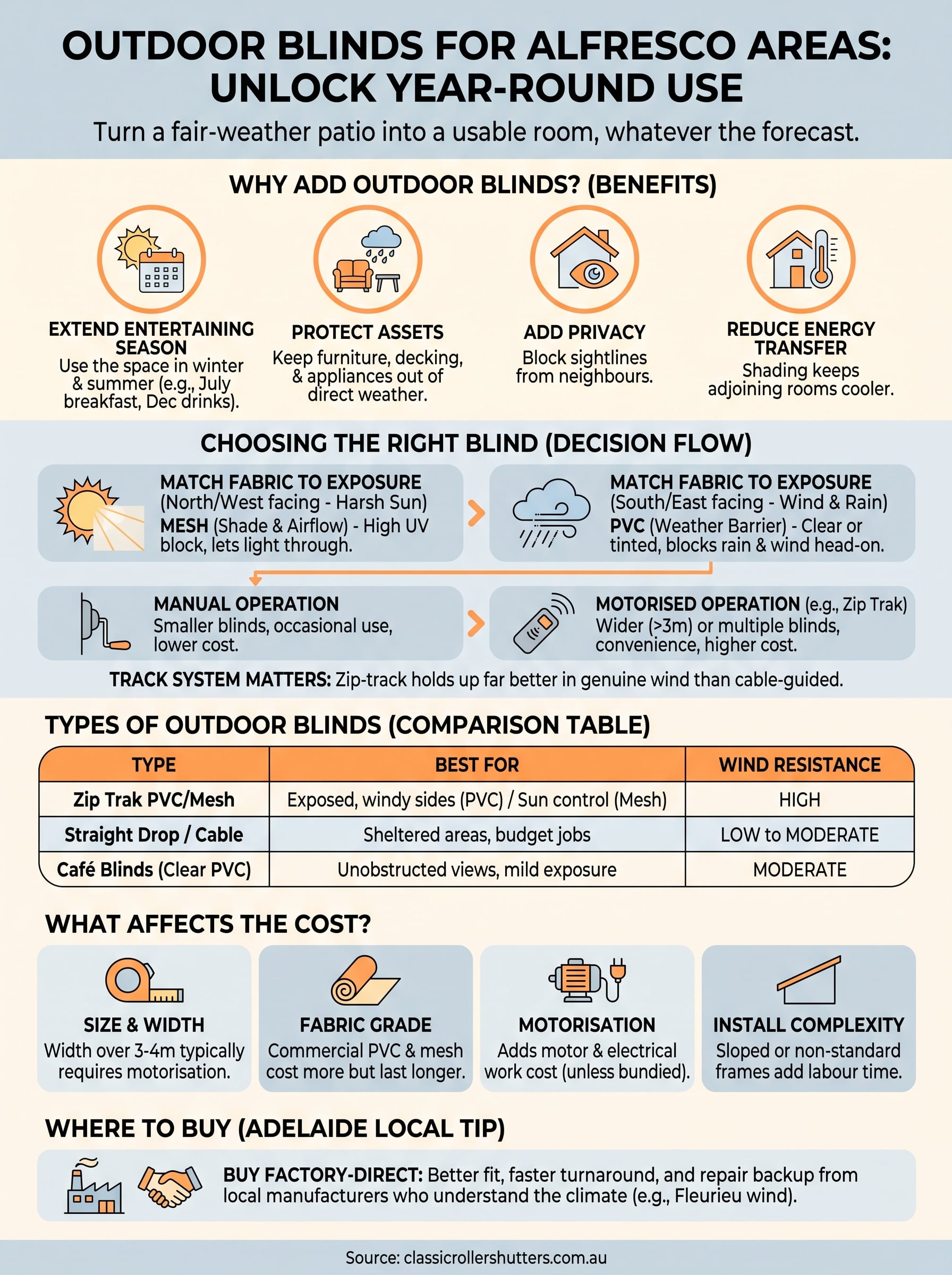
Making the most of your alfresco year-round
Getting real use out of your alfresco isn’t about waiting for perfect weather, it’s about removing the weather as a factor altogether. Once blinds are fitted, that space stops being a fair-weather bonus and becomes another room in the house, one you’ll actually use for breakfast in July and drinks in February. Fabric grade, track type, and matching the blind to your exposure are the decisions that determine whether that holds true in year three, not just on installation day.
Getting there starts with an accurate quote, not a guess based on photos. Local manufacturing and a proper in-home measure mean the blind fits your posts and beams the first time, without surprises on install day. If you’re ready to stop losing half the year to heat, wind, or rain, get a free in-home quote from Classic Roller Shutters and find out what it’ll take to make your alfresco work every month, not just the easy ones.