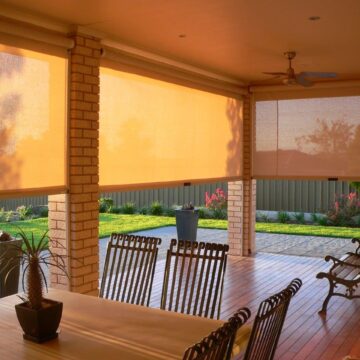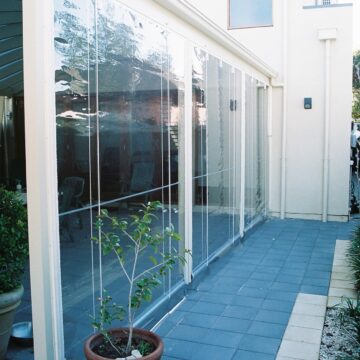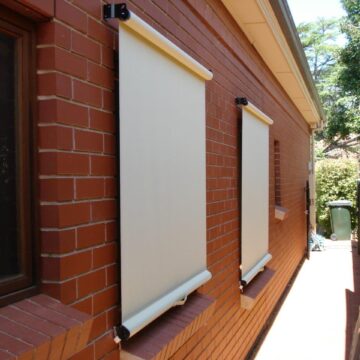
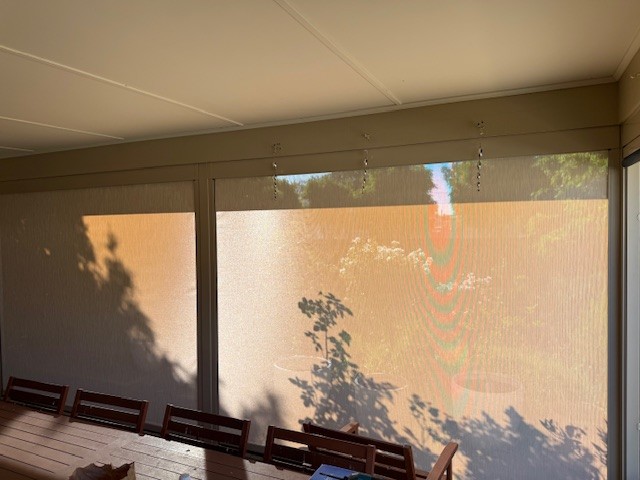
Zipscreen outdoor blinds are motorised external blinds with fabric that tracks within side channels, creating a sealed barrier against wind, rain, insects and UV rays. Unlike standard outdoor blinds that flap in the breeze, zipscreen blinds lock the fabric edges into guided rails on both sides. This makes them ideal for exposed areas like balconies, patios and verandas where you want reliable protection from the elements.
You’ll find out what makes zipscreen blinds different from other outdoor blind systems, how much they cost in Adelaide, and what to consider before you buy. We cover sizing options, fabric choices, motor types, and installation requirements. You’ll also see how zipscreen compares to alternatives like Ziptrak, café blinds and standard channel blinds. If you’re weighing up whether zipscreen suits your outdoor area, this guide gives you the details you need to make an informed decision. We’ll also share what to expect from local Adelaide suppliers when you request quotes.
Why zipscreen outdoor blinds matter
Zipscreen outdoor blinds transform your outdoor space from a weather-dependent area into a year-round extension of your home. They protect you from Adelaide’s hot summers, unpredictable winds and sudden rain, letting you use your patio or balcony whenever you want. The guided track system stops the fabric from flapping or billowing, which means you get consistent coverage even when strong winds hit. You can entertain guests, work from your outdoor area, or simply relax without worrying about sudden weather changes disrupting your plans.
Protection from Adelaide’s extreme weather
Adelaide’s climate swings from scorching 40-degree days to cold winter evenings, and zipscreen outdoor blinds handle both extremes. The sealed edge system blocks up to 95% of UV rays depending on your fabric choice, keeping your outdoor furniture from fading and your family protected from sun damage. When summer storms roll in, the waterproof seal prevents rain from blowing through gaps that standard outdoor blinds leave open. Your outdoor area stays dry and usable even during Adelaide’s wettest months.
Zipscreen blinds create a true barrier against the elements, not just a partial shield.
Year-round outdoor living
You gain extra living space without the cost of a renovation when you install zipscreen outdoor blinds. Your outdoor area becomes functional in winter because the blinds trap warm air and block cold winds. During summer, you control how much breeze flows through by adjusting the blind height. Many Adelaide homeowners use their screened patios as dining rooms, home offices or children’s play areas throughout the year. The blinds also keep insects out during evening barbecues, which means you spend less time swatting mosquitoes and more time enjoying your outdoor space.
How to choose the right zipscreen for your space
Choosing the right zipscreen outdoor blinds depends on your space dimensions, sun exposure and how you plan to use the area. You need to measure accurately, pick fabric that matches your privacy and shade needs, and select a motor type that fits your budget and lifestyle. The wrong choice means you’ll end up with blinds that don’t fully protect your space or cost more than necessary. Getting these decisions right from the start saves you from expensive modifications later.
Measure your outdoor area first
You must know the exact width and drop height of the opening you want to cover before you talk to suppliers. Zipscreen blinds typically span up to 5.8 metres wide and drop 4 metres in a single panel, though some manufacturers offer wider options. Measure from the underside of your roof beam to your deck or floor level for the drop, and from one side of your opening to the other for the width. If your space exceeds these dimensions, you’ll need multiple panels with joins between them. Adelaide’s strong winds mean you should also note whether your area faces north, south or gets crosswinds, as this affects which mounting method works best.
Accurate measurements prevent gaps that let wind and rain through the edges.
Pick fabric based on your goals
Mesh density determines how much light, heat and privacy you get from your zipscreen outdoor blinds. Clear PVC blocks 100% of wind and rain but offers no shade, making it ideal for winter protection on verandas where you want maximum light. A 95% mesh blocks most UV rays and heat while still letting you see outside, which suits areas where you want afternoon shade without complete darkness. A 90% or lower mesh rating gives you more privacy and better heat blocking for west-facing patios that cop Adelaide’s harsh afternoon sun. You can also choose fabric colours that complement your home’s exterior, though darker colours absorb more heat and lighter colours reflect it.
Consider motor types and power options
Zipscreen blinds run on either mains power or rechargeable battery motors, and your choice depends on whether you have outdoor power points. Mains-powered motors cost less upfront and never need recharging, but you’ll pay an electrician to install a weatherproof outlet if you don’t already have one near your mounting location. Battery motors eliminate electrical work and let you position blinds anywhere, though you need to recharge them every few months depending on use. Some systems offer solar panel options that trickle-charge the battery, which works well for sunny Adelaide patios. Remote controls come standard with most systems, and you can upgrade to smartphone control or home automation integration if you want to schedule your blinds to lower automatically at certain times.
Zipscreen outdoor blind prices in Adelaide
Zipscreen outdoor blind prices in Adelaide range from $600 to $1,800 per square metre installed, depending on fabric type, motor choice and panel size. A standard 3-metre-wide by 2.5-metre-drop blind for a typical Adelaide patio costs between $2,400 and $3,500 fully installed, while larger or custom configurations push costs higher. You’ll pay more for premium mesh fabrics, integrated lighting or home automation features. Local Adelaide suppliers often quote lower than national chains because they manufacture locally and skip middleman markups. Factory-direct businesses like Classic Roller Shutters typically offer better value than retail showrooms, though you should always compare at least three quotes to understand the market rate.
Base price ranges for standard installations
Entry-level zipscreen outdoor blinds start at approximately $600 to $900 per square metre when you choose basic mesh fabric and battery-operated motors. A small balcony opening of 2 metres wide by 2 metres high costs around $2,400 to $3,600 installed. Mid-range options with higher-quality fabrics and mains-powered motors sit between $900 and $1,200 per square metre, which means that same 4-square-metre area jumps to $3,600 to $4,800. Premium systems with motorised operation, remote control, specialised fabrics or integrated LED lighting reach $1,200 to $1,800 per square metre. Adelaide suppliers who manufacture their own blinds locally often price 15% to 25% lower than those importing pre-made systems from interstate or overseas.
Factory-direct suppliers eliminate distributor margins, which directly reduces your final cost.
You’ll find that larger single panels cost less per square metre than smaller ones because the track system and motor represent fixed costs regardless of size. Installing two separate 2-metre blinds costs more than one 4-metre blind covering the same area due to doubled hardware and labour. Most Adelaide suppliers require a minimum order value of $1,500 to $2,000 because the setup and installation time doesn’t change much whether they fit one small blind or one large blind.
What affects your final quote
Your fabric choice changes the price by $200 to $600 per blind depending on mesh density, UV rating and colour. Clear PVC costs less than mesh fabrics, while specialised fire-rated or commercial-grade mesh adds 20% to 30% to material costs. Fabric warranties also vary, with budget options covering 3 to 5 years and premium fabrics guaranteed for 7 to 10 years. Motor type affects pricing significantly, with battery systems adding $150 to $250 per blind and mains-powered motors requiring electrical work that costs $300 to $600 per outdoor area if you lack existing weatherproof power points.
Installation complexity influences labour charges, which typically represent 25% to 35% of your total quote. Straightforward brick or timber mounting on single-storey homes costs less than installations requiring scaffolding, concrete drilling or repairs to existing structures. Adding smart home integration or multiple blinds on one control system increases costs by $200 to $400 per additional blind due to programming requirements. Wind ratings matter in exposed Adelaide locations, with reinforced tracks for high-wind areas adding $150 to $300 per blind but preventing damage during storms.
Comparing quotes from Adelaide suppliers
Request itemised quotes that separate materials, labour and additional charges so you can compare fairly between suppliers. Some Adelaide businesses include free site visits and measurements, while others charge $50 to $100 that gets deducted from your final order. Warranty terms differ substantially between suppliers, with local manufacturers often offering longer structural warranties (10 to 15 years) than retailers (5 to 7 years). Check whether quotes include motor warranties separately from fabric and track warranties, as some suppliers provide only 2 years on motors while others cover 5 years.
Payment terms vary across Adelaide suppliers, with most requiring 30% to 50% deposits and the balance on completion. Factory-direct businesses sometimes offer package deals when you order multiple blinds, reducing per-blind costs by 10% to 15%. Beware of quotes that seem unusually low, as they often indicate lower-grade materials or exclude installation steps like electrical work or permit fees. Adelaide councils sometimes require permits for external structural additions, which costs $150 to $300 and takes two to four weeks for approval. Reputable suppliers know local permit requirements and include these costs upfront rather than surprising you later.
Zipscreen installation, care and repairs
Zipscreen outdoor blinds require professional installation to function correctly and maintain warranty coverage, though maintenance stays simple once they’re fitted. You can expect installation to take three to six hours per blind depending on mounting surface and complexity. Most Adelaide suppliers include installation in their quotes, and attempting DIY installation voids manufacturer warranties because incorrect tensioning or mounting damages the track system. Understanding proper care extends the life of your blinds and reduces repair costs, while knowing when to call professionals prevents minor issues from becoming expensive failures.
Professional installation requirements
Licensed installers mount zipscreen outdoor blinds to structurally sound surfaces like brick, concrete or timber beams that can support the blind’s weight plus wind load. Your installer checks that mounting points align vertically and horizontally within 2mm tolerance, as misalignment causes the fabric to bind or wear unevenly. They also set the correct fabric tension in the side channels, which requires specialised tools and experience to get right. Adelaide’s building codes require electrical work on mains-powered systems to be completed by licensed electricians, which most blind installers subcontract if they don’t hold electrical licences themselves. The installation includes testing all safety features like obstruction sensors and ensuring remote controls pair correctly with motors.
Professional installation guarantees your zipscreen system meets wind load ratings for your specific location.
Routine cleaning and maintenance
You should clean your zipscreen outdoor blinds every three to four months using a soft brush or cloth with mild soap and water. Hose down the fabric while it’s fully extended to remove dust, pollen and Adelaide’s red soil particles that accumulate in the weave. Never use pressure washers or harsh chemicals, as they damage the fabric coating and waterproof membrane. Check side channels quarterly for debris buildup, which stops the fabric tracking smoothly and causes premature motor wear. Battery-powered motors need recharging every 60 to 90 days depending on usage, while mains-powered systems require no regular motor maintenance.
Lubricate the side channel tracks annually with silicone spray to maintain smooth operation. Inspect fabric edges for fraying or damage after storms, as small tears worsen quickly when the blind operates under tension. Adelaide’s salty coastal air affects metal components over time, so wipe down aluminium housings and tracks every six months to prevent corrosion.
When to call for repairs
Contact your supplier immediately if the fabric jams, tears or pulls out of the side channels, as continuing to operate damaged zipscreen outdoor blinds destroys motors and tracks. Motor failures typically show up as slow operation, unusual noises or complete failure to respond to controls. Most Adelaide suppliers offer repair services within two to five business days, with motor replacements costing $300 to $600 and fabric replacement ranging from $400 to $800 depending on size. Track damage from impact or corrosion requires professional assessment, as bent tracks can’t guide fabric properly and need complete replacement.
Alternatives and how zipscreen compares
Zipscreen outdoor blinds compete with several other external blind systems in the Adelaide market, each offering different trade-offs between cost, weather protection and ease of use. You’ll encounter Ziptrak blinds, standard café blinds, straight-drop blinds and conventional channel blinds when shopping for outdoor coverage. Understanding how zipscreen stacks up against these alternatives helps you decide which system delivers the protection and functionality your space needs. The right choice depends on your budget, how exposed your area is to wind, and whether you prioritise full weather sealing or partial coverage.
Zipscreen vs Ziptrak blinds
Ziptrak and zipscreen both use track-guided systems, but Ziptrak blinds operate with a spring-loaded mechanism that you control by pulling the bottom rail up or down manually. Zipscreen outdoor blinds always include motorised operation, which means you use a remote or switch instead of physically handling the blind. Ziptrak costs 15% to 30% less upfront because it eliminates motor and electrical components, making it attractive when you’re working with a tight budget. However, you sacrifice convenience on large or high blinds where reaching the bottom rail becomes difficult. Zipscreen provides better wind resistance in exposed Adelaide locations because the motorised tensioning maintains constant pressure on the side channels, while Ziptrak’s spring mechanism can loosen over time.
Motorised zipscreen systems handle Adelaide’s strong winds more reliably than manual alternatives.
Zipscreen vs standard outdoor blinds
Standard café blinds and straight-drop outdoor blinds cost 40% to 60% less than zipscreen systems but offer minimal wind protection because the fabric hangs loose without side channel guidance. These blinds suit sheltered verandas or courtyards where wind rarely blows, though they flap and billow during storms. You gain no sealed barrier against rain or insects with standard blinds, which limits year-round usability compared to zipscreen’s fully enclosed system. Conventional channel blinds split the difference by using side tracks without the sealed zip mechanism, costing 20% to 35% less than zipscreen while providing moderate wind resistance. Choose standard blinds when your primary goal is shade and privacy in protected areas, but pick zipscreen when you need reliable all-weather protection.
Next steps for your outdoor area
You now understand how zipscreen outdoor blinds work, what they cost in Adelaide, and how they compare to other outdoor blind systems. Your next move is to measure your outdoor area accurately and decide which fabric density suits your sun exposure and privacy needs. Consider whether battery or mains-powered motors fit your space better, and factor in electrical work costs if you don’t have outdoor power points already installed.
Request quotes from at least three local Adelaide suppliers to compare pricing, installation terms and warranty coverage. Ask each supplier about wind ratings specific to your location, fabric warranties, and whether they manufacture blinds locally or import them. Factory-direct manufacturers typically offer better value than retailers who mark up pre-made systems. Check whether quotes include all installation costs, electrical work if required, and any council permits your area might need.
Classic Roller Shutters provides free in-home consultations and detailed quotes without obligation. Visit Classic Roller Shutters Adelaide to request your assessment and transform your outdoor area into year-round living space.