A tilting rod that won’t turn, a louver that hangs at an odd angle, or a panel that won’t stay closed, these are the kinds of small problems that make plantation shutters frustrating to use. The good news is that most of these issues come down to worn or broken components, and sourcing the right plantation shutter spare parts is often all it takes to get them working again.
You don’t necessarily need to replace an entire panel or call in a professional for every little fault. With the right replacement part and some basic tools, many of these fixes are straightforward enough to handle yourself. At Classic Roller Shutters Adelaide, we’ve helped plenty of customers across Adelaide identify exactly what’s gone wrong with their shutters and find the parts to sort it out.
Below, we’ve listed six common plantation shutter spare parts that address the most frequent issues we see. Each entry covers what the part does, the problem it solves, and what to look for when purchasing a replacement.
1. Louvre pins and spring-loaded pins
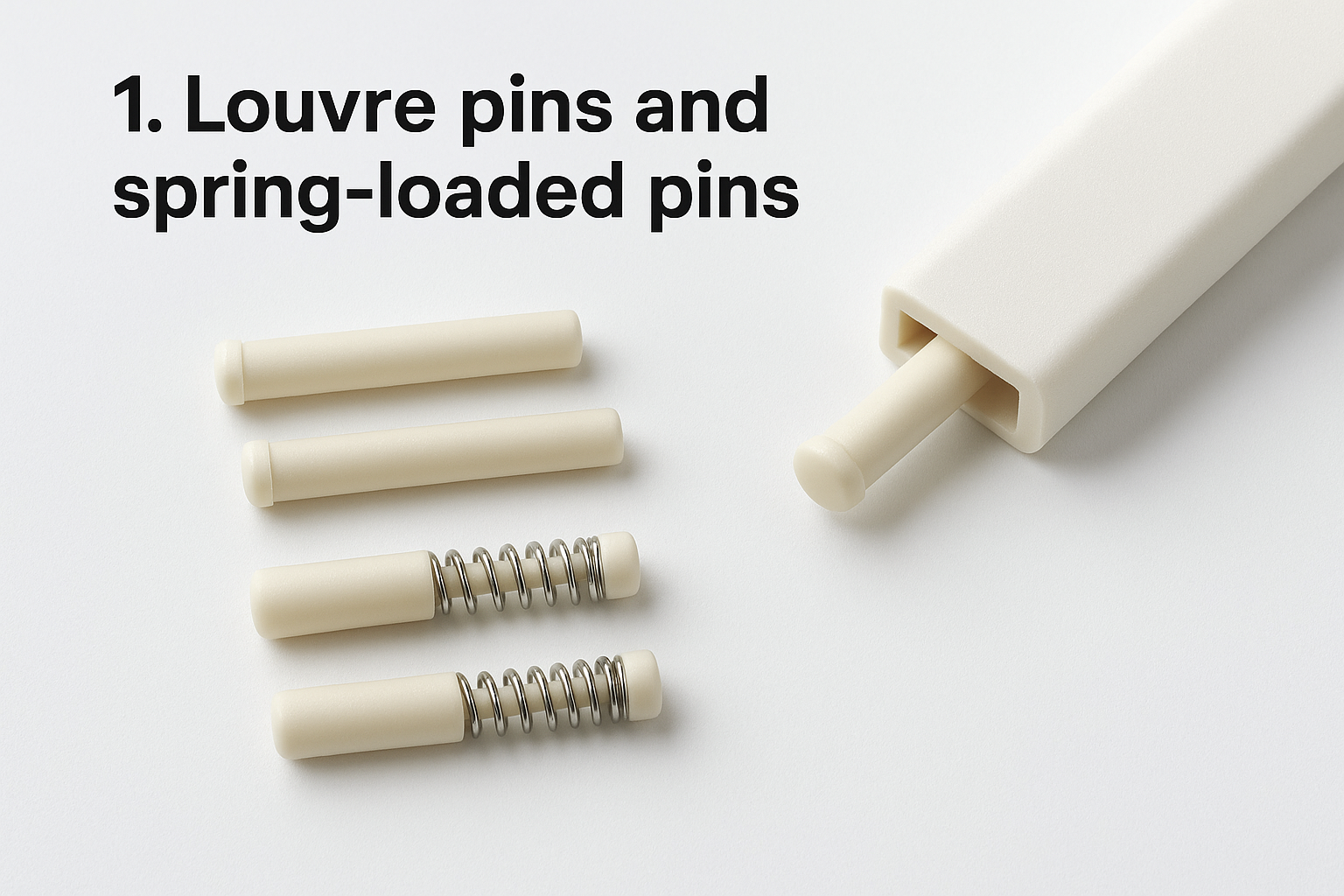
Louvre pins are among the most commonly replaced plantation shutter spare parts. These small components sit at each end of every louvre slat and allow the slats to pivot when you operate the tilt rod. Spring-loaded pins add friction to hold each slat in the angle you’ve set.
What this part does
Each louvre slat has a pin at both ends. One side typically connects to the tilt rod mechanism, while the other sits in a socket inside the shutter frame. The spring-loaded version uses a small internal spring to hold the louver under tension, which is what stops it from drifting back to a flat position on its own after you’ve tilted it.
Signs you need to replace it
The clearest sign is a louver that spins freely and won’t hold its angle. You might also notice a slat that sits slightly lower than the others, or one that catches and grinds as you move the tilt rod. A cracked or snapped pin is usually visible once you remove the slat from the frame.
If multiple slats on the same panel are drifting, check the tension screws first before replacing pins, as worn tension is a separate issue covered further in this article.
How to match the right size and style
Pin diameter and length vary between manufacturers, so take the old pin with you when sourcing a replacement. The two main types are smooth barrel pins and spring-loaded pins. Mixing the two on the same panel can cause uneven tension. Also check whether your frame socket is round or square, as this affects which pin will actually fit.
How to replace it safely
Remove the louver by gently pressing both pins inward and pulling the slat free from the frame. Slide the new pin into the end of the slat, making sure the spring mechanism faces outward toward the frame. Press the slat back into position until both pins click into their sockets. Avoid forcing the slat into place, as plastic frames crack easily under lateral pressure.
Typical cost and where to buy in Australia
Louvre pins generally cost between $2 and $8 per pack depending on size, material, and quantity. Hardware stores carry basic versions, and specialist shutter suppliers stock a wider range of sizes to suit different shutter brands and frame types.
2. Tilt rod connectors, staples, and clips
The tilt rod runs vertically through the centre of your shutter panel and connects to every louver slat. When the connector clips or staples that link each slat to the rod fail, you lose the ability to tilt multiple slats at once.
What this part does
Tilt rod connectors are small clips or staples that attach each louver to the central tilt rod. When you rotate the rod, these connectors transfer the movement to every slat simultaneously, keeping them aligned and angled together across the full panel.
Signs you need to replace it
The main sign is one or more slats that no longer move when you operate the tilt rod, while the rest of the panel tilts normally. You might also spot a clip sitting loose in the channel or a staple that has pulled away from the slat body.
If several connectors fail at once, inspect the tilt rod itself for warping or cracking before replacing clips individually.
How to match the right size and style
Connectors vary in width to suit different tilt rod profiles, so take a failed clip to your supplier to match the shape and thickness. Most are either hook-style clips or flat staples that press onto the rod.
How to replace it safely
Slide the new connector onto the tilt rod at the correct slat position, then press it onto the slat until it seats firmly. Avoid overtightening or bending the clip during installation, as plastic connectors snap under excess force.
Typical cost and where to buy in Australia
These plantation shutter spare parts are inexpensive, typically costing $3 to $10 for a pack. Specialist shutter suppliers and some hardware stores across Australia carry them.
3. Tension screws for loose or drifting louvers
Tension screws are small but critical plantation shutter spare parts that control how firmly each louver holds its position. When these screws wear out or loosen, your louvers stop staying at the angle you set and drift back to flat on their own.
What this part does
Each tension screw applies friction to the pin socket inside the frame, holding each louver in place after you tilt it. Tightening the screw increases resistance, which stops the slat from moving once you’ve set the angle you want.
Signs you need to replace it
The most obvious sign is a louver that slowly falls flat after you tilt it, even when the pin itself is undamaged. You might also notice that the whole panel feels loose when you tilt the slats, with very little resistance as they move.
If tightening the existing screw no longer holds the louver in position, the screw thread is likely stripped and needs replacing rather than just adjusting.
How to match the right size and style
Tension screws vary in thread diameter and length depending on the shutter brand. Bring the original screw to your supplier, or note the frame material, as timber and PVC frames typically use different thread types.
How to replace it safely
Use a screwdriver that fits the head precisely to avoid stripping the new screw. Tighten gradually and test the louver after each turn until it holds position without becoming stiff to operate.
Typical cost and where to buy in Australia
Tension screws are very affordable, usually costing $2 to $6 per pack. Specialist shutter suppliers across Australia stock the correct sizes for most common shutter brands.
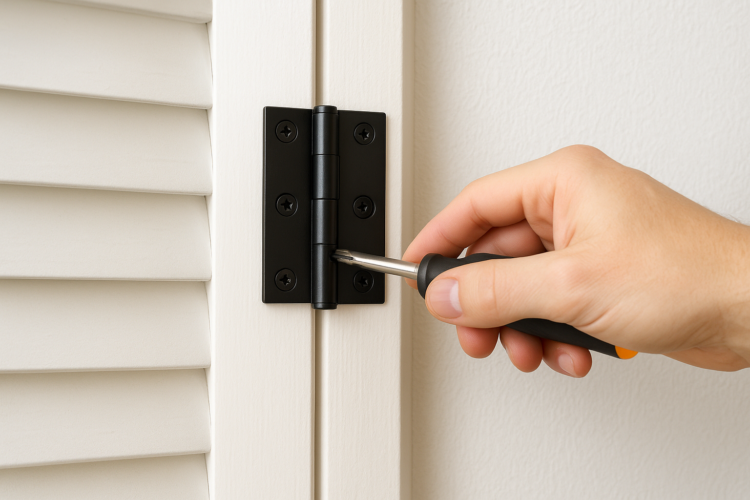
4. Hinges and hinge screws for sagging panels
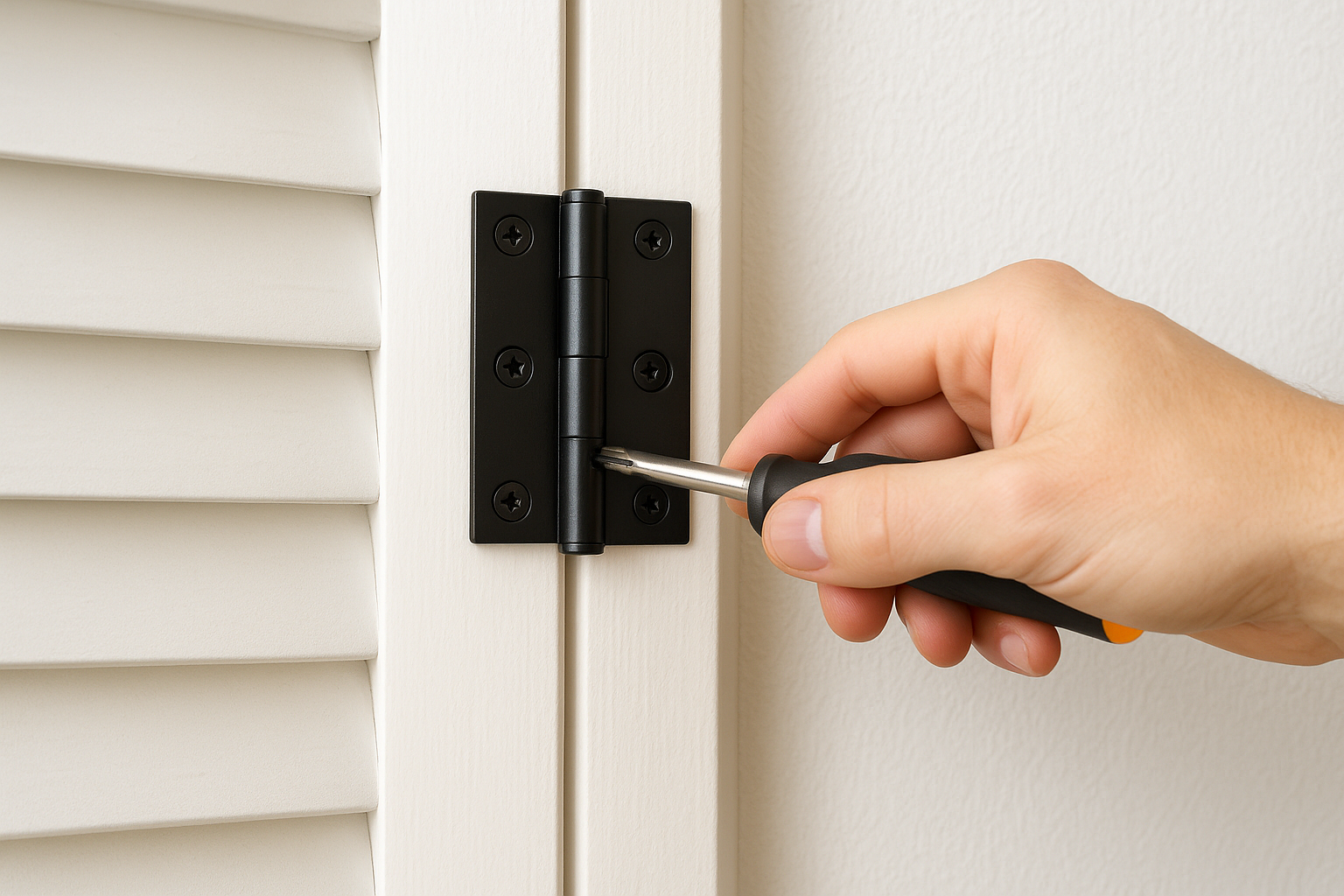
Hinges and hinge screws hold your shutter panels to the frame and to each other when panels fold back. When these components fail, panels sag, drag, or refuse to sit flush against the window opening.
What this part does
Hinges mount along the vertical edge of each panel and connect it to either the frame or the adjacent folding panel. The hinge screws secure the hinge plates firmly in place. Together, they carry the full weight of the panel and determine how well it sits and swings when you open or close the shutter.
Signs you need to replace it
A panel that hangs lower on one side than the other is the most common sign of a failed hinge. You might also notice a panel scraping the frame during operation, or hinge screws that have stripped and no longer hold the plate flat against the timber or PVC.
If the screw hole itself is damaged, fill it with timber filler or use a slightly larger replacement screw before re-drilling.
How to match the right size and style
Take the old hinge to your supplier to match these key details:
- Plate size and screw hole spacing
- Barrel diameter
- Frame material (timber vs PVC)
Hinges for timber frames differ from those for PVC, so confirming your frame material before purchasing saves a wasted trip.
How to replace it safely
Support the panel before removing the old hinge to avoid stressing the remaining fixings. Fit the new hinge, align the panel carefully, then tighten the screws gradually on both sides until the panel hangs straight.
Typical cost and where to buy in Australia
Replacement hinges and screws are widely available plantation shutter spare parts, typically costing $5 to $15 per hinge depending on size and material. Specialist shutter suppliers across Australia stock the most common styles.
5. Magnets, catches, and replacement louvers
Magnets, catches, and cracked louver slats are three separate issues, but they often get grouped together because they all affect how your shutter looks and closes. Sourcing these plantation shutter spare parts early prevents the damage from spreading to surrounding components.
What this part does
Magnets and catches sit along the meeting edge of your shutter panel and keep the panel held shut when you close it. Replacement louvers are full slat substitutes for cracked, warped, or snapped slats that can no longer be repaired at the pin level.
Signs you need to replace it
A panel that swings open on its own or refuses to stay closed points directly to a failed magnet or catch. Replacement louvers are needed when you see visible cracks, splits, or deep gouges on a slat that affect its structural integrity rather than just its finish.
A single broken louver left in place can put uneven stress on the surrounding slats and accelerate wear across the whole panel.
How to match the right size and style
Match magnets by strength rating and mounting hole spacing. For louvers, you need to match slat width, thickness, material, and colour as closely as possible. Bring the damaged slat to your supplier so they can compare it directly against their stock.
How to replace it safely
Press the new magnet into its housing until it seats flush, then test the closure before re-hanging the panel. Swap louvers by removing the pin on each end, sliding the old slat free, and fitting the replacement using the same method described in section one.
Typical cost and where to buy in Australia
Magnets and catches typically cost $3 to $10 per set, while individual replacement louvers vary widely based on material and size, usually ranging from $10 to $30 per slat. Specialist shutter suppliers across Australia are your best source for matching slats to existing panels.
A quick plan for your repair
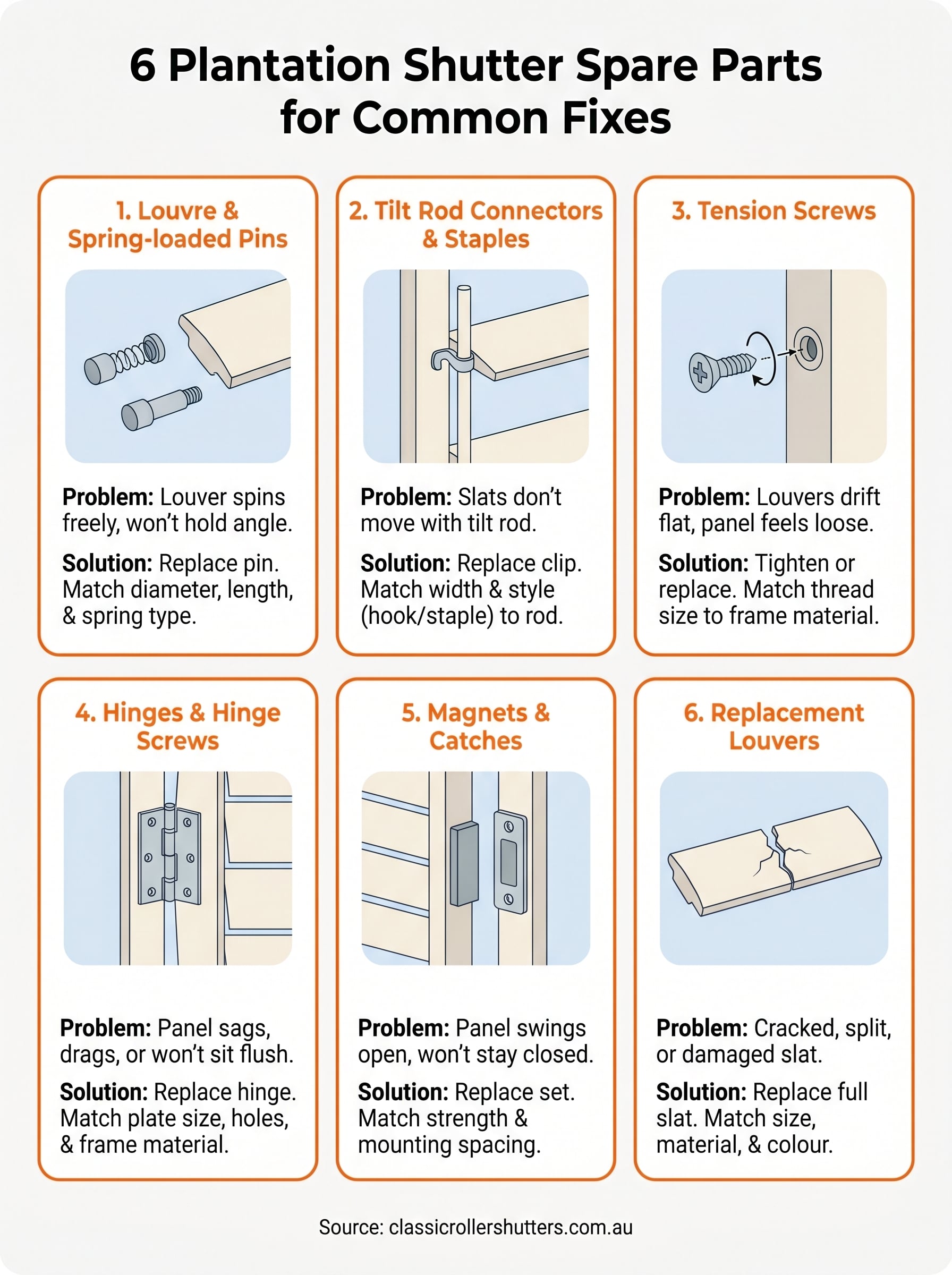
Start by identifying the specific symptom rather than guessing at the cause. A drifting louver points to pins or tension screws, a panel that won’t stay closed points to magnets or catches, and a sagging panel points to hinges. Narrowing it down before purchasing anything saves you from buying parts you don’t need and making extra trips to your supplier.
Once you know what’s failed, take the damaged component to a specialist supplier so they can match it directly against their stock. Generic hardware stores carry basic fasteners, but shutter-specific parts need to suit your exact frame material, brand, and dimensions to work correctly.
Most of the plantation shutter spare parts covered in this article are affordable and straightforward to fit with basic tools at home. If you’re unsure where to start or can’t identify the fault on your own, the team at Classic Roller Shutters Adelaide can help you work through the problem and find the right replacement.