Something’s gone wrong with your roller shutter, maybe it’s jammed, maybe a slat has cracked, or maybe you just heard a noise that didn’t sound right. You jump online to order a replacement part, and suddenly you’re staring at a list of component names that mean nothing to you. Guide rail? Barrel? Bottom rail? A clear roller shutter parts diagram is exactly what you need to make sense of it all and identify the specific part that needs attention.
At Classic Roller Shutters Adelaide, we’ve been manufacturing, installing, and repairing roller shutters for over 40 years. Our dedicated repair division handles all brands, and we also sell spare parts directly to DIY customers from our Adelaide factory. So when we label a component on a diagram, it comes from hands-on experience, not a textbook.
This guide breaks down every major component of a standard roller shutter system, explains what each part does, highlights the ones that commonly wear out or fail, and walks you through when you can handle a fix yourself versus when it’s time to call in a professional. Whether you’re troubleshooting at home or preparing to order a replacement part, you’ll have a solid reference to work from.
Why a roller shutter parts diagram matters
A roller shutter is made up of more components than most people realise. From the barrel that holds the curtain to the guide rails that keep it tracking straight, every part plays a specific role in how the shutter operates. Without a clear reference point, you end up guessing which part has failed, which wastes time and often money on the wrong replacement. A proper roller shutter parts diagram gives you a shared language, so whether you’re describing a fault to a technician or searching for a spare part online, you know exactly what you’re looking for.
Getting the Right Part First Time
One of the most common mistakes DIY repairers make is ordering parts based on a rough description. You might search for “the rubber strip on the side of the shutter” when the correct term is weather seal or brush seal, and the results you get back will be completely different. Knowing the proper component name means you can match specifications accurately, including dimensions, material type, and compatibility with your shutter brand.
Getting the component name right before you order saves you a return trip to the parts supplier and avoids a repair job that stalls halfway through.
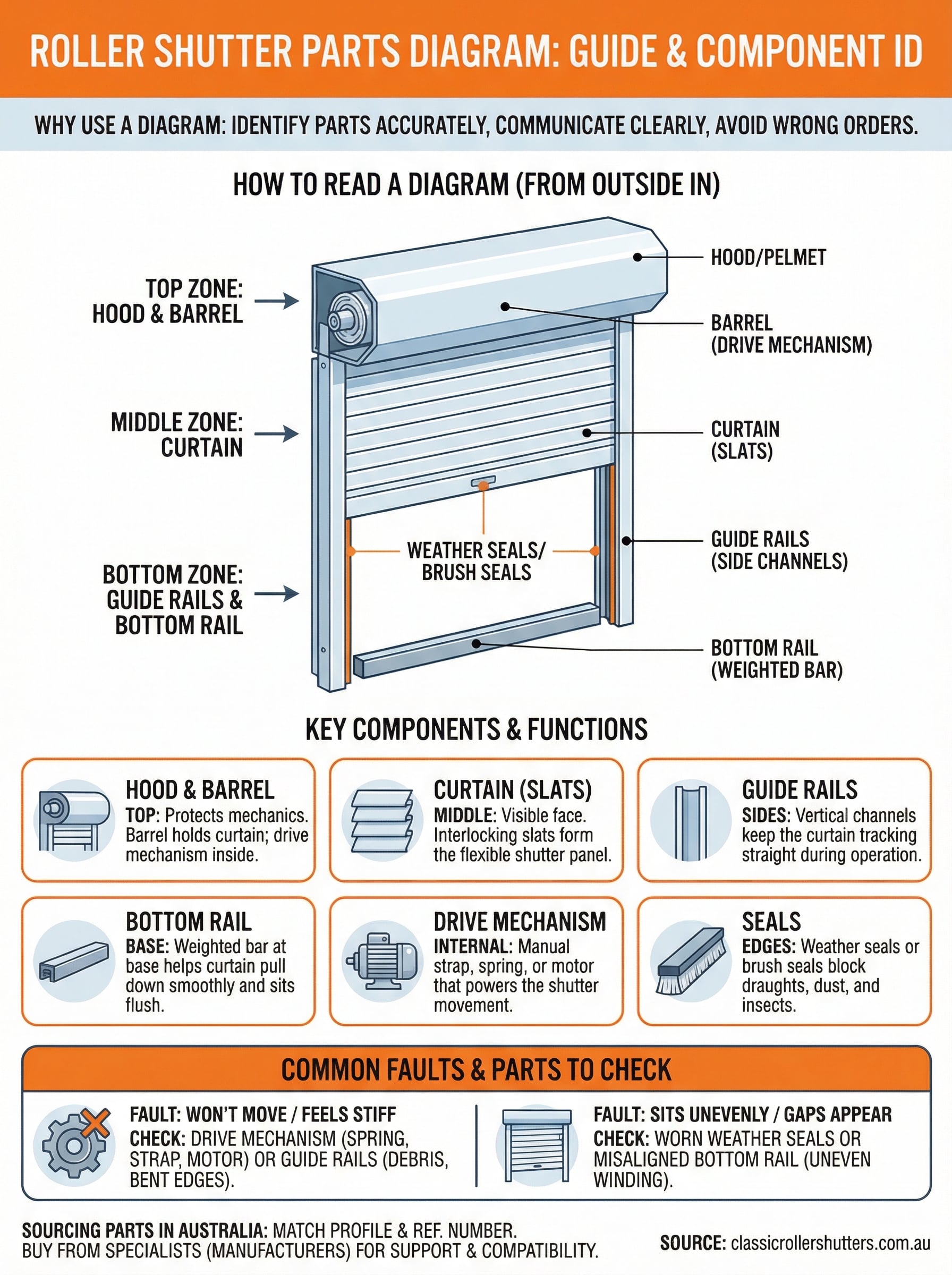
The key components you’ll encounter in most diagrams include:
- Barrel (also called the roll or drum)
- Curtain (the interlocking slats)
- Bottom rail (the weighted bar at the base)
- Guide rails (the side channels)
- End caps and hood
- Drive mechanism (manual strap, spring, or motor)
- Weather seals and brush seals
Communicating Clearly With Technicians
If you call a repair service and say “the thing at the bottom keeps getting stuck,” a technician will ask follow-up questions before they can help. If you say “the bottom rail is catching in the guide rail channel,” the conversation moves faster and the technician arrives prepared with the right parts. This matters even more when you’re getting a quote remotely, since accurate part identification means you’re less likely to receive a revised invoice after the job starts.
Understanding your shutter’s components also helps you evaluate quotes more confidently. You’ll know whether the technician is replacing a drive spring or the entire barrel assembly, and you can ask informed questions about whether a full replacement is actually necessary or whether a targeted repair will do the job.
How to read a roller shutter parts diagram
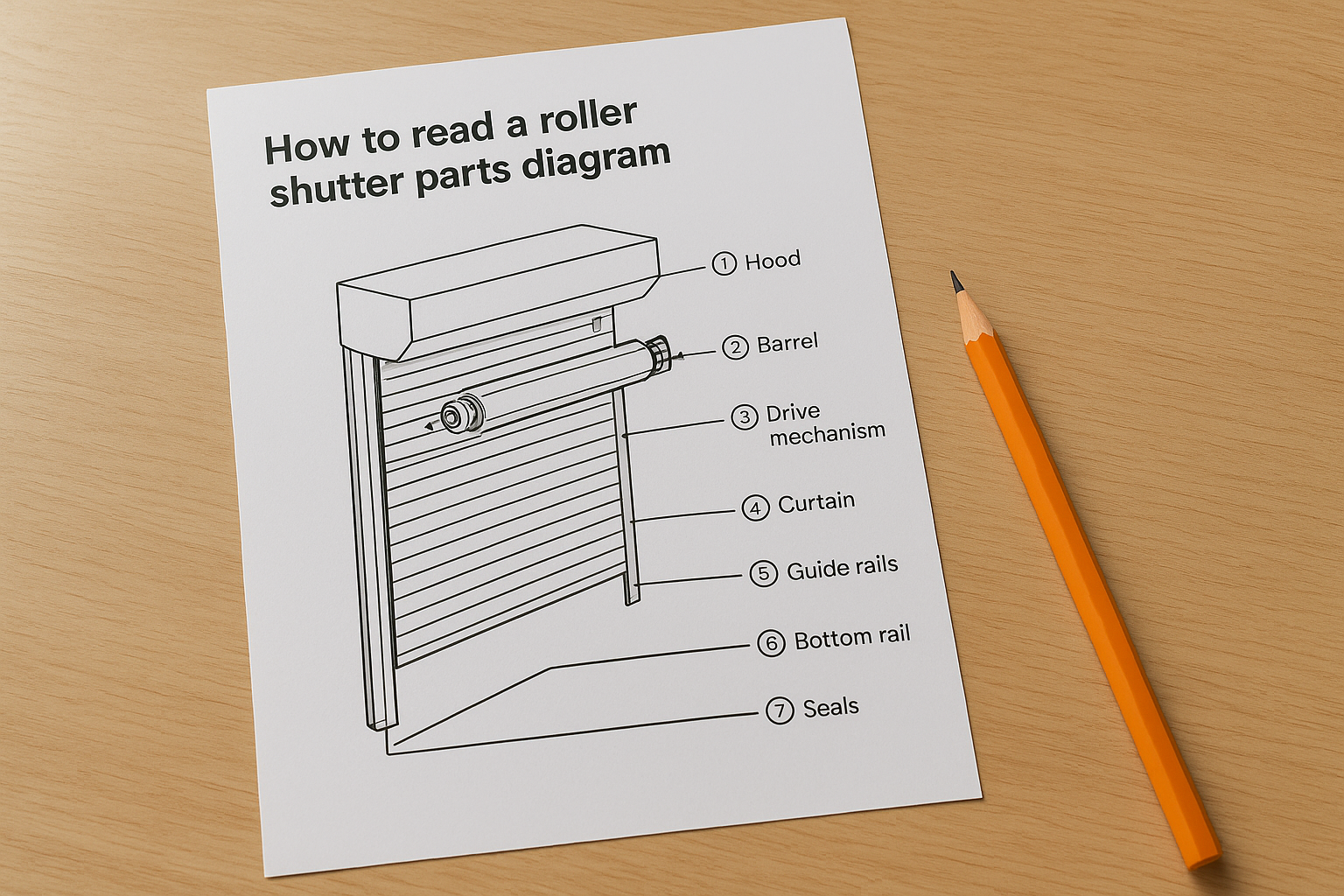
Most roller shutter parts diagrams follow a consistent layout that moves from the top of the installation down to the floor. Once you understand the basic structure, you can apply it to almost any diagram you come across, whether it’s printed in a product manual or available from a parts supplier. Start by identifying the three main zones: the hood at the top, the curtain running through the middle, and the guide rails on either side.
Read From the Outside In
Diagrams typically show an exploded view, meaning each component is pulled slightly away from the assembly to give you a clear line of sight to every part. The outer housing, which is the hood or pelmet, sits at the top. Inside that, you’ll find the barrel and drive mechanism. Working outward from the centre of the shutter, you move through the curtain slats, then the guide rails, and finally the bottom rail and seals.
When you look at a roller shutter parts diagram for the first time, focus on the arrows and leader lines that connect labels to components. These lines guide your eye directly to each part so you can match the name to its physical location without any guesswork.
Treat the diagram as a map: the labels point to specific parts, and the arrows show you exactly where each component sits within the assembled system.
Match the Part Number to a Specification
Most quality diagrams include reference numbers next to each component. These numbers correspond to a parts list, usually printed alongside the diagram or available from the manufacturer. When you order a replacement, use the reference number rather than just the name, since components like springs or seals come in multiple sizes that look similar but are not interchangeable.
Also check whether the diagram notes the shutter’s profile type, such as foam-filled or aluminium slat, because the same component name can refer to physically different parts depending on which profile your system uses.
Roller shutter parts explained from top to bottom
Working through a roller shutter parts diagram from the top of the system to the floor gives you the clearest mental picture of how everything connects. Each zone handles a distinct function, and faults almost always originate in one specific zone rather than spreading across the whole system.
The Hood and Barrel
The hood (also called the pelmet or housing) sits at the very top of the installation and protects the internal mechanics from weather and dust. Inside the hood, the barrel (sometimes called the roll or drum) is the central cylinder around which the curtain winds as the shutter opens. The barrel connects directly to the drive mechanism, whether that is a manual strap, a spring system, or an electric motor.
A damaged or bent barrel will cause the curtain to wind unevenly, which is one of the most common reasons a shutter stops sitting flush when fully closed.
The Curtain and Bottom Rail
The curtain is the visible face of your shutter and consists of interlocking horizontal slats, usually made from aluminium. These slats clip together to form a continuous, flexible panel that rolls up inside the hood when you open the shutter. At the base of the curtain, the bottom rail is a reinforced bar that adds weight to help the curtain pull down smoothly and sit flush against the sill when closed.
Guide Rails and Seals
The guide rails are the vertical channels on either side of the shutter that keep the curtain tracking straight as it moves up and down. Running inside or alongside those channels are the weather seals, sometimes called brush seals or rubber strips, which close the gaps between the curtain edges and the frame to block draughts, dust, and insects.
Worn seals are worth replacing promptly rather than leaving them to deteriorate further. Brush seals suit light gaps well, while rubber or PVC seals provide a firmer barrier in exposed locations where weather protection matters most.
Common faults and what part to check
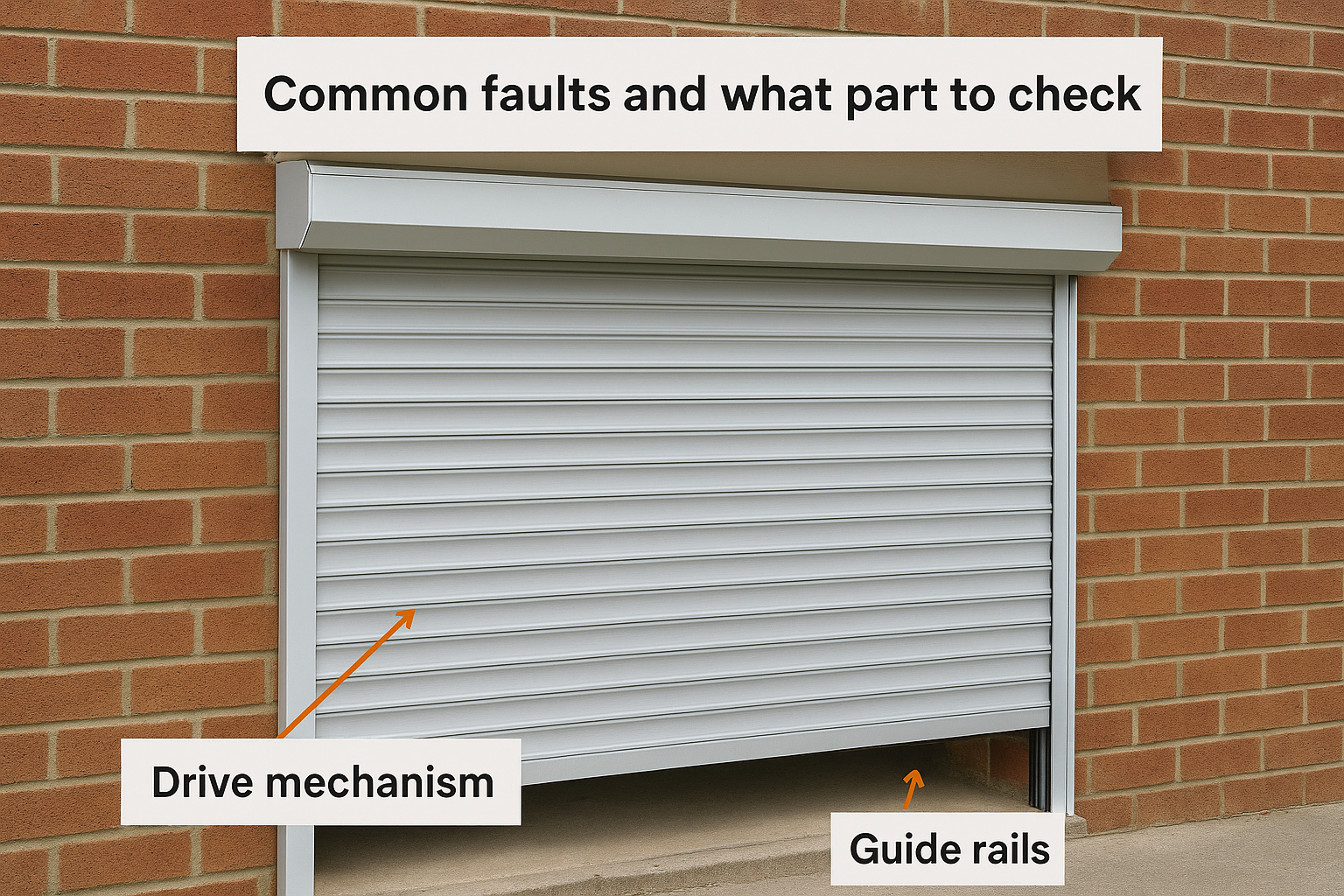
Most roller shutter problems follow recognisable patterns, and once you know which component is responsible for which function, narrowing down the fault becomes straightforward. Use your roller shutter parts diagram as a starting point: match the symptom to the zone where the problem originates, then work through the likely causes before ordering any replacement parts.
Shutter Won’t Move or Feels Stiff
When your shutter refuses to move or needs excessive force to operate, the fault usually sits in the drive mechanism or guide rails. A worn or broken drive spring, a motor that has reached the end of its service life, or a strap that has snapped inside the barrel will all prevent smooth operation. On manual shutters, check the strap and spring first before assuming the barrel itself needs replacing.
If the shutter moves but grinds or catches, the guide rails are the more likely culprit rather than the drive mechanism.
Debris or corrosion inside the guide rail channels is another frequent cause of stiffness. Clear the channels thoroughly and inspect the edges of the curtain slats for any bent or cracked sections that may be catching on the rail walls.
Shutter Sits Unevenly or Gaps Appear
An uneven curtain that leaves visible gaps along the bottom or sides usually points to a worn weather seal or a misaligned bottom rail. Check the brush seals running inside the guide rails first, since these compress over time and stop providing an effective barrier. Replace them as a pair rather than replacing just the damaged side.
If the bottom rail is sitting at an angle when the shutter is closed, the curtain has likely wound unevenly onto the barrel. This can happen after a sharp impact or if a slat has cracked and disrupted the alignment of the panel below it.
Choosing the right replacement parts in Australia
Sourcing roller shutter parts in Australia is straightforward once you know exactly what you need, but the market includes generic components alongside brand-specific parts that are not interchangeable. Before you place any order, confirm the manufacturer and profile type of your shutter. Foam-filled slats, hollow aluminium slats, and polycarbonate profiles all use different seals, end caps, and bottom rail dimensions, so a part that looks identical may still be the wrong fit.
Source Parts That Match Your Profile
Your roller shutter parts diagram should include a profile code or product reference, typically printed on the original documentation or stamped on the barrel end cap. Use that reference when you contact a supplier. Australian suppliers generally stock parts for common local profiles, but imported or discontinued systems may require custom-cut seals or fabricated components. If you can’t find a matching part number, bring a sample or accurate measurements rather than relying on a description alone.
Measuring twice before ordering once saves the cost of return shipping and a repair job that stalls while you wait for the correct component.
Buy From a Manufacturer or Dedicated Parts Supplier
Purchasing directly from a local manufacturer or dedicated parts division gives you access to accurate technical support alongside the components themselves. Generic hardware stores sometimes stock weather seals and basic fixings, but they rarely carry barrel components, drive springs, or motor assemblies suited to residential roller shutters. For electric shutters in particular, motor compatibility is critical; fitting the wrong motor torque rating can damage the barrel or void any existing warranty on the shutter system. Always confirm the voltage and torque specifications match your existing drive unit before finalising a motor purchase.
Final checks before you order or repair
Before you buy a part or start any repair work, run through a short checklist. Confirm you’ve identified the correct component using a roller shutter parts diagram and noted its reference number and profile type. Double-check the measurements of worn seals or rails against the replacement specifications, since a 1mm difference can mean the part simply won’t fit. Take a photo of the existing component alongside a ruler before you remove it, so you have an accurate reference if anything is unclear later.
If the fault involves an electric motor or drive spring, consider whether a DIY repair is the right call. Springs under tension and electrical components carry genuine safety risks, and a professional repair often costs less than fixing a mistake. For anything beyond a straightforward seal or slat replacement, get in touch with the Classic Roller Shutters Adelaide team for expert advice, parts, or a fast repair backed by over 40 years of hands-on experience.