If you run a café, canteen, kiosk, or commercial kitchen in Adelaide, your service counter is one of the most exposed areas of your business. It’s where food passes through, where cash sits, and where hygiene standards are under constant scrutiny. Servery roller shutters give you a practical way to secure that opening when service ends, and keep pests, dust, and unauthorised access out in the meantime.
At Classic Roller Shutters Adelaide, we manufacture and install roller shutters for both residential and commercial applications, including purpose-built solutions for servery windows and counters. With over 40 years of experience and a factory right here in Adelaide, we understand what local businesses need from their shutters, reliable operation, easy cleaning, and a clean finish that suits a food-service environment.
This article breaks down what servery roller shutters are, how they work, what materials and features to look for, and why they matter for both security and hygiene compliance. Whether you’re fitting out a new commercial space or upgrading an existing counter, you’ll find the practical detail you need to make a well-informed decision.
Why servery roller shutters matter for counters
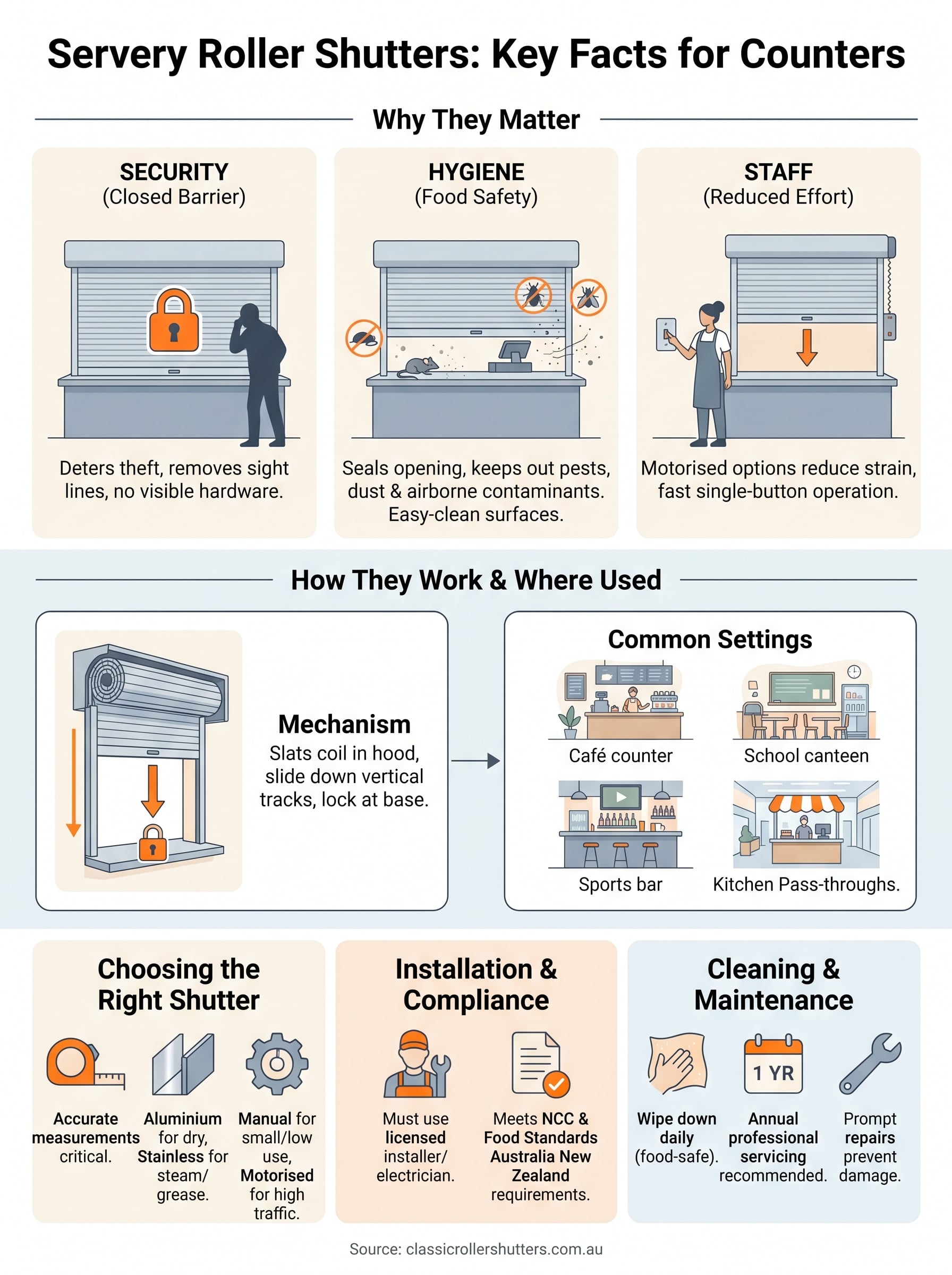
A service counter is more than a place where transactions happen. It connects your kitchen or storage area directly to the public, and that creates a real vulnerability every time you close for the day. Servery roller shutters address that vulnerability directly by forming a solid, lockable barrier across the opening, separating your commercial space from foot traffic, pests, and potential theft.
Security when your counter is closed
When your café, canteen, or kiosk shuts at the end of a shift, the counter opening becomes a weak point. A roller shutter fitted to your servery window gives you a hard barrier that replaces a locked door, and it does it in a fraction of the footprint. Most servery shutters run on a vertical track system, so they slide straight down into position without swinging outward or inward, which matters when your space is tight.
A well-fitted servery shutter can deter opportunistic theft as effectively as a solid wall, because it removes any clear sight line into your stock and equipment.
Built-in locking mechanisms sit inside the curtain itself, so there is no padlock to lose and no visible hardware for someone to tamper with. For businesses that handle cash or expensive catering equipment, that level of integrated security is worth the investment.
Hygiene and food safety compliance
Food businesses in Australia operate under strict hygiene requirements guided by Food Standards Australia New Zealand. Keeping pests, dust, and airborne contaminants away from food preparation and service areas is a legal obligation, not a preference. A closed shutter creates a physical seal across your counter window, which limits exposure when the service area is not in active use.
Stainless steel and powder-coated aluminium are the two most common materials used in commercial servery shutters, and both wipe down easily with standard food-safe cleaning products. Unlike fabric or timber alternatives, these materials do not absorb moisture or harbour bacteria, which means they hold up in kitchens where steam and grease are a daily reality.
Reducing operational disruption
Your staff need to open and close the counter quickly and reliably, especially during busy service periods. Motorised servery roller shutters let your team raise or lower the shutter with a single button press, removing the need to manually lift a heavy curtain dozens of times a day. That saves time on every shift and reduces physical strain on your staff.
Manual spring-assisted options are also available for smaller openings where power access is limited, and they still offer smooth, consistent operation without the electrical complexity of a motorised system. Choosing the right drive type from the start means fewer maintenance calls down the track.
Where you see them and how they work
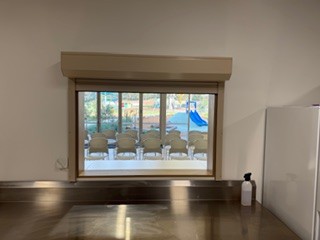
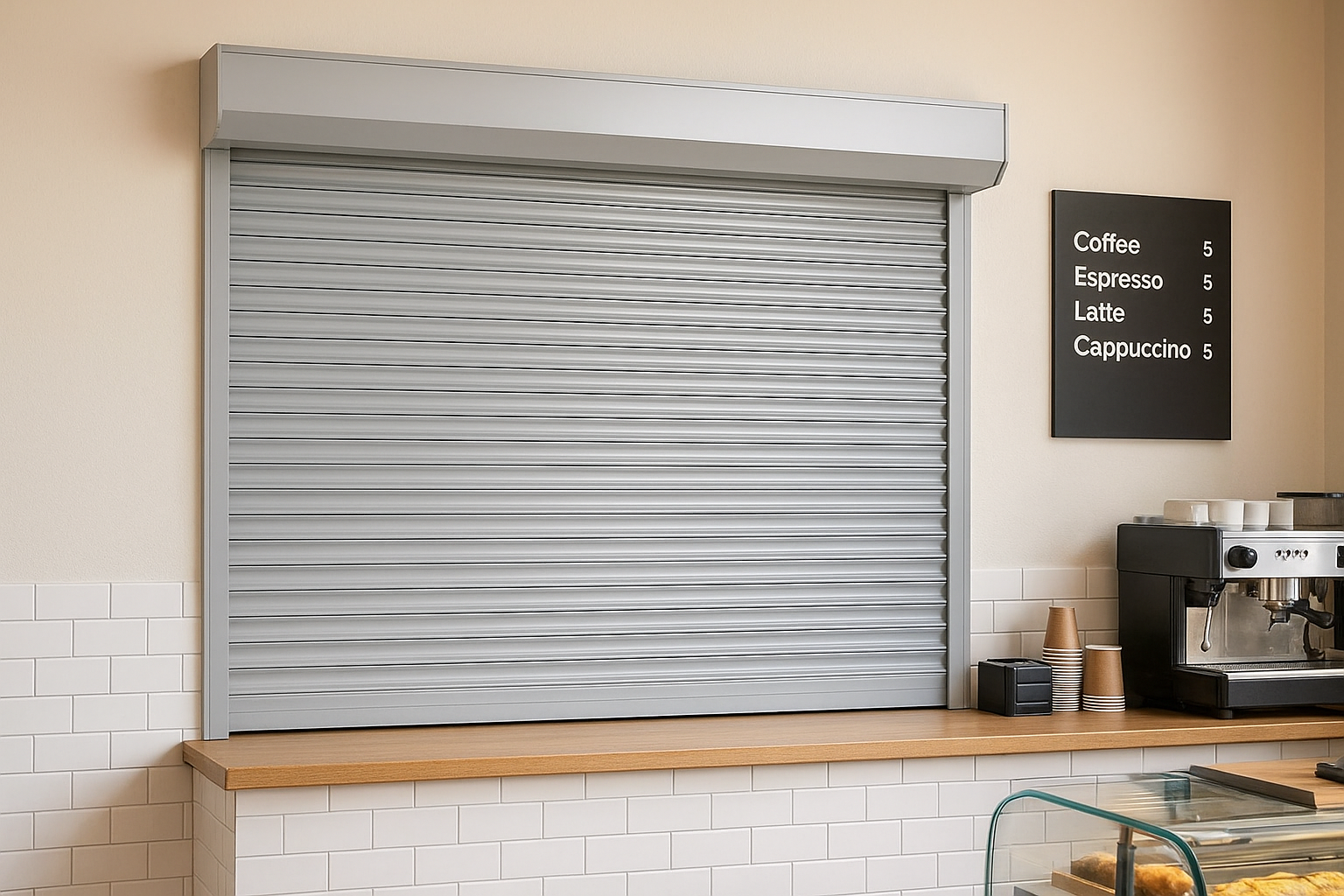
Servery roller shutters appear across a wide range of food and retail settings, from small kiosks in shopping centres to large hospital canteens. If you have ever waited at a counter and watched staff roll down a slatted curtain at closing time, you have already seen one in action. The shutter sits coiled inside a compact hood mounted above the opening, and the curtain drops vertically into tracks fixed on either side of the frame.
Where businesses use them
You will find servery roller shutters fitted in cafés, school canteens, sports club bars, hospital food courts, aged care facilities, and outdoor market stalls. Any business that serves food or goods through a defined opening and needs to secure that opening outside of trading hours is a strong candidate for a servery shutter.
Common settings include:
- Cafés and coffee shops
- Canteen windows in schools, hospitals, and aged care facilities
- Club bars and sports pavilions
- Kiosks in shopping centres, stadiums, and transport hubs
- Commercial kitchen pass-through windows
Each of these settings shares one characteristic: the counter window is open during service and requires a reliable barrier when service ends.
The more public-facing your counter is, the more a physical shutter reduces your exposure to theft, contamination, and liability.
How the mechanism works
The curtain consists of interlocking horizontal slats that feed into vertical guide tracks on each side of the opening. When you raise the shutter, the slats stack neatly inside the hood above; when you lower it, they unroll back into position and lock securely at the base. Manual spring-assisted systems use a coiled tension spring to balance the curtain weight, while motorised systems replace that spring with a tubular motor you operate via a wall switch or remote control.
How to choose the right shutter for your opening
Getting the selection right before you order saves you time and money. Three factors drive almost every purchasing decision: your opening size, the material that suits your environment, and the drive type that matches how your staff use the counter each day.
Measure the opening accurately
Start with a precise measurement of the clear opening width and height before you contact any installer. A servery roller shutter needs to fit snugly within the side tracks, and even a few millimetres of error can prevent the curtain from sealing properly at the base. Measure at least twice and note whether any existing architrave or cladding will reduce the usable space.
Key measurements to record:
- Clear width between finished surfaces
- Clear height from the counter top to the soffit or hood mounting point
- Depth available above the opening for the coil hood
Choose a material that suits your environment
Aluminium powder-coated slats work well for most indoor servery applications because they are lightweight, easy to clean, and available in a wide range of colours to match your fit-out. If your counter produces significant steam or grease daily, stainless steel slats offer better corrosion resistance and handle heavier cleaning regimes without deteriorating over time.
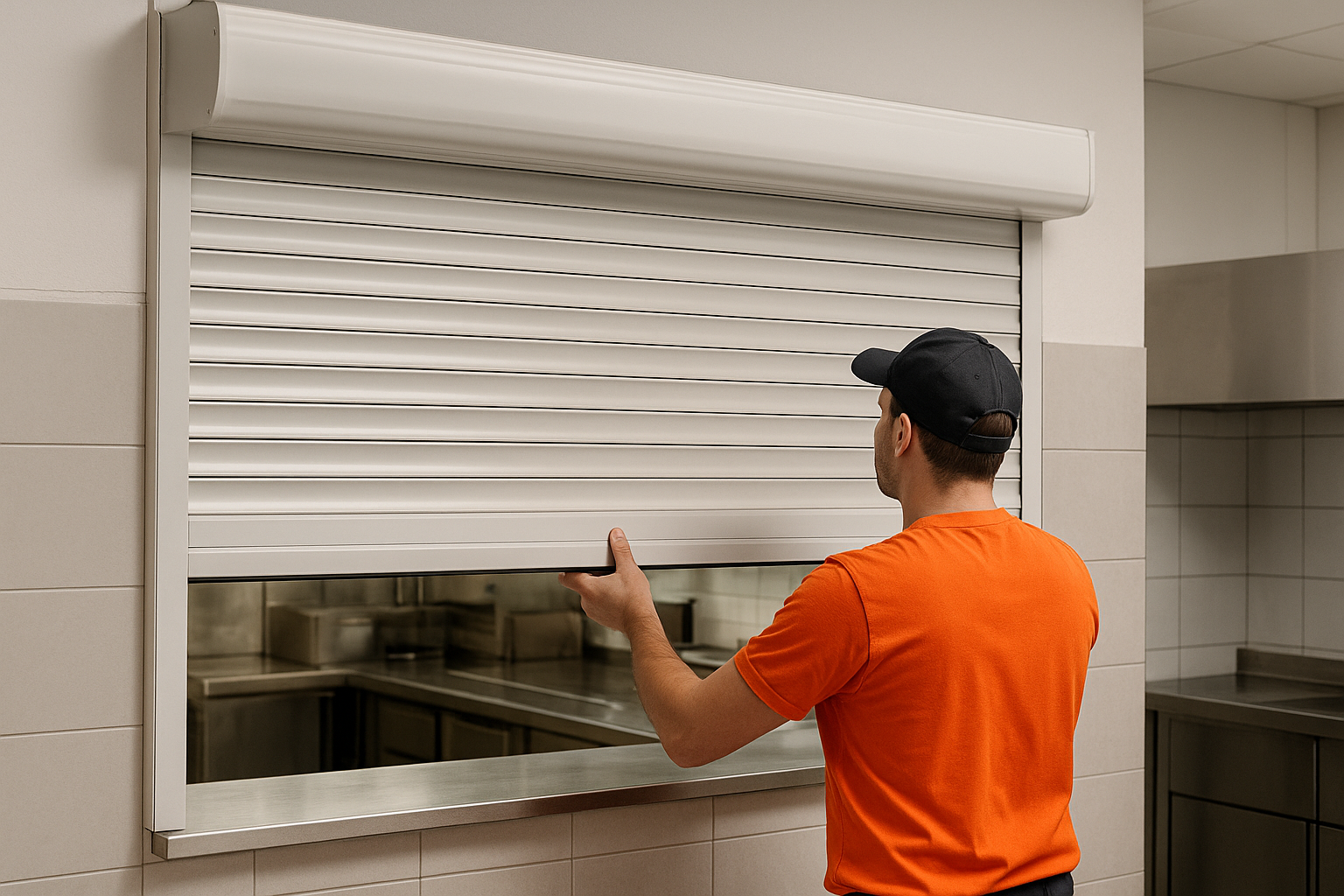
Choosing the wrong material for a high-moisture environment often leads to premature corrosion and a costly early replacement.
A quick comparison of the two main options:
| Material | Best suited for | Key advantage |
|---|---|---|
| Powder-coated aluminium | Dry or low-moisture indoor counters | Lightweight, wide colour range |
| Stainless steel | Commercial kitchens, high-steam areas | High corrosion and chemical resistance |
Manual or motorised drive
Motorised servery roller shutters suit high-traffic settings where staff raise and lower the shutter many times each day, because a single button press takes under ten seconds and removes repetitive manual effort. Smaller openings under around 1.5 metres wide can work well with a spring-assisted manual system, which is simpler to install and carries no electrical components.
For larger or heavier curtains, a motorised tubular drive also protects the slats and tracks from the uneven strain that builds up with manual lifting across hundreds of cycles each week.
Installation and compliance in Australia
Getting your servery roller shutters installed correctly from the start protects both your investment and your compliance standing. Poor installation can compromise the seal, allow pest ingress, or create mechanical faults that develop slowly over months of regular use. In Australia, commercial roller shutter installation involves both building code considerations and food safety obligations, so engaging an experienced local installer who understands both sides of that equation matters.
Who should handle installation
Roller shutter installation in a commercial setting is not a task to hand off to a general handyperson. A licensed installer will assess your wall substrate, confirm the correct fixing method for your opening, and ensure the tracks sit plumb so the curtain travels smoothly on every cycle without binding. In South Australia, any electrical work associated with a motorised drive system must be carried out by a licensed electrician, which is a requirement under state electrical safety legislation.
Attempting to self-install a motorised shutter without licensed electrical work puts you at risk of non-compliance and voids most product warranties.
Beyond the electrical requirement, a commercial installer will also check that the hood, tracks, and base seal align correctly so there are no gaps that undermine hygiene or security once the shutter is in the closed position.
Building codes and food safety obligations
Your local council or certifier may require documentation confirming your commercial fit-out meets the National Construction Code (NCC) provisions relevant to your building class. For food premises, the Food Standards Australia New Zealand standards specify that surfaces and fittings must not harbour pests or bacteria, which directly affects the materials and finish you select for your shutter.
Before installation begins, confirm with your installer that the shutter material, finish, and sealing method meet the obligations your food business operates under. Keeping a record of the installation date, product specifications, and any compliance documentation makes future inspections straightforward and protects you if questions arise during a council visit.
Cleaning, servicing and repairs
Your servery roller shutters will perform reliably for years if you build basic maintenance into your regular schedule. Neglecting cleaning and servicing allows grease and grime to accumulate in the tracks and on the slats, which accelerates wear and leads to binding or motor strain.
A five-minute clean at the end of each shift takes far less time than organising an emergency repair during a busy trading period.
Routine cleaning
Wipe down the aluminium or stainless steel slats with a damp cloth and a food-safe cleaning solution after each service period, or at minimum at the end of each trading day. Pay close attention to the guide tracks on either side of the opening, where debris collects and prevents the curtain from travelling smoothly.
Avoid abrasive pads or harsh solvents on powder-coated surfaces, as these strip the protective finish and leave the aluminium exposed to moisture. A soft cloth and a mild detergent handle the job without causing any damage to the finish.
Scheduled servicing
Beyond daily cleaning, arrange a professional service at least once a year to inspect the drive mechanism, lubricate the moving parts, and confirm the tracks and base seal remain correctly aligned. For high-use counters that open and close multiple times each day, twice-yearly servicing extends the life of the motor and slats considerably.
A qualified technician will also check the tension on spring-assisted systems and confirm that any motorised drive is operating within the correct load range for the curtain weight.
Repairs
When a slat bends, a track warps, or a motor starts to hesitate, address the fault promptly rather than continuing to operate the shutter under strain. Forcing a damaged shutter through repeated cycles worsens the original fault and often turns a minor repair into a full component replacement.
At Classic Roller Shutters Adelaide, our dedicated repair division services all brands of roller shutters, so you do not need to replace the entire unit simply because one component has failed.
Next steps
Servery roller shutters give your counter real protection against theft, pests, and hygiene risks, and they do it without adding bulk or complicating your daily workflow. The right shutter for your opening depends on your material choice, drive type, and the compliance requirements that apply to your food premises in South Australia. Getting those decisions right from the start saves you from costly corrections down the track.
At Classic Roller Shutters Adelaide, we manufacture and install commercial roller shutters locally, and our repair division covers all brands when something goes wrong. Whether you are fitting out a new canteen, upgrading an existing counter, or simply need a quote to take to your builder, we can help you work through the options. Our team offers free in-home consultations, so you are not guessing at measurements or materials on your own.
Get in touch with Classic Roller Shutters Adelaide to book your free quote today.