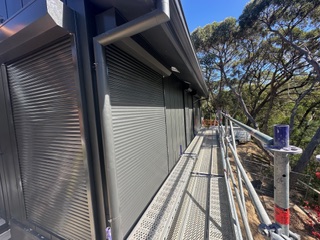
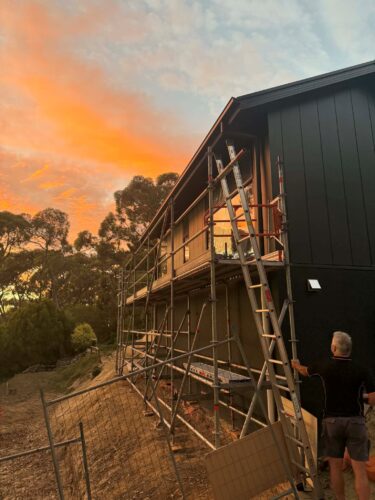
If you’re building or renovating in a bushfire-prone area of South Australia, one of the first questions you’ll face is how much do bushfire shutters cost. It’s a fair question, and not a simple one. Prices vary significantly depending on your property’s BAL (Bushfire Attack Level) rating, the size of your windows, the material spec required, and whether you’re retrofitting or installing as part of a new build. do you need scaffold and are we travelling.
At Classic Roller Shutters Adelaide, we manufacture and install roller shutters locally, including bushfire-rated systems designed to meet Australian Standards. Over our 40+ years in the industry, we’ve helped hundreds of Adelaide homeowners navigate the requirements, and the costs, of protecting their homes in designated bushfire zones.
This guide breaks down what you can realistically expect to pay for bushfire shutters in 2026, what drives the price up or down, and where you can make informed decisions to stay within budget without compromising on safety. We’ll cover BAL ratings, material and size variables, installation factors, and how to compare quotes with confidence.
Why bushfire shutter pricing varies so much
When people ask how much do bushfire shutters cost, they’re often surprised to find there’s no single number. The price you’ll pay depends on a combination of factors that interact with each other, and getting one of them wrong can mean your shutters fail to meet the required standard. Understanding what drives the cost is the first step to budgeting accurately and avoiding expensive surprises down the track.
Your BAL rating sets the minimum specification
Your property’s BAL (Bushfire Attack Level) rating is the single biggest factor in determining what type of shutter you need and how much you’ll spend. The rating is assessed by a qualified consultant and determines how much radiant heat, ember attack, and direct flame your home could realistically face during a bushfire. Higher BAL ratings require heavier-gauge steel, tighter construction tolerances, and tested sealing systems to comply with AS 3959, Australia’s construction standard for bushfire-prone areas. A great Sout Australian company to assess your needs is Expert Bushfire Risk Management in South Australia.
A shutter that meets BAL-12.5 requirements will not comply at BAL-29 or BAL-40, so matching the product specification to your exact rating is non-negotiable.
BAL ratings run from BAL-LOW through to BAL-FZ (Flame Zone), with each step up significantly increasing both the specification and the price. A system suitable for a BAL-12.5 property can cost considerably less than one built to BAL-40 or BAL-FZ requirements, where the construction must withstand direct flame contact for a sustained period.
Window size and aperture count
Larger windows cost more to shutter, which is straightforward enough. However, the relationship between size and price is not always linear. Wide or tall openings may require custom-fabricated curtain boxes, heavier curtain profiles, and structural fixing points that standard installations don’t need. If your home has multiple large openings, such as sliding door stacks or bifold door systems, each one adds substantially to the total job cost.
Your total aperture count also affects motor and control system costs. Each motorised shutter requires its own drive mechanism, and when you’re automating several shutters across a property, the wiring, switchgear, and programming time all feed into the final price. Retrofitting motorisation to an existing manual shutter adds further cost compared to specifying it from the start.
Material specification and profile weight
Aluminium extrusion profiles used in bushfire shutters vary in wall thickness and slat design depending on the BAL rating they need to meet. At higher ratings, the curtain profiles are heavier, the guides are reinforced, and the bottom rail sealing must be far tighter. These material upgrades carry a real cost at the manufacturing stage, which is why two shutters covering identical window sizes can differ significantly in price when they’re built to different BAL specifications. Classic will help you with all your needs.
Local manufacturing also plays a role in pricing. Products fabricated in Adelaide to a verified standard carry predictable quality, whereas imported shutters can vary in actual profile weight and construction tolerance, sometimes requiring rectification work after installation that adds unexpected cost to your project.
Typical bushfire shutter prices in Australia in 2026
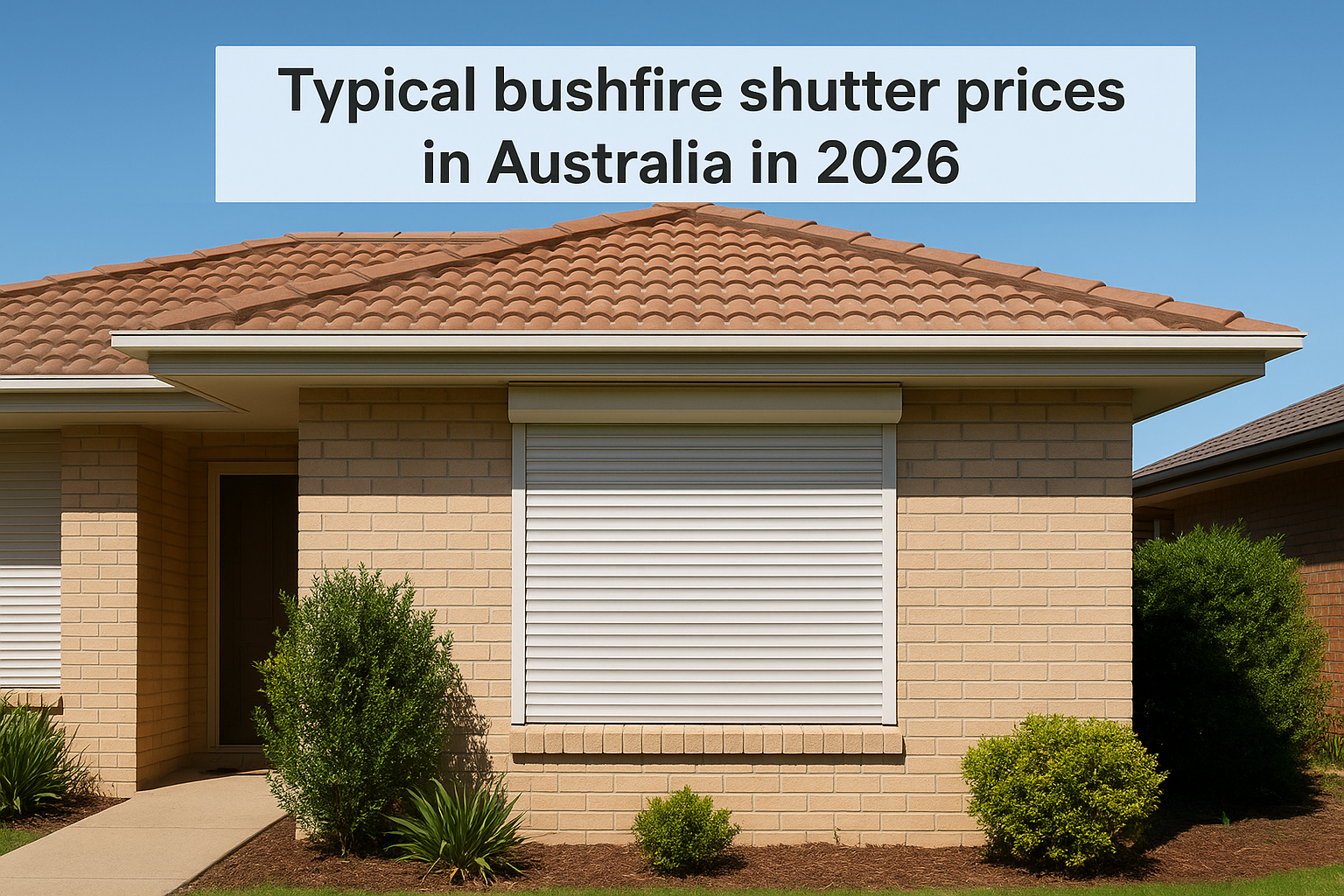
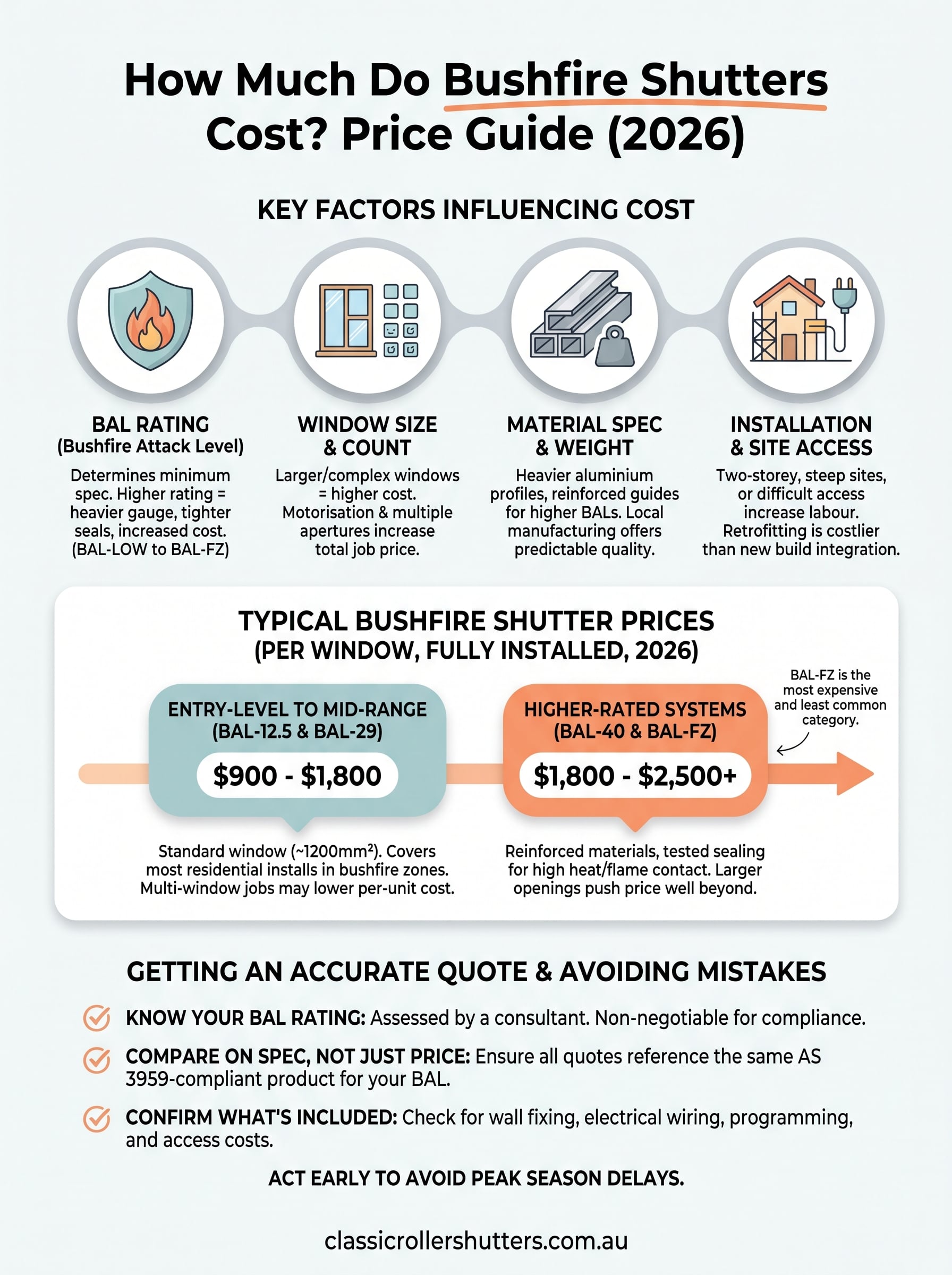
When people research how much do bushfire shutters cost, they’re usually looking for a ballpark number to start planning. Prices in Australia in 2026 typically range from around $1500 to $5,500 per window for supply and installation, but that range spans a wide variety of specifications, sizes, and BAL ratings. The figures below reflect standard residential windows and doors; larger or more complex openings will sit above these estimates. its very hard to give a window of pricing as with bushfire shutters there are so many site variables to consider. call us on 83692266 and talk through your needs today.
Entry-level to mid-range: BAL-12.5 and BAL-29
For properties rated at BAL-12.5 or BAL-29, you’re generally looking at the lower end of the price range. A standard-sized window (roughly 1200mm x 1200mm) with a motorised, compliant shutter at BAL-12.5 typically costs $1500 to $2,400 fully installed. BAL-29 systems, which require heavier profiles and tighter sealing, generally come in between $1,700 and $2,800 per opening for similar dimensions.
Most Adelaide homes in designated bushfire zones sit at BAL-12.5 or BAL-29, which means this price bracket covers the majority of residential installs.
Multi-window projects reduce the per-unit cost slightly due to shared wiring, programming, and site time, so getting all openings quoted together usually gives you a better overall rate than adding shutters one at a time.
Higher-rated systems: BAL-40 and BAL-FZ
BAL-40 and Flame Zone (BAL-FZ) shutters carry significantly higher costs because of the reinforced materials, tested sealing systems, and construction tolerances required to comply with AS 3959. At BAL-40, expect to pay $2,800 to $4,500 per opening for a standard window, with larger apertures like sliding doors or bifold stacks pushing well beyond that. BAL-FZ systems, which must withstand direct flame contact, are the most expensive and least common category, and pricing should always be confirmed against a certified product specification for your exact opening dimensions.
How BAL ratings change the price and requirements
Your BAL rating is a legal determination, not a choice. A qualified bushfire consultant or certifier assesses your site and assigns a rating based on vegetation type, slope, and proximity to bushland. Once that rating is confirmed, every product you install must meet or exceed that specification to satisfy your building permit and insurance requirements. Understanding where your property sits on the BAL scale gives you a much clearer picture of what you’ll spend when working out how much do bushfire shutters cost.
BAL-LOW and BAL-12.5: the baseline tier
At BAL-LOW, there are no mandatory construction requirements for shutters, so most homeowners at this rating install standard roller shutters for general protection and peace of mind rather than compliance. At BAL-12.5, the requirements begin. Shutters must resist ember attack and some radiant heat, which means verified profiles and sealing, but the material specification is still relatively accessible compared to higher ratings.
Moving from BAL-12.5 to BAL-29 typically adds 20 to 35 per cent to your per-window cost due to heavier profile requirements and tighter construction tolerances.
BAL-29 and BAL-40: where requirements tighten significantly
BAL-29 systems require heavier aluminium profiles, reinforced guide channels, and sealing systems that prevent ember entry under sustained conditions. At BAL-40, the benchmark shifts again. Products must withstand higher levels of radiant heat and ember attack for longer periods, which means thicker curtain slats, more robust bottom rail seals, and fixing methods that maintain integrity under significant thermal stress.
BAL-FZ: the most demanding specification
Flame Zone (BAL-FZ) is the highest classification and applies to properties that could face direct flame contact during a fire event. Shutters at this level must be tested to specific Australian Standards and certified accordingly. Product selection at BAL-FZ is narrower, lead times can be longer, and pricing reflects the engineering required to meet the standard.
Installation costs, access issues, and ongoing costs
Installation makes up a significant component of how much do bushfire shutters cost, and it varies considerably from property to property. A standard single-storey installation on level ground with straightforward wall access carries the lowest labour costs. Once you introduce two-storey buildings, steep blocks, or tight roof spaces where the curtain box needs to be recessed into the structure, the complexity increases and the labour cost follows.
Site access and height requirements
Scaffolding or elevated work platforms add real cost to any installation where shutters need to be fitted above single-storey height. If your home sits on a sloped block or has external cladding that complicates the fixing process, your installer will factor that into the labour component of your quote. Recessed curtain boxes fitted into the eave or fascia line during construction are far more cost-effective than retrofitting them later, which is why including shutters in your new build plans from the start almost always saves money overall. Always consider, maintence down the track. These are the answers the team at Classic Roller Shutters can help you with – 83692266.
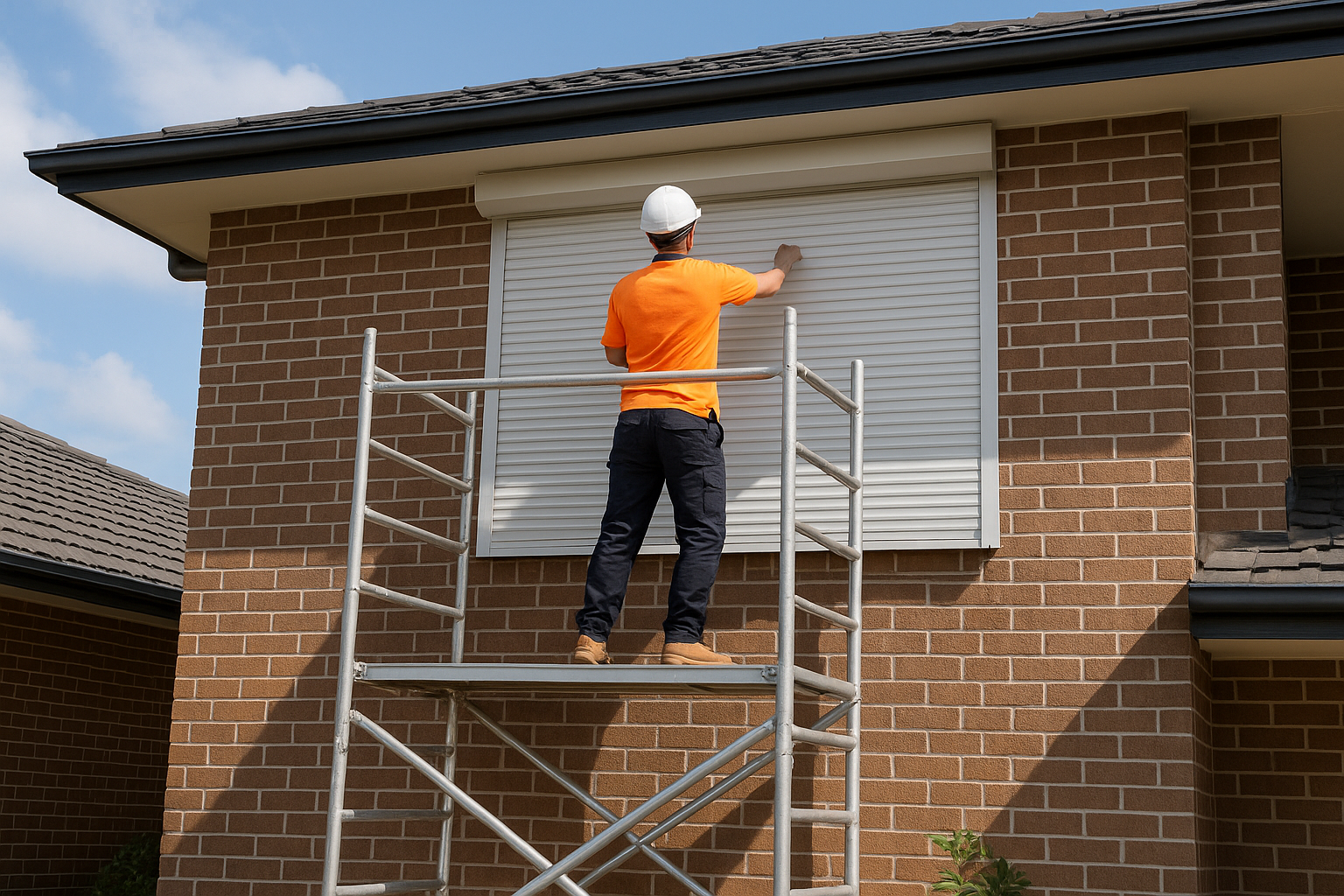
Retrofitting bushfire shutters to an existing home typically costs 25 to 35 per cent more than specifying them during the original build, due to the additional structural and electrical work involved.
Motorisation and ongoing maintenance
Electric motorisation is standard on most bushfire shutter installations because manual operation during an emergency is impractical. Each motor adds to your upfront cost, but ongoing electrical running costs are minimal since motors only draw power when the shutter moves. Your wiring layout and the number of control points also affect the installation price, particularly on larger homes with multiple openings.
Annual servicing is worth budgeting for, particularly in dusty or coastal environments where guide channels accumulate debris and seals degrade faster. A professional service check keeps your shutters operating correctly and confirms the sealing integrity that your BAL rating compliance depends on.
How to get an accurate quote and avoid costly mistakes
Getting a reliable quote starts with having the right information ready before you contact us. The most common reason quotes vary wildly is that customers compare systems built to different specifications without realizing it. If you want a genuine comparison of how much do bushfire shutters cost for your property, every quote you receive needs to reference the same BAL rating, the same window dimensions, and the same motor and control setup. Classic offers the full suite of Bal rated shutters and can help with all your needs. We use our own trusted team of installers and electricians and scaffolders.
Know your BAL rating before you call anyone
Your BAL certificate is the starting point for any quote conversation. If you don’t have it yet, a certified bushfire consultant can assess your site and provide the documentation your installer needs to specify the correct product. Attempting to quote without a confirmed rating means your supplier is guessing, and the price they give you may bear no relation to what compliant installation actually requires at your property. Call us once you know.
Bring your site plan, BAL certificate, and window measurements to any quote consultation so your supplier can give you a firm price, not an estimate built on assumptions.
Compare quotes on specification, not just price
When you receive multiple quotes, check that each one references the same AS 3959-compliant product for your specific BAL rating. A lower quote that uses a lighter-grade profile or omits proper sealing is not a saving; it is a compliance risk that could affect your building approval and insurance cover. Ask each supplier to confirm the profile weight, the sealing system included, and whether the product has been tested to the relevant standard.
You should also confirm what the installation price covers: wall fixing method, electrical wiring, programming of control points, and any access requirements specific to your site. A quote that omits these items will look cheaper on paper but cost more once the job is complete.
What to do next – call classic 83692266 the bal shutter experts
You now have a clear picture of how much do bushfire shutters cost across different BAL ratings, window sizes, and installation scenarios. The main takeaway is that your BAL certificate drives every other decision, so if you haven’t had your site assessed yet, that’s the first step. Once you have your rating confirmed, you can approach suppliers with the right information and compare quotes on a like-for-like basis rather than guessing at specifications.
If your property is in a bushfire-prone area of South Australia, acting early gives you more time to select the right product, schedule installation, and avoid the delays that come with peak demand periods before summer. Getting multiple quotes from suppliers who manufacture locally also means you can verify the product specification rather than relying on imported systems that may not meet your exact compliance requirements.
Get a free quote from Classic Roller Shutters Adelaide and speak directly with an informed team that manufactures and installs locally across Adelaide, your bushfire experts.