Outdoor blinds cop a beating from Adelaide’s sun, dust, rain, and everything in between. Over time, that buildup of grime and mould doesn’t just look bad, it actually breaks down the material and shortens the lifespan of your blinds. Knowing how to clean outdoor blinds properly makes a real difference, whether you’re dealing with PVC, mesh, or canvas.
At Classic Roller Shutters, we’ve been manufacturing, installing, and repairing outdoor blinds across Adelaide for over 40 years. We’ve seen firsthand what neglect does to blinds, and what a bit of regular maintenance can prevent. The good news is that cleaning them yourself isn’t complicated, as long as you use the right method for the right material.
This guide walks you through safe, practical cleaning steps for each type of outdoor blind. You’ll learn which cleaning solutions actually work without causing damage, how to tackle mould and stubborn stains, and how to keep your blinds in top shape between professional services. Let’s get into it. Or call 83692266 and book a tech to clean them for you.
Before you start: materials, safety, quick checks
Jumping straight into scrubbing is a reliable way to damage your blinds. Before you start learning how to clean outdoor blinds properly, take a few minutes to gather the right supplies and do a quick inspection. Using the wrong product, especially anything solvent-based or abrasive, can permanently cloud PVC, weaken canvas fibres, or cause mesh to fray at the edges.
What you’ll need
Having everything ready before you begin makes the job faster and reduces the risk of reaching for the wrong product mid-clean. You don’t need specialised equipment, just a few basic items you likely already have at home.
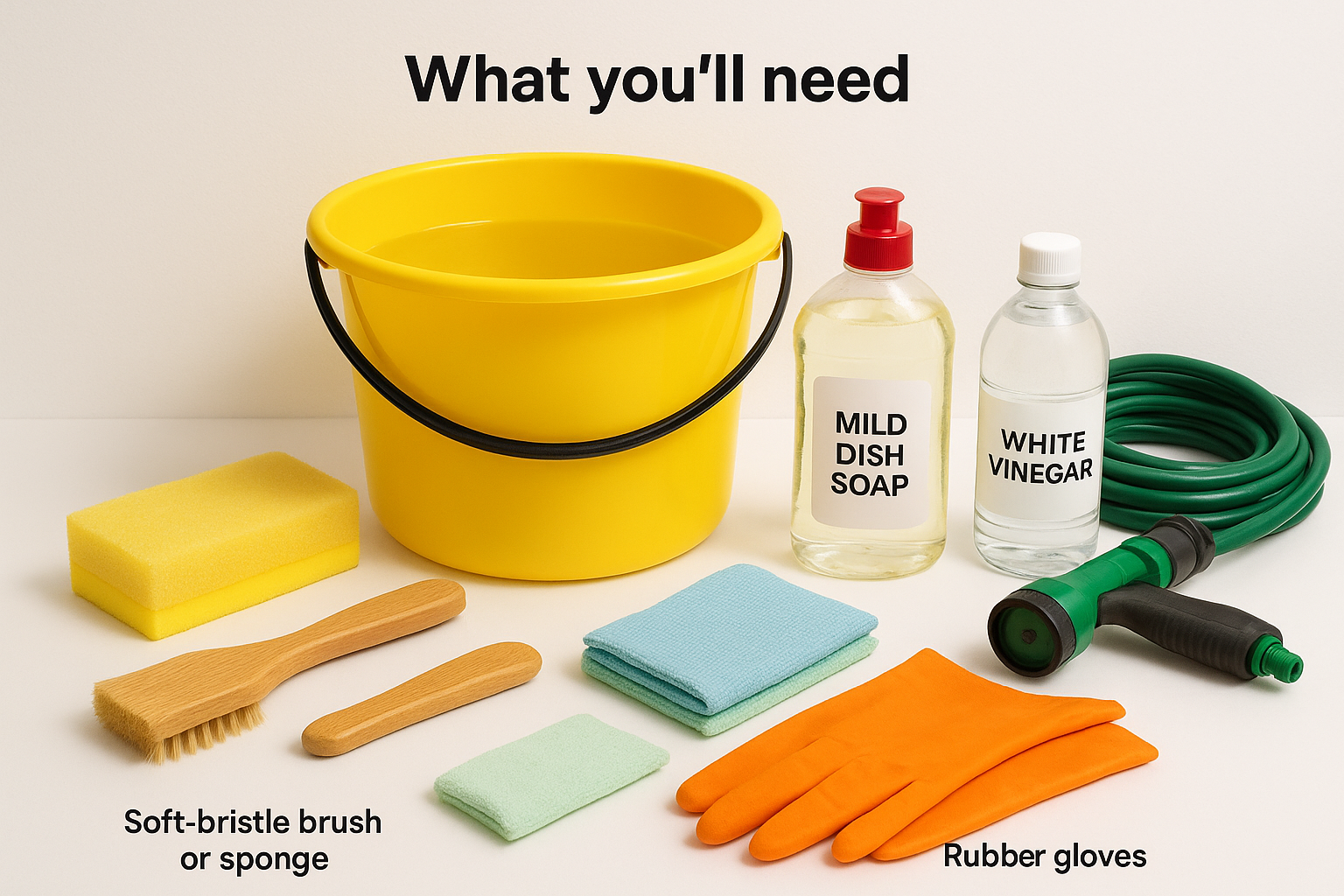
Recommended supplies:
| Item | Purpose |
|---|---|
| Soft-bristle brush or sponge | Scrubbing without scratching |
| Bucket of warm water | General cleaning solution base |
| Mild dish soap or outdoor fabric cleaner | Safe dirt removal |
| White vinegar (diluted) | Mould and mildew treatment |
| Microfibre cloths or old towels | Drying and gentle wiping |
| Garden hose with gentle spray setting | Rinsing |
| Rubber gloves | Hand protection |
Never use undiluted bleach on coloured canvas or mesh blinds, as it strips colour and weakens fibres over repeated use.
Quick checks before you begin
Before you apply any water or cleaning solution, inspect your blinds thoroughly. Look for tears, loose stitching, cracked PVC panels, or damaged tracking. Cleaning a blind that’s already compromised can make minor damage significantly worse, particularly if you’re applying water pressure near a weakened seam or edge.
Also check the blind’s operating mechanism, whether it’s manual, zip track, or motorised. If anything feels stiff or isn’t retracting smoothly, note it before you start. Water can work its way into mechanical components if seals are already worn, so it’s better to address those issues separately rather than cleaning straight over them.
Step 1. Wash mesh and canvas blinds
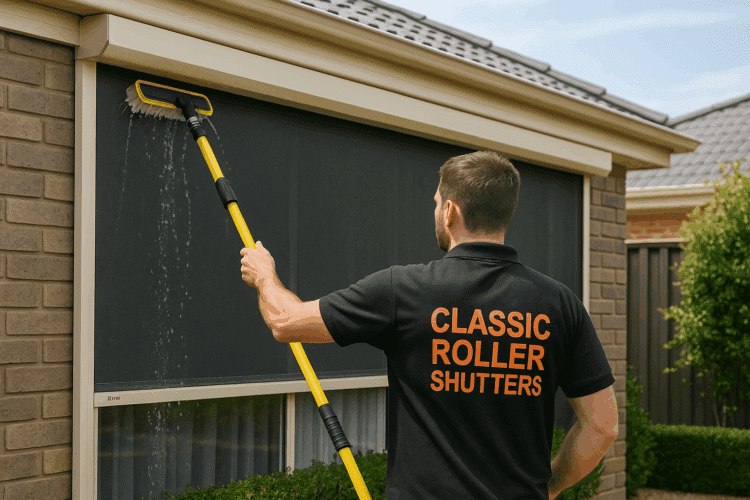
Mesh and canvas blinds are durable but porous, which means they hold onto dust, pollen, and salt residue more than other materials. The good news is that mild soap and warm water handle most of the buildup without any risk to the fabric, provided you avoid high-pressure washing and abrasive scrubbing tools.
How to clean the fabric
Start by brushing off any loose debris with a dry soft-bristle brush before applying water. This prevents dirt from grinding into the fibres when you start scrubbing. Once the surface is clear, work through these steps in order:
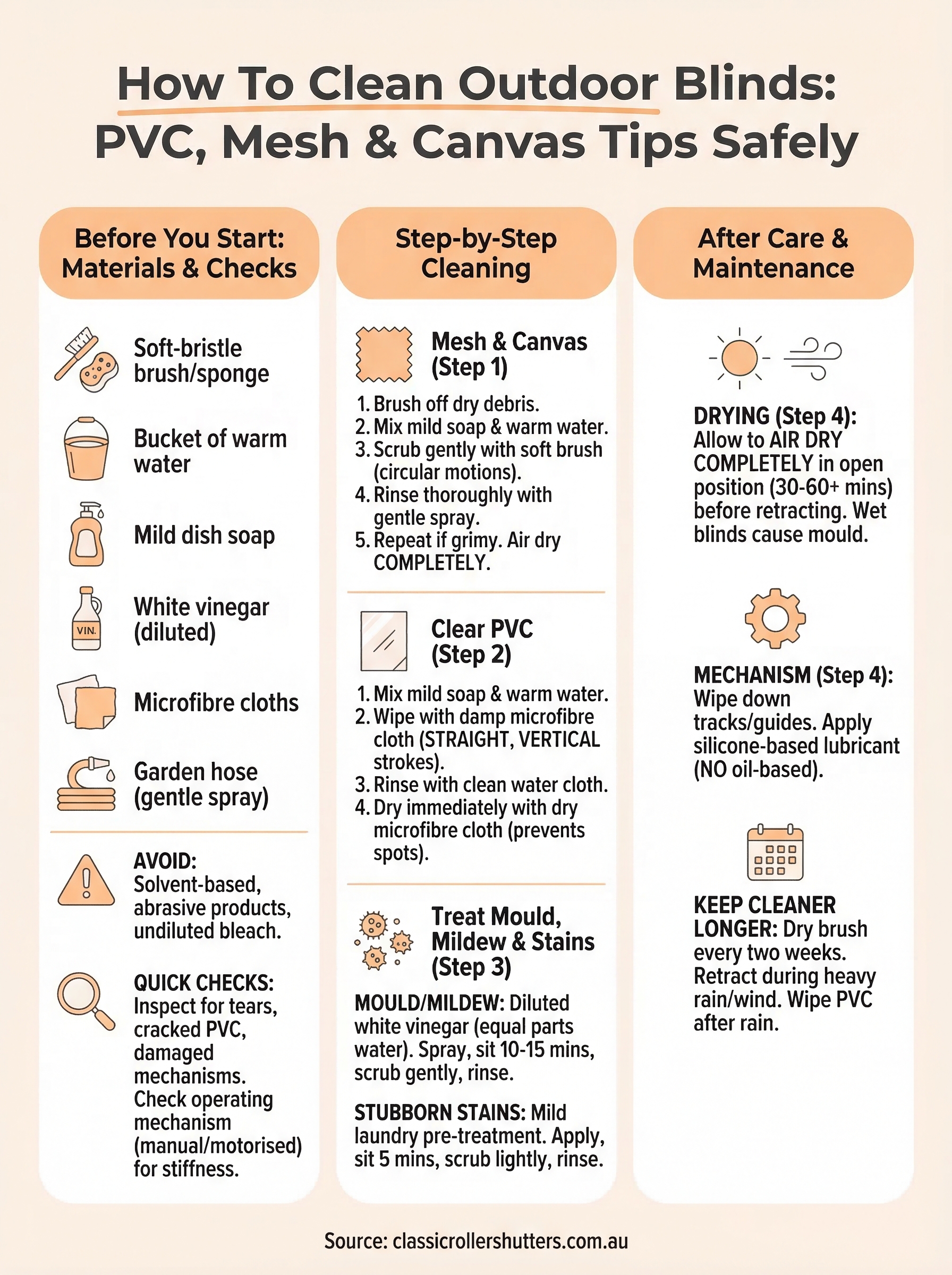
- Mix one teaspoon of mild dish soap into a bucket of warm water.
- Dip your soft-bristle brush or sponge into the solution and scrub the blind in circular motions, starting from the top.
- Rinse thoroughly with a garden hose on a gentle spray setting.
- Repeat on any areas that still look grimy or discoloured.
Avoid machine washing canvas blinds. The agitation cycle can warp the hemming and cause irreversible shrinkage along the edges.
Make sure you rinse all soap residue completely, as leftover detergent attracts new dirt faster and can leave streaky marks across both mesh and canvas surfaces.
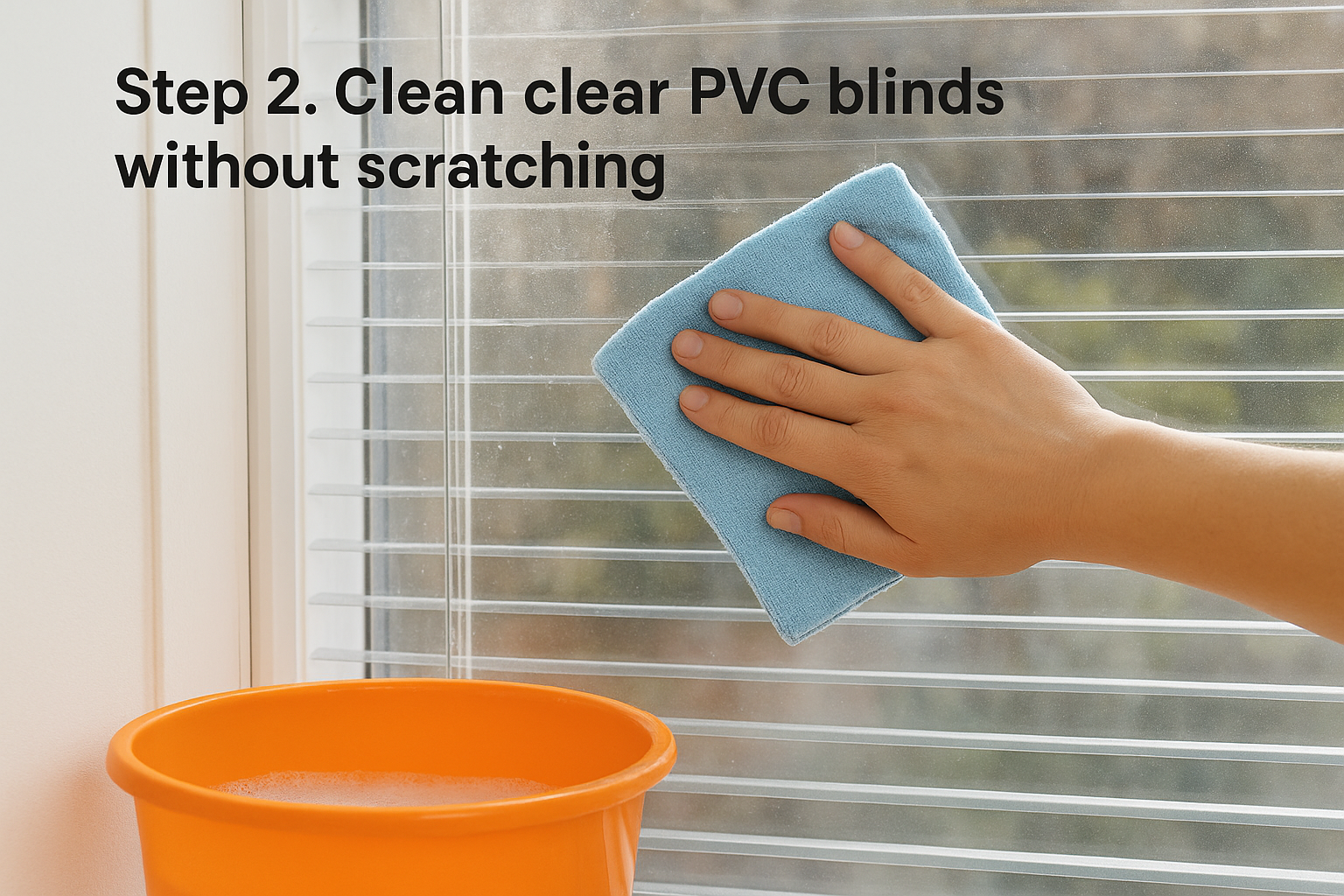
Step 2. Clean clear PVC blinds without scratching
Clear PVC blinds need a gentler approach than fabric options. The material scratches easily and can turn permanently cloudy if you use the wrong cloth or cleaning product. When thinking about how to clean outdoor blinds made from PVC, the rule is simple: soft, damp, and mild.
The right method for PVC
Never use paper towels, rough sponges, or abrasive pads on PVC. These leave fine surface scratches that catch dust and gradually turn your clear panels opaque over time. Always use a clean microfibre cloth and work in straight, vertical strokes rather than circular motions.
Avoid any cleaner containing ammonia or alcohol on PVC, as both accelerate yellowing and cause the material to crack with repeated exposure.
Follow these steps to clean PVC panels safely:
- Mix a few drops of mild dish soap into a bucket of warm water.
- Dampen a microfibre cloth in the solution and wipe from top to bottom in straight passes.
- Rinse with clean water applied via a second damp cloth.
- Dry immediately with a fresh, dry microfibre cloth to prevent water spots and streaking.
Step 3. Treat mould, mildew, algae and stains
Mould and mildew are common in Adelaide’s humid seasons, and they’re one of the main reasons people look up how to clean outdoor blinds in the first place. Left untreated, mould spores penetrate deep into fabric fibres and PVC surfaces, making them increasingly difficult to remove over time. Algae builds up similarly on surfaces that stay damp after rain.
Removing mould and mildew
For most outdoor blind materials, a diluted white vinegar solution is your safest starting point. Mix equal parts white vinegar and water in a spray bottle, apply it directly to the affected area, and let it sit for 10 to 15 minutes before scrubbing gently with a soft-bristle brush. Rinse thoroughly once done.
For persistent mould on canvas or mesh, a diluted solution of 1 part bleach to 10 parts water works well, but test it on a hidden section first to check for colour fading.
Removing stubborn stains
Stains from bird droppings, rust, or tannins need a targeted approach rather than general scrubbing. Apply a small amount of mild laundry pre-treatment directly to the stain, leave it for five minutes, then scrub lightly with a soft brush and rinse thoroughly. Avoid rubbing aggressively, as this spreads the stain further across the surface and pushes it deeper into the material.
Step 4. Dry, retract and maintain mechanisms
Drying is a step many people skip when working out how to clean outdoor blinds, but it matters just as much as the wash itself. Retracting wet blinds traps moisture inside the roll, which creates exactly the conditions mould needs to return within days of cleaning.
Dry before you retract
Allow your blinds to air dry completely in the open position before rolling them up. On a typical Adelaide day, this takes around 30 to 60 minutes depending on the material and how much direct sun the area gets. Canvas holds moisture longer than mesh or PVC, so give it extra time before retracting.
Never retract a blind that still feels damp to the touch, as moisture locked inside the roll is the leading cause of mould reappearing quickly after cleaning.
Check the mechanism while it’s accessible
Once your blinds are dry, take a moment to inspect the tracking, guides, and operating hardware for any grit or residue left behind from the clean. Wipe down the tracks with a dry cloth, and apply a small amount of silicone-based lubricant to zip track guides or roller mechanisms if they feel stiff. Avoid oil-based lubricants entirely, as they attract dust and cause stubborn buildup inside the mechanism over time.
Keep them cleaner for longer
Knowing how to clean outdoor blinds properly is only half the job. The other half is making cleaning less necessary in the first place. A quick dry brush-down every two weeks removes the dust and pollen that would otherwise bond to the surface when rain hits. The less buildup you allow to accumulate, the faster and easier each proper wash becomes.
Retracting your blinds during extended periods of heavy rain or strong winds also makes a real difference. Prolonged exposure to moisture and debris is what accelerates mould growth and stresses the mechanisms. Even simple habits like wiping down PVC panels after rain prevents the water spots and mineral deposits that build up over time.
When your blinds need professional attention, repairs, or a full replacement, the team at Classic Roller Shutters Adelaide can help. Reach out to Adelaide’s outdoor blind specialists for a free consultation or quote.