
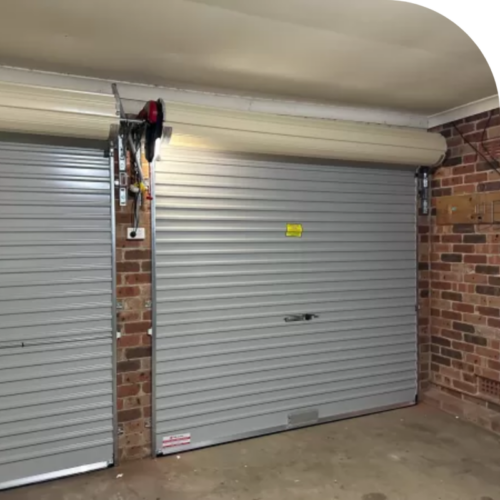
If you’ve ever looked at a garage and wondered what is a roller door, the answer is straightforward, it’s a door made from horizontal slats that coils around a drum above the opening. Simple concept, but there’s more to it than that. The mechanism, the materials, and the motor options all affect how well it performs, how long it lasts, and whether it’s the right fit for your property.
Roller doors are one of the most common garage door types across Adelaide, but they’re not the only option. Sectional doors, tilt doors, and panel lift doors each work differently and suit different spaces. Choosing between them comes down to your garage layout, your budget, and what matters most to you, whether that’s security, insulation, or saving space.
At Classic Roller Shutters Adelaide, we’ve been manufacturing, installing, and repairing roller shutters and roller doors for over 40 years. That hands-on experience gives us a solid foundation to explain exactly how roller doors work, what types are available, and where they genuinely shine, or fall short. This guide covers the full picture so you can make a confident, informed decision.
Why roller doors matter for homes and businesses
Roller doors are one of the most practical and widely used door options for garages, warehouses, and commercial properties across Australia. When you’re asking what is a roller door and whether one suits your property, it helps to understand what makes them such a common choice. They solve real problems around security, space, and daily convenience, and they do it in a compact, reliable package that works for both residential and commercial settings.
Security and weather protection
A roller door gives your garage or commercial space a solid physical barrier against break-ins and harsh weather. The interlocking slats, typically made from aluminium or steel, leave very little gap for forced entry. In Adelaide, where summer heat, UV exposure, and strong winds are part of everyday life, that weather resistance also means your car, tools, or stored stock stay better protected year-round.
Most roller doors also support integrated locking systems and motorised deadbolts, which adds another layer of protection beyond what a standard tilt or panel door can offer. For commercial properties storing equipment or inventory, that level of security matters.
Space savings and daily convenience
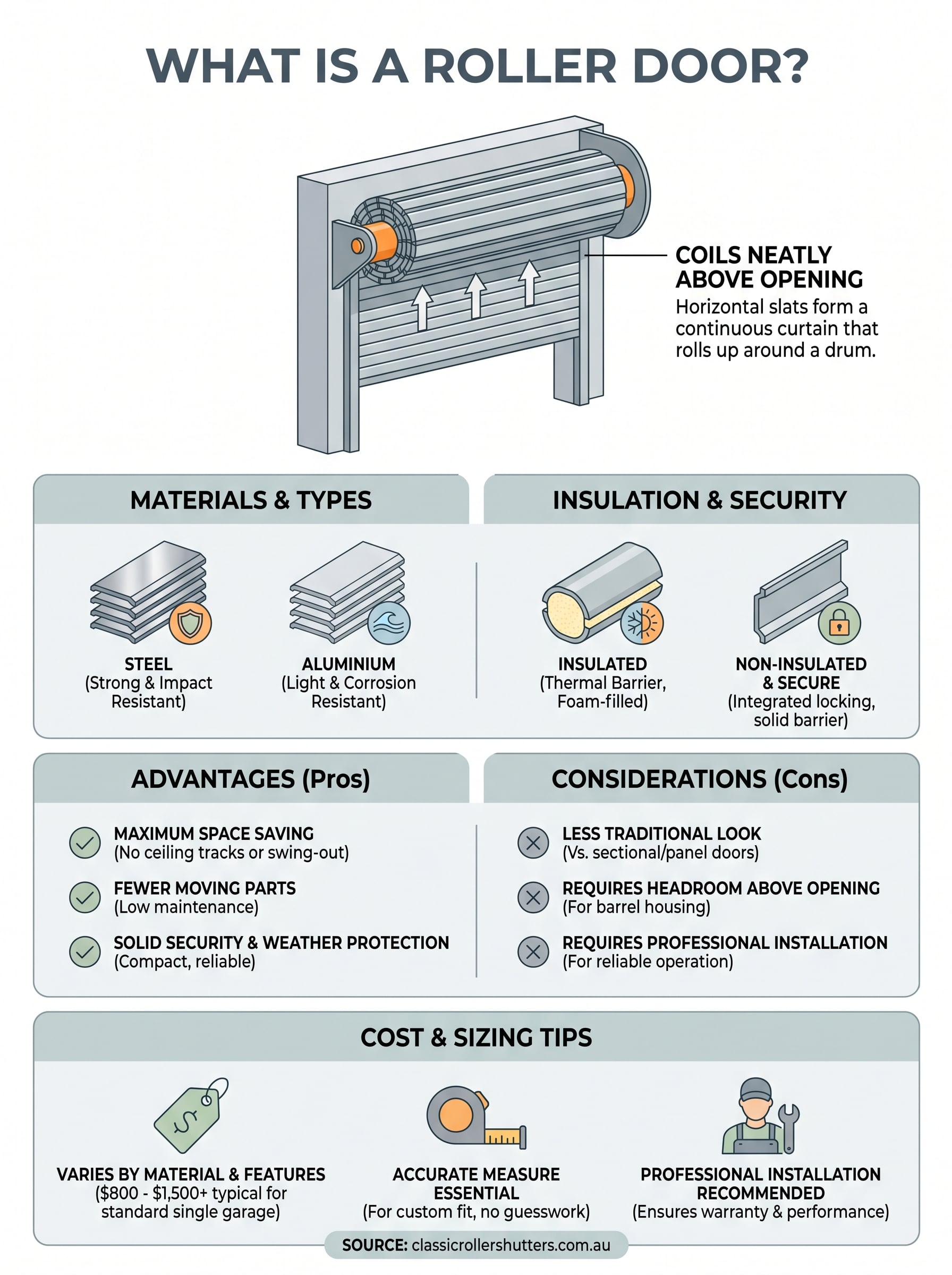
Unlike tilt doors that swing outward or sectional doors that need clearance inside the garage, a roller door coils neatly above the opening. That means you get the full depth of your garage for parking or storage, with no wasted space on either side of the door. For narrow driveways or compact blocks, that difference is significant.
For properties where every square metre counts, a roller door is often the only style that gives you full usable space without compromise.
Motorised options add another layer of convenience. You open and close the door without leaving your car, and many modern motors include remote access and obstacle detection as standard features, making daily use straightforward and safe.
How a roller door works
Understanding the mechanism helps you answer what is a roller door at a practical level, not just a visual one. The core design is simple: horizontal slats link together to form a continuous curtain, and that curtain rolls up around a drum mounted inside a barrel housing directly above the door opening.
The slats and drum mechanism
Each slat connects to the next through a curved interlocking profile. When you open the door, the slats hinge at each joint and wrap tightly around the drum in a coil. That coil sits inside the barrel, which keeps the packed door compact and out of the way. The whole assembly fits within the door frame itself, so it needs no ceiling clearance inside your garage.
This compact design is what separates a roller door from a sectional or tilt door in terms of usable space.
Manual vs motorised operation
Basic roller doors use a spring-tensioned drum to counterbalance the weight of the slats, making them light enough to lift by hand. Motorised versions replace that manual effort with an electric motor connected to the drum shaft, so the door opens and closes at the press of a button. Most motors also include safety features like auto-stop on obstruction.
Types of roller doors and key features
When thinking about what is a roller door, it’s worth knowing that not all roller doors are built the same. Material choice and insulation level significantly affect performance, longevity, and running costs, so understanding the main types helps you pick the right door from the start.
Steel and aluminium slat doors
Steel slat doors offer superior strength and impact resistance, making them the go-to choice for commercial properties, warehouses, and high-security applications. Aluminium slat doors are lighter and naturally corrosion-resistant, which suits Adelaide’s coastal and inland conditions equally well. Both materials come in a range of profiles and colours, so you’re not limited to a plain industrial look.
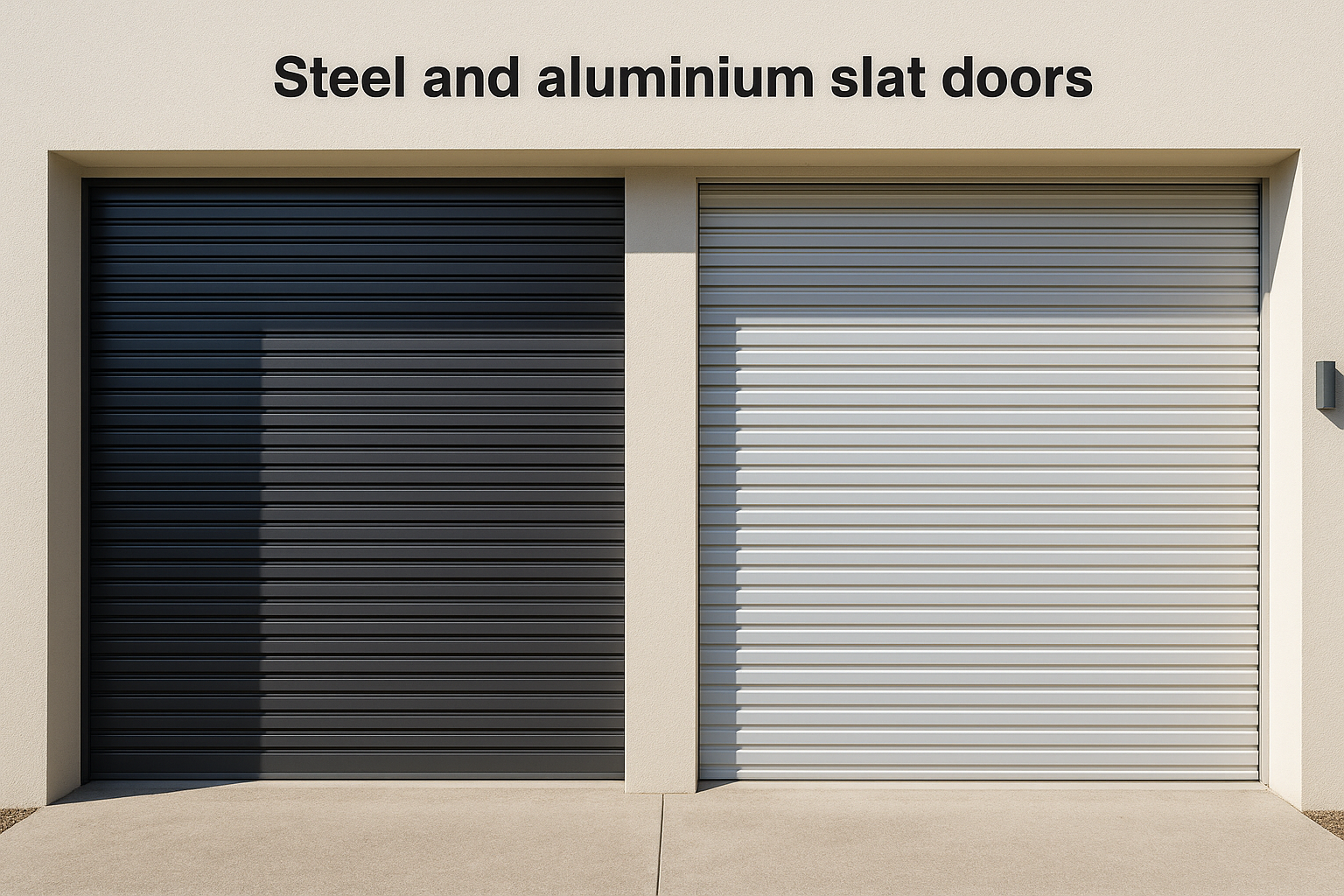
Aluminium is often the better long-term choice for residential properties near the coast, where salt air accelerates rust on uncoated steel.
Insulated vs non-insulated options
Insulated roller doors use foam-filled slats that reduce heat transfer between your garage and the outside. If you use your garage as a workshop, or if it connects directly to your home, that thermal barrier makes a genuine difference to comfort and energy costs year-round.
Non-insulated doors cost less upfront and work fine for standalone garages where temperature control is not a priority, giving you a budget-friendly entry point without sacrificing security or durability.
Pros and cons compared with other garage doors
Knowing what is a roller door is one thing, but weighing it against sectional and tilt doors helps you decide if it genuinely suits your property. Each door type has real trade-offs that affect your space, your budget, and your daily routine.
Where roller doors win
Roller doors use less space than any other garage door type, since the slats coil tightly above the opening with no ceiling swing required. They also have fewer moving parts than sectional doors, which keeps maintenance straightforward and repair costs lower over time. For properties with short driveways or tight garage layouts, that compact design is a clear advantage.
If your driveway is short or your garage ceiling is low, a roller door is almost always the better fit for your property.
Where other doors have the edge
Sectional doors offer better thermal insulation and a more traditional panelled appearance, which suits some homes aesthetically. Tilt doors are simpler in construction and often cost less upfront, though they need clear space in front of your garage to swing open, which rules them out on many modern blocks. Neither option matches a roller door for compact installation, but both can work well where space and aesthetics outweigh practicality as your main concern.
Costs, sizing and installation tips
Understanding what is a roller door in terms of cost and sizing helps you budget accurately before committing to anything. Roller door pricing in Australia varies based on material, insulation level, and motorisation, but a standard single-garage aluminium roller door typically falls between $800 and $1,500 supply and installed. Insulated steel doors or larger commercial openings can push that figure to $2,500 or beyond.
Getting the sizing right
Measuring your garage opening accurately before requesting a quote saves time and avoids expensive adjustments later. Most single garage doors sit around 2,400mm wide by 2,100mm high, but older Adelaide homes often have non-standard openings that require custom manufacturing. A professional on-site measure-and-quote visit removes the guesswork entirely.
Getting an accurate measurement before ordering ensures your door fits correctly the first time, with no rework costs.
Common measurements to confirm before your quote:
- Opening width and height at the narrowest point
- Available headroom above the opening for the barrel housing
- Side room on each guide rail
Installation considerations
Professional installation is not optional if you want the door to perform reliably long-term. The drum housing, guides, and motor all need precise alignment to operate smoothly and safely. Attempting a DIY install without the right tools risks damaging the mechanism and voiding your manufacturer warranty, which costs more to fix than the original installation.
Next steps
Now that you understand what is a roller door and how it compares to other options, the practical next move is getting a quote tailored to your specific opening, budget, and usage. Reading about costs and sizing gives you a useful starting point, but accurate pricing only comes from a proper on-site measure, where a professional can confirm headroom, side room, and any non-standard requirements your property might have.
Classic Roller Shutters Adelaide manufactures roller doors locally and has been installing and repairing them across Adelaide for over 40 years. That means no middlemen, no guesswork, and no waiting on imported stock. Whether you need a standard residential door or a larger commercial setup, the team can walk you through your options clearly and give you a fixed price before any work begins.
Book a free measure and quote with Classic Roller Shutters Adelaide and get the right door sorted without the back-and-forth.