A roller shutter jammed halfway down at 6 PM on a Friday night isn’t just inconvenient, it’s a security risk. Whether it’s a shutter that won’t close after a storm, one that’s gone off its tracks, or a motor that’s completely given up, these situations don’t wait for business hours. That’s where emergency shutter repair comes in, and knowing what it actually involves can save you time, money, and a lot of stress.
At Classic Roller Shutters Adelaide, our dedicated repair division handles exactly these situations. With over 40 years of experience manufacturing, installing, and repairing roller shutters across Adelaide, we’ve seen just about every type of failure, from snapped straps and bent guides to burnt-out motors and weather-damaged slats. We repair all brands, not just our own, and we understand how urgent it feels when your home or business is left exposed because a shutter won’t do the one job it’s supposed to do.
This article breaks down what emergency shutter repair actually means, the most common scenarios that call for it, and how to tell when you genuinely need a professional versus when the fix can wait. We’ll also cover what to expect from the process, so you’re not going in blind if you ever need to make that call. If you’re dealing with a broken shutter right now, you’re in the right place.
Why emergency shutter repair matters
A roller shutter that won’t close properly is an active security risk from the moment it fails, not just something to add to the weekend to-do list. Whether the shutter is jammed open, stuck halfway down, or visibly bent and off its tracks, the gap it creates in your property’s protection doesn’t wait while you figure out your options. Knowing why timely professional repair matters makes it easier to take the right action quickly instead of hoping the problem resolves itself overnight.
Security is the most immediate concern
When a shutter fails to close fully, your property is exposed in a way that ordinary curtains or internal locks can’t compensate for. For a residential home, that means a window or door is left accessible to anyone who walks past and notices. For a commercial premises, the stakes are even higher: stock, equipment, cash, and sensitive documents can all be at risk if the shutter guarding a shopfront or rear access point fails before you leave for the night.
A shutter stuck open offers exactly the same level of security as having no shutter at all.
Adelaide does see opportunistic property crime, and a visibly broken or partially raised shutter signals to anyone watching that your usual security layer has a gap in it. This is precisely why emergency shutter repair exists as a specific, urgent service rather than a routine booking. In most scenarios involving a shutter that won’t close, the situation genuinely cannot wait until next week.
Weather damage gets worse fast
South Australia’s climate adds real urgency to shutter faults. Strong winds, storm events, and extreme summer heat all place shutters under stress, and a shutter that takes a hit during a storm can go from functional to completely inoperable in a matter of minutes. When slats are bent, guides are cracked, or a bottom rail has been forced off its track, leaving it unaddressed exposes your windows and surrounding frames to whatever weather follows.
Water can enter damaged slat channels and track housings, warp the frame around the shutter, and cause secondary damage to ceilings or internal fixtures if the shutter sits in a compromised state for several days. A repair that a technician could sort out quickly on the day it happens can turn into a more extensive and costly job once surrounding materials have absorbed moisture and started to deteriorate.
Mechanical faults rarely stay contained
A shutter that’s slightly off its track or grinding during operation is giving you an early warning you shouldn’t ignore. If you keep forcing it to run, the guides can crack further and the motor can burn out, turning what started as a minor alignment problem into a component replacement job. Manual shutters with worn straps or locking bars that aren’t seating properly face the same problem: continued use puts stress on parts that are already at their limit.
Booking an emergency shutter repair at the first sign of a serious fault often reduces the total repair cost because the technician catches the problem before it spreads to connected components. Treating it as something that can wait is almost always the more expensive decision once you factor in the additional damage that accumulates in the meantime.
What counts as an emergency shutter fault
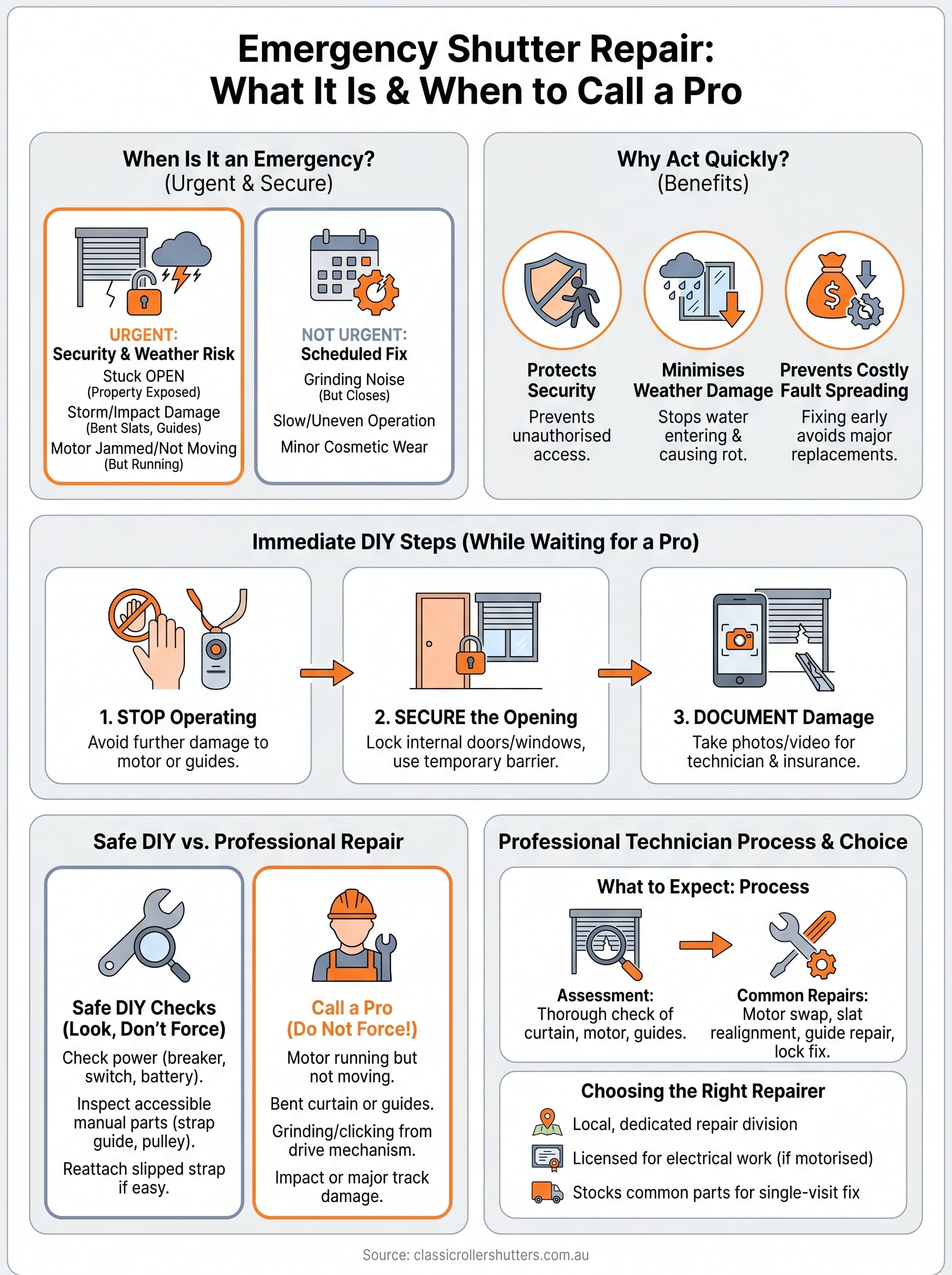
Not every shutter problem is an emergency, and understanding the difference helps you prioritise correctly instead of either panicking over a minor issue or waiting too long on a serious one. The core test is simple: does the fault leave your property exposed or create an immediate safety hazard? If the answer is yes, you’re dealing with a situation that warrants same-day emergency shutter repair rather than a routine booking.
Faults that need same-day attention
Some failures remove the shutter’s ability to do its job entirely. A shutter stuck in the open position is the clearest example: your window or door is now unprotected, and no workaround changes that fact until the shutter is operational again. The same applies to a bottom rail that has buckled or come off its guides, leaving a gap between the shutter and the sill that a person could reach through or lever open.
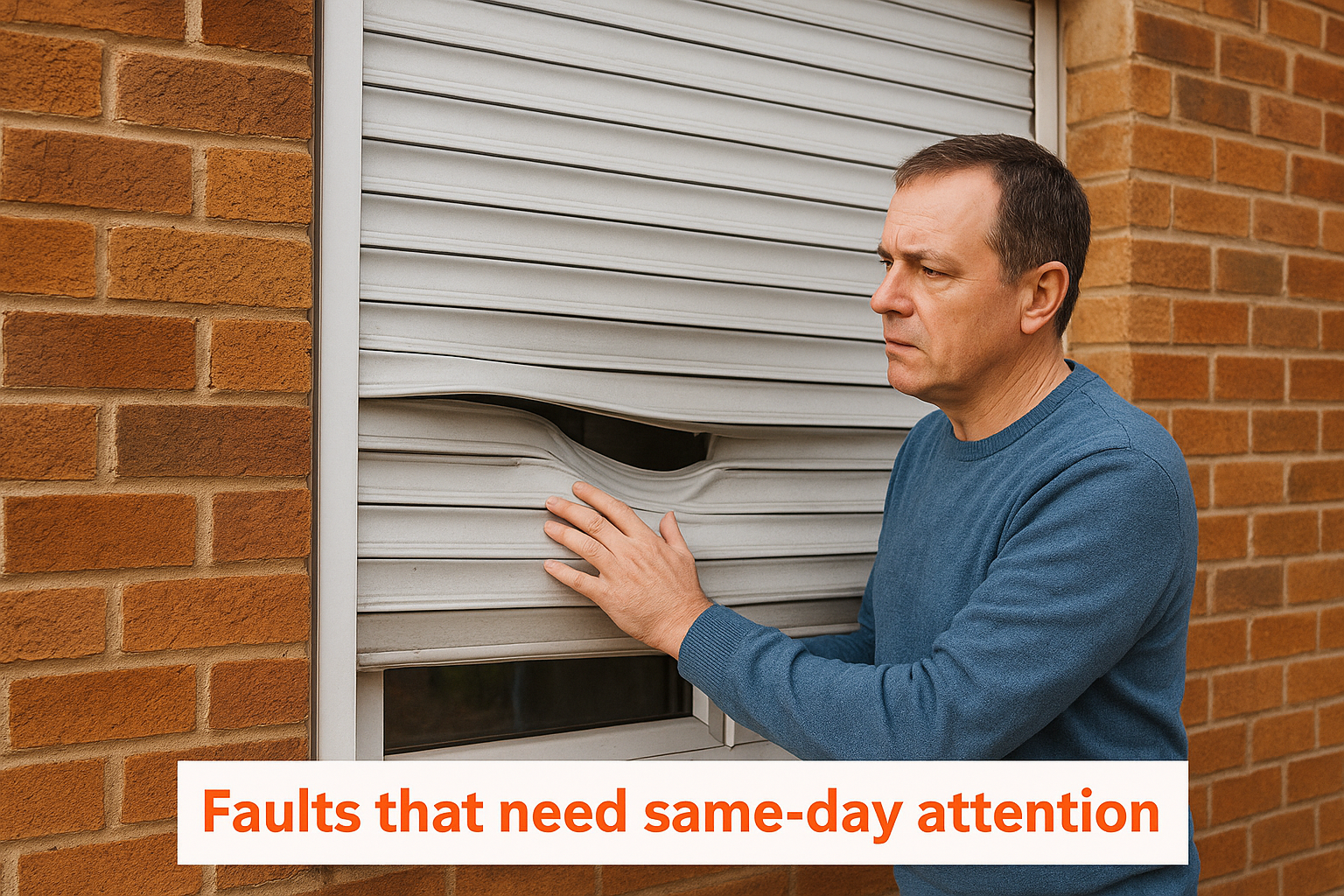
If your shutter won’t close and secure, treat it as a security breach first and a repair job second.
Visible physical damage after a storm or impact also falls into the same-day category. Bent or cracked slats that prevent the curtain from travelling down the guides, broken locking bars, or a jammed drive mechanism on an electric shutter all leave you without functioning security until they’re fixed. If the motor is running but the shutter isn’t moving, stop operating it immediately: continued use risks burning out the motor and turning a straightforward repair into a full component replacement.
Faults that can wait for a scheduled booking
Some problems are genuine faults but not emergencies. A shutter that opens and closes fully but makes a grinding noise is worth booking in promptly, but it isn’t leaving your property exposed tonight. Similarly, a slow or uneven motor that still completes its cycle, a strap showing early signs of wear, or a slat with minor cosmetic damage all deserve attention without requiring an urgent callout.
The distinction matters because emergency callouts cost more than scheduled appointments. Knowing which category your fault falls into lets you make a calm, informed decision rather than a reactive one.
What to do now to secure the property
When a shutter fails, the first few minutes matter. Your instinct might be to keep trying the switch or strap to get it moving again, but forcing a stuck or damaged shutter almost always makes the underlying fault worse. Stop operating it, assess what you can see, and then focus on making the opening as secure as possible while you arrange an emergency shutter repair.
Stop operating the shutter immediately
Continuing to run a motor against a jammed curtain or repeatedly yanking a manual strap puts direct stress on the components that are already failing. If the shutter is electric, switch it off at the wall or isolate it from the control panel. If it’s manual, leave the strap or winder alone. The goal right now is to prevent a repairable fault from becoming a full replacement job before a technician arrives.
Forcing a stuck shutter is one of the most common ways a simple repair turns into a motor or guide replacement.
Secure the opening with what you have
Once you’ve stopped operating the shutter, turn your attention to the gap it’s leaving. Lock any windows or doors that sit behind the shutter opening, even if the shutter is only partially raised. For ground-floor or street-facing openings, consider whether a temporary physical barrier is practical, such as moving solid furniture against the window or using a fitted security door or grille if one is already in place.
If you’re securing a commercial premises after hours, contact your alarm monitoring provider to let them know the shutter is compromised. Don’t rely on the alarm alone to compensate for the exposed gap.
Document the damage before anything is touched
Take photos or a short video of the shutter in its current state before any temporary fixes are applied. This gives the technician a clear picture of exactly what happened and provides solid evidence for an insurance claim if a storm, impact, or third party caused the damage.
Photograph the full shutter curtain, the guides on both sides, and any visible points of damage. A timestamped phone photo takes under a minute and can prevent significant back-and-forth with both your repairer and your insurer later.
When to call a pro vs safe DIY checks
There’s a meaningful difference between inspecting a shutter to understand what’s wrong and attempting to fix it yourself. Some basic checks are safe to carry out before calling anyone, and they help you give the technician accurate information when you do make contact. Others put you at risk of making the fault worse or injuring yourself, particularly with electric shutters and their drive mechanisms.
Safe checks you can do yourself
If the shutter is electric and has stopped responding, check the obvious power-related causes first. Confirm the circuit breaker for that circuit hasn’t tripped, verify that the wall switch is receiving power, and check whether a remote control battery has simply died. These are genuine, common causes of an apparent shutter failure that require no tools and carry no risk.
For manual shutters, check whether the locking bar has engaged in an unintended position, or whether the strap guide has come away from the wall mount. A strap that has slipped off its pulley can sometimes be reattached without specialist tools if the mechanism is accessible and undamaged. If you can see the fault clearly and correcting it doesn’t require you to put pressure on the curtain or track, it’s a reasonable check to run through yourself.
Anything that requires you to apply force to a jammed curtain, track, or drive shaft should be left to a professional.
When the fault needs a professional
Call a professional for emergency shutter repair if the motor is running but nothing is moving, if the curtain is visibly bent or off its guides, or if you can hear grinding or clicking from the drive mechanism. These symptoms point to a mechanical or electrical fault that a non-specialist cannot safely diagnose or fix without the right tools and training.
You should also call a pro if the bottom rail is jammed against the sill at an angle, if any part of the guide track has cracked or separated from the wall, or if the shutter took a direct impact from a vehicle, falling debris, or storm damage. Forcing the curtain in any of these situations risks burning out the motor, bending the guides beyond repair, or causing the curtain to drop suddenly and without warning.
What a technician will inspect and fix
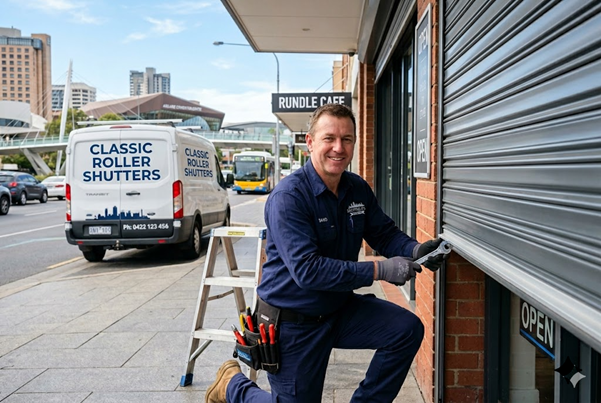
When a technician arrives for an emergency shutter repair, they follow a structured inspection process before touching any components. Understanding what they’re looking for helps you give them accurate information when you call, which can reduce the time they spend diagnosing the fault and get your shutter operational again faster.
The initial assessment
A technician starts by examining the full curtain from top to bottom, checking whether the slats are intact, correctly interlocked, and moving freely within the guides. They inspect both guide tracks for cracks, separation from the wall, or debris that’s causing the curtain to bind. For electric shutters, they check the motor housing, drive shaft, and limit switch settings to identify whether the fault is mechanical or electrical. On manual shutters, the strap, spring tension, and locking bar mechanism all get checked at this stage.
A thorough assessment at the start prevents a technician from replacing components that aren’t actually faulty.
Your power supply and control wiring also get tested if the shutter is motorised. A tripped isolator, a corroded terminal, or a failed capacitor inside the motor housing can all produce identical symptoms from the outside, so the technician uses the assessment to narrow down exactly what needs attention.
Common repairs carried out on-site
Most emergency shutter faults are resolved in a single visit because technicians carry the parts most likely to fail. Common on-site repairs include:
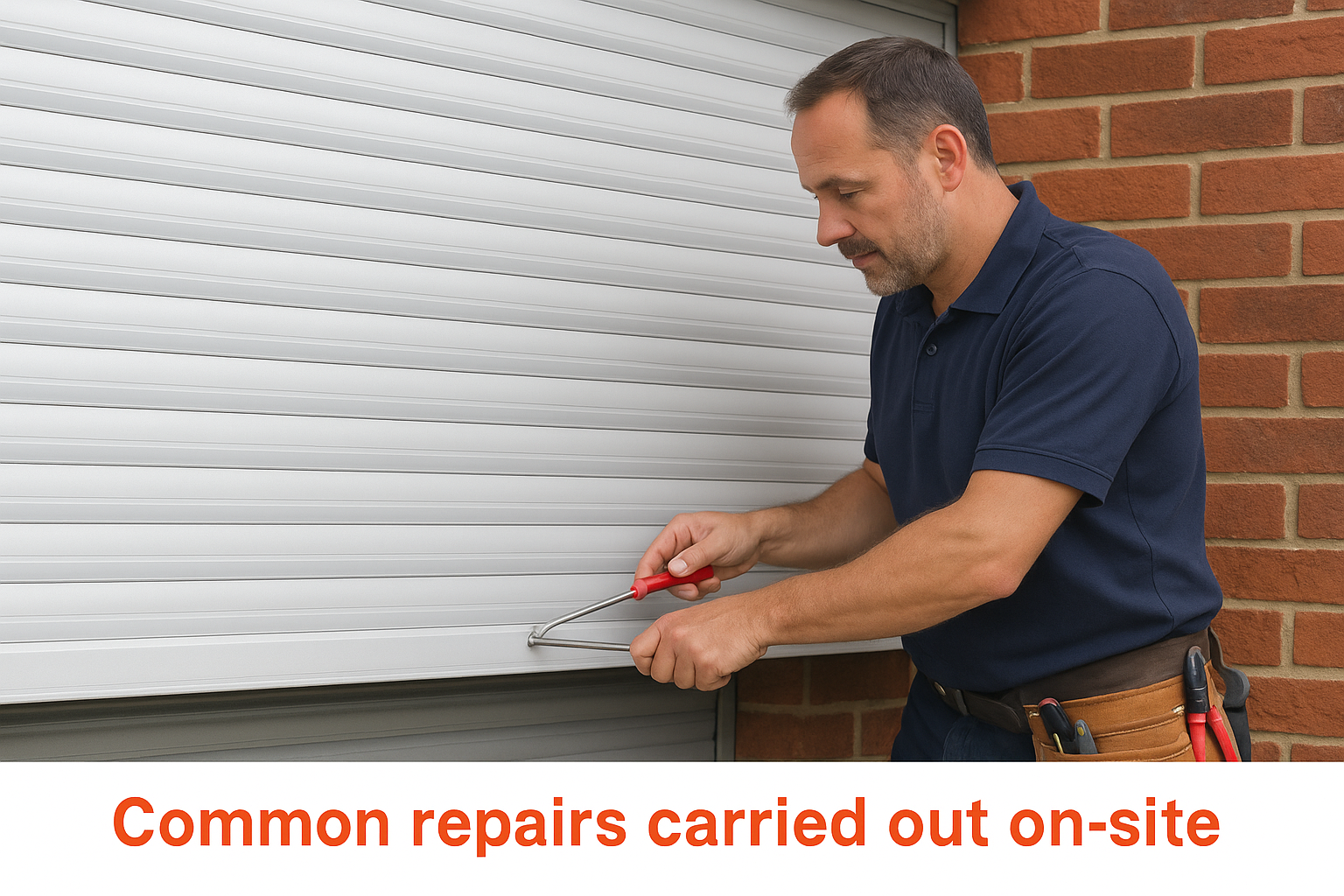
- Motor replacement or capacitor swap for electric shutters that run but don’t move, or that have stopped responding entirely
- Slat replacement and realignment after storm damage or impact has bent or cracked sections of the curtain
- Guide track realignment or replacement where the curtain has come off its runners
- Locking bar and bottom rail repairs when the shutter is closing but not securing correctly
- Strap, spring, and pulley replacement on manual shutters where the operation has become heavy or uneven
If a full component replacement is needed and the part isn’t on the van, the technician will make the shutter as secure as possible and confirm a return visit with a clear timeframe.
Cost, timing, and choosing a repairer in Adelaide
Understanding what you’re likely to pay and how long you’ll wait helps you make a clear-headed decision when a shutter fails. Emergency callouts cost more than scheduled repairs because they involve a technician dropping everything to attend your property, often outside standard hours. Knowing the rough cost range before you call means you won’t be caught off guard when the quote comes through.
What emergency repairs typically cost
Labour rates for emergency shutter repair in Adelaide vary depending on the time of day, the day of the week, and the complexity of the fault. Standard business-hours callouts typically run lower than after-hours or weekend attendance fees. On top of the labour charge, parts such as motors, capacitors, slats, and guide tracks are priced separately, so the final invoice reflects both what the technician did and what they replaced.
A straightforward fix like a capacitor swap or a strap replacement can often be completed in under an hour, which keeps the total cost contained. Larger jobs involving full motor replacements or significant curtain damage will cost more, but getting them done promptly almost always costs less than waiting and allowing secondary damage to accumulate.
Asking for a written quote before the technician starts work protects you from unexpected costs and gives you something to reference for an insurance claim.
How to choose the right repairer
When selecting a repairer, prioritise local businesses with a dedicated repair division rather than installers who treat repairs as a side service. A company that regularly services all brands carries a broader range of parts on the van, which increases the chance your shutter gets fixed in a single visit. Ask directly whether they stock motors and common components for your shutter brand before they come out.
Check that the repairer is licensed for electrical work if your shutter is motorised, since swapping a motor involves wiring that requires appropriate qualifications in South Australia. Verified customer reviews and a clear, upfront pricing structure are also reliable signals that you’re dealing with a repairer who takes the work seriously rather than one chasing a quick callout fee.
Get your shutter working and secure again
A failed roller shutter leaves your property exposed and your options feeling limited, especially outside business hours. The good news is that most faults come down to a short list of well-understood components, and a qualified technician with the right parts on hand can resolve the majority of them in a single visit. The key is acting quickly rather than waiting to see if the problem settles on its own, because it rarely does.
Whether you need an emergency shutter repair after a storm, a motor that’s stopped responding, or a curtain that’s come off its guides, Classic Roller Shutters Adelaide has a dedicated repair division that services all brands across Adelaide. With over 40 years of local experience and a team that carries common parts ready to go, we’re set up to get your shutter secure again fast. Book your shutter repair with Classic Roller Shutters Adelaide and get the job done properly.