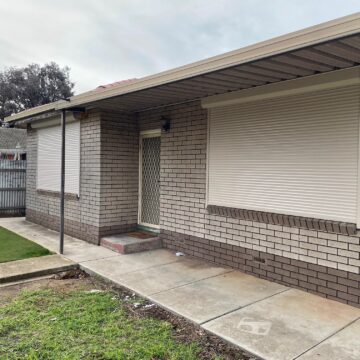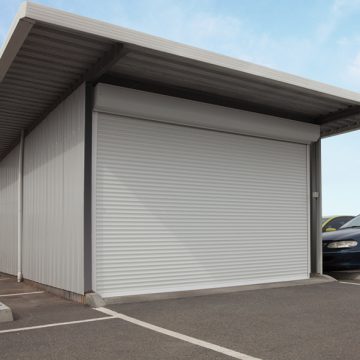
Standard roller shutters do a brilliant job of blocking out light, noise, and intruders, but what if you don’t want to sit in the dark every time you close them? That’s exactly the problem see through roller shutters solve. Made from clear polycarbonate or perforated aluminium, these shutters let natural light pass through while still providing a physical barrier against break-ins, weather, and prying eyes.
They’re increasingly popular across Adelaide for shopfronts, cafés, and pergolas where visibility matters just as much as security. Whether you want to showcase a retail display after hours or keep an eye on your front yard without sacrificing protection, there’s a see through option that fits the brief. The trade-off between security and natural light? It’s no longer necessary.
At Classic Roller Shutters Adelaide, we’ve been manufacturing and installing roller shutters for over 40 years, and we’ve seen demand for these transparent and semi-transparent options grow steadily. In this guide, we’ll break down the different types available, what they cost, where they work best, and how to choose the right one for your property.
What see through roller shutters are
See through roller shutters are roller shutter systems built from transparent or semi-transparent materials instead of the solid aluminium slats you’d find on a standard shutter. The result is a shutter that closes fully and provides a physical security barrier, yet still allows natural light to pass through and lets you see what’s happening on the other side. They’re a direct response to the limitation most traditional shutters create: a locked-down, dark space that cuts off visibility entirely.
The key distinction is in the construction material and slat design. Where a standard aluminium roller shutter uses extruded aluminium slats that interlock to form a solid wall, see through versions use either clear polycarbonate slats, perforated aluminium slats, or a combination of both. Each material handles the balance between light transmission and physical strength differently, which affects what situations they suit best.
The materials that make it possible
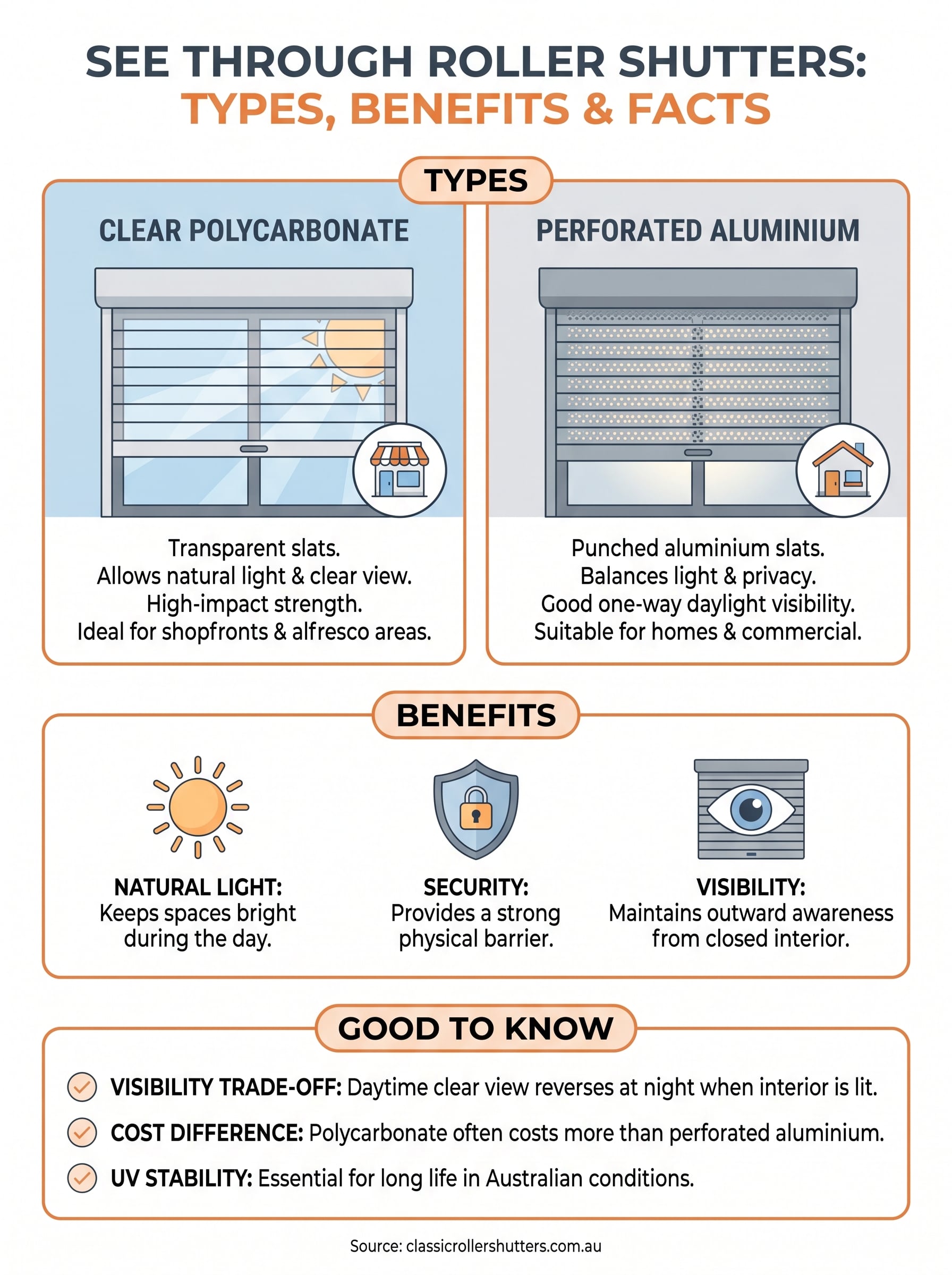
Polycarbonate is the most common material used for fully transparent roller shutters. It’s a high-impact thermoplastic that’s significantly stronger than glass, and it comes in clear or tinted versions. Polycarbonate slats slot together in the same way aluminium slats do, but they transmit light rather than blocking it. The material is UV-resistant and rated for outdoor use, making it well suited for shopfronts, alfresco areas, and residential windows exposed to the Adelaide sun.
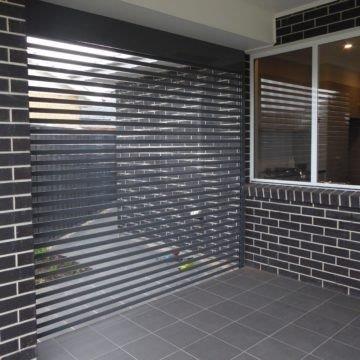
Perforated aluminium takes a different approach. Rather than replacing the aluminium entirely, manufacturers punch a pattern of small holes through standard aluminium slats. This lets a portion of light through and gives a degree of outward visibility, particularly from a darker interior looking out. The perforation rate (how much of the slat surface is open versus solid) varies between products and directly affects how much light comes through and how visible the interior is from outside.
Perforated aluminium is often the better choice when you need a balance between daytime visibility and nighttime privacy, since the one-way visibility effect reverses after dark.
How the visibility and protection balance works
The visibility you get from see through roller shutters depends on two factors: the material and the lighting conditions on either side. During daylight hours, polycarbonate shutters give you a clear view in both directions, while perforated aluminium tends to offer better outward visibility from a darker interior. After dark, when interior lights are on, the dynamic reverses and interior illumination becomes visible from outside.
Understanding this means you can plan placement accordingly. A retail business that wants to display products after hours benefits most from clear polycarbonate on street-facing windows. A homeowner who wants to keep an eye on the front yard while maintaining some privacy might prefer a mid-range perforation rate on aluminium. The right choice comes down to how you use the space and at what time of day visibility matters most to you.
Types of see through roller shutters
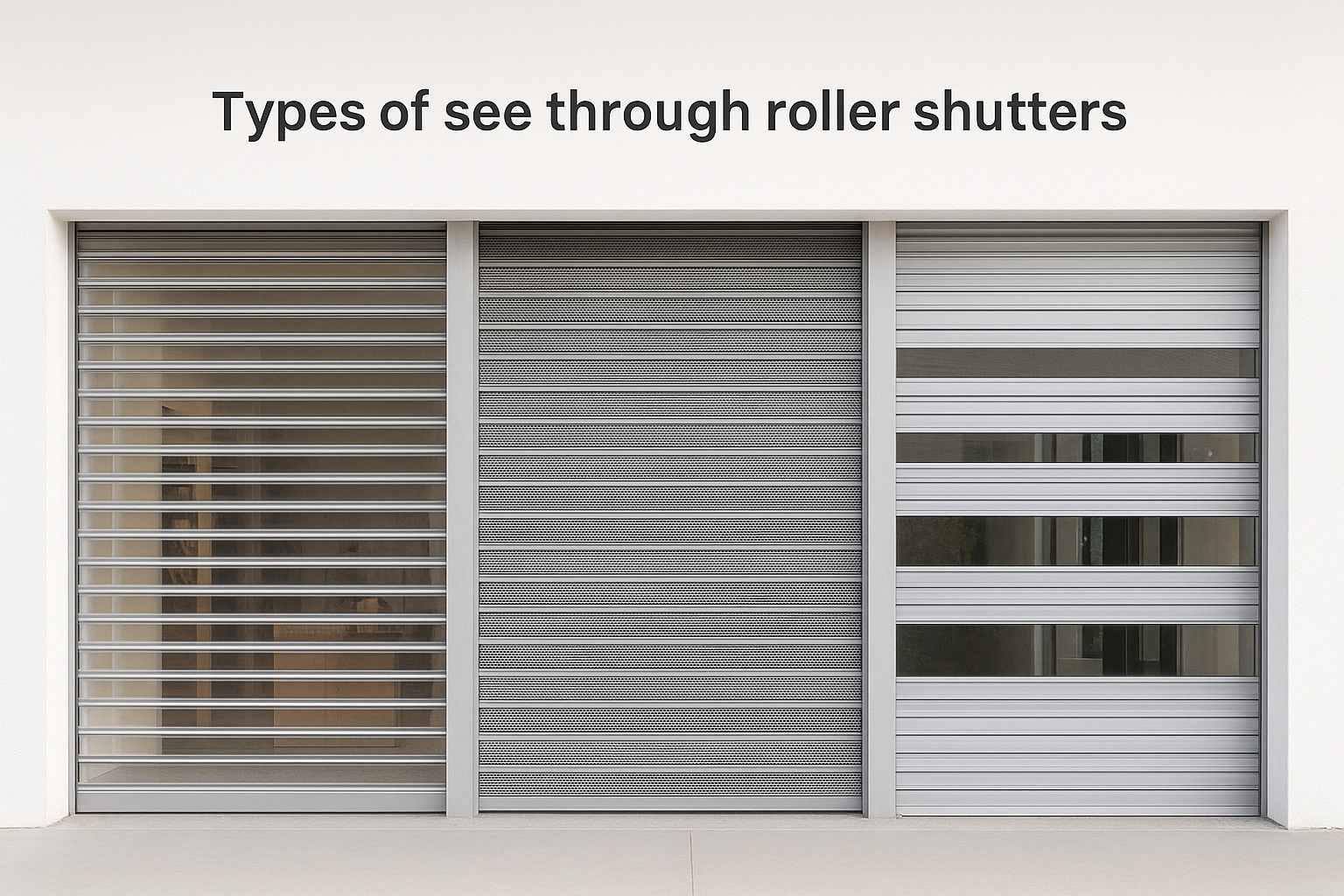
The market for see through roller shutters breaks down into three main options, each with a different approach to balancing visibility, light transmission, and physical strength. Knowing the differences before you commit saves you from installing something that doesn’t suit how you actually use the space.
Clear polycarbonate shutters
Clear polycarbonate shutters use interlocking transparent slats that behave structurally like standard aluminium ones but let light pass through freely. They’re available in clear, tinted, or frosted finishes, giving you control over how much privacy you want alongside the light transmission. The clear version gives you an unobstructed view in both directions during daylight, while tinted options reduce glare and solar heat gain without turning the space dark.
These shutters are a popular choice for shopfronts and retail displays because they let customers see products after hours without leaving the premises unprotected. They’re also used in residential settings on alfresco areas and ground-floor windows where natural light is a priority.
Polycarbonate shutters are significantly stronger than glass, so you’re not trading security for transparency.
Perforated aluminium shutters
Perforated aluminium shutters keep the standard aluminium slat construction but add a pattern of small punched holes across the surface. The percentage of open area (called the perforation rate) determines how much light comes through and how visible the interior is from outside. A higher perforation rate lets in more light but reduces the structural density of each slat.
You’ll find these shutters suit applications where some visibility is useful but you still want a more solid-looking finish than clear polycarbonate provides. Common perforation rates range from 15% to 45% open area, and that choice affects both aesthetics and function in equal measure.
Combination shutters
Some manufacturers produce shutters that mix solid aluminium slats with polycarbonate or perforated panels in a single curtain. You can position a clear or perforated band at eye level for visibility while keeping solid slats at the top and bottom for added strength. This configuration gives you targeted visibility exactly where you need it without compromising the overall integrity of the shutter.
Benefits and trade-offs to know
See through roller shutters offer a genuinely different outcome from standard shutters, but the decision isn’t one-sided. Understanding both sides of the equation helps you choose a product that performs well for years rather than creating problems you didn’t anticipate.
What you gain
Natural light without a dark, closed-off space is the most obvious benefit. When you close a standard shutter, the room behind it loses daylight entirely. A polycarbonate or perforated aluminium shutter closes the same way but keeps the space connected to outside light, which reduces your reliance on artificial lighting during the day.
You also keep outward visibility, which matters for security as much as comfort. Being able to see movement outside from a closed interior gives you an awareness that solid shutters eliminate entirely. For retail settings, a closed but transparent shopfront lets potential customers view your products outside trading hours, which is a direct commercial advantage with no extra effort on your part.
A polycarbonate shutter can achieve impact resistance comparable to standard aluminium, so you’re not sacrificing structural protection for the sake of transparency.
What to plan for
Privacy after dark is the most significant trade-off to account for. Once interior lighting is on and the outside is dark, the visibility dynamic reverses. What gave you outward visibility during the day becomes a lit interior visible from the street at night. This isn’t a flaw unique to these products; it’s a physics reality you need to factor into your installation decision from the start.
Clear polycarbonate surfaces show dirt, dust, and water marks more readily than solid aluminium. Regular cleaning keeps them looking sharp, but that’s an ongoing maintenance commitment that solid shutters don’t demand to the same degree. In dusty or coastal environments around Adelaide, this consideration carries more weight.
Finally, clear polycarbonate options typically sit at a higher price point than equivalent solid aluminium shutters due to material costs. Perforated aluminium is usually closer in price to standard products, making it a practical middle ground if budget is a factor. Knowing this upfront helps you compare quotes with the full picture in mind.
Best uses for homes and businesses in Adelaide
Adelaide’s climate and urban layout create specific conditions that make see through roller shutters more practical here than in many other parts of Australia. Hot summers, strong UV exposure, and a mix of dense suburban streets and busy retail strips mean that balancing light, security, and visibility is a real daily concern for both homeowners and business owners. The right application depends on how your space functions and what you need the shutter to do at different times of day.
Residential applications
Homeowners across Adelaide’s inner suburbs get the most out of polycarbonate or perforated aluminium shutters on ground-floor windows and alfresco areas. If you have a front room that faces the street, a clear or tinted polycarbonate shutter lets you close up for security without losing the daylight that makes the room usable. North and west-facing windows in particular benefit from tinted polycarbonate options, which cut solar heat gain while still letting diffused light through during Adelaide’s intense summer afternoons.
Alfresco and patio enclosures are another strong fit. Closing the space with a see through roller shutter keeps the area sheltered from wind and dust while maintaining that open, outdoor feel. For new builds and renovations, these shutters integrate cleanly into modern façades without the heavy, closed-off appearance of solid aluminium.
If your alfresco area faces west, a tinted polycarbonate option reduces afternoon heat load noticeably compared to a clear panel.
Commercial and retail applications
Shopfronts along Rundle Mall, Unley Road, and Norwood’s The Parade are exactly the kind of setting where polycarbonate shutters earn their cost. Closing the store at the end of the day with a clear shutter means your window display keeps working overnight. Foot traffic that passes after hours can still see featured products and signage, which is a passive marketing advantage that solid shutters shut off entirely.
Cafés and restaurants with street-facing counters or display cases benefit similarly. Perforated aluminium suits applications where a more industrial aesthetic fits the fitout, such as warehouses, workshops, and mechanical businesses that need controlled ventilation alongside physical security. The open perforation lets air circulate while keeping the premises closed, which matters in Adelaide’s warmer months.
How much see through roller shutters cost in Australia
Pricing for see through roller shutters varies more than standard shutters because the material options cover a wider range. Polycarbonate shutters sit at the higher end of the market, while perforated aluminium products typically land closer to standard roller shutter pricing. Knowing the rough figures before you contact suppliers helps you budget accurately and compare quotes without surprises.
Polycarbonate shutter costs
Clear polycarbonate shutters generally range from $800 to $1,200 per square metre installed in Australia, depending on the glazing finish (clear, tinted, or frosted), the drive mechanism (manual versus electric), and the complexity of your installation. Electric operation adds to the upfront cost, but it’s worth including from the start if you’re fitting shutters across multiple windows, since retrofitting a motor later costs more than specifying it in the original quote.
For large shopfront openings, get a fixed-price quote that includes the motor, guide rails, and installation so you’re comparing complete jobs rather than slat pricing alone.
Tinted polycarbonate panels carry a small premium over clear ones due to the additional UV coating applied during manufacturing, but that cost difference is modest compared to the benefit of reduced solar heat gain on north and west-facing windows across Adelaide’s summers.
Perforated aluminium shutter costs
Perforated aluminium shutters are generally more affordable, with installed pricing typically ranging from $800 to $1200 per square metre depending on the perforation rate, shutter width, and motor type. A higher perforation rate can slightly reduce material cost, but the difference is minor compared to the impact that opening size and motor selection have on your final figure.
For commercial applications where you need to cover wide roller door openings, perforated aluminium is often the practical choice for getting ventilation and partial visibility without the price tag of a full polycarbonate installation.
What affects the final price
Several factors push the cost of any see through roller shutters installation up or down regardless of material choice:
- Opening size: Larger openings require more material and heavier housing boxes.
- Motor type: Standard motors suit most residential applications; commercial-grade motors for wide or heavy shutters cost more.
- Installation complexity: Multi-storey access, heritage façades, or non-standard frame configurations add to your labour cost.
- Quantity: Installing shutters across multiple windows in a single visit reduces the per-unit cost compared to a single-window job.
What to check before you buy
Before you contact a supplier, there are a few specific things worth clarifying that will save you from paying for the wrong product or dealing with problems after installation. See through roller shutters come in enough variations that a brief checklist of questions cuts through the noise and gets you to the right specification faster.
Check the material rating and impact resistance
Not all polycarbonate panels carry the same impact resistance rating, and not all suppliers use commercial-grade material for residential installations. Ask your supplier what thickness and grade of polycarbonate they use, and whether it’s UV-stabilised. Untreated polycarbonate yellows and becomes brittle under prolonged UV exposure, which is a real concern in Adelaide’s climate. A quality product should include UV stabilisation as standard, not as an optional extra.
If a supplier can’t tell you the polycarbonate grade or thickness, that’s a clear signal to ask more questions before signing anything.
Confirm the drive mechanism suits your opening size
Manual operation works fine for small windows, but for anything wider than around 2.4 metres or heavier than a standard residential slat, a manual mechanism puts strain on both the operator and the hardware. Check that the motor specification matches your opening width and shutter weight, not just a generic residential rating. For commercial openings, ask specifically whether the motor is rated for multiple daily cycles, since motors designed for occasional residential use wear quickly in high-traffic environments.
Your installer should assess the opening dimensions and recommend a motor based on those measurements, not offer a single solution across every job. If you’re fitting shutters across multiple openings, ask whether a single control point or home automation integration is available so you’re not managing them individually.
Ask about cleaning and maintenance requirements
Clear polycarbonate surfaces scratch more easily than aluminium, so the cleaning method matters as much as the cleaning frequency. Ask your supplier what products and tools are safe to use, and avoid anything abrasive. Perforated aluminium requires less attention but can accumulate dust in the holes over time, particularly near busy roads or construction sites. Knowing the maintenance commitment upfront means you can keep the product looking sharp without having to guess later.
FAQs about see through roller shutters
These are the questions we hear most often from Adelaide homeowners and business owners considering see through roller shutters for the first time. Short, direct answers are what you need here, so that’s exactly what you’ll find below.
Are see through roller shutters as strong as solid aluminium shutters?
Polycarbonate roller shutters use a high-impact thermoplastic that is considerably stronger than glass and comparable in impact resistance to aluminium for standard residential applications. The strength depends heavily on the slat thickness and grade of polycarbonate your supplier specifies, so always confirm those details before you buy. Perforated aluminium shutters retain most of the structural integrity of a standard aluminium shutter, with the reduction in material caused by the perforations being a relatively minor factor at typical perforation rates.
If impact resistance is your main priority, ask your supplier for the polycarbonate grade rating and compare it directly to the aluminium equivalent.
Can see through roller shutters provide privacy?
Daytime privacy is limited with clear polycarbonate shutters, since both sides can see through equally in similar lighting conditions. Tinted or frosted polycarbonate panels improve privacy during the day by reducing visual clarity from the outside. Perforated aluminium offers better daytime privacy due to the one-way visibility effect from a darker interior looking out. After dark with interior lights on, both options allow your interior to be visible from outside, so placement and lighting habits matter when privacy is a priority.
How long do polycarbonate shutters last outdoors in Australia?
UV-stabilised polycarbonate shutters typically last 15 to 20 years in outdoor conditions when properly maintained. The UV stabilisation is the critical factor; without it, polycarbonate yellows and becomes brittle under prolonged sun exposure, which is a genuine risk given Adelaide’s UV index. Regular cleaning with a non-abrasive cloth and mild soapy water keeps the surface clear and extends the product’s life noticeably.
Can I get see through roller shutters with a motor?
Yes. Both polycarbonate and perforated aluminium shutters are available with electric motors, and motorised operation is the recommended choice for openings wider than 2.4 metres or for commercial applications with frequent daily use. A motorised system can also integrate with home automation platforms, letting you schedule or remotely control the shutters alongside other devices.
Next steps for choosing the right shutter
You now have everything you need to make a confident decision about see through roller shutters for your property. The clearest next step is to measure your openings, decide whether you prioritise daytime visibility, nighttime privacy, or both, and then contact a local supplier who manufactures and installs their own products rather than just reselling imported stock.
Getting a quote before you commit costs you nothing, and an in-person assessment gives you accurate pricing based on your actual opening dimensions and installation conditions rather than rough estimates. A good supplier will recommend the right material grade, motor specification, and perforation rate for your specific situation rather than offering a one-size approach.
Classic Roller Shutters Adelaide has been manufacturing and installing shutters locally for over 40 years. Book a free in-home quote and get an accurate price for your property with no obligation.