If you live near a busy road in Adelaide, you already know how relentless traffic noise can be, especially at night or on weekends when you just want some quiet. It’s one of the most common reasons homeowners ask us about roller shutter noise reduction at our Adelaide factory and showroom. The short answer is yes, roller shutters do reduce noise. But the more useful question is: by how much, and is it enough to make a real difference in your home?
Over 40 years of manufacturing and installing roller shutters across Adelaide has given us a pretty clear picture of what they can and can’t do when it comes to blocking sound. We’ve fitted shutters on homes next to main roads, near airports, and backing onto train lines, so we’ve heard the feedback (and measured the results). The figures matter here, because vague promises don’t help you make a smart decision. You need actual decibel numbers and honest comparisons with alternatives like double glazing or acoustic glass.
That’s exactly what this article covers. We’ll break down how many decibels roller shutters typically cut from road noise, explain why some shutters perform better than others, and compare them against other common soundproofing options, so you can decide what’s actually worth your money. No guesswork, just practical information based on real-world experience.
What roller shutter noise reduction means
Roller shutter noise reduction refers to the measurable drop in sound levels that occurs when a roller shutter is closed over a window or door. Sound travels in waves, and any material that sits between the source of that sound and your ears will absorb, reflect, or block some of those waves. A roller shutter creates an additional physical barrier on the exterior of your window, which is why it can lower the amount of road noise, traffic rumble, or neighbourhood sound that reaches you inside.
How sound travels into your home
Windows are typically the weakest point in any building’s exterior when it comes to noise. Even a standard double-brick wall can block far more sound than a single-glazed window of the same size. Sound waves pass through glass far more easily than through masonry, which means that even a small gap or a thin pane lets in significant noise. When you add a roller shutter on the outside of that window, you introduce a second layer of material that the sound must pass through before it even reaches the glass.
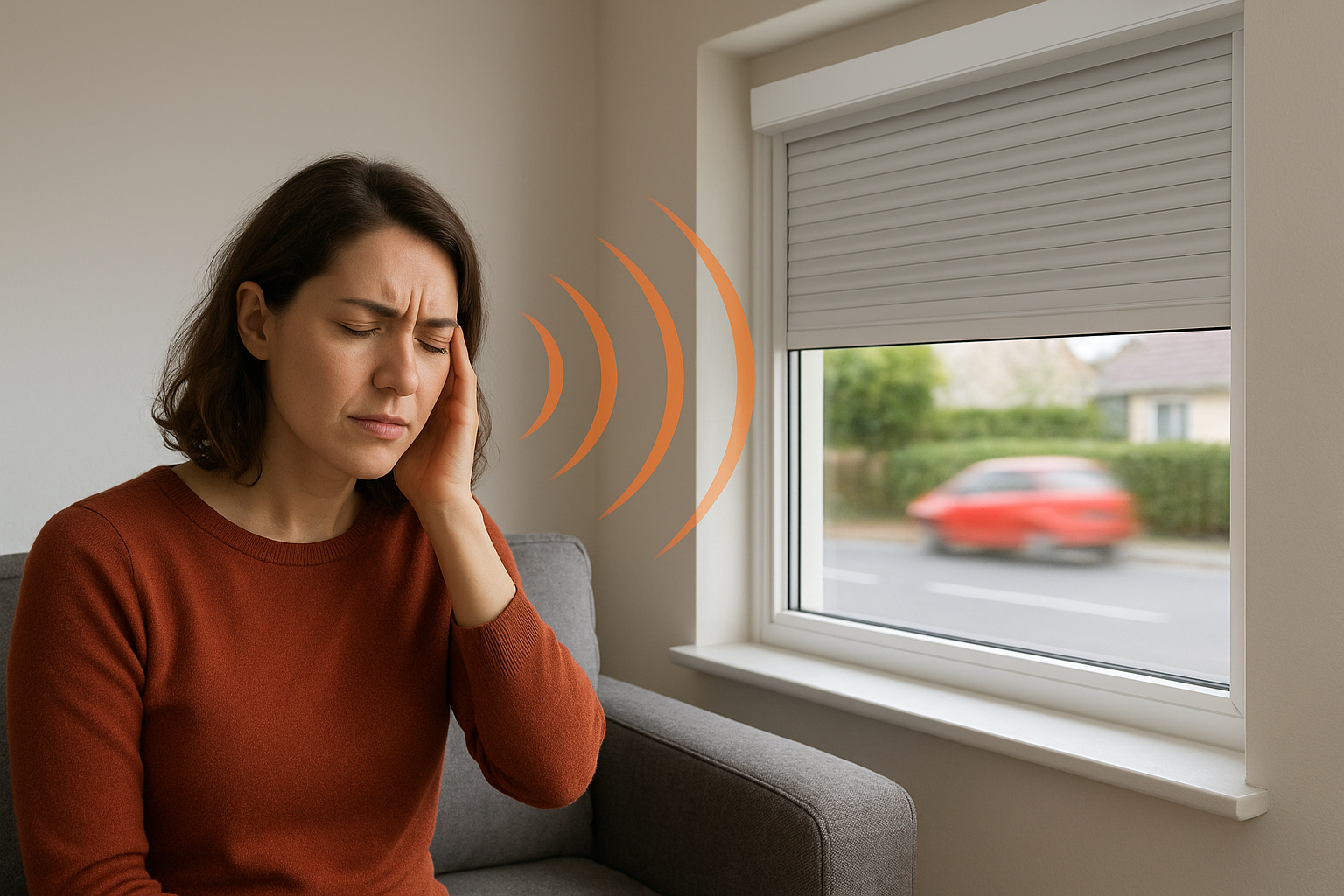
The air gap between the closed shutter and the window surface is particularly important. This trapped air space acts as a buffer zone, dampening sound waves before they hit your glass. The same principle sits behind double glazing, where two panes of glass with an air gap between them perform better than a single pane alone, and it applies here too.
What decibels actually mean for you
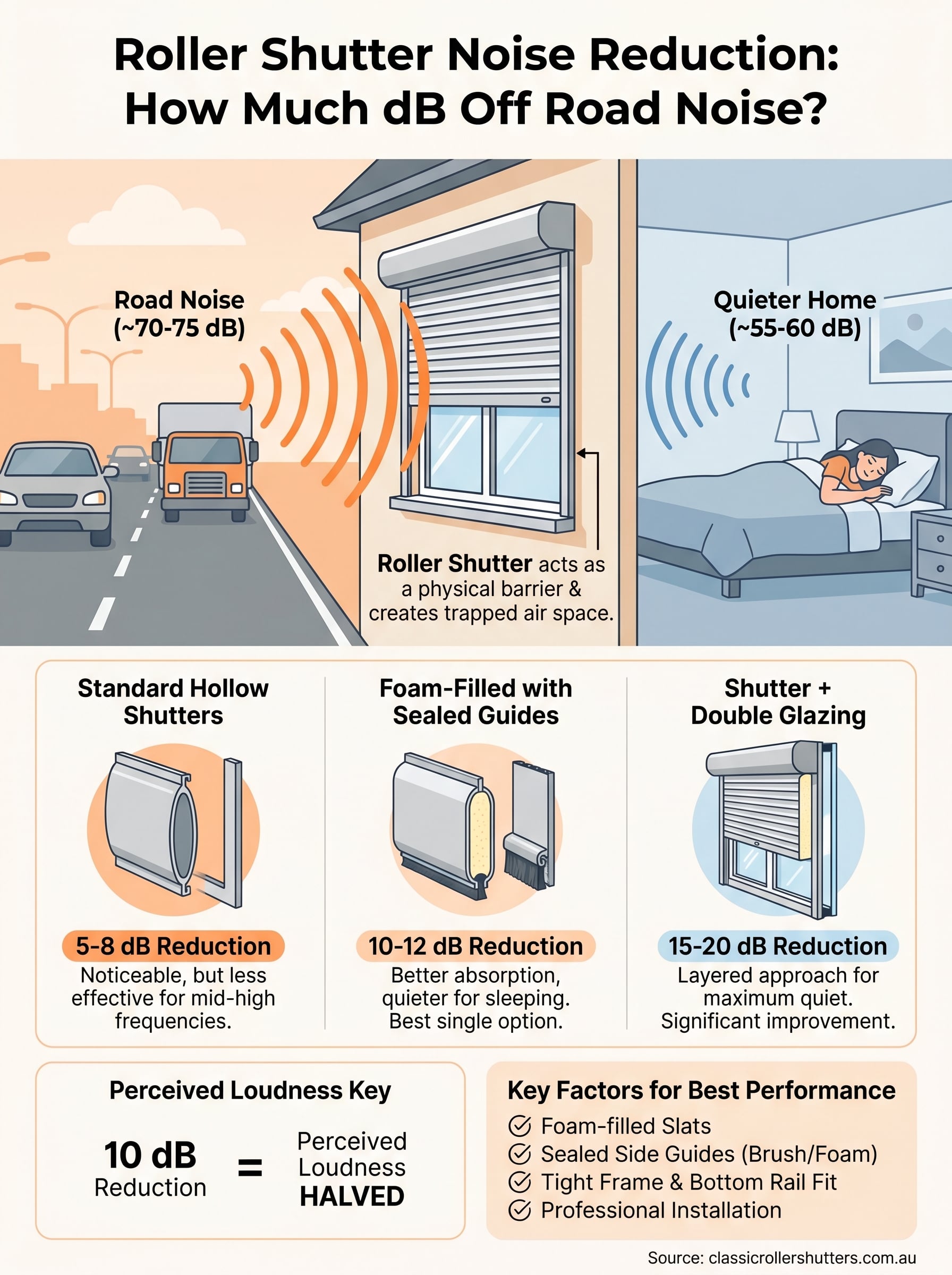
Decibels (dB) are the unit used to measure sound intensity, but the scale is logarithmic rather than linear. That means a 10 dB reduction doesn’t just cut noise by 10%; it actually halves the perceived loudness. A 3 dB reduction is already noticeable to most people, while a 10 dB drop makes a room feel dramatically quieter.
A 10 dB reduction in sound is perceived by most people as roughly half as loud, which means even moderate acoustic improvements make a real, felt difference in your home.
Road traffic on a typical Adelaide main road sits around 70 to 75 dB at the kerb. Inside a standard home with windows closed, that might drop to 55 to 60 dB. Bringing your indoor level below 45 dB starts to feel genuinely comfortable for sleeping and conversation, which is the practical target that roller shutter noise reduction is working towards in most residential settings.
Why roller shutters reduce noise and why they don’t “soundproof”
Roller shutters reduce noise through a combination of physical mass and air gap buffering. When you close a shutter, sound waves from traffic hit the aluminium slats first, and the density of those slats reflects a portion of that energy outward before it can pass through to your window glass. This is a genuine acoustic benefit, but it has clear limits you should understand before making any decisions.
How roller shutters block sound physically
The slats add physical mass directly to your window’s exterior, which is one of the most reliable methods of reducing sound transmission. The trapped air space between the closed shutter and your window glass also acts as an acoustic buffer, absorbing energy from sound waves before they reach the pane.
Three factors determine how well your shutter performs acoustically:
- Slat fill: foam-filled slats absorb more sound than hollow profiles
- Guide seals: brush or foam seals along the side guides reduce the air gaps where noise leaks through
- Frame fit: a tighter fit between shutter and frame leaves less room for sound to bypass the barrier entirely
Where the limits are
Roller shutters are not a complete soundproofing system, and understanding why matters before you invest. Sound transmits through walls, roof cavities, and gaps around door frames just as readily as it does through windows. A roller shutter solves one weak point in your home’s exterior, but it cannot seal the entire building envelope.
Roller shutter noise reduction works best as part of a layered approach, where shutters handle the window barrier and other measures address gaps and wall surfaces.
For significant noise problems, such as a property sitting directly on a main road, shutters will reduce what you hear indoors, but pairing them with improved window glazing will produce a noticeably stronger result.
How much dB reduction you can expect at home
In practical terms, roller shutter noise reduction delivers between 5 and 12 dB depending on the product you choose and how well it is installed. That range might sound modest, but remember that a 10 dB drop cuts perceived loudness roughly in half. For most Adelaide homes near busy roads, that shift is enough to make a bedroom genuinely liveable.
Standard shutters with hollow slats
Hollow-profile aluminium shutters typically achieve a noise reduction in the range of 5 to 8 dB when closed tightly over a single-glazed window. That is a real and noticeable improvement, particularly for lower-frequency road rumble, but it leaves some mid and high-frequency noise still audible. Your results will also vary depending on how well the bottom rail and side guides seal against the frame when the shutter is fully down.
A well-fitted standard shutter on a single-glazed window can drop indoor noise from a busy street by around 5 to 8 dB, which most people notice immediately when the shutter closes.
Side guide seals make a significant difference even with hollow slats. Brush seals and foam compression seals along the guides close the air gaps where sound bypasses the slat panel entirely, and they are worth specifying even on a tighter budget.
Foam-filled shutters with sealed guides
Foam-filled slats combined with quality side seals push performance up to the 10 to 12 dB range on standard glazing. The foam core adds acoustic mass and absorbs sound energy that hollow slats reflect. Choose this option if quieter sleeping or a home office is your priority.
Key factors that push your shutter toward the higher end of that range:
- Foam-filled slat profile rather than hollow aluminium
- Brush or foam compression seals on both side guides
- Tight bottom rail seal against the window sill
- Professional installation with minimal gaps at the frame
Roller shutters vs double glazing and other options
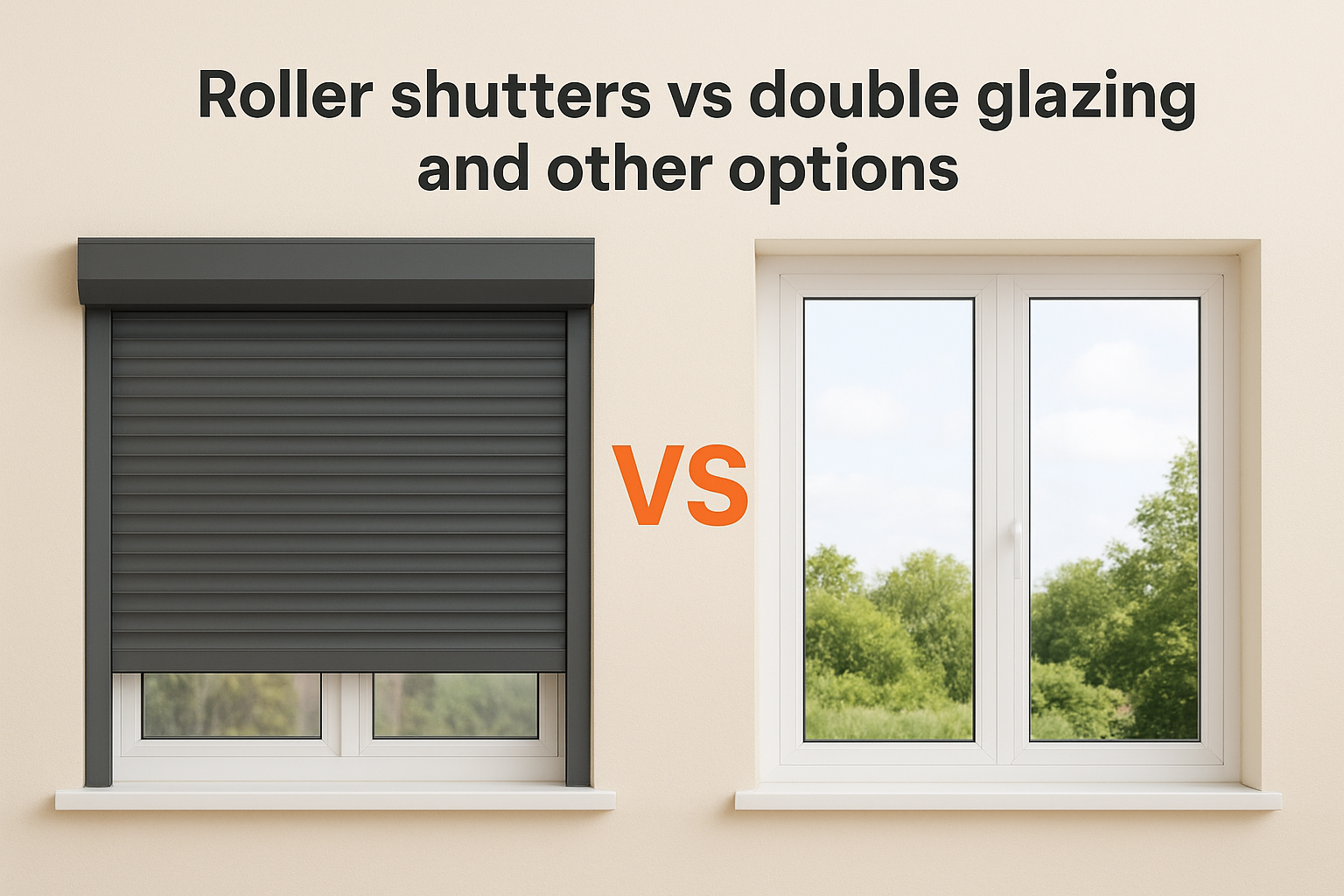
Roller shutters and double glazing both target the same weak point in your home, but they work through different mechanisms and sit at very different price points. Understanding how each option compares helps you decide whether roller shutter noise reduction is the right starting point, or whether your situation calls for a layered approach.
Double glazing
Double glazing typically delivers 8 to 12 dB of noise reduction on its own, placing it in a similar range to a well-fitted foam-filled roller shutter. The key difference is the mechanism: double glazing works through a sealed air gap between two panes of glass, while roller shutters add an external physical barrier. When you combine both, results consistently reach the 15 to 20 dB range.
Pairing roller shutters with double glazing produces a noticeably stronger result than either option alone, and is worth the investment if your home sits directly on a high-traffic road.
Retrofit double glazing carries a significantly higher installation cost than roller shutters, particularly on older homes with non-standard window frames. If your budget is limited, roller shutters deliver solid acoustic performance at a fraction of the replacement glazing cost.
Acoustic curtains and secondary glazing
Acoustic curtains can add 3 to 5 dB of reduction using dense, heavy fabric, but they only act on noise that has already passed through the glass. Their practical ceiling is low compared to a properly fitted shutter.
Secondary glazing, which adds an inner pane without replacing the existing window, performs closer to full double glazing at a lower price. For most Adelaide homeowners, roller shutters paired with secondary glazing offer the best balance of performance and cost.
How to choose and install for the best results
Getting the most from roller shutter noise reduction starts with the decisions you make before the shutter is even ordered. Product specification and installation quality together determine whether your shutter performs at the lower or upper end of the acoustic range, and both are areas where the right choices make a clear, measurable difference. Remember roller shutters only help with the noise that passes through the windows.
Specify the right slat and seal combination
When selecting a shutter for noise reduction, foam-filled slats should be your starting point rather than hollow aluminium profiles. Pair them with brush or compression foam seals on both side guides to close the gaps where sound leaks around the edges. These seals are often listed as an optional upgrade, but for acoustic performance they are not optional at all.
Key features to specify when ordering:
- Foam-filled slat profile
- Brush or compression seals on both side guides
- Tight-fitting bottom rail with a rubber or foam seal
- Pelmet box cover to reduce sound entry at the top of the shutter
Get the installation right
Professional installation makes a real difference to acoustic performance. Even a high-spec shutter loses significant noise reduction benefit if it is fitted with gaps around the frame or a poorly adjusted bottom rail. Ask your installer to confirm that the bottom rail seal sits flush against the sill when the shutter is fully closed, and that the side guide tension is checked before they finish the job.
A shutter that fits correctly across every edge will consistently outperform a premium-spec shutter with a poor fit.
If you are upgrading an existing shutter, replacing worn guide seals is often the single most cost-effective improvement you can make to noise performance without replacing the whole unit.
Next steps for a quieter home
Roller shutter noise reduction is one of the most practical improvements you can make to a noisy Adelaide home, and it delivers results you notice the same day the shutter closes. Start by identifying your noisiest windows, typically those facing a main road or a neighbouring property, and prioritise those first. Foam-filled slats with properly sealed side guides will give you the strongest result from a single shutter installation.
If your home sits on a particularly busy street, combining roller shutters with improved glazing will push your acoustic performance well beyond what either option achieves alone. You do not need to upgrade every window at once. A staged approach, starting with bedrooms and living areas, lets you manage the investment while still making a genuine difference quickly. For a free in-home consultation and an honest assessment of what your property needs, talk to the team at Classic Roller Shutters and get a quote that fits your situation.